 Ultimate guide
Why Consistent Janitorial Services Matter in 2026
Table of Contents
- The Hidden Costs of Inconsistent Cleaning
- How to Evaluate Janitorial Service Quality
- The Impact of a Clean Workspace on Employee Health
- Janitorial Service Performance Metrics That Matter
- Calculating ROI: Why Consistency Beats Deep Cleaning
- Protecting Brand Credibility and Client Impressions
- Conclusion: Building a Reliable Janitorial Partnership
- Frequently Asked Questions
Last Updated: September 18, 2026
The Hidden Costs of Inconsistent Cleaning
Inconsistent cleaning rarely shows up as a single dramatic failure. It shows up as small problems accumulating: a conference room that smells of stale coffee before a client visit, a restroom out of supplies mid-week, a lobby floor dull by Thursday. Facility managers call these isolated incidents, but they are symptoms of one issue: a janitorial program without reliable standards. This guide from Rangel Janitorial examines why consistent janitorial services matter, what inconsistency costs, and how to build a program you can trust.
The costs rarely appear on a single invoice. They surface as rework, complaints, and accelerated wear on the building itself.
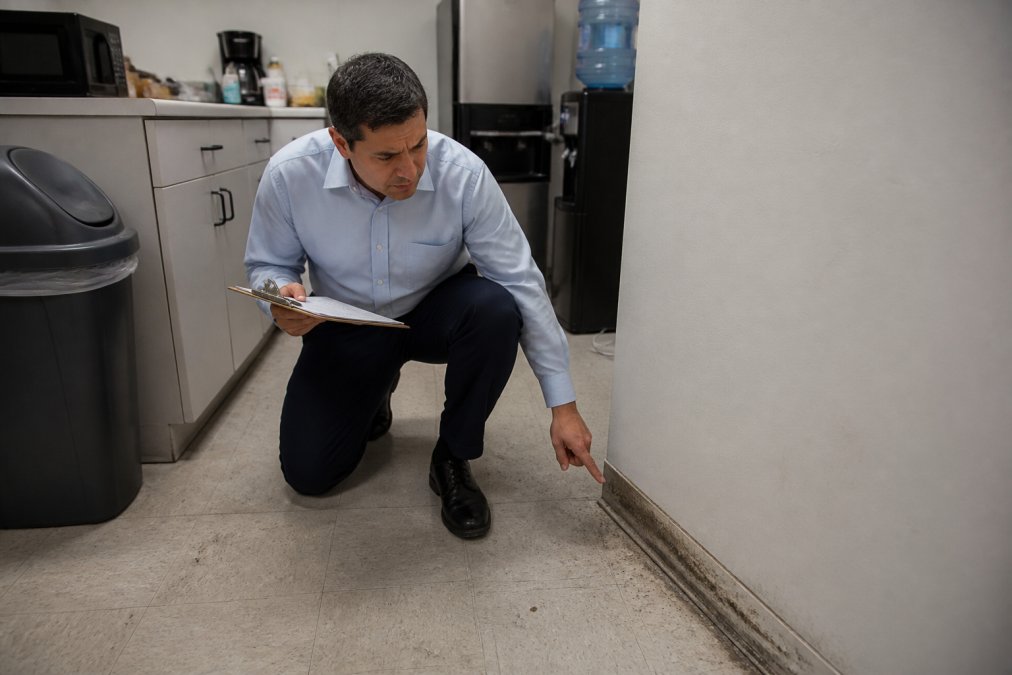
When high-touch surfaces are skipped for a few days, grime builds in layers, and removing it takes longer than routine maintenance would have. Floors that miss regular attention collect abrasive grit that dulls the finish and shortens the flooring's life. These quiet expenses show up in capital budgets years later.
How to Evaluate Janitorial Service Quality
Evaluating janitorial service quality means measuring outcomes against a documented standard, not judging by a walkthrough. A provider that cleans well one week and poorly the next is delivering luck, not quality. The difference shows up in your inspection records, not a lobby that looks good the day the account manager visits.
The process starts with a written scope defining every task, frequency, and area before service begins. Without that baseline, disputes become opinion rather than fact. "Clean restrooms daily" is not a standard; "restroom fixtures wiped, mirrors polished, dispensers restocked, floors mopped with a designated restroom tool set, once per service day" is one you can audit.
The Consistency Audit Checklist
Use this checklist to assess whether your provider delivers reliable results. Score each item 0-2: 0 for absent, 1 for partial or inconsistent, 2 for fully documented and repeatable. A perfect score is 16.
- A written scope of work lists every area, task, and frequency (0 / 1 / 2)
- The same crew members service your facility on a predictable schedule (0 / 1 / 2)
- Supervisors conduct documented quality inspections, not just visual walkthroughs (0 / 1 / 2)
- A named account contact responds to issues within a defined timeframe (0 / 1 / 2)
- High-touch surfaces are cleaned on a stated, recurring schedule (0 / 1 / 2)
- Supply restocking is tracked, not handled reactively (0 / 1 / 2)
- You receive written reports showing what was completed and when (0 / 1 / 2)
- The provider can show how they handle turnover and coverage gaps (0 / 1 / 2)
How to read the score:
- 14-16: A managed program. Keep it, and audit quarterly.
- 10-13: Workable but drifting. Ask for a corrective action plan with dates.
- 6-9: Reactive service dressed up as a program. Expect escalating complaints.
- 0-5: You are paying for attendance, not outcomes. Rebid.
Run this audit quarterly, and a shortened version after any crew change. Turnover is when standards slip first, because a new crew inherits a building without the habits that kept it clean.
What a Real Inspection Looks Like
A walkthrough is not an inspection. An inspection has four parts: a defined area list, a scoring rubric, a named inspector, and a written record. Most facility managers have the first two in their heads; the gap is the last two.
A practical pattern is a monthly joint inspection with your account contact, walking a rotating sample of areas rather than the same lobby. Score each area against the scope, note deficiencies with a photo and date, and set a correction deadline. Over three months the pattern emerges: a provider that fixes the same deficiency twice is absorbing it, not correcting it.
Documentation You Should Be Able to Request
Consistency is only provable if it is written down. At minimum, you should be able to request:
- The current scope of work with task frequencies
- Inspection reports for the past quarter
- A log of reported issues and resolution times
- Supply restocking records for restrooms and breakrooms
- Crew assignment records showing who serviced your facility and when
If any request is met with delay or a verbal summary instead of a document, treat it as a finding.
The Impact of a Clean Workspace on Employee Health
A clean workspace directly affects how often employees get sick and how productive they are. Shared surfaces, poor indoor air quality, and neglected common areas all spread illness through an office.
Reducing Absenteeism and Cross-Contamination
Absenteeism is where inconsistent cleaning becomes genuinely expensive. When illness spreads through a team, the cost is not just sick days but delayed projects, overloaded remaining staff, and the drop in output that follows.
Janitorial Service Performance Metrics That Matter
The right janitorial service performance metrics turn a subjective service into something you can manage. Most facilities track too little, then react only when something goes visibly wrong.
Track these metrics and review them monthly:
| Metric | What It Measures | Target Signal |
|---|---|---|
| Inspection pass rate | Percentage of areas meeting standard | Consistently high |
| Response time | Hours to resolve a reported issue | Same business day |
| Supply stockouts | Times restrooms or kitchens ran out | Near zero |
| Crew turnover | Stability of assigned staff | Low and stable |
| Complaint volume | Issues raised by occupants | Declining over time |
Calculating ROI: Why Consistency Beats Deep Cleaning
Consistency delivers a better return than periodic deep cleaning because preventative maintenance costs less than corrective work. A deep clean after months of neglect is expensive, disruptive, and often too late to undo damage to surfaces and finishes. The financial case is not that consistent service is cheap, but that inconsistent service is expensive in ways that never appear on the cleaning invoice.
The Four Cost Buckets
Build your ROI case around four buckets. Each one is a real cost that inconsistent cleaning either creates or inflates.
A Worked Comparison Structure
You do not need exact numbers to build a credible case. You need a consistent structure. Lay the two options side by side:
| Cost Category | Inconsistent Program | Consistent Program |
|---|---|---|
| Monthly service invoice | Lower | Higher |
| Deep cleans per year | Multiple, unpredictable | Fewer, scheduled |
| Rework visits per year | Frequent | Rare |
| Asset replacement cycle | Shorter | Longer |
| Absenteeism impact | Higher | Lower |
| Complaint handling labor | Ongoing | Minimal |
The Lowest-Bid Trap
Rangel Janitorial builds tailored cleaning plans that hold a standard across every visit, with trained professional crews and real-time facility upkeep, so the routine never drifts.
Protecting Brand Credibility and Client Impressions
Brand credibility is shaped by what clients see the moment they walk in. A polished lobby, fresh restrooms, and clean meeting rooms communicate attention to detail; a neglected facility communicates the opposite, and visitors draw conclusions about the whole operation from the space.
Conclusion: Building a Reliable Janitorial Partnership
The challenge most facility managers face is not finding a cleaning company. It is finding one that shows up, follows the same standard every visit, and responds when something goes wrong. That reliability is what separates a vendor from a partner.
Frequently Asked Questions
Why are consistent janitorial services important for my facility?
Consistent janitorial services prevent the buildup of dirt, allergens, and germs that can harm employee health and damage facility assets. They also ensure your workspace always looks professional for clients. Unlike sporadic deep cleaning, daily maintenance keeps high-touch surfaces sanitized and reduces long-term repair costs. For facilities in California, consistent service also helps meet health and safety compliance standards and supports a healthier, more productive workforce.
How do I measure the effectiveness of a janitorial service?
Use janitorial service performance metrics such as inspection scores, complaint response times, and absenteeism rates. Conduct regular walkthroughs with a checklist covering high-touch surfaces, restrooms, and common areas. Track how quickly issues are resolved and whether the same problems recur. A reliable provider will share quality assurance reports and adjust protocols based on your feedback. Consistent documentation makes it easier to spot trends and hold the service accountable.
What is the link between janitorial consistency and workplace health?
Consistent cleaning reduces the spread of illness by regularly disinfecting high-touch surfaces like doorknobs, keyboards, and shared equipment. When cleaning is sporadic, germs and allergens accumulate, leading to higher absenteeism and lower productivity. Studies show that a clean workspace can reduce sick days and improve indoor air quality. For medical facilities and gyms, consistent sanitization protocols are even more critical to prevent cross-contamination and protect vulnerable populations.
Why is routine maintenance more cost-effective than deep cleaning?
Routine maintenance prevents small messes from becoming costly problems. Dirt and grime that sit for weeks can permanently damage flooring, upholstery, and equipment, leading to expensive replacements. Consistent daily cleaning also reduces the need for frequent deep cleaning, which disrupts operations and costs more per visit. By investing in a regular janitorial schedule, you extend the lifespan of your assets and avoid the hidden costs of neglect, such as reduced employee morale and client complaints.