 Ultimate guide
Insurance for Residential Cleaning Services: A Complete Guide
Quick Summary
Insurance for residential cleaning services protects you when an accident or loss happens inside a client's home, covering injury and property claims through general liability and protecting staff and vehicles through other policies. Many residential cleaners need several policy types, not just one, because each covers a different risk. Clients often ask for proof of coverage before hiring.
- General liability covers third-party bodily injury and property damage tied to your cleaning work.
- Workers' compensation covers medical costs and lost wages for employees injured on the job.
- Bonding and crime coverage address theft by employees, which matters when staff have access to homes.
- Check policy exclusions for electronics, jewelry, antiques, and chemical-related damage before relying on coverage.
- Keep current certificates of insurance on file and send updates whenever limits or policy periods change.
Table of Contents
- What Cleaning Business Insurance Covers for Residential Work
- Why House Cleaners and Maid Services Need Coverage
- Types of Policies: General Liability, Workers' Comp, Auto and Bonding
- Cleaning Business Insurance Cost: What Affects Your Premium
- Insurance for Self-Employed House Cleaners
- Exclusions, Chemical Risks and Certificates of Insurance
- Choosing Your Next Step: Getting Quotes and Verifying Coverage
- Frequently Asked Questions
What Cleaning Business Insurance Covers for Residential Work
Last Updated: November 10, 2026
Cleaning business insurance for residential work protects you when something goes wrong in a client's home, which in house cleaning happens more often than most owners expect, and insurance for residential cleaning services is the safeguard that keeps those incidents from becoming financial disasters. Liability coverage handles injury and property claims, while other policies cover your employees and your vehicles. Insurance for residential cleaning services is the foundation that lets clients trust you inside their homes.
A typical policy set for a residential cleaner covers several distinct exposures. General liability pays for third-party bodily injury and property damage tied to your work. A client who slips on a freshly mopped floor or a broken vase knocked off a shelf both fall under this coverage. Workers' compensation covers medical costs and lost wages if an employee is hurt on the job. Commercial auto coverage applies when you drive a van or car for business. Bonding and crime coverage address theft by employees, which matters because you are often trusted with keys and access to valuables.
Each of these covers a different risk, so a gap in one area is not solved by strength in another. Many small cleaning owners buy general liability alone and assume they are protected for everything. They are not. Ask any prospective insurer exactly which exposures a policy includes, and compare that list against how you actually operate.
Why House Cleaners and Maid Services Need Coverage
House cleaners and maid services work in spaces they do not own, with items they do not control, and often alone. That combination creates liability exposure that office cleaners rarely face. A single accident in a client's kitchen can produce a bodily injury claim, a damaged appliance claim, and a dispute over what was broken and when.
Clients increasingly ask for proof of coverage before hiring. Property managers, homeowners' associations, and some high-end clients will request a certificate of insurance before you start work. Without one, you may lose the contract regardless of your skill.
Coverage also protects your personal savings. Without a business policy, a serious claim can be pursued against your own assets. For a sole operator, that exposure is the entire business. Insurance converts an uninsured risk into a predictable cost you can plan for.
Types of Policies: General Liability, Workers' Comp, Auto and Bonding
Most residential cleaners combine several policy types rather than buying one product. Understanding what each addresses makes it easier to request accurate quotes and avoid buying duplicate protection.
General Liability and Client Injury or Property Damage
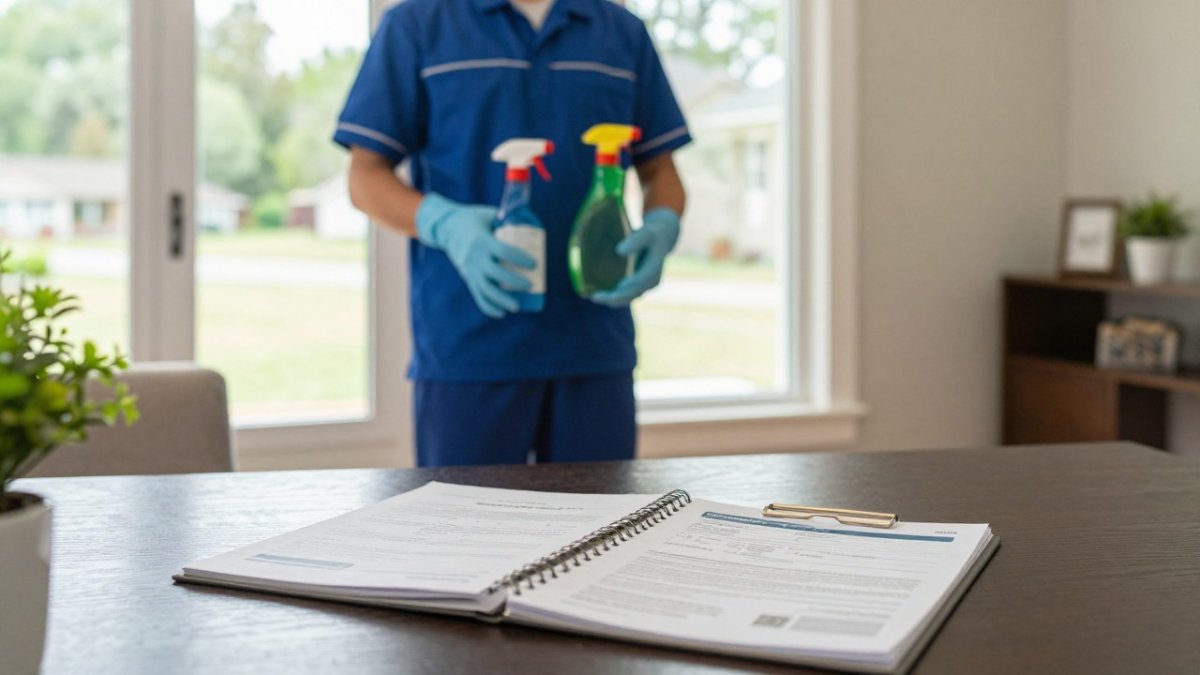
General liability is the core policy for a cleaning business. It responds to claims that your work caused bodily injury or property damage to a client or a third party. Typical scenarios include a client injured by a fall caused by wet floors you left behind, or a damaged wall or furnishing during cleaning.
Pay attention to the policy's limits and deductible. A higher deductible lowers your premium but means you pay more out of pocket on each claim. Confirm whether the policy covers accidental damage to a client's belongings, since some policies exclude certain property categories. Electronics, jewelry, and antiques are common exclusions, so ask for these in writing.
Janitorial Bonds and Employee Theft Protection
Janitorial bonds and crime or employee dishonesty coverage protect clients against theft by your staff. A bond is a three-party arrangement: if an employee steals from a client, the bond compensates the client, and then you must repay the bonding company. Some clients, especially commercial ones, require bonding before awarding work. Residential clients may request it as reassurance when staff have access to homes while the owner is away.
Verify the bond amount required by your largest clients before purchasing, because an insufficient bond can disqualify you from contracts.
The article breaks the core policy types into what each one addresses, which can be scanned at a glance:
| Policy | What it covers | Example from the article |
|---|---|---|
| General liability | Client bodily injury and property damage | Client slips on wet floors left behind |
| Workers' compensation | Medical costs and lost wages for employees hurt on the job | Employee injured on the job |
| Commercial auto | Vehicles used for business | Van or car driven for work |
| Bonding and crime | Theft by employees | Staff theft from clients |
Cleaning Business Insurance Cost: What Affects Your Premium
Premiums vary widely, and any figure quoted without context should be treated with caution. Insurers price policies based on several factors, including your annual revenue, the number of employees, the services you perform, your claims history, the coverage limits you choose, and your deductible.
Premiums depend on factors such as your revenue, staffing, services, and coverage limits, so request a quote from an insurer that specializes in cleaning businesses to see your actual numbers, and compare the coverage included, not just the price.
Lower premiums sometimes reflect narrower coverage. Before choosing the cheapest option, confirm the limits, exclusions, and deductible. A policy that looks inexpensive can leave you exposed to exactly the claims that matter most.
Insurance for Self-Employed House Cleaners
If you operate as a sole proprietor or independent contractor, your insurance needs differ from an employer's. Workers' compensation requirements depend on whether you have employees and how your state defines them, and many solo cleaners do not carry workers' compensation at all. That is a legitimate choice, but it means an injury to you is not covered by a business policy.
Independent contractors who hire subcontractors should also confirm that those subcontractors carry their own liability coverage. Clients may hold you responsible for injuries caused by a subcontractor's work, so collect certificates of insurance from anyone you bring onto a job. This is one of the more commonly overlooked gaps in residential cleaning operations.
Self-employed cleaners who use a personal vehicle for business should check whether their personal auto policy covers business use. Many personal policies exclude commercial activity, which can leave you without coverage after an accident on the way to a job.
Exclusions, Chemical Risks and Certificates of Insurance
Every policy has exclusions, and the fastest way to understand them is to test them against realistic jobs. Coverage depends on policy wording, so the examples below show what to ask about rather than guaranteeing an outcome.
Consider a cleaner who uses a strong alkaline degreaser on a kitchen floor and leaves residue that dulls a natural stone surface. The client may claim the stone needs professional refinishing.
A second scenario: a client's key is lost while the cleaner has it for a scheduled visit, and the client asks for lock replacement. Many general liability policies do not cover lost keys, and some crime or bonding policies require proof of theft rather than loss.
A third scenario involves an employee who slips on a wet bathroom floor in a client home. The injury itself falls under workers' compensation in most cases, not general liability, which is why the two policies must be confirmed together.
Chemical risk deserves its own review. Cleaning products can cause skin or respiratory reactions in clients, employees, or pets, and some can damage natural stone, finished wood, or certain floors.
Certificates of insurance are the document clients use to verify your coverage before signing. A certificate typically lists your insurer, policy numbers, coverage types, limits, and policy periods. Some clients ask to be named as an additional insured, which extends certain coverage to them for claims arising from your work.
Watch out: a certificate shows coverage at issue, so an expired or cancelled policy can leave a client holding an outdated document, and you remain responsible for any gap.
Keep current certificates on file, send updated copies whenever limits or policy periods change, and reread every contract's insurance and indemnity language before you sign.
Choosing Your Next Step: Getting Quotes and Verifying Coverage
Start by listing your services, your employees, your vehicles, and the typical size of the homes you clean. Use that list to request quotes that cover general liability, workers' compensation if applicable, commercial auto if you drive for business, and bonding if clients require it. Compare the coverage limits, exclusions, and deductibles side by side, not just the premium.
Verify each policy before relying on it. Confirm with the insurer that the coverage is active, check the limits in writing, and make sure your certificates of insurance match your current policy. Ask your insurer to walk through a claim scenario relevant to your work so you understand the process before you need it.
If you want to see how a commercial cleaning operation structures its coverage and staffing, Rangel Janitorial provides a free quote for facilities across California, and its team can explain how fully bonded and insured crews are managed. For a day porter or on-site cleaning need, you can request a day porter quote to see how coverage and service scope fit together. Businesses in the Sacramento area can also get a free janitorial quote from a local team that is licensed and insured.
Frequently Asked Questions
What kind of insurance do you need for a cleaning service?
Most residential cleaning businesses start with general liability insurance, which covers client injuries and accidental damage to a client's home or belongings. Many also carry workers' compensation if they have employees, commercial auto coverage if they use business vehicles, and a janitorial bond to protect clients against employee theft. Requirements vary by state and by how the business is structured, so check your state's rules and any contract a client asks you to sign before choosing coverage.
Does cleaning business insurance cover damage to a client's home?
General liability insurance typically covers accidental damage a cleaner causes to a client's property, such as a broken vase or a scratched floor, when the damage results from the cleaner's work. Policies usually exclude intentional damage, normal wear, and losses from pre-existing defects. Read the exclusions in your policy, and document the condition of the home at the start of each job to support any future claim.
What is the difference between cleaning business insurance and a janitorial bond?
Insurance protects your business against third-party claims such as injuries or property damage. A janitorial bond, sometimes called a surety bond, protects your clients against theft or dishonest acts by your employees. The bond is usually purchased by the cleaning business and triggered when a client files a claim, so it is a different tool from general liability coverage and often a requirement in commercial contracts.
Does a residential cleaning business need workers' compensation insurance?
In most states, a business with employees is required to carry workers' compensation insurance, which pays medical costs and lost wages when a worker is injured or becomes ill on the job. Requirements depend on your state and the number of employees you have. Independent contractors generally are not covered, so classify your workers carefully and keep records that support that classification.
How can self-employed house cleaners find affordable insurance?
Start by comparing general liability quotes for your specific services, since coverage needs for a solo cleaner are often narrower than for a larger maid service. Ask whether bundled business owner's policies or online quotes lower the premium, and raise your deductible only if you can afford the out-of-pocket cost. Compare exclusions as well as price, because a cheaper policy that omits client property damage may not meet your clients' requirements.
How much does general liability insurance cost for a cleaning business?
Premiums depend on factors such as annual revenue, the number of employees, the services you offer, your coverage limits, and your claims history, so there is no single price that applies to every cleaner. Pricing is typically set through an insurance quote. Request quotes that use the same coverage limits so you can compare them accurately, and ask each provider which factors drove its price.