 Comparison
Stratus Building Solutions Alternative: 2026 Guide
Table of Contents
- Overview of Stratus Building Solutions Alternatives
- Why Facility Managers Switch From Stratus Building Solutions
- Commercial Cleaning Contract Best Practices When Evaluating Alternatives
- How to Choose a Janitorial Service Provider: Key Evaluation Criteria
- Benefits of Local vs National Cleaning Companies
- Top Stratus Building Solutions Alternatives Compared
- Making the Transition: Exit Strategy and Implementation
- Conclusion
- Frequently Asked Questions
Last Updated: September 3, 2026
Overview of Stratus Building Solutions Alternatives
Facility managers evaluating Stratus Building Solutions alternatives face a critical decision. The commercial cleaning landscape has shifted dramatically, with new providers offering specialized capabilities, electrostatic disinfection, and franchise-backed support. If you're currently with Stratus Building Solutions or considering a switch, understanding what's changed in the market matters.
The challenge isn't finding a cleaning vendor, it's finding one that matches your specific operational needs without disrupting daily operations or inflating your budget. A medical practice has different hygiene requirements than a corporate office. A multi-location property manager needs consistency across buildings that a single-location gym doesn't. The best alternative depends entirely on what you actually need.
At Rangel Janitorial, we've spent over 30 years working with facility managers across California to understand what drives these decisions. When teams switch providers, it's rarely about price alone. It's about reliability, specialized capabilities, and confidence that your facility will be maintained to your standards. This guide walks through the evaluation process, major alternatives, and how to transition with minimal disruption.
Why Facility Managers Switch From Stratus Building Solutions
Facility managers don't leave their current provider on impulse. The decision typically follows a pattern: inconsistent service quality, unmet specialized needs, or communication breakdowns.
Consistency problems emerge gradually. A crew misses a section one week. Equipment damage takes days to address. Staff turnover means different people handling your facility with slightly different standards. Over months, small gaps accumulate into a perception that the vendor no longer meets expectations.
Specialized service gaps become apparent when facility needs evolve. A medical practice discovers that standard cleaning protocols don't match healthcare compliance requirements. A gym realizes routine disinfection isn't sufficient for high-touch equipment. A corporate office expanding to multiple locations discovers that a single-location vendor can't deliver consistent quality across buildings. When your provider can't adapt, friction builds.
Communication breakdowns accelerate the exit. Service issues take days to resolve. Billing questions go unanswered. Requests for customized plans get pushed back. Facility managers increasingly feel like account numbers rather than valued clients.
Contract renewal becomes the natural inflection point for change. The commercial cleaning market has also evolved, new providers now offer real-time facility upkeep, and electrostatic coverage that create measurable operational improvements.
Commercial Cleaning Contract Best Practices When Evaluating Alternatives
Before comparing vendors, establish your evaluation framework. A well-structured commercial cleaning contract best practices approach prevents emotional decisions and ensures you're comparing apples to apples.
Start by documenting your current service gaps. Be specific: "Floor maintenance in the lobby is spotty" or "We need electrostatic disinfection for high-touch surfaces in our medical facility" or "Real-time upkeep means someone responds to spills within 2 hours."
Define your service level requirements in writing. Specify frequency (daily, weekly, monthly), scope (which areas, which surfaces), and standards (what "clean" means for your facility). Include response time requirements for urgent issues.
Evaluate the vendor's operational model. Are they a franchise system (local franchisees handle service, creating potential variability) or a direct-service model (company employs crews directly)? Franchise systems offer established training but depend on individual franchisee quality. Direct-service models provide more control over crew training and consistency.
Assess accountability mechanisms. How does the vendor handle service failures? Is there a performance dashboard or regular reporting? Can you access real-time facility status? Technology-driven accountability separates vendors that stand behind their work from those that simply show up.
Review the contract termination clause carefully. What happens if the relationship doesn't work? Is there an exit pathway without penalty? A 30-day termination option gives you flexibility. A multi-year lock-in with heavy penalties creates risk.
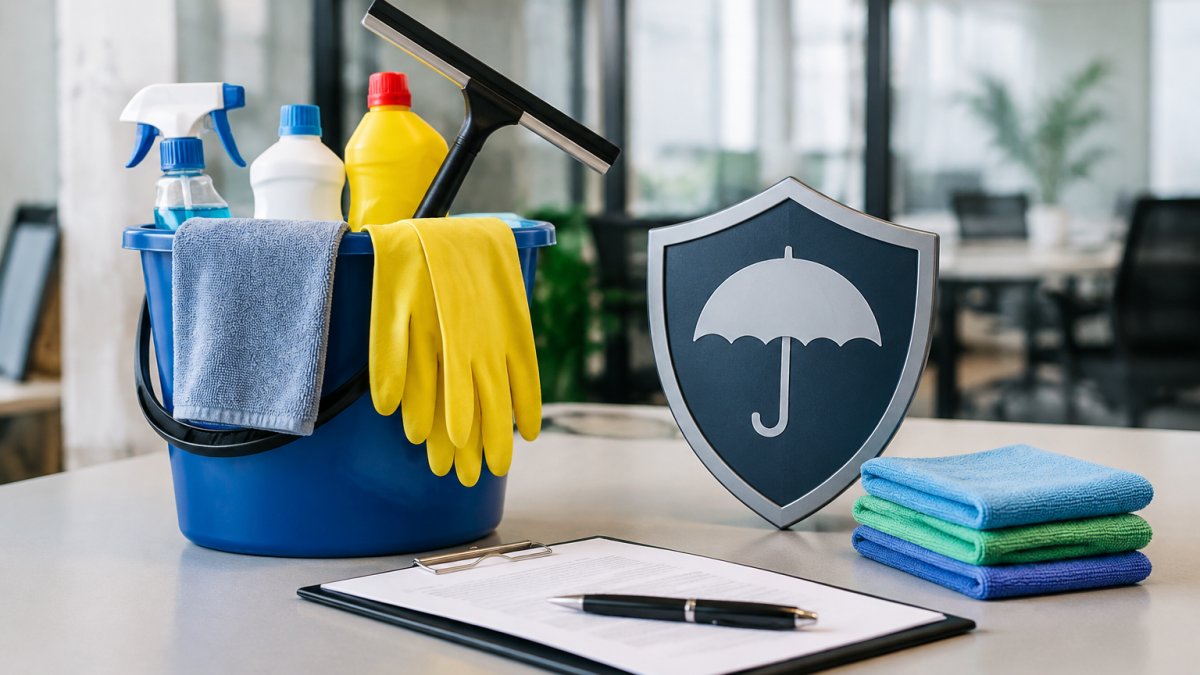
Verify bonding and insurance. The vendor should be fully bonded and insured. Confirm coverage amounts are appropriate for your facility size and risk profile.
How to Choose a Janitorial Service Provider: Key Evaluation Criteria
Selecting the right provider requires evaluating multiple dimensions. How to choose a janitorial service provider involves looking beyond the pitch and examining actual operational capabilities.
Experience and track record matter. How long has the vendor been in business? Do they have references from similar facilities? A provider with 30+ years of experience has weathered economic cycles and staffing challenges. That institutional knowledge translates into reliability.
Crew quality and training determine execution. Are crews fully trained on your facility's specific needs? What's the onboarding process? A well-trained crew will catch problems early and maintain consistent standards.
Specialized capabilities address specific needs. Does the vendor offer electrostatic disinfection? Medical facility compliance expertise? Day porter services? These aren't nice-to-haves if your facility requires them.
Technology and transparency provide visibility. Can you access performance metrics? Is there a communication system for reporting issues? Does the vendor provide regular reporting on service completion and issues identified?
Responsiveness to issues separates reliable vendors from mediocre ones. When something goes wrong, how quickly does the vendor respond? A vendor that responds within 2 hours to urgent issues demonstrates accountability.
Customization capability matters for complex facilities. Can the vendor adapt their service plan to your specific needs? A vendor with rigid, one-size-fits-all approaches will eventually create friction.
Pricing transparency prevents surprises. How is pricing structured? Are there additional charges for specialized services? A vendor that clearly explains pricing and handles scope adjustments without surprise fees builds trust.
Benefits of Local vs National Cleaning Companies
The local-versus-national decision shapes your entire vendor relationship. Benefits of local vs national cleaning companies break down into distinct trade-offs.
Local providers typically offer personalized service and direct accountability. You likely know the owner or operations manager. Issues get escalated directly to decision-makers rather than getting lost in corporate bureaucracy. However, local providers often lack resources for specialization. They may not have electrostatic disinfection. If they lose key staff, there's no backup team.
National providers bring standardized processes, extensive training, and specialized capabilities. They invest in electrostatic disinfection equipment, and compliance expertise. They have the scale to serve multi-location clients consistently. The trade-off is that they can feel impersonal. Service can feel standardized rather than customized.
For facility managers, the optimal choice depends on your situation. A single-location corporate office often benefits from a local provider's personalized attention. A multi-location property manager or large medical facility needs a national provider's consistency and specialization.
Top Stratus Building Solutions Alternatives Compared
Evaluating Stratus Building Solutions alternatives requires looking at specific vendors that address market gaps.
| Provider | Best For | Key Differentiator | Service Model |
|---|---|---|---|
| Rangel Janitorial | Medical facilities, multi-location properties, specialized disinfection | 30+ years, electrostatic disinfection, fully bonded and insured | Direct service, California-based |
| Coverall | Health-conscious facilities, standardized protocols | Science-backed Core 4 Process, 40+ years experience | Franchise network |
| Anago Cleaning Systems | Specialized disinfection, GBAC-accredited facilities | Protection+ Disinfection program, GBAC STAR accreditation | Franchise network |
| Jani-King | Large facilities, national coverage, franchise opportunities | 9,000+ franchisees globally, 50+ years experience | Franchise network |
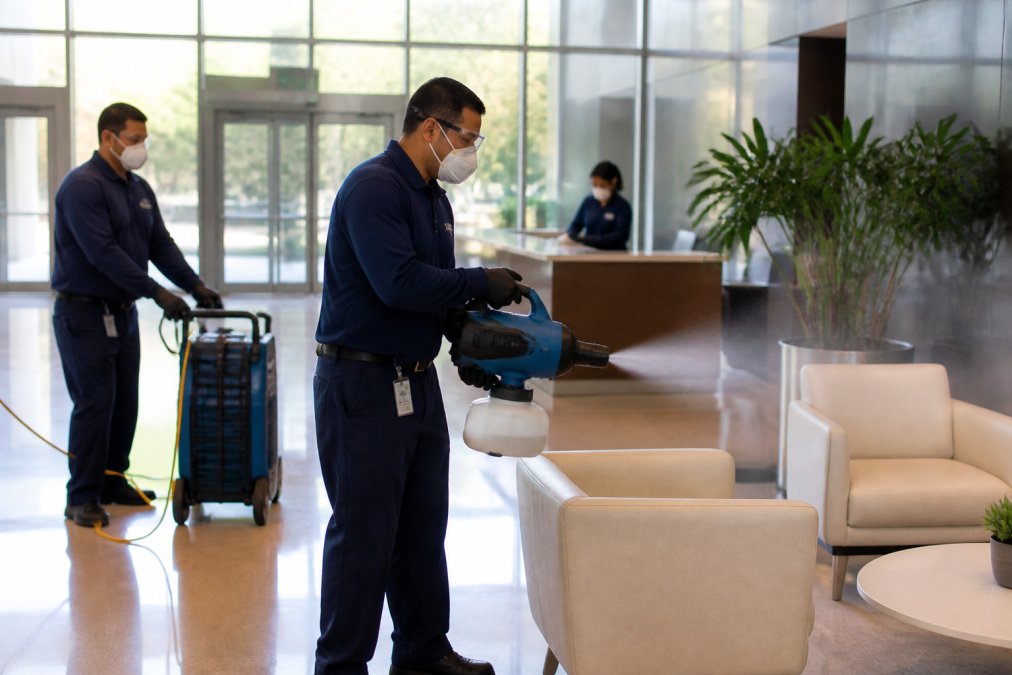
Rangel Janitorial: Specialized Disinfection and Tailored Solutions
Rangel Janitorial has built its reputation on specialized capabilities and direct accountability. Over 30 years of experience cleaning California facilities has taught the team exactly what facility managers need: reliability, specialized expertise, and real-time responsiveness.
The differentiator is electrostatic disinfection. Unlike standard spray or wipe disinfection, electrostatic disinfection delivers 360-degree coverage. The technology charges disinfectant particles, allowing them to wrap around objects and reach crevices that conventional methods miss (the CDC). For medical facilities where compliance matters, this capability changes the operational reality.
Rangel Janitorial operates as a direct-service model, not a franchise system. Crews are Rangel Janitorial employees, fully trained to company standards. There's no franchisee variability. The company is fully bonded and insured with background-checked, trained crews.
Pros:
- Specialized electrostatic disinfection provides compliance assurance for medical facilities
- 30+ years of California market experience
- Direct service model ensures crew consistency and accountability
- Fully bonded and insured with trained, background-checked crews
- Tailored cleaning solutions adapt to your specific facility needs
- Real-time facility upkeep means responsive handling of urgent issues
- Satisfaction guarantee demonstrates confidence in service quality
Cons:
- California-only service area limits options for multi-state facility managers
- Smaller scale than national franchise systems may limit some specialized services
Coverall: Science-Backed Cleaning Protocols
Coverall brings a health-science perspective to commercial cleaning. The company has built its approach around the Core 4 Cleaning Process, based on CDC and AORN (Association of Perioperative Nurses) guidelines (the CDC). The protocols are designed by healthcare professionals to match actual infection-control requirements.
The franchise model means Coverall operates through a network of local business owners trained to Coverall standards. The strength is that you're working with a local operator who understands your market. The limitation is that service quality depends on that individual franchisee's commitment to training and standards.
Over 40 years in the industry gives Coverall deep experience with evolving cleaning standards and regulatory requirements.
Pros:
- Science-backed Core 4 Process based on CDC and AORN guidelines
- 40+ years of industry experience
- Health-focused approach appeals to medical facilities
- Franchise network provides local operator responsiveness
- Customized cleaning programs for different business types
Cons:
- Franchise model means service quality varies by individual franchisee
- Pricing and service consistency not guaranteed across locations
- Smaller franchisees may lack specialized equipment like electrostatic disinfection
Anago Cleaning Systems: Advanced Technology and GBAC Accreditation
Anago Cleaning Systems positions itself at the technology-forward end of the market. The company offers the Protection+ Disinfection program and GBAC STAR Accreditation, which is third-party verification that the facility meets rigorous cleaning and disinfection standards.
GBAC accreditation matters for medical facilities and healthcare offices where regulatory compliance is non-negotiable. It's not Anago's claim, it's independent certification that cleaning protocols meet industry standards. Anago also offers electrostatic disinfection for specialized needs.
Pros:
- GBAC STAR Accreditation provides third-party verification of cleaning standards
- Protection+ Disinfection program is a certified protocol
- Electrostatic disinfection available for specialized needs
- Customized cleaning packages based on specific business requirements
- Advanced cleaning agents and techniques
Cons:
- Franchise model means service delivery depends on individual franchisee quality
- GBAC accreditation is a standard, not a guarantee of superior service
- Pricing and service consistency vary by franchisee
Jani-King: National Scale with Franchise Support
Jani-King is the largest commercial cleaning franchise globally, with over 9,000 franchisees (janiking.com). That scale brings significant advantages for large facility managers or multi-location properties. The company has 50+ years of experience and has invested heavily in franchisee support systems.
However, the franchise model means service quality depends on the individual franchisee. A well-run Jani-King location will deliver excellent service. A poorly-managed location will underperform.
Pros:
- Largest commercial cleaning franchise network globally
- Extensive franchisee support and training systems
- 50+ years of experience and proven business model
- Multi-location coverage across states
- Customized cleaning programs available
Cons:
- Service pricing not publicly available (requires quote)
- Franchise model means local service quality varies by franchisee
- Larger scale can feel impersonal for smaller facilities
- Limited specialization compared to focused providers
Making the Transition: Exit Strategy and Implementation
Switching cleaning vendors requires careful planning. A poorly executed transition creates facility disruption and service gaps. A well-planned transition minimizes risk.
Start by reviewing your current contract. Identify the termination clause, required notice period, and any penalties for early exit. Know your financial exposure before committing to a change.
Develop a transition timeline. Give your current vendor 30-60 days notice to ensure a smooth handoff. Create a detailed facility handoff document that includes your facility's layout, specific cleaning needs, high-priority areas, equipment locations, access procedures, and special instructions.
Schedule an overlap period where both vendors are present. Have the current vendor walk the new vendor through the facility, explaining specific needs and problem areas. A 1-2 week overlap is ideal.
Establish clear performance metrics for the new vendor. Define what success looks like: specific areas serviced, frequency, quality standards, response times. Make these measurable and documented.
Monitor the first month closely. Visit your facility more frequently than normal. Document any service gaps and communicate issues immediately so the new vendor can adjust.
For medical facilities or multi-location properties, consider a phased transition. Switch one location first, validate that the new vendor performs well, then expand to other locations. This reduces risk if the transition reveals problems.
Conclusion
Switching from Stratus Building Solutions requires evaluating what your facility actually needs, not just finding the cheapest alternative. A medical practice needs specialized disinfection and compliance assurance. A multi-location property manager needs consistency across buildings. A gym needs thorough sanitization of high-touch equipment.
Rangel Janitorial brings 30+ years of California market experience, fully bonded and insured professional crews, and specialized electrostatic disinfection that delivers 360-degree coverage. For facility managers in California managing corporate offices, medical facilities, or multi-location properties, the combination of reliability, specialization, and real-time upkeep addresses the exact gaps that drive switches from larger vendors. Get a free quote from Rangel Janitorial and see how tailored cleaning solutions and satisfaction guarantees can transform your facility management approach.
Frequently Asked Questions
Q: What should I look for in a janitorial service contract when switching from Stratus Building Solutions?
A: Focus on three critical elements: service level agreements (SLAs) that specify response times for complaints, detailed scope of work including frequency and specific areas covered, and clear termination clauses with notice periods. Verify the provider is fully bonded and insured, and request references from facilities similar to yours. Ensure the contract includes performance metrics, quality assurance inspections, and a process for addressing missed areas or equipment damage quickly.
Q: How do local janitorial providers compare to national franchises in terms of consistency and accountability?
A: Local providers like Rangel Janitorial offer direct accountability and customized service tailored to your specific facility needs, with decision-makers available immediately. National franchises provide standardized protocols and wider resources but consistency depends on individual franchisees. Local companies often respond faster to complaints and adapt quickly to changes, while franchises bring brand reputation and backup support. For multi-location facilities, local providers can manage customized plans across different buildings without corporate bureaucracy.
Q: What makes electrostatic disinfection better than standard cleaning for medical and gym facilities?
A: Electrostatic disinfection applies a charged mist that clings to all surfaces, including hard-to-reach areas, crevices, and equipment undersides, providing 360-degree coverage. This is especially critical in medical practices where compliance with healthcare facility standards is non-negotiable, and in gyms where high-touch surfaces like equipment and locker rooms harbor pathogens. Standard cleaning misses these areas. The technology ensures consistent disinfectant application and reduces the time needed for thorough coverage, making it more efficient for high-traffic facilities.
Q: How do I verify a cleaning company is truly bonded and insured before signing a contract?
A: Request proof of current bonding and insurance certificates directly from the provider, then contact the bonding company and insurance carrier to verify coverage is active. Ask specifically what the policy covers: general liability, property damage, workers' compensation, and whether the coverage includes damage to your facility's equipment or finishes. Confirm the coverage limits are adequate for your facility size and risk profile. This protects you if equipment is damaged during cleaning or if an employee is injured on your property.