 Comparison
Commercial Cleaning vs Janitorial Services: Key Differences
Last Updated: November 9, 2026
Quick Summary
Janitorial services are the recurring daily upkeep that keeps a facility presentable, while commercial cleaning is the broader category covering that routine work plus deep, specialized, and project-based tasks scheduled around it. Most facilities need both a reliable daily crew and a scheduled deep-cleaning program.
- Janitorial tasks include trash removal, dusting, vacuuming, mopping, restroom cleaning, and wiping high-touch surfaces.
- Commercial cleaning tasks include carpet extraction, floor stripping and waxing, window cleaning, and electrostatic disinfection.
- Match cleaning frequency to traffic and use, giving restrooms and lobbies daily attention and private offices less.
- Pricing depends on square footage, frequency, task complexity, facility type, and labor requirements.
- A service-level agreement should include a written scope, an inspection method, and a stated complaint response time.
Table of Contents
- Commercial Cleaning vs Janitorial Services: A Side-by-Side Comparison
- Janitorial Services Examples: What Daily Upkeep Actually Looks Like
- Commercial Cleaning Tasks: Deep, Specialized, and Project-Based Work
- Building a Janitorial Service Schedule That Matches Your Facility
- What Drives Pricing for Commercial Cleaning Services
- Industry-Specific Requirements: Medical, Industrial, and Fitness Facilities
- Service-Level Agreements and Quality Measurement
- Get a Free Quote from Rangel Janitorial
- Frequently Asked Questions
Commercial Cleaning vs Janitorial Services: A Side-by-Side Comparison
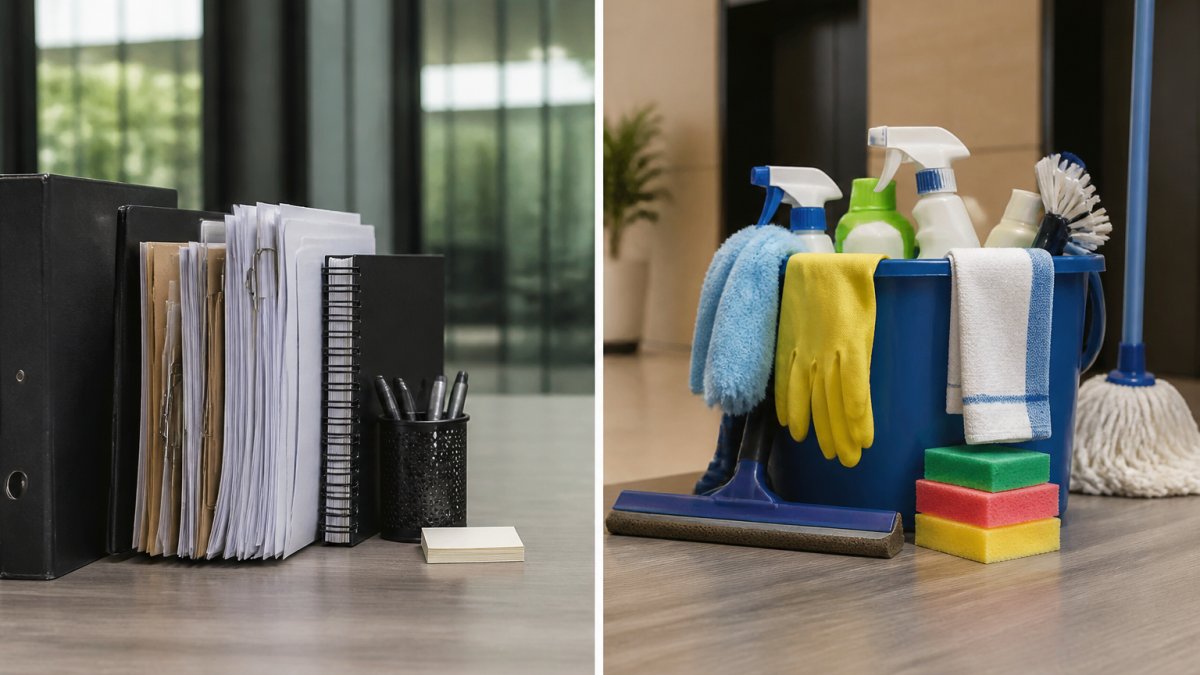
The difference between commercial cleaning and janitorial services comes down to scope and rhythm: janitorial work is the recurring daily upkeep that keeps a facility presentable, while commercial cleaning covers the deeper, specialized, and project-based work scheduled around it. Understanding this distinction is one of the most useful things to do before you sign a contract.
Janitorial services are ongoing, routine cleaning performed on a set schedule: emptying waste bins, dusting, vacuuming, mopping, restroom cleaning, and wiping high-touch surfaces. Commercial cleaning is the broader category that includes janitorial work plus periodic deep cleaning, carpet extraction, floor stripping and waxing, window cleaning, and specialized disinfection.
Confusing the two leads to real problems. Facilities that buy only janitorial coverage wonder why their carpets look gray after a year. Facilities that buy only project cleaning never get their trash emptied on a Tuesday.
| Factor | Janitorial Services | Commercial Cleaning |
|---|---|---|
| Frequency | Daily or several times weekly | Weekly, monthly, quarterly, or one-time |
| Scope | Routine upkeep tasks | Deep, specialized, or project work |
| Typical buyer goal | Day-to-day appearance | Restoring condition and hygiene |
| Staffing | Dedicated recurring crew | Specialized teams or equipment |
| Contract type | Recurring service agreement | Project quote or add-on schedule |
Janitorial Services Examples: What Daily Upkeep Actually Looks Like
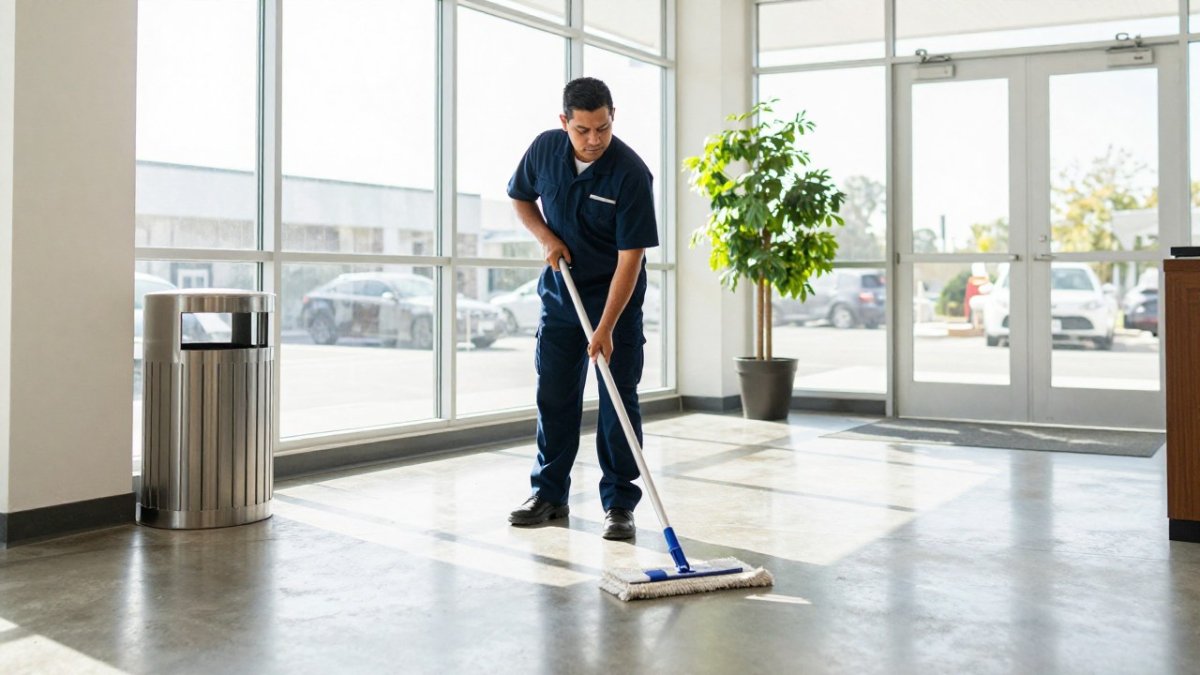
Janitorial services examples are the tasks you'd notice immediately if they stopped: trash removal, emptying waste bins, dusting horizontal surfaces, vacuuming traffic lanes, mopping hard floors, restroom cleaning and restocking, and wiping high-touch surfaces like door handles and light switches.
This is day-to-day upkeep, and it's what keeps a workplace clean enough to walk clients through without apologizing.
A common mistake is treating janitorial work as unskilled labor and writing a vague scope of work. Vague scopes produce vague results. Spell out which rooms, how often, and what "clean" means for each.
- Trash removal and waste bin emptying, all occupied areas
- Dusting desks, ledges, and shared surfaces
- Vacuuming carpet and rugs; mopping hard floors
- Restroom cleaning, disinfection, and supply restocking
- High-touch surface wiping: handles, switches, shared equipment
- Breakroom and kitchenette wipe-down
Commercial Cleaning Tasks: Deep, Specialized, and Project-Based Work
Commercial cleaning tasks go past daily maintenance into work that needs different equipment, training, or timing. Carpet extraction, hard floor stripping and waxing, window cleaning inside and out, cleaning hard-to-reach areas like vents and high ledges, and electrostatic disinfection all fall here.
These jobs are periodic by nature. You don't strip and wax a lobby floor every night, and you don't extract carpet weekly. They're scheduled around your facility's calendar, often during off-hours or seasonal breaks.
Specialized cleaning can protect the asset, not just the appearance. Carpet that is never extracted can wear out faster, and deep cleaning is often treated as facility maintenance rather than a cosmetic expense.
Building a Janitorial Service Schedule That Matches Your Facility
A janitorial service schedule should match cleaning frequency to traffic and use, not to habit. High-traffic areas like lobbies, restrooms, and breakrooms usually need daily attention; private offices and storage areas often need less. Build the schedule from the room list up.
Start with a walkthrough. Note which spaces get foot traffic, which get food and drink, and which sit empty. Then assign each space a frequency tier.
| Space Type | Suggested Frequency | Notes |
|---|---|---|
| Restrooms | Daily, multiple passes | Highest hygiene priority |
| Lobby and entry | Daily | First impression zone |
| Open office and cubicles | Daily or 3x weekly | Vacuum, dust, trash |
| Breakroom | Daily | Food waste and surfaces |
| Private offices | 1-2x weekly | Lower traffic |
| Storage and utility rooms | Weekly or monthly | Low visibility |
| Carpets (extraction) | Quarterly to twice yearly | Periodic deep cleaning |
| Hard floor refinishing | Once or twice yearly | Periodic deep cleaning |
Review the schedule quarterly. A facility that adds headcount or changes layout needs its cleaning plan updated, and a provider that never revisits the schedule is coasting.
What Drives Pricing for Commercial Cleaning Services
Pricing for commercial cleaning services is not a single flat rate. It depends on factors such as square footage, cleaning frequency, task complexity, facility type, and labor requirements. Pricing depends on quantity, dates, and delivery; request a quote from Rangel Janitorial for current pricing.
When comparing bids, ask every provider to itemize tasks, frequency, supplies, and periodic work separately, then compare line by line rather than on the bottom number.
A practical way to compare is to request the same scope template from every bidder, covering the room list, frequency per room, supplies included or excluded, and periodic services priced separately.
Industry-Specific Requirements: Medical, Industrial, and Fitness Facilities
Medical, industrial, fitness, education, and retail facilities need cleaning standards built around their specific risks, not a generic office plan. A dental suite, a warehouse office combo, a gym locker room, and a classroom have almost nothing in common beyond needing to be clean, and the compliance layer is where the differences become contractual rather than cosmetic.
Medical and dental facilities. These spaces require documented infection control, careful disinfection of treatment areas, and staff trained in healthcare cleaning protocols. Relevant guidance for healthcare settings distinguishes cleaning from disinfection and emphasizes high-touch surface frequency. Staff should be trained on bloodborne pathogen precautions where occupational exposure is possible, and on hazard communication for the chemicals they use. For a deeper look at those standards, see our guide to medical facility cleaning standards.
Industrial and warehouse facilities. Industrial parks and warehouse-office combinations need tailored plans that separate heavy-duty floor care from office upkeep. Shop floors, break areas, and locker rooms carry different soils than carpeted offices, and dust control matters where combustible dust or sensitive equipment is present. Floor condition is a safety issue as well as an appearance one, so floor care schedules should account for slip and trip hazards.
Fitness centers. Gyms face the opposite problem from offices: high-traffic areas, sweaty equipment, and locker rooms that need serious sanitizing. Shared equipment, mats, and locker room floors are high-touch, high-moisture surfaces where disinfectant contact time matters more than scrubbing effort. Our fitness center cleaning guide covers equipment sanitization and locker room care in detail.
Education and childcare. Classrooms, cafeterias, and restrooms combine high occupancy with young populations, so surface disinfection frequency and restroom restocking are typically the controlling tasks. Many districts and centers specify cleaning products and require documentation of daily restroom and cafeteria cleaning.
Retail and hospitality. Customer-facing floors, restrooms, and entry glass drive first impressions, while back-of-house areas carry food, packaging, and trash loads. Frequency usually follows traffic, and periodic floor care is scheduled around store hours or seasonal resets.
Electrostatic disinfection is a supplement to cleaning, not a substitute for removing soil first. Routine disinfection of high-touch surfaces can be paired with periodic electrostatic treatment during high-occupancy periods.
Across these settings, buyers often ask for task checklists, product safety data sheets, and training records as part of compliance.
Service-Level Agreements and Quality Measurement
A service-level agreement turns "clean" into something measurable: which tasks, how often, to what standard, and what happens when a task is missed. Without an SLA, quality disputes become a matter of opinion, and the provider's opinion usually wins.
Build in three things. First, a written scope of work listing every task and frequency. Second, an inspection method, whether that's a signed checklist per visit or a monthly walkthrough with your facility manager. Third, a response time for complaints, stated in hours rather than "as soon as possible."
Accountability also depends on staffing. Ask how crews are trained, whether the same team services your building each visit, and who your point of contact is. A provider that rotates strangers through your facility every week can't deliver consistent quality, no matter what the contract says.
If you're comparing providers right now, our guide on how to choose the right commercial cleaning company covers insurance, references, and red flags worth checking before you sign.
Get a Free Quote from Rangel Janitorial
The distinction between commercial cleaning and janitorial services matters most when you're ready to act on it. Most facilities need both: a reliable daily crew and a scheduled deep-cleaning program, managed by one accountable provider.
That's what we do. Rangel Janitorial brings more than 30 years of experience, fully bonded and insured crews, and a satisfaction guarantee to corporate offices, medical facilities, and industrial parks. We provide tailored cleaning plans, our electrostatic disinfection offers 360-degree coverage, and we aim to deliver consistent quality across multiple properties. You can see the full range of what we offer on our services page, or read more about commercial cleaning in Murrieta and the Inland Empire if that's your area.
Contact Rangel Janitorial for a free quote and to discuss a cleaning plan that covers both daily and periodic work.
If your current provider treats daily upkeep and deep cleaning as an afterthought, we can help you build a plan that handles both. Rangel Janitorial offers tailored cleaning solutions, real-time facility upkeep, and electrostatic disinfection with 360-degree coverage, backed by trained professional crews and a satisfaction guarantee. Get started with Rangel Janitorial and get a facility plan that holds up visit after visit.
Frequently Asked Questions
Is janitorial the same as commercial cleaning?
No. Janitorial services cover recurring day-to-day upkeep like trash removal, vacuuming, restroom cleaning, and dusting. Commercial cleaning is broader and includes those routine tasks plus periodic deep cleaning, carpet extraction, window washing, and specialized disinfection. Many providers offer both under one contract, but the scope, schedule, and pricing differ. Knowing which service you need helps you compare quotes accurately and avoid paying for deep work you do not need every week.
What tasks are included in janitorial services?
Typical janitorial services examples include emptying waste bins, dusting horizontal surfaces, vacuuming and mopping floors, cleaning and restocking restrooms, wiping high-touch surfaces, and spot-cleaning glass. These tasks follow a recurring schedule, often nightly or several times per week, and focus on maintaining workplace cleanliness and facility appearance. Deep carpet extraction, hard-to-reach area cleaning, and specialized sanitizing usually fall outside standard janitorial scope and are priced separately.
How often should a business schedule janitorial services?
Frequency depends on traffic and facility type. A Class A office with moderate foot traffic often needs janitorial service three to five nights per week, while a medical or fitness facility with high-touch surfaces may require daily attention. High-traffic areas like lobbies and restrooms may need mid-day upkeep in addition to nightly cleaning. Build your janitorial service schedule around occupancy patterns, then add periodic deep cleaning quarterly or semi-annually to address buildup routine work cannot handle.
Can one cleaning company provide both janitorial and commercial cleaning?
Yes. Many full-service providers bundle routine janitorial maintenance with periodic commercial cleaning tasks such as carpet extraction, floor stripping and waxing, and electrostatic disinfection. Bundling can simplify vendor management. Ask for a scope of work that separates recurring tasks from project-based work so you can see exactly what is covered each visit and what is billed separately. Confirm the provider is bonded and insured before signing.
What does commercial cleaning typically include beyond routine janitorial work?
Commercial cleaning tasks go beyond daily maintenance to include deep cleaning of carpets and upholstery, hard floor care like stripping and waxing, window and high-reach cleaning, and specialized disinfection such as electrostatic spraying for 360-degree coverage. These services are scheduled periodically rather than nightly and often require specialized equipment and trained crews. They address buildup, pathogens, and areas routine janitorial work does not reach, which matters most in medical, fitness, and high-traffic commercial facilities.