 Ultimate guide
Standard Commercial Cleaning Services: What's Included
Table of Contents
- What Standard Commercial Cleaning Services Include
- Office Cleaning Checklist for Janitors
- Deep Cleaning vs. Standard Janitorial Services
- Commercial Cleaning Scope of Work Template
- Janitorial Service Pricing Models
- Quality Assurance and Compliance Standards
- Specialized Services: Medical Facilities and High-Traffic Areas
- Selecting the Right Commercial Cleaning Partner
- Frequently Asked Questions
Last Updated: September 25, 2026
What Standard Commercial Cleaning Services Include
Professional commercial cleaning services form the backbone of facility maintenance across corporate offices, medical practices, and industrial spaces. Understanding what is included in standard commercial cleaning services helps facility managers make informed decisions about their cleaning contracts and ensures their buildings meet professional standards.
At Rangel Janitorial, we've spent over 30 years defining what truly constitutes comprehensive commercial cleaning. The scope of work varies by facility type and contract terms, but standard services typically encompass daily tasks, weekly deep work, and specialized treatments designed to maintain a professional environment.
Daily Cleaning Tasks
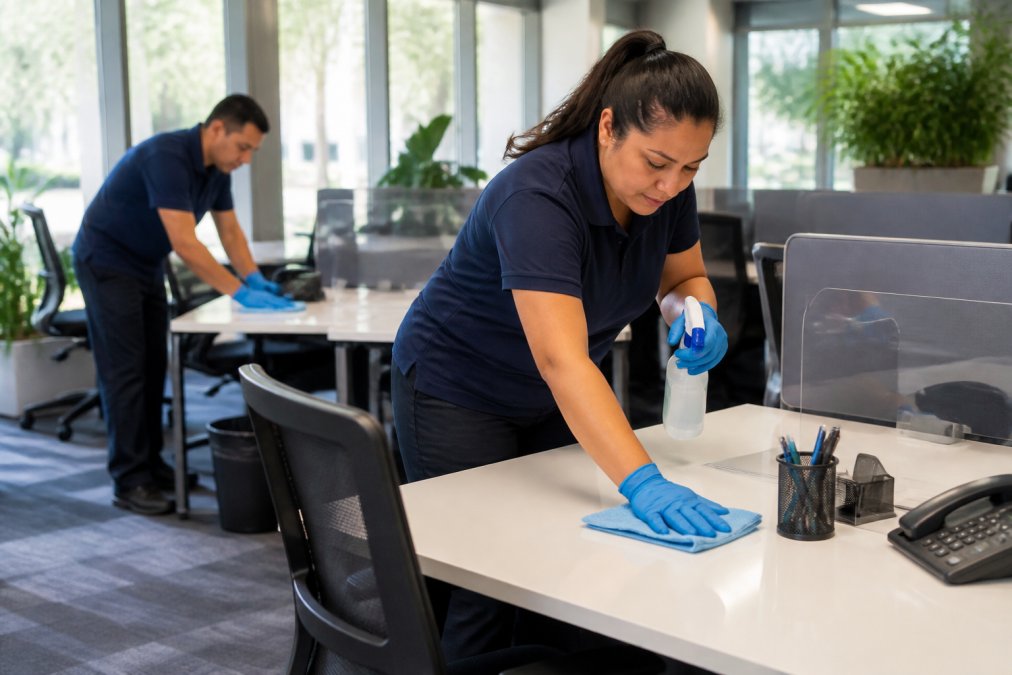
Daily janitorial work forms the operational foundation of any commercial cleaning program. These recurring tasks keep facilities functional and presentable between deeper cleaning cycles.
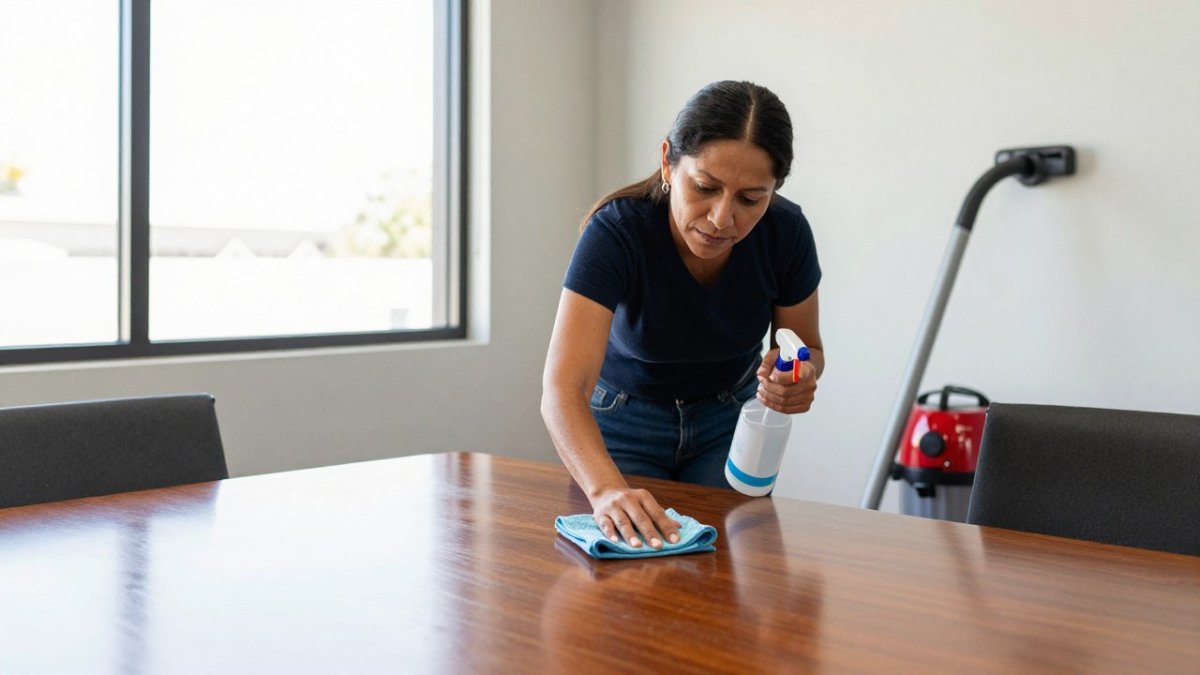
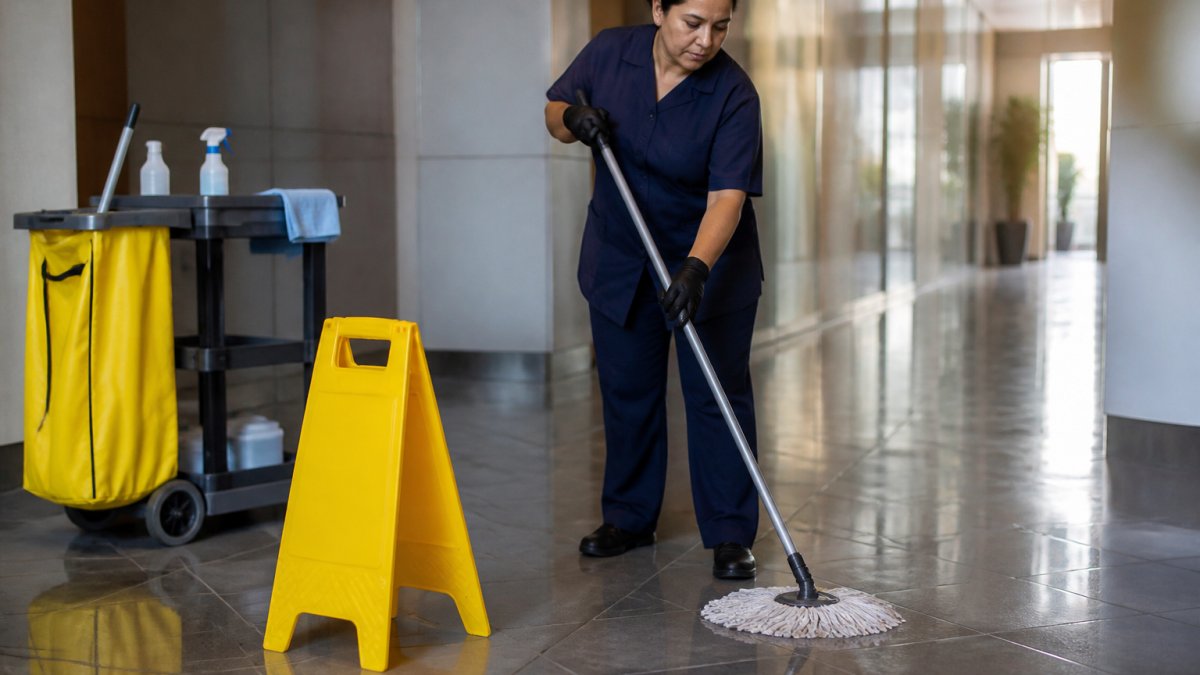
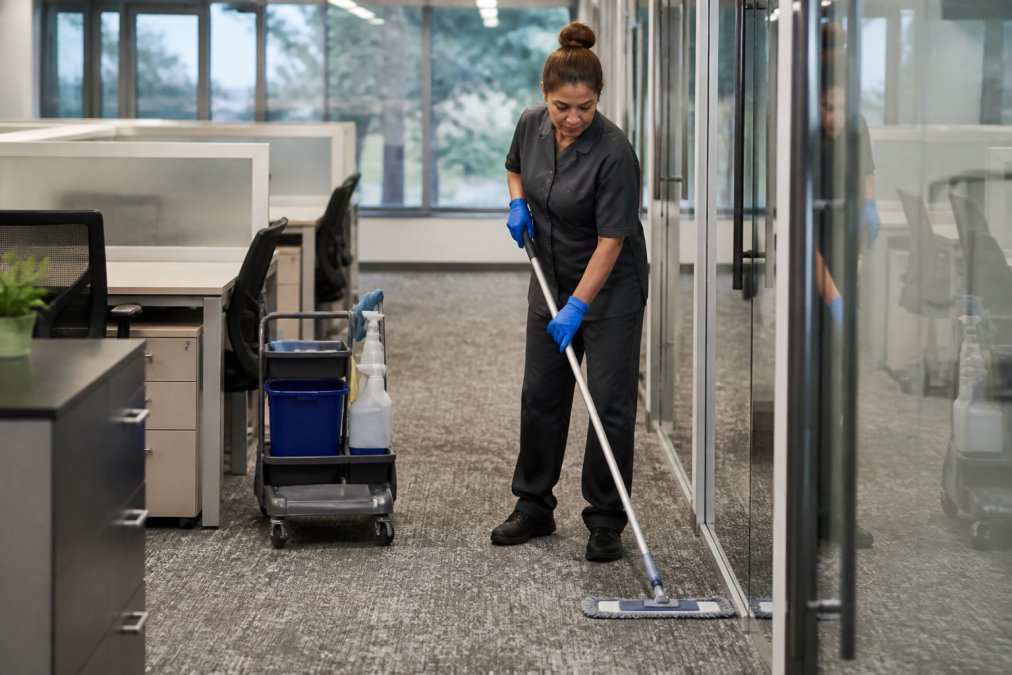
Standard daily services include vacuuming all carpeted areas, mopping hard floors, and emptying trash receptacles. Restroom sanitation is critical, this involves cleaning and disinfecting toilets, sinks, urinals, and stall partitions. Replenishing consumables like paper towels, toilet paper, and soap dispenser refills ensures facilities remain operational.
High-touch surface disinfection has become essential in modern facilities. Door handles, light switches, handrails, and elevator buttons receive regular attention during daily cleaning. Many facilities now require electrostatic disinfection technology, which provides 360-degree coverage.
Dusting desks, shelving, and horizontal surfaces prevents dust accumulation that affects both appearance and air quality. Spot-cleaning spills and minor stains throughout the day prevents permanent damage to carpets and upholstery.
Weekly and Monthly Services
Beyond daily maintenance, commercial cleaning services incorporate deeper work on scheduled intervals. Weekly tasks typically include detailed floor care, carpet shampooing in high-traffic areas, and cleaning baseboards and wall surfaces.
Monthly deep cleaning targets areas that don't require daily attention. This includes cleaning light fixtures, air vents, ceiling tiles, and interior window sills. Carpet extraction removes embedded dirt and allergens. Wall cleaning addresses scuffs and marks that accumulate over time.
Office Cleaning Checklist for Janitors
A comprehensive office cleaning checklist ensures consistent standards across all areas and shifts. This becomes especially important for multi-location facilities where different crews work different properties.
The checklist should specify frequency for each task, daily, weekly, monthly, or quarterly. Common daily items include trash removal, restroom sanitation, floor sweeping and mopping, and dusting. Weekly items typically encompass detailed floor care and high-touch surface disinfection.
Monthly tasks address deeper maintenance: carpet extraction, light fixture cleaning, baseboards, and wall spot-cleaning. Quarterly or semi-annual tasks include HVAC vent cleaning and deep window washing.
| Task | Frequency | Area | Standard |
|---|---|---|---|
| Trash removal | Daily | All areas | Empty and replace liners |
| Restroom sanitation | Daily | Bathrooms | Disinfect all surfaces |
| Floor mopping | Daily | Hard floors | Streak-free finish |
| Vacuuming | Daily | Carpeted areas | Remove visible debris |
| High-touch disinfection | Daily | Door handles, switches | Electrostatic or spray |
| Window cleaning | Weekly | Interior/exterior | Streak-free glass |
| Carpet shampooing | Weekly | High-traffic areas | Deep soil removal |
| Baseboards | Monthly | All areas | Dust and spot-clean |
| Light fixture cleaning | Monthly | All areas | Remove dust and debris |
| Carpet extraction | Monthly | All carpeted areas | Professional equipment |
| Floor stripping/waxing | Quarterly | Hard floors | Restore protective coating |
Deep Cleaning vs. Standard Janitorial Services
The distinction between standard janitorial services and deep cleaning is fundamental to facility maintenance planning. Standard services maintain baseline cleanliness and functionality on a recurring schedule. Deep cleaning addresses accumulated dirt, allergens, and pathogens that regular maintenance cannot reach.
Standard janitorial work focuses on visible surfaces and high-traffic areas using routine methods. Daily vacuuming, mopping, and restroom cleaning fall into this category. These services prevent immediate deterioration and maintain professional appearance.
Deep cleaning involves specialized equipment and techniques targeting areas neglected during routine maintenance. Carpet extraction pulls embedded soil and allergens from carpet fibers. Electrostatic disinfection applies antimicrobial solution in a 360-degree mist, reaching surfaces that traditional spraying cannot.
Medical facilities and high-traffic gyms require more frequent deep cleaning than typical offices. The concentration of pathogens in healthcare settings and the high-touch nature of fitness equipment demand specialized protocols that go beyond standard janitorial work.
Commercial Cleaning Scope of Work Template
A clearly defined scope of work prevents misunderstandings between facility managers and cleaning providers. This document specifies exactly what services are included, their frequency, and performance standards.
Defining Service Frequency and Coverage Areas
The scope of work should identify all areas to be cleaned and the frequency for each. Some facilities require daily service in all areas, while others designate certain spaces for weekly or monthly attention only.
Coverage areas typically include lobbies, common areas, offices, conference rooms, restrooms, break rooms, and mechanical spaces. Each area should have specific tasks listed with frequency. For example: "Conference rooms, daily vacuuming and dusting, weekly window cleaning, monthly carpet extraction."
Frequency decisions depend on facility type and traffic volume. Corporate offices with moderate traffic typically use a daily standard cleaning model with weekly deep work. Medical facilities require daily disinfection of all areas due to infection control standards. Industrial facilities may need specialized protocols for equipment areas and warehouse spaces.
Standard vs. Specialized Service Scope
Standard commercial cleaning services address routine maintenance across general-purpose facilities. Specialized services target specific facility types with unique requirements.
Standard scope typically includes trash removal, restroom sanitation, floor care, dusting, and basic disinfection. These services work for most office environments and general commercial spaces.
Specialized services become necessary for medical facilities, laboratories, food service areas, and manufacturing environments. Medical facilities require higher-standard disinfection protocols, compliance with healthcare facility standards, and documentation of infection control procedures. Food service areas require grease removal and deep sanitation protocols. Manufacturing facilities need dust control and equipment-specific cleaning procedures.
Rangel Janitorial's experience across medical facilities and industrial parks has demonstrated that specialized scope of work prevents compliance violations and operational disruptions. A medical facility using standard office cleaning protocols risks regulatory citations.
Janitorial Service Pricing Models
Understanding commercial cleaning pricing models helps facility managers budget accurately and compare service providers fairly. Pricing approaches vary significantly based on facility size, service frequency, and specialization requirements.
Most providers use square footage as the primary pricing metric.
Frequency affects pricing substantially. Daily cleaning costs more than twice-weekly service. Adding specialized services, electrostatic disinfection, carpet extraction, or medical-grade sanitization, increases costs proportionally.
Service level agreements often include pricing tiers.
Geographic location influences pricing.
Quality Assurance and Compliance Standards
Professional commercial cleaning services must meet established quality and compliance standards. These standards vary by facility type and regulatory environment.
General office facilities typically follow industry best practices for cleanliness and sanitation. Professional cleaning standards define acceptable levels for dust, debris, and visible soil. Many providers use inspection checklists aligned with industry standards to ensure consistency.
Medical facilities operate under stricter compliance requirements. The Centers for Disease Control and Prevention provides guidance on healthcare facility disinfection. Providers serving medical facilities must demonstrate knowledge of these regulations and maintain documentation of disinfection protocols.
OSHA standards address workplace safety for cleaning staff, including proper handling of chemical cleaners and personal protective equipment requirements.
Green cleaning standards have emerged as facilities prioritize environmental responsibility. These standards address chemical safety, waste reduction, and sustainable practices.
Quality assurance systems track cleaning performance over time. Real-time inspection reporting allows facility managers to verify work completion and identify issues quickly. Before-and-after documentation provides evidence of service delivery.
Specialized Services: Medical Facilities and High-Traffic Areas
Certain facility types require specialized commercial cleaning services beyond standard janitorial work. Medical facilities, dental offices, and high-traffic fitness centers demand elevated sanitization protocols.
Medical facilities require infection control protocols that address pathogen transmission.
Selecting the Right Commercial Cleaning Partner
Choosing a commercial cleaning provider requires evaluating multiple factors beyond price. The provider's experience, reliability, and service quality directly impact facility appearance and operational efficiency.
Frequently Asked Questions
What specific tasks are included in standard commercial cleaning services?
Standard commercial cleaning services typically include vacuuming and mopping floors, dusting surfaces and furniture, emptying trash receptacles, restroom sanitation and disinfection, and wiping down high-touch surfaces like doorknobs and light switches. Daily tasks focus on maintaining cleanliness and hygiene, while weekly or monthly services may include carpet extraction. The exact scope depends on your facility's size, traffic level, and industry requirements.
How does standard janitorial service differ from deep cleaning?
Standard janitorial services maintain ongoing cleanliness through daily or weekly routines, covering routine dusting, vacuuming, mopping, and trash removal. Deep cleaning is a specialized, intensive service performed less frequently (quarterly or annually) that targets areas not covered in routine maintenance, such as carpet extraction, equipment sanitization, and hard-to-reach surfaces. Deep cleaning often requires commercial-grade equipment and extended time, making it more costly but essential for facility hygiene standards.
What should I include in a commercial cleaning scope of work template?
A scope of work template should specify daily, weekly, and monthly tasks; frequency and scheduling; areas to be cleaned; special requirements (restroom sanitation, window washing, floor care); response time for complaints; and any specialized services like electrostatic disinfection. Include details on bonding and insurance requirements and how customizations will be handled for multi-location facilities. A clear template prevents misunderstandings and ensures consistent quality across all properties.
What factors affect janitorial service pricing models?
Janitorial pricing depends on square footage, service frequency (daily, weekly, or monthly), facility type (office, medical, industrial), traffic level, and specialized requirements like electrostatic disinfection or green cleaning. Most providers use square-footage-based pricing. Request detailed quotes that break down labor, supplies, and specialized services to compare value accurately.
Maintaining a spotless facility requires partnering with a commercial cleaning provider that understands your specific needs. Rangel Janitorial's 30+ years of experience, fully bonded and insured professional crews, and specialized electrostatic disinfection technology ensure your facility receives consistent, high-quality care. Contact us today for a free quote and discover how tailored cleaning solutions can transform your facility.