 Comparison
ServiceMaster vs Aria Cleaning Services: 2026 Comparison
Table of Contents
- ServiceMaster vs Aria Cleaning Services: A Side-by-Side Comparison
- Commercial Cleaning Service Pricing Models Explained
- The Benefits of Local Janitorial Services for Multi-Location Facilities
- Janitorial Service Contract Checklist: What to Verify Before You Sign
- Specialized Disinfection and Floor Care Capabilities
- Service Level Agreements and Quality Assurance
- Cost-Benefit Analysis: Small vs. Large Facilities
- Which Provider Fits Your Facility?
- Frequently Asked Questions
Last Updated: September 20, 2026
ServiceMaster vs Aria Cleaning Services: A Side-by-Side Comparison
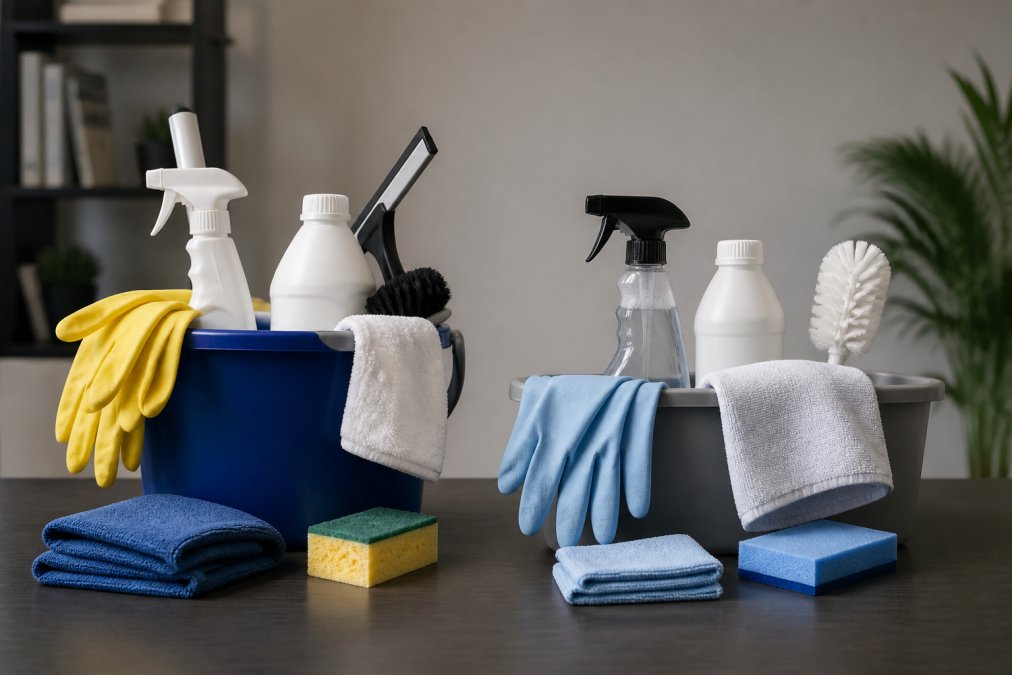
Choosing between ServiceMaster and Aria Cleaning Services comes down to a single question: do you want a national franchise network or a regional specialist? ServiceMaster vs Aria Cleaning services is really a comparison of scale versus focus, and the right answer depends on your facility's size, locations, and hygiene requirements.

How the Two Models Differ
ServiceMaster operates as a franchise network, which means your experience depends heavily on your local franchise owner. The upside is national account support and consistent brand standards. The downside is that quality can vary from market to market.
| Factor | ServiceMaster | Aria Cleaning Services |
|---|---|---|
| Model | National franchise network | Regional specialist |
| Geographic reach | Broad, multi-state | Limited footprint |
| Floor care | General janitorial | Specialized strip and wax |
| Communication | Franchise-dependent | Direct, owner-led |
| Best for | Multi-state portfolios | Single-site, floor-focused needs |
Commercial Cleaning Service Pricing Models Explained
Commercial cleaning pricing is not a single rate. It is a bundle of decisions, and the model a provider uses tells you where their margin lives. Most contracts fall into one of four structures, and each one shifts risk between you and the provider.
| Pricing Model | How It Works | Best Fit | Watch For |
|---|---|---|---|
| Per square foot | Flat rate multiplied by cleanable square footage, billed monthly | Open-plan offices, retail floors, warehouses | Rate quoted on gross square footage instead of cleanable area |
| Flat monthly fee | One all-inclusive number for a defined scope and frequency | Facilities with stable, predictable traffic | Scope creep when your layout or headcount changes |
| Hourly / time-and-materials | You pay for labor hours plus supplies | Irregular needs, one-time deep cleans, post-construction | No cap on hours means no cap on your invoice |
| Per-task or per-job | Priced by task (strip and wax, carpet extraction, disinfection) | Floor programs and specialty work | Bundled into a monthly rate where the task cost is invisible |
What Actually Drives Your Quote
Every provider builds a quote from the same inputs. Knowing them lets you compare apples to apples instead of two numbers that look similar.
- Cleanable square footage vs. gross square footage. Storage rooms, server closets, and mechanical spaces are not cleaned the same way as open floor. A provider quoting on gross footage is padding the number.
- Production rate. This is the square footage one worker can clean per hour at a given quality standard. Restrooms, kitchens, and medical exam rooms have far lower production rates than open offices, which is why a 20,000-square-foot medical suite can cost more than a 40,000-square-foot warehouse.
- Frequency and service window. Five-night-per-week service costs more than three-night, and daytime service costs more than after-hours because it competes with your operations.
- Restroom count and fixture count. Restrooms are the single largest labor driver in most janitorial scopes. Two facilities of equal size can differ by thousands per month based on restroom density.
- Specialty scope. Floor stripping and waxing, carpet extraction, high-dusting, and electrostatic disinfection are priced separately because they require different equipment and training.
- Supply responsibility. If the provider supplies paper, soap, and liners, that cost is in the rate. If you supply them, your rate should drop.
Franchise vs. Regional Pricing Structures
Franchise networks and regional providers build their rates from different cost stacks, and that difference shows up in how they quote.
Bureau of Labor Statistics janitorial services wage data
The Benefits of Local Janitorial Services for Multi-Location Facilities
The benefits of local janitorial services show up most clearly when you manage several buildings in the same region. A regional provider can route crews efficiently, respond to site issues the same day, and keep one account manager across all your properties.
Janitorial Service Contract Checklist: What to Verify Before You Sign
A janitorial service contract should spell out scope, frequency, response times, and termination terms in writing. Verbal promises about "extra attention" mean nothing when a complaint goes unanswered for a week.
Use this checklist before signing with any provider:
- Itemized scope of work, task by task, by area
- Cleaning frequency and exact service windows
- Named account manager and escalation contact
- Complaint response time in writing, not "as soon as possible"
- Insurance certificates and bonding documentation on file
- Background check policy for assigned crew members
- Supply and equipment responsibility (yours or theirs)
- Termination notice period and transition terms
- Quality inspection schedule and reporting format
Insurance, Bonding, and Compliance Documentation
Verify insurance and bonding directly with the provider's certificate of insurance, not a verbal assurance. Ask for the certificate holder to list your company, and confirm the policy is current before crews arrive.
Specialized Disinfection and Floor Care Capabilities
Disinfection and floor care separate the generalists from the specialists. Standard janitorial covers trash, vacuuming, and restrooms. Electrostatic disinfection and strip-and-wax floor programs sit in a different tier of capability.
Service Level Agreements and Quality Assurance
A service level agreement is a written contract section that defines measurable performance standards, response times, and remedies when standards aren't met. Without one, quality disputes become a matter of opinion.
| SLA Element | Weak Version | Strong Version |
|---|---|---|
| Quality standard | "Professional clean" | Inspection score of 90+ monthly |
| Complaint response | "Promptly" | Within 24 hours, in writing |
| Re-clean policy | Not mentioned | Free re-clean within 48 hours |
| Reporting | On request | Monthly report with photos |
| Escalation | Single contact | Named manager plus owner contact |
Cost-Benefit Analysis: Small vs. Large Facilities
Small facilities under roughly 10,000 square feet usually get better value from a local provider. The scope is simple, the crew is small, and a regional team can quote competitively without franchise overhead.
Which Provider Fits Your Facility?
Most comparison articles end with a vague recommendation. This one ends with a decision matrix. Use the rows below to match your situation to the provider model that fits it, then verify the match against the contract checklist above before you sign anything.
| Your Situation | Better Fit | Why |
|---|---|---|
| Facilities in three or more states | National franchise network | Account consolidation, standardized reporting, one point of contact across markets |
| Single site under 10,000 sq ft | Regional provider | Lower overhead, faster response, competitive rate on a simple scope |
| Heavy floor care (strip and wax, corridors, lobbies) | Regional specialist | Dedicated floor crews and equipment, not a generalist add-on |
| Medical, dental, or clinical suites | Provider with documented disinfection protocols | Training records, electrostatic capability, and compliance paperwork on request |
| Multi-building portfolio inside one metro | Regional provider with multi-site experience | Same account manager across properties, consistent quality standard |
| Post-construction or one-time deep clean | Either, priced per job | Compare per-task quotes, not monthly rates |
| Facility with strict after-hours security requirements | Provider with established overnight crews | Badging, background checks, and security coordination already in place |
How to Run the Comparison Yourself
A side-by-side comparison only works if you force both providers to answer the same questions in writing. Send the same request to each and score the responses.
- Request an itemized scope. Task by task, area by area. If one provider will not itemize, that is your answer.
- Ask for the production rate assumption. How many square feet per hour are they budgeting? A rate that assumes an unrealistic production rate will fail in month two.
- Request a sample quality inspection report. This shows you what documentation looks like before you are locked in.
- Confirm insurance and bonding in writing. Certificate of insurance with your company listed as certificate holder, current policy dates.
- Ask what happens when a complaint comes in. The answer should be a number of hours, not an adjective.
The Decision Rule
If your facilities span multiple states and you need one consolidated account, the franchise model earns its overhead. If your facilities sit inside one region and you need responsiveness, floor care depth, and a single accountable contact, a regional provider will usually outperform on both quality and cost.
Frequently Asked Questions
What are the primary differences between national franchises and local cleaning services?
National franchises like ServiceMaster operate through independently owned locations, so quality can vary by owner. Local providers often deliver more consistent communication and tailored plans because decisions are made closer to the facility. A commercial cleaning comparison should weigh standardization against flexibility. Local teams may also respond faster to site-specific issues and offer customized cleaning plans without corporate approval delays.
How do commercial cleaning companies determine their pricing structures?
Most commercial cleaning service pricing models are based on square footage, frequency of service, facility type, and special requirements like electrostatic disinfection or post-construction cleanup. Franchises may add royalty fees into their quotes. Local providers often price per job or per square foot with more flexibility. Always request a free estimate and ask what is included versus billed separately, such as floor care or window washing.
What should be on a janitorial service contract checklist?
A janitorial service contract checklist should include scope of work, service frequency, quality control procedures, insurance and bonding verification, termination terms, and a service level agreement with response times. Confirm whether deep cleaning, carpet cleaning, and high-touch surface disinfection are included. Also verify compliance reporting for medical facilities and whether the provider carries workers compensation and general liability coverage.
How does bonded and insured status protect my business?
Bonded and insured status means the cleaning company carries a surety bond and liability insurance. If a crew member damages property or theft occurs, the bond covers your loss. Insurance covers accidents on your premises. Always ask for a certificate of insurance and verify the bond is current. This is a standard item on any janitorial service contract checklist and protects both your facility and your liability exposure.
Does ServiceMaster offer specialized disinfection services for medical facilities?
ServiceMaster Clean locations may offer disinfection services, but availability depends on the individual franchise owner. Medical and dental facilities need documented sanitization protocols and compliance reporting. Some local providers specialize in electrostatic disinfection that delivers 360-degree coverage, which is better suited for high-traffic clinical spaces. Ask any provider for written protocols and proof of training before signing a contract.