 Ultimate guide
Professional Electrostatic Disinfection Services: 2026 Guide
Table of Contents
- What Is Professional Electrostatic Disinfection?
- How Electrostatic Disinfection Works
- Benefits of Electrostatic Spraying for Offices and Commercial Facilities
- Industries and Facilities That Benefit Most
- How to Prepare Your Facility for Electrostatic Disinfection
- Electrostatic Disinfection Cost Factors and ROI
- Choosing the Right Professional Electrostatic Disinfection Service
- Frequently Asked Questions
Last Updated: August 31, 2026
What Is Professional Electrostatic Disinfection?
Professional electrostatic disinfection uses positively charged particles to coat surfaces with hospital-grade disinfectants, ensuring comprehensive coverage even in hard-to-reach areas. Unlike traditional spray or wipe methods, charged particles are naturally attracted to surfaces, including vertical walls, underneath furniture, and shadowed corners, delivering 360-degree coverage that conventional spraying cannot achieve.
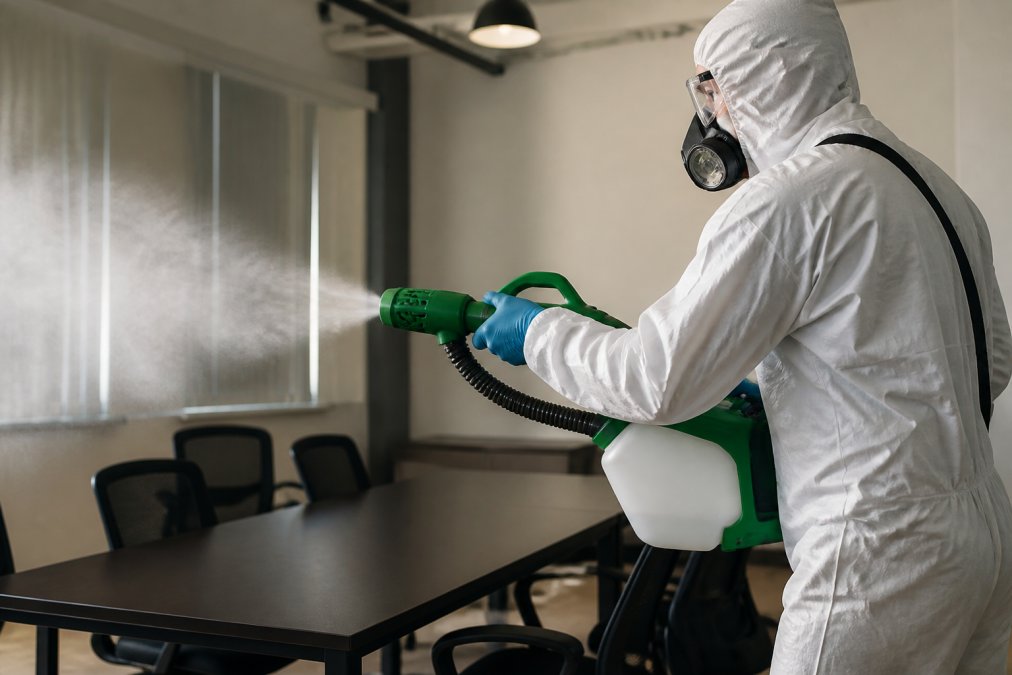
A handheld or backpack electrostatic sprayer atomizes the disinfectant solution into ultra-fine particles (typically 30-60 microns) and charges them electrostatically. These particles wrap around surfaces, adhering to areas that would be difficult or impossible to reach manually. The result is superior coverage compared to traditional disinfection methods in a single pass.
At Rangel Janitorial, we've implemented electrostatic disinfection technology across our service offerings to deliver specialized sanitation for medical practices, corporate offices, fitness centers, and industrial facilities throughout California. Our approach combines EPA-registered disinfectants with professional-grade equipment and trained technicians to ensure every surface receives the protection your facility needs.
How Electrostatic Disinfection Works
When a disinfectant is electrostatically charged, the droplets develop a positive electrical charge that makes them naturally attracted to surfaces, which are typically neutral or negatively charged. This electrostatic attraction ensures particles adhere to all exposed surfaces, including areas that gravity and air currents would normally miss.
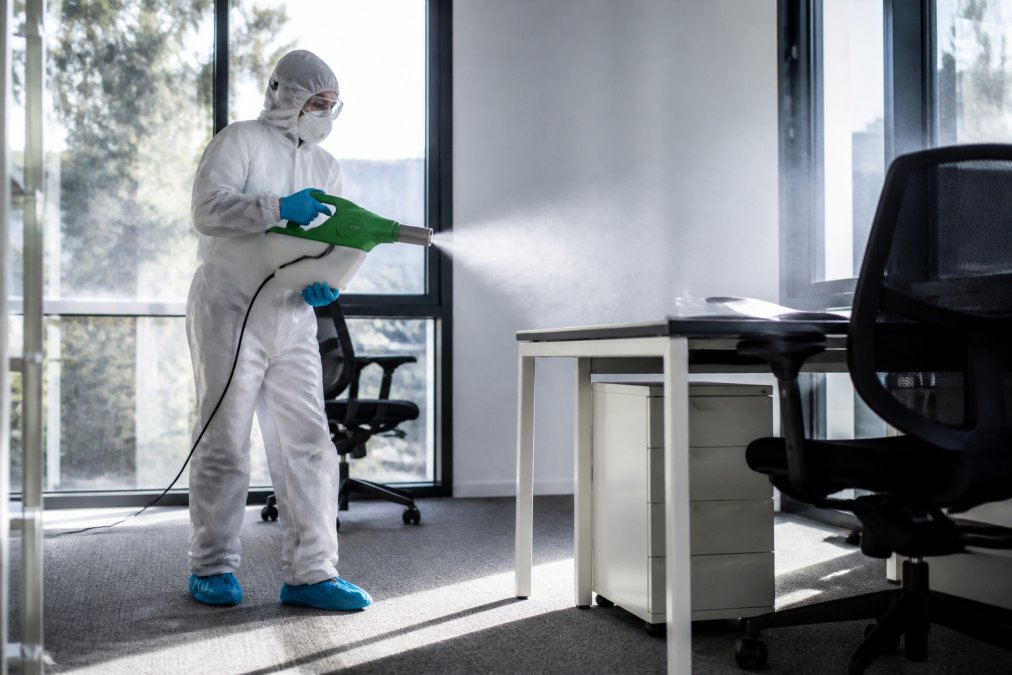
The application process begins with selecting an EPA-registered disinfectant compatible with your facility's needs and surfaces. The technician fills the sprayer's tank with the solution and activates the electrostatic charge. As the disinfectant is sprayed, it exits the nozzle as a fine aerosol mist with a positive electrical charge. The charged particles travel through the air and settle on all exposed surfaces, desks, chairs, walls, equipment, light switches, door handles, and even the undersides of furniture, creating uniform disinfection coverage.
Dwell time is critical in this process. After application, the disinfectant must remain on surfaces long enough to effectively eliminate pathogens. Most hospital-grade disinfectants require 10-30 minutes of contact time, depending on the specific product and the pathogens being targeted (the EPA). Once dwell time is complete, surfaces dry quickly, typically within 30-60 minutes, and the facility can be re-occupied.
The technology excels at addressing the most challenging sanitation problem: reaching surfaces that standard cleaning methods cannot access effectively. Electrostatic disinfection targets both visible high-touch points and invisible microbial contamination settled throughout your facility, which is why healthcare facilities, fitness centers, and commercial offices increasingly rely on this method.
Benefits of Electrostatic Spraying for Offices and Commercial Facilities
Electrostatic spraying delivers measurable advantages beyond basic sanitation. The technology reaches approximately three times more surface area per application compared to manual spraying or wiping, directly reducing labor costs and application time for facility managers (peer-reviewed research).
A trained technician can disinfect a 10,000 square-foot office space in 30-45 minutes using electrostatic technology, a task requiring several hours with traditional methods. This rapid application minimizes business disruption, allowing offices to resume normal operations quickly. For medical practices, dental offices, and fitness centers where downtime impacts revenue, this efficiency is essential.
The touchless application method eliminates cross-contamination risk during the disinfection process itself. Traditional methods involve technicians physically touching surfaces with cloths or mops, which can inadvertently transfer pathogens between areas. Electrostatic spraying maintains distance from surfaces while achieving superior coverage.
Electrostatic technology uses approximately 50-70% less disinfectant solution compared to conventional spraying methods while achieving better coverage (the EPA). The charged particles adhere to surfaces more effectively, reducing waste and lowering chemical costs.
The wrap-around technology also addresses a critical gap in traditional cleaning: invisible pathogens on surfaces that appear clean. Electrostatic disinfection targets the entire facility environment, undersides of furniture, interior surfaces of air vents, cable management areas, where pathogens accumulate but manual cleaning rarely reaches.
Staff and visitors perceive facilities as cleaner and safer when they know professional electrostatic disinfection is part of the maintenance protocol. This perception improves employee satisfaction, supports recruitment and retention, and enhances the facility's professional reputation.
Industries and Facilities That Benefit Most
Medical and dental practices represent a significant user base, where infection control directly impacts patient safety and regulatory compliance. Healthcare facilities face strict OSHA and CDC requirements, and electrostatic disinfection provides documented evidence of comprehensive pathogen reduction that satisfies regulatory standards.
Corporate office buildings benefit significantly from electrostatic disinfection, particularly in multi-tenant environments where shared spaces, conference rooms, elevators, and restrooms experience high occupancy and frequent contact. Class A office buildings in California increasingly offer electrostatic disinfection as a facility amenity that differentiates their properties and supports tenant retention.
Fitness centers and gyms present unique sanitation challenges due to moisture, perspiration, and constant contact. Electrostatic disinfection reaches equipment surfaces, locker interiors, and ventilation areas that standard cleaning protocols miss. The rapid drying time is particularly valuable where equipment must be available for immediate use after service.
Industrial parks, warehouse-office combinations, schools, and educational facilities increasingly adopt electrostatic disinfection to maintain sanitary conditions across high-touch surfaces while minimizing operational disruption.
Rangel Janitorial has developed specialized protocols for each facility type, recognizing that a medical practice's disinfection requirements differ significantly from a fitness center's needs.
How to Prepare Your Facility for Electrostatic Disinfection
Proper preparation maximizes the effectiveness of electrostatic disinfection and minimizes service time. Clear communication between your facility team and the disinfection service provider about timing, access requirements, and special considerations is essential.
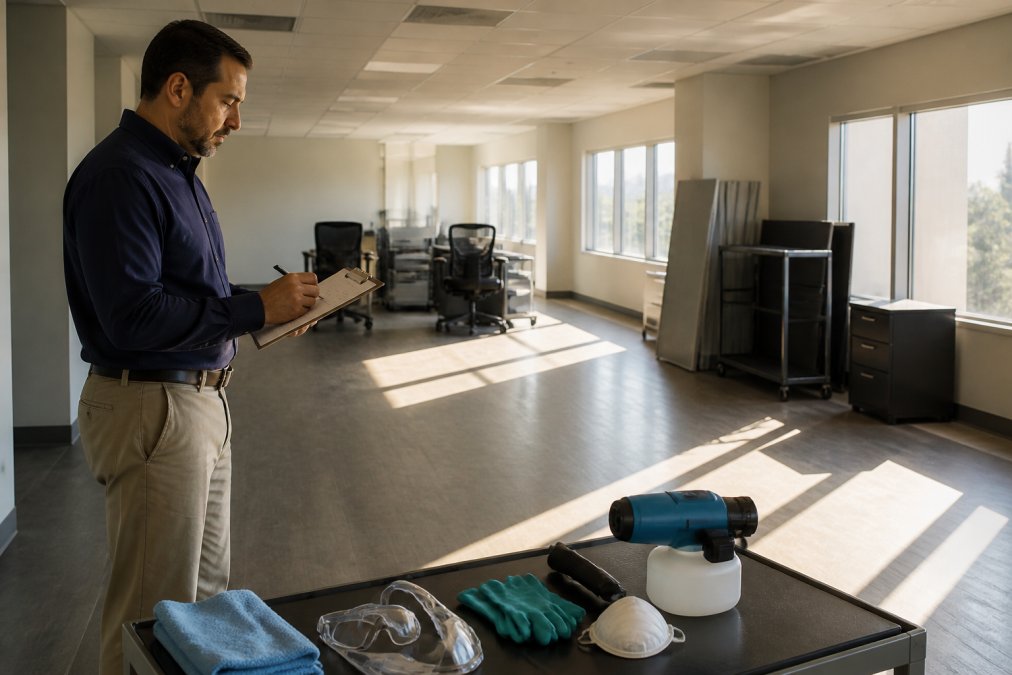
Pre-service preparation checklist:
- Schedule service during off-hours or low-occupancy periods to minimize disruption
- Remove or cover sensitive equipment that shouldn't contact disinfectant mist
- Clear surfaces of clutter, papers, and personal items that could obstruct spray coverage
- Move furniture away from walls to allow access to baseboards and wall surfaces
- Close internal doors between sections being treated to contain the application
- Ensure adequate ventilation by opening windows and activating HVAC systems
- Inform all occupants of the scheduled service and expected downtime
- Identify any surfaces requiring special attention or with material compatibility concerns
- Ensure restrooms and break rooms are empty and accessible
- Confirm that high-touch areas are accessible to the technician
The technician will conduct a walk-through before beginning service to identify specific areas requiring attention, note any surface material concerns, and confirm dwell time requirements. During application, occupants should remain outside treated areas. Most facilities schedule electrostatic disinfection after business hours to avoid any exposure to the disinfectant mist.
After application, the dwell time period (usually 10-30 minutes) must be observed before re-occupancy. Once dwell time is complete and surfaces have dried, the facility is safe for normal use. Most facilities experience complete drying within 30-60 minutes, allowing same-day re-occupancy.
Electrostatic Disinfection Cost Factors and ROI
Understanding the financial aspects of electrostatic disinfection requires examining both direct service costs and broader return on investment. Pricing depends on several factors that facility managers should evaluate when comparing service options.
Facility size represents the primary cost driver, with pricing typically scaling by square footage. Service frequency also affects total cost, monthly disinfection costs less per application than quarterly service, but requires a larger annual commitment.
EPA-registered hospital-grade disinfectants cost more than standard cleaning chemicals but provide superior efficacy against a broader spectrum of pathogens. Off-hours service typically costs more than standard business-hour applications due to labor premiums.
The return on investment extends beyond direct service costs. Reduced employee illness and absenteeism generate measurable savings. Facilities implementing regular electrostatic disinfection typically see lower rates of communicable illness transmission, reducing lost productivity and healthcare costs. For medical and dental practices, the regulatory compliance value is substantial, electrostatic disinfection provides documented evidence of comprehensive sanitation supporting accreditation and licensing requirements.
Liability reduction represents another financial benefit. Facilities maintaining rigorous disinfection protocols demonstrate due diligence in protecting occupants and visitors. Commercial properties offering professional electrostatic disinfection can enhance their appeal and support tenant retention.
Rangel Janitorial works with facility managers to develop cost-effective disinfection schedules aligned with operational needs and budget constraints, providing transparent quotes based on your specific facility requirements.
Choosing the Right Professional Electrostatic Disinfection Service
Selecting an electrostatic disinfection provider requires evaluating several critical factors beyond price. The service provider's experience with your specific facility type matters significantly. A company experienced in medical office disinfection may have different protocols than one specializing in fitness centers or corporate offices.
Verify that the service provider uses EPA-registered disinfectants appropriate for your facility type and regulatory requirements. The provider should explain which disinfectants they use, why those products are selected, and how they meet your facility's compliance standards.
Professional training and certification indicate service quality. Technicians should be trained in electrostatic equipment operation, disinfectant safety protocols, and facility-specific procedures. Ask about the provider's training program and whether technicians hold relevant certifications.
Insurance and bonding protect your facility. Verify that the service provider carries liability insurance and is fully bonded. Request proof of insurance and confirm that coverage includes equipment damage, chemical damage, and occupant injury.
Consistency and reliability matter more than cost alone. Ask for references from existing clients in your industry and verify that the provider maintains a reliable service record.
Rangel Janitorial brings 30+ years of experience in commercial cleaning and specialized expertise in electrostatic disinfection across California. Our fully bonded and insured professional crews understand the specific requirements of corporate offices, medical facilities, fitness centers, and industrial properties. We provide tailored electrostatic disinfection services designed to meet your facility's unique needs, with satisfaction guaranteed on every service.
| Factor | Why It Matters | What to Verify |
|---|---|---|
| EPA-registered disinfectants | Ensures efficacy against target pathogens | Ask for product names and safety data sheets |
| Technician training | Affects application quality and safety | Request certification or training documentation |
| Insurance and bonding | Protects your facility from liability | Verify coverage amounts and policy details |
| Facility experience | Ensures provider understands your needs | Ask for references in your industry |
| Service consistency | Supports reliable sanitation standards | Check client reviews and service history |
Professional electrostatic disinfection has become essential for facilities serious about infection control and occupant safety. The technology delivers comprehensive surface coverage, rapid application, and proven pathogen reduction that traditional cleaning methods cannot match.
Rangel Janitorial delivers professional electrostatic disinfection services across California with 30+ years of experience and fully bonded, trained crews. Our specialized expertise in 360-degree disinfectant coverage ensures your facility receives the protection it deserves. Get a free quote today and discover how professional electrostatic disinfection can enhance your facility's hygiene standards and occupant safety.
Frequently Asked Questions
How does professional electrostatic disinfection differ from traditional manual cleaning?
Electrostatic disinfection uses positively charged particles that wrap around surfaces, reaching crevices, undersides, and hard-to-access areas that manual cleaning misses. Traditional methods rely on direct contact, leaving gaps. Electrostatic spraying applies disinfectant faster while using less liquid, covers 360-degree surfaces with wrap-around technology, and dries quickly with no residue. The hospital-grade disinfectants used are EPA-registered for superior pathogen reduction compared to standard cleaners.
Is electrostatic disinfection safe for electronics and sensitive office equipment?
Yes, when performed by trained professionals using proper protocols. The electrostatic process applies a fine mist rather than heavy liquid spray, minimizing moisture exposure to electronics. Professionals protect sensitive equipment before service and allow adequate drying time. The EPA-registered disinfectants evaporate cleanly without residue. Always inform your service provider about sensitive electronics so they can adjust application methods and ensure occupant safety during and after treatment.
What types of facilities benefit most from electrostatic disinfection services?
Medical and dental offices, fitness centers with high-touch equipment, corporate office buildings, schools, warehouses, and multi-tenant properties all benefit significantly. Facilities with high occupant traffic, shared equipment, or strict infection control requirements see the greatest return. Electrostatic disinfection complements regular janitorial cleaning by targeting invisible pathogens and reducing cross-contamination risk in areas where viral load and pathogenic control are critical.
How often should a business schedule professional electrostatic disinfection?
Frequency depends on facility type, occupancy, and infection control standards. Medical and dental practices may schedule regular service. Corporate offices may use monthly or quarterly schedules. High-traffic gyms and fitness centers benefit from frequent disinfection of equipment and locker rooms. Your service provider can recommend a preventative maintenance schedule based on your specific facility hygiene needs and regulatory compliance requirements.
What is the dwell time required for electrostatic disinfectants to be effective?
Most EPA-registered hospital-grade disinfectants used in electrostatic spraying require 1-10 minutes of dwell time for full germicidal efficacy, depending on the specific product. The disinfectant must remain wet on the surface during this period to eliminate pathogens effectively. After dwell time, surfaces dry quickly and are safe for re-occupancy. Your professional service provider will specify the exact dwell time for the disinfectant being used and advise on facility re-entry timing.
Are the chemicals used in electrostatic spraying EPA-registered?
Yes, professional electrostatic disinfection services use EPA-registered, hospital-grade disinfectants proven effective against a broad spectrum of pathogens. These chemicals meet strict federal standards for safety and efficacy. Professionals follow CDC guidelines and use proper PPE during application. The disinfectants are safe for occupants when applied correctly and dry without toxic residue, making them suitable for medical facilities, offices, and fitness centers where regulatory compliance and occupant safety are essential.
Can electrostatic disinfection replace regular janitorial cleaning?
No. Electrostatic disinfection complements regular cleaning but does not replace it. Professional janitorial cleaning removes visible dirt, debris, and organic matter that can shield pathogens. Electrostatic spraying then targets remaining invisible pathogens and provides superior surface adhesion through positively charged particles. Together, they create a comprehensive sanitization protocol that reduces viral load and cross-contamination risk far more effectively than either method alone.
What should I expect during a professional electrostatic disinfection service?
A trained technician will arrive with EPA-registered hospital-grade disinfectant and specialized electrostatic equipment. They'll apply the charged mist to all surfaces, including high-touch areas, hard-to-reach spots, and equipment. The process typically takes minutes to complete, depending on facility size. Surfaces dry quickly with no residue. You'll receive guidance on dwell time before re-occupancy and confirmation that the service meets your facility's infection control and regulatory compliance standards.