 Comparison
Medical Office Cleaning vs General Janitorial
Table of Contents
- Medical Office Cleaning vs General Janitorial: Core Differences
- Infection Control and Cross-Contamination Prevention
- OSHA Bloodborne Pathogen Standards for Cleaning
- The Difference Between Cleaning and Disinfecting
- Medical Office Cleaning Checklist and Protocols
- Staffing, Training, and Background Screening
- Audit Readiness and Documentation Requirements
- Frequently Asked Questions
Last Updated: September 28, 2026
Medical Office Cleaning vs General Janitorial: Core Differences
Medical office cleaning requires specialized protocols, hospital-grade disinfectants, and infection control training that standard janitorial crews lack. This distinction directly impacts patient safety, regulatory compliance, and facility reputation.
General janitorial services maintain appearance and basic cleanliness. Medical office cleaning addresses contamination risks, bloodborne pathogen exposure, and healthcare-associated infections through validated disinfection, OSHA protocol compliance, and documented procedures.
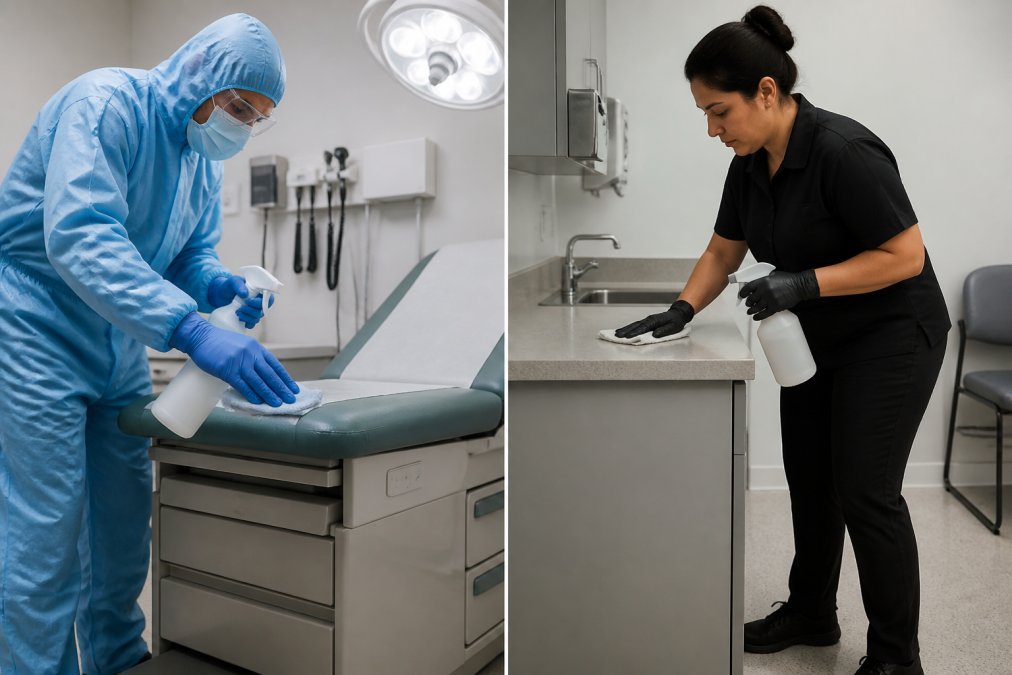
A missed spot in an exam room can transmit infection to the next patient, shaping training requirements, chemical selection, scheduling frequency, and cost structure.
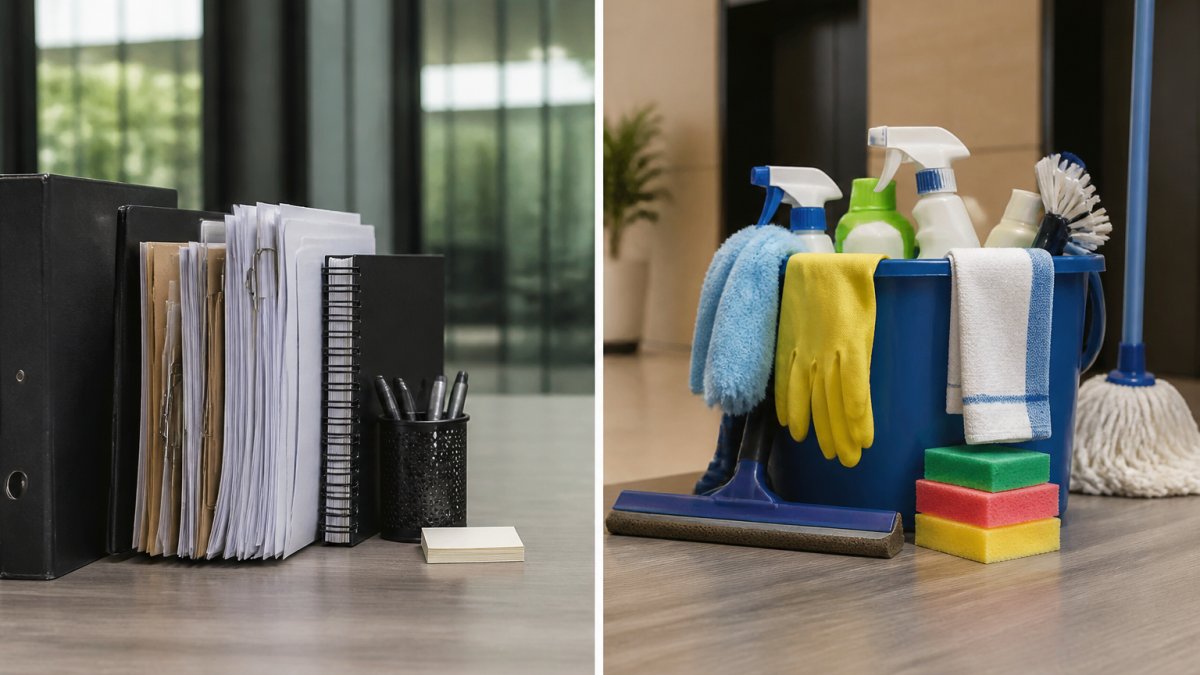
| Aspect | Medical Office Cleaning | General Janitorial |
|---|---|---|
| Staff Training | OSHA bloodborne pathogen certification required | Basic janitorial training |
| Disinfectants Used | Hospital-grade, EPA-registered antimicrobials | Standard commercial cleaners |
| Infection Control Protocols | Documented, validated procedures | Standard cleaning practices |
| Compliance Documentation | Detailed audit trails required | Minimal documentation |
| High-Touch Surface Focus | Systematic, evidence-based approach | Incidental coverage |
| Cost Structure | Higher due to specialization | Lower baseline cost |
| Best For | Medical practices, dental offices, clinics | Corporate offices, retail spaces |
Infection Control and Cross-Contamination Prevention
Medical offices face constant cross-contamination risk between patients, making infection prevention a patient safety imperative.
Medical office cleaning removes pathogens from high-touch surfaces, doorknobs, light switches, examination tables, blood pressure cuffs, shared equipment, where a single contaminated surface can transmit bloodborne pathogens, respiratory viruses, or antibiotic-resistant bacteria to multiple patients.
Effective infection control prioritizes high-touch zones: exam room surfaces require disinfection between patients, while treatment areas demand terminal cleaning protocols. Standard crews clean everything the same way.
Medical-trained crews use microfiber technology and validated dwell times, the contact period a disinfectant needs on a surface to kill pathogens. Wiping disinfectant off too quickly creates the illusion of cleanliness without actual pathogen reduction, a concept general janitorial staff typically aren't trained on.
Medical office protocols specify cleaning order, equipment sanitation between uses, and proper PPE handling to prevent cross-contamination, details that separate effective infection control from surface-level cleaning.
OSHA Bloodborne Pathogen Standards for Cleaning
OSHA's bloodborne pathogen standard (29 CFR 1910.1030) establishes mandatory requirements for exposure incident handling, staff training, and contaminated material management.
The standard requires written exposure control plans, bloodborne pathogen training for all staff who might encounter blood or body fluids, and proper biohazard waste handling.
Medical office cleaning crews must receive OSHA-mandated bloodborne pathogen training covering HIV, hepatitis B, hepatitis C, and other pathogens. Untrained crews handling biohazard cleanup without proper protocols violate OSHA requirements and expose the practice to citations and penalties.
Medical offices must maintain records of cleaning protocols, staff training dates, and exposure incidents to prove OSHA compliance. General janitorial contracts rarely include this documentation.
Contaminated materials require specialized disposal through licensed medical waste services, training and connections standard janitorial crews lack.
The Difference Between Cleaning and Disinfecting
Cleaning removes visible dirt, dust, blood, and organic matter through mechanical action. It's a prerequisite because organic matter shields pathogens from disinfectants; a spotless surface can still harbor viruses or bacteria if disinfection is skipped.
Disinfection uses chemical agents to kill pathogens on surfaces, requiring the right chemical at the right concentration, adequate contact time (dwell time), and proper application method. A properly disinfected surface is hygienically safe even if not visibly dirty.
Medical offices must clean first, then disinfect. General services often stop after cleaning; medical office protocols include validation steps.
EPA Registration and Hospital-Grade Standards
EPA-registered disinfectants have been tested and proven effective against specific pathogens (the EPA). Hospital-grade disinfectants meet higher efficacy thresholds and are tested against bloodborne viruses and antibiotic-resistant bacteria.
Medical offices must select disinfectants with EPA registration numbers and pathogen claims matching their specific infection control risks. A dental practice with bloodborne pathogen exposure needs different coverage than a dermatology office.
Contact Time and Application Failure
Contact time (dwell time) ranges from 30 seconds to 10 minutes depending on the product and pathogen. Wiping disinfectant off too quickly defeats its purpose, a common failure in general janitorial cleaning.
Medical-trained crews read product labels, follow manufacturer instructions, and document contact time. General janitorial staff typically aren't trained on this concept.
Validation and ATP Testing
Medical offices use adenosine triphosphate (ATP) testing to validate disinfection. ATP is present in all living cells; if detected after disinfection, living organisms remain. ATP meters provide results in 15 seconds.
ATP testing is a best practice in healthcare facility cleaning, demonstrating evidence-based validation. General janitorial services rarely have ATP meters or training to interpret results.
Product Safety Data Sheets (SDS) and Staff Protection
Every disinfectant product must have an SDS available specifying hazards, required PPE, first-aid procedures, and disposal requirements. Medical office staff must be trained on each product's SDS to comply with OSHA's Hazard Communication Standard (29 CFR 1910.1200).
General janitorial services may not maintain accessible SDS files or provide product-specific training, leaving no assurance of OSHA hazard communication compliance.
Medical Office Cleaning Checklist and Protocols
A medical office cleaning checklist differs fundamentally from a general office checklist. It's organized by contamination risk, not just room type.
High-Touch Surfaces (cleaned between every patient):
- Doorknobs and handles
- Light switches
- Examination tables and chairs
- Blood pressure cuff and stethoscope
- Computer keyboards and mice in patient areas
- Sink faucets and soap dispensers
- Toilet seats and handles
Moderate-Risk Surfaces (cleaned daily minimum):
- Walls in patient areas
- Window sills and blinds
- Waiting room chairs
- Reception desk surfaces
- Restroom surfaces
Low-Risk Surfaces (standard cleaning frequency):
- Baseboards and floors
- Hallway walls
- Storage areas
- Administrative office spaces
Sequence matters: high-touch surfaces first with fresh supplies, moderate-risk areas next, low-risk areas last, preventing cross-contamination.
Documentation requirements exceed general office standards. Each cleaning session should record date, time, surfaces cleaned, products used, contact times, staff member, and any issues. This audit trail proves compliance with infection control protocols during regulatory inspections.
Staffing, Training, and Background Screening
Medical office cleaning requires staff with specific qualifications, clearance levels, ongoing competency validation, and background vetting that general janitorial workers lack.
OSHA Bloodborne Pathogen Certification
OSHA's bloodborne pathogen standard (29 CFR 1910.1030) requires mandatory training for employees who might encounter blood or body fluids, covering transmission routes, pathogens of concern (HIV, hepatitis B, hepatitis C), exposure recognition, PPE use, contaminated material handling, post-exposure procedures, and incident reporting. Training must occur before work begins and annually thereafter with documented attendance. General janitorial services typically do not provide this healthcare-specific training.
Background Screening and Vetting Workflows
Patients in medical offices are vulnerable populations. Healthcare facilities typically implement background screening that exceeds standard employment vetting. Common requirements include:
- Criminal background check (often with specific exclusions for violent crimes, theft, or drug offenses)
- Verification of prior employment and references
- Social Security number verification
- Address history verification
- Sometimes health screening or tuberculosis testing
The vetting process for medical office cleaning staff is more rigorous than for general office cleaning because staff will have access to patient areas, medical records, and potentially sensitive patient information.
Specialized Equipment and Medical Device Training
- Which surfaces and equipment can tolerate disinfectant chemicals
- Manufacturer-approved cleaning methods for specific devices
- How to avoid damaging electronic components or optical surfaces
- Proper handling of equipment that may be contaminated with blood or body fluids
Ongoing Competency and Refresher Training
Competency validation can include:
- Observation of cleaning procedures to ensure protocols are followed
- Spot checks using ATP testing to validate disinfection effectiveness
- Periodic quizzes or competency assessments on bloodborne pathogen knowledge
- Review of incident reports or near-misses
Bonding and Liability Coverage
Audit Readiness and Documentation Requirements
Medical offices face regulatory oversight from multiple agencies. State health departments, OSHA, and sometimes the CDC conduct facility inspections. Cleaning documentation directly impacts compliance assessments.
An audit-ready medical office maintains:
- Written cleaning protocols specific to each clinical area
- Staff training records with dates and topics covered
- Disinfectant product documentation with EPA registration numbers
- Daily or shift-level cleaning logs
- Records of any corrective actions taken
- Validation procedures (such as ATP testing) demonstrating disinfectant effectiveness
Frequently Asked Questions
What is the main difference between medical office cleaning and general janitorial services?
Medical office cleaning focuses on infection control and compliance with healthcare regulations, using hospital-grade disinfectants and specialized protocols to prevent cross-contamination. General janitorial services prioritize appearance and basic sanitation without the regulatory rigor or specialized training required for healthcare environments. Medical offices must follow OSHA bloodborne pathogen standards, maintain detailed documentation, and use EPA-registered disinfectants with specific dwell times on high-touch surfaces, requirements that general office cleaning does not address.
How often should a medical office be cleaned and disinfected?
Medical offices typically require daily cleaning with multiple disinfection cycles throughout the day, especially for high-touch surfaces like doorknobs, light switches, and examination tables. Terminal cleaning of patient care areas should occur at the end of each day or between patients, depending on facility protocols and patient volume. General offices usually need daily or weekly cleaning but not the frequency-intensive disinfection schedules that healthcare facilities require to reduce healthcare-associated infections.
What training do cleaning crews need for medical office environments?
Crews cleaning medical offices must understand OSHA bloodborne pathogen standards, proper use of hospital-grade disinfectants, appropriate PPE requirements, and biohazard disposal protocols. They need certification in bloodborne pathogen awareness and training on cross-contamination prevention specific to clinical settings. General janitorial crews typically lack this specialized training and are not equipped to handle the regulatory and safety requirements of healthcare facilities.
Why is the difference between cleaning and disinfecting important in medical offices?
Cleaning removes visible dirt and debris but does not kill pathogens; disinfecting uses EPA-registered chemicals to eliminate microorganisms on surfaces. Medical offices must do both: clean first to remove organic matter, then apply hospital-grade disinfectants with adequate dwell time to reduce pathogen load. General offices often combine these steps or skip disinfection entirely. In healthcare settings, this distinction is critical for infection control and regulatory compliance under OSHA and CDC standards.
What documentation do medical offices need for cleaning compliance?
Medical offices must maintain detailed records of cleaning schedules, disinfectant products used, dwell times, staff training certifications, and any incidents or deviations from protocol. This documentation supports audit readiness for OSHA inspections and demonstrates compliance with healthcare facility standards. General offices rarely need this level of documentation, making medical office cleaning significantly more complex from a compliance and administrative perspective.