 Ultimate guide
Medical Facility Cleaning Compliance 2026 Guide
Table of Contents
- 2026 Regulatory Compliance Overview for Medical Facilities
- Infection Control and Prevention Protocols
- High-Touch Surface Disinfection Standards and Frequency
- OSHA Bloodborne Pathogens Standard for Janitorial Staff
- Cleaning Audit and Documentation Procedures
- Medical Office Janitorial Service Insurance Requirements
- Healthcare Facility Infection Control Cleaning Checklist
- Technology-Driven Compliance Tracking and Liability Protection
- Liability and Insurance Implications of Non-Compliance
- Frequently Asked Questions
Last Updated: August 27, 2026
2026 Regulatory Compliance Overview for Medical Facilities
Medical facility cleaning compliance requirements 2026 have become significantly more stringent, driven by heightened infection control standards and evolving regulatory frameworks. Healthcare administrators, facility managers, and janitorial supervisors must navigate a complex landscape of federal regulations, state mandates, and industry best practices that directly impact patient safety and operational liability.
The core framework rests on three primary regulatory pillars: OSHA standards for occupational safety, CDC guidelines for infection prevention, and state health department regulations. These are enforceable mandates with real consequences for non-compliance, including fines, license suspension, and legal liability. A single healthcare-associated infection outbreak can cost a facility millions in direct treatment costs, regulatory fines, and lost patient trust. This guide walks you through essential 2026 compliance requirements, specific protocols your facility must implement, and documentation systems that protect you during audits.
Infection Control and Prevention Protocols
Infection control protocols define how surfaces are cleaned, when they're cleaned, and what disinfectants are used, directly affecting whether pathogens survive or are eliminated before patient contact.
The distinction between cleaning and disinfection is critical. Cleaning removes visible dirt and organic matter using detergent and water. Disinfection uses EPA-registered chemical agents to kill pathogens. Both steps are necessary; organic matter can shield pathogens from disinfectants. The proper sequence, clean first, then disinfect, is non-negotiable.
Your facility's infection control protocols must specify which areas receive daily versus terminal cleaning, which EPA-registered disinfectants are approved for each surface type, required contact times, which surfaces are high-touch and require frequent disinfection, and procedures for biohazard spills. The CDC estimates that one in every 25 hospitalized patients develops a healthcare-associated infection (HAI) during their stay, many originating from environmental contamination (the CDC). Your cleaning protocols directly influence whether your facility becomes a pathogen vector or a controlled environment where infections are minimized.
The 2026 update emphasizes risk stratification, matching cleaning intensity to actual risk levels. Patient care areas, operating rooms, and immunocompromised patient units require more aggressive protocols than administrative offices.
High-Touch Surface Disinfection Standards and Frequency
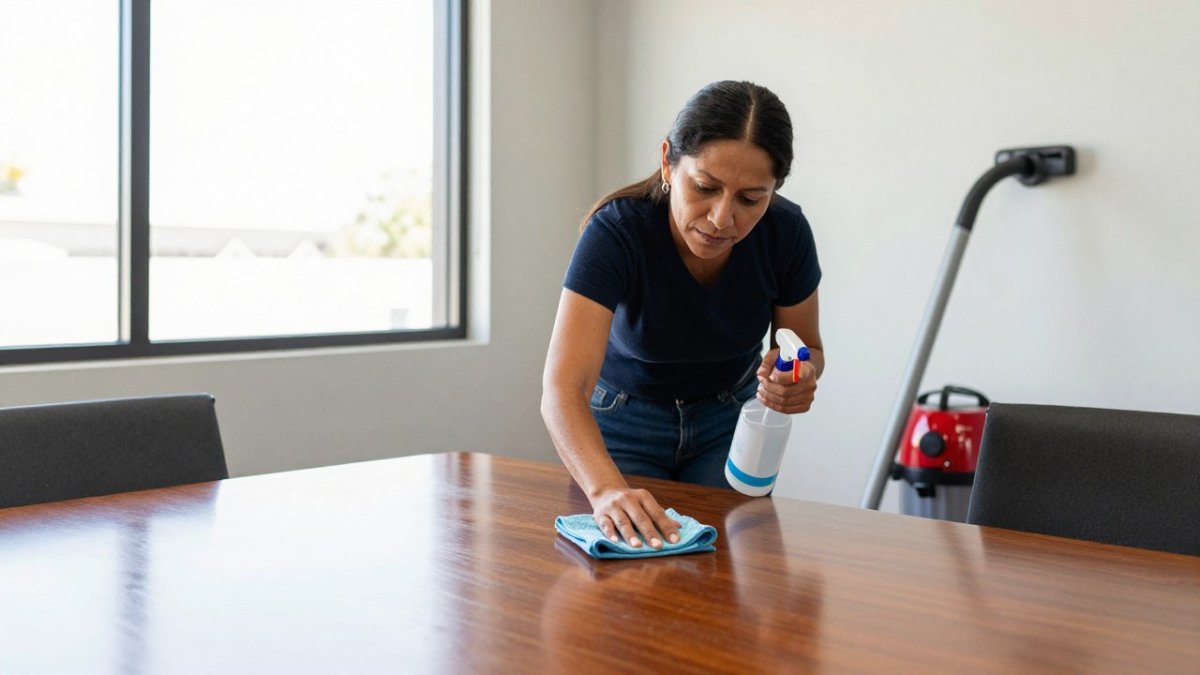
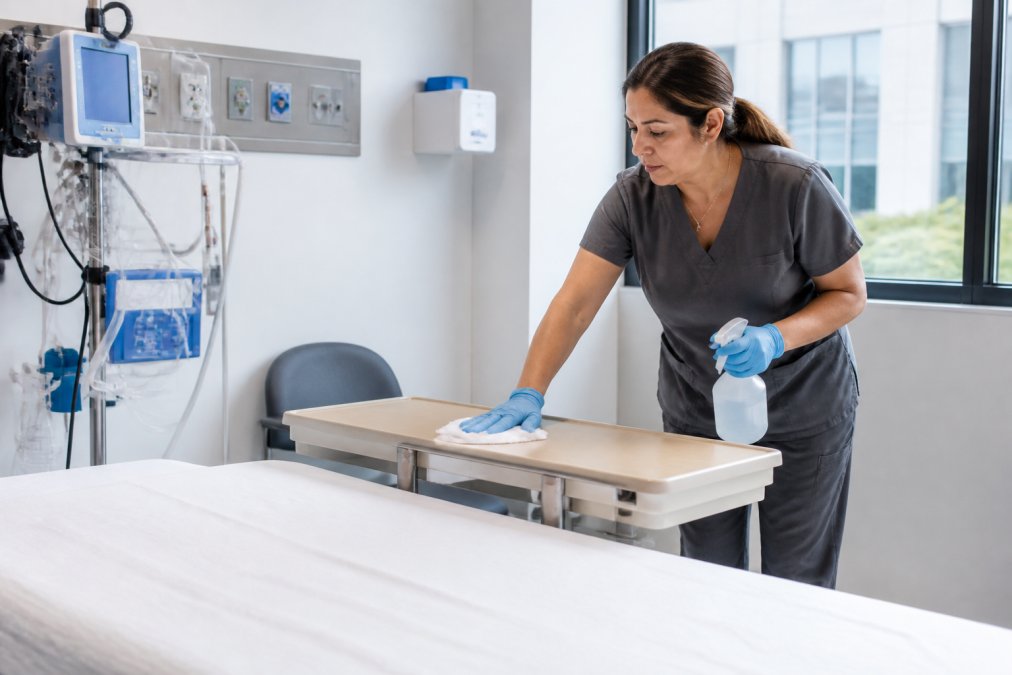
High-touch surfaces, door handles, bed rails, light switches, computer keyboards, and countertops, are primary vectors for pathogen transmission because hands are the most common vehicle for spreading infectious agents.
Disinfection frequency depends on patient acuity level, volume of contact, known pathogen presence, and surface material. High-touch surfaces in patient care areas should be disinfected at minimum once per shift, with more frequent disinfection during outbreaks or for immunocompromised units.
Dwell time, how long a surface must remain wet with disinfectant, is critically important. EPA-registered disinfectants list specific dwell times on product labels, typically ranging from 30 seconds to 10 minutes. Surface material compatibility matters significantly. Alcohol-based disinfectants can degrade plastic and rubber, while quaternary ammonium compounds may leave residue on glass. Your facility must maintain an inventory of approved disinfectants matched to specific surface types.
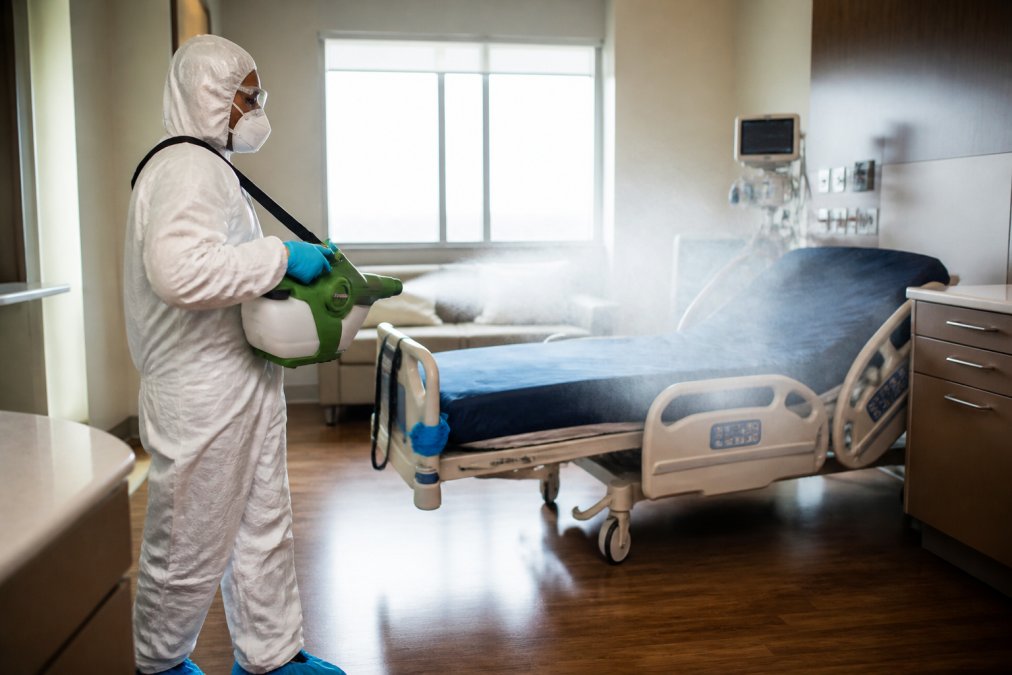
Electrostatic disinfection technology provides 360-degree coverage of surfaces, reaching areas that traditional wiping misses: undersides of equipment, crevices, and irregular surfaces. This technology uses electrical charge to coat surfaces with disinfectant particles, ensuring more consistent coverage than manual application. Electrostatic disinfection is particularly valuable for terminal cleaning between patient encounters or during outbreak response.
OSHA Bloodborne Pathogens Standard for Janitorial Staff
The OSHA Bloodborne Pathogens Standard (29 CFR 1910.1030) establishes mandatory requirements for protecting workers exposed to blood or other potentially infectious materials (OPIM). Janitorial and environmental services staff are classified as occupationally exposed employees.
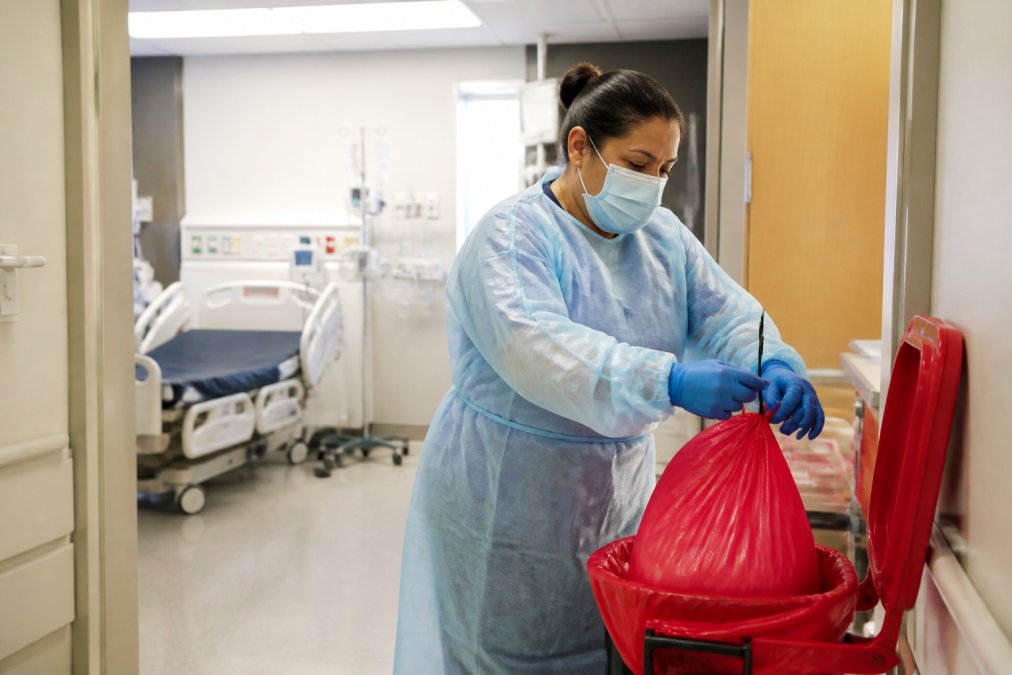
Your facility must provide bloodborne pathogen training to all janitorial staff within 30 days of hire and annually thereafter (osha.gov). Training must cover transmission routes, exposure risk recognition, engineering and work practice controls, and proper PPE use. Training must be documented and records retained for the duration of employment plus 30 years.
Engineering controls, physical devices that isolate or remove hazards, are the first line of defense: sharps disposal containers, biohazard waste bags, and closed-system collection containers. Janitorial staff must never reach into containers or attempt to compact biohazard waste. Your facility must have a documented exposure control plan available to all employees.
Personal protective equipment requirements include gloves, face masks, eye protection, and protective gowns. Your facility must provide PPE at no cost and ensure proper fit and training. Hepatitis B vaccination is required for all occupationally exposed employees unless they decline in writing. Your facility must offer the vaccine series free of charge and maintain vaccination records.
If an occupational exposure incident occurs, needlestick injury, cut from contaminated sharp, or splash to mucous membranes, your facility must provide immediate medical evaluation and testing. Post-exposure prophylaxis (PEP) may be indicated. Your facility must have a documented protocol for reporting and managing exposure incidents.
Cleaning Audit and Documentation Procedures
Documentation is your facility's primary defense during regulatory inspections and patient safety incidents. Your facility must maintain records demonstrating: cleaning schedules and task assignments, disinfectant inventory logs with product names and expiration dates, daily cleaning verification records, training documentation with signatures, incident reports, corrective action records, and equipment maintenance logs.
Technology-driven compliance tracking systems offer significant advantages over paper checklists: real-time documentation, automated alerts for missed tasks, and audit trails showing exactly when and by whom each task was completed. These systems provide the granular documentation regulators expect.
Your facility should conduct internal audits at least quarterly, including observation of actual cleaning practices, ATP (adenosine triphosphate) testing to verify disinfection efficacy on high-touch surfaces, documentation review, and staff knowledge assessment. Document corrective actions taken: retraining, protocol adjustment, equipment replacement, or schedule modification.
Medical Office Janitorial Service Insurance Requirements
When your facility contracts with an external janitorial service, you transfer operational responsibility but not liability. Your facility remains responsible for ensuring cleaning meets regulatory standards.
Your contract with any janitorial vendor must require: General Liability Insurance (minimum $1 million per occurrence, $2 million aggregate), Workers' Compensation Insurance (required in all states), Professional Liability Insurance specific to healthcare cleaning ($1 million standard), and Pollution Liability Insurance for improper chemical or biohazard waste disposal.
Your contract must require the janitorial service to maintain these policies for the engagement duration and provide proof of coverage annually. Require the vendor to name your facility as an additional insured on their general liability policy. Beyond insurance, your contract should specify cleaning protocols matching your infection control standards, approved disinfectants and equipment, staff training requirements in bloodborne pathogen protocols, your audit rights, performance standards and remedies, and termination clauses for compliance issues.
Healthcare Facility Infection Control Cleaning Checklist
A comprehensive cleaning checklist ensures no critical areas or surfaces are missed. This checklist should be facility-specific, reflecting your actual layout, patient populations, and risk areas.
Daily Cleaning Checklist - Patient Care Areas:
- Bed rails, headboard, and footboard - disinfected with EPA-registered disinfectant, dwell time observed
- Bedside table and all surfaces - wiped clean and disinfected
- Door handles (both sides) and light switches - disinfected
- Computer keyboard and mouse - disinfected or covered
- Bathroom surfaces: toilet seat, faucet handles, sink, mirror - cleaned and disinfected
- Floor: swept and mopped with appropriate cleaning solution
- Waste containers: emptied, liners replaced, container wiped
- Equipment (blood pressure cuff, pulse oximeter, thermometer) - disinfected per manufacturer instructions
High-Touch Surface Checklist - Common Areas:
- Elevator buttons (all floors) - disinfected
- Door handles and push plates - disinfected
- Stair railings - disinfected
- Reception desk surfaces and writing surfaces - disinfected
- Waiting room seating and armrests - disinfected or sanitized
- Restroom surfaces: toilets, faucets, sinks, mirrors, door handles - cleaned and disinfected
- Break room refrigerator handles, microwave buttons, countertops - disinfected
Terminal Cleaning Checklist - Between Patient Encounters:
- All horizontal surfaces: beds, tables, countertops, equipment - cleaned thoroughly and disinfected
- Vertical surfaces: walls (at least 6 feet), whiteboards, monitors - disinfected
- All equipment brought into the room during patient stay - disinfected
- Floor: thoroughly cleaned and disinfected
- Air vents and grilles: wiped clean
- Electrostatic disinfection applied to entire room (if available)
Biohazard and Spill Response Checklist:
- Area cordoned off to prevent exposure
- Appropriate PPE donned by responding staff
- Visible blood or body fluid cleaned with absorbent material
- Area disinfected with appropriate high-level disinfectant
- Contaminated materials placed in biohazard waste container
- Incident documented with date, time, location, and responding staff
- Area cleared for re-entry only after disinfection is complete
Each task should include space for staff initials, timestamp, and notes about obstacles or concerns. This creates accountability and provides audit documentation.
Technology-Driven Compliance Tracking and Liability Protection
The 2026 regulatory environment increasingly expects facilities to use technology for compliance documentation. Manual paper checklists raise questions during inspections: How do you verify tasks were actually completed versus documented after the fact? How do you identify patterns of missed areas?
Technology-driven compliance systems address these concerns through real-time task logging with automatic timestamps and geolocation verification, automated alerts for missed tasks, performance analytics identifying training needs or scheduling problems, audit trails and compliance reports, and integration with infection control data to correlate cleaning compliance with HAI rates.
The liability protection benefit is substantial. If a patient develops a healthcare-associated infection and litigation ensues, your facility's defense depends partly on documentation showing cleaning protocols were followed. Technology-driven systems create documentation that's difficult to dispute. Regular ATP (adenosine triphosphate) testing logged in your compliance system creates quantitative evidence that disinfection is actually working.
Your facility should implement a feedback loop where compliance data informs protocol adjustments. If ATP testing consistently shows high readings on specific surfaces despite protocol compliance, the disinfectant or dwell time may need adjustment. This continuous improvement approach demonstrates to regulators that your facility uses data to maintain and enhance compliance.
Liability and Insurance Implications of Non-Compliance
Non-compliance creates exposure across multiple liability categories, each with distinct financial and reputational consequences.
Patient Harm Liability - If a patient develops a healthcare-associated infection traced to environmental contamination from inadequate cleaning, your facility faces claims for medical costs, pain and suffering, and potentially punitive damages. A single HAI case can cost hundreds of thousands of dollars in direct costs plus legal fees.
Regulatory Fines and Penalties - State health departments and CMS can impose substantial fines for compliance violations, representing direct financial loss.
License Suspension or Revocation - Serious compliance violations can result in suspension or revocation of your facility's operating license, preventing operations and revenue generation.
Accreditation Loss - Loss of accreditation from The Joint Commission or other bodies due to compliance failures may affect insurance reimbursement and patient referrals.
Staff Liability - If a janitorial staff member contracts a bloodborne pathogen due to inadequate training or PPE, your facility is liable for workers' compensation claims and potentially negligent retention claims.
Reputational Damage - In the era of online reviews and social media, a compliance failure generates negative publicity affecting patient volume and staff recruitment.
Your facility's insurance policies should include coverage for these exposures, but insurance is a backstop, not a primary defense. The most effective liability mitigation strategy is rigorous compliance: documented protocols, trained staff, verified implementation, and continuous improvement.
Medical facility cleaning compliance requirements 2026 demand more than surface-level attention to cleaning protocols. Your facility must treat environmental services as a strategic component of infection prevention, implement technology-driven compliance tracking, maintain comprehensive documentation, and ensure all staff receive proper training and oversight.
Rangel Janitorial's 30+ years of experience working with medical facilities across California, combined with specialized electrostatic disinfection technology and fully bonded and insured professional crews, ensures your facility meets and exceeds 2026 compliance standards. Our approach integrates proven cleaning protocols with documentation systems that protect your facility during audits and provide defensible evidence of compliance. Get a free quote and discover how Rangel Janitorial can transform your facility's cleaning operations from a compliance burden into a liability shield.
Frequently Asked Questions
What are the main differences between 2026 medical facility cleaning compliance standards and previous years?
2026 compliance standards strengthen infection control requirements, expand high-touch surface disinfection protocols, and mandate real-time documentation systems. Healthcare-associated infection prevention now requires validated disinfection dwell times and enhanced pathogen transmission tracking. Medical facilities must implement technology-driven audit trails and provide staff training on bloodborne pathogen protocols. These updates reflect post-pandemic learnings and tighter regulatory oversight from OSHA and the CDC.
What does the OSHA bloodborne pathogens standard require from janitorial staff in medical offices?
The OSHA bloodborne pathogens standard mandates that janitorial staff receive annual training on exposure control, proper PPE use, and biohazard waste disposal. Staff must follow standard operating procedures for handling contaminated sharps, blood, and bodily fluids. Facilities must provide appropriate PPE, hepatitis B vaccination access, and medical evaluation after potential exposures. Janitorial crews must document all exposure incidents and maintain compliance records for OSHA inspection.
What insurance coverage do medical office janitorial service providers need?
Medical office janitorial service insurance requirements typically include general liability (minimum $1 million), workers' compensation, and professional liability coverage. Many medical facilities now require pollution liability and biohazard cleanup coverage. Providers must maintain bonding and verify coverage limits match facility risk profiles. Insurance documentation should cover cross-contamination liability, equipment damage, and occupational injury claims. Verify your janitorial partner's current coverage before contracting.
How do I use a healthcare facility infection control cleaning checklist to ensure compliance?
A healthcare facility infection control cleaning checklist should cover patient care areas, high-touch surfaces, disinfection frequency, dwell time validation, and staff training documentation. Assign responsibility for each task, specify EPA-registered disinfectants by surface type, and record completion times. Include sections for bloodborne pathogen protocols, biohazard waste disposal, and equipment sanitation. Conduct weekly compliance audits against the checklist and maintain records for regulatory inspection. Digital checklists with timestamp tracking strengthen audit trails.
What are the consequences of non-compliance with 2026 medical facility cleaning standards?
Non-compliance exposes facilities to regulatory fines, loss of accreditation, and increased liability for healthcare-associated infections. OSHA violations can result in penalties exceeding $10,000 per infraction. Facilities face potential lawsuits from patients harmed by infection transmission, insurance coverage denial, and reputational damage. Staff members may face occupational safety violations. Implementing validated cleaning protocols, staff training, and documentation systems protects your facility and reduces legal risk.
How does electrostatic disinfection support 2026 compliance standards?
Electrostatic disinfection delivers EPA-registered disinfectants with consistent dwell time across high-touch surfaces and complex equipment, meeting 2026 infection control standards. The 360-degree coverage reduces cross-contamination risk and ensures validated surface decontamination in patient care areas. This technology provides measurable compliance data for audit documentation and supports healthcare-associated infection prevention protocols. Electrostatic disinfection also reduces staff exposure to biohazards and improves cleaning efficacy in difficult-to-reach areas.
What documentation should a medical facility maintain to prove cleaning compliance?
Medical facilities must maintain daily cleaning logs recording which surfaces were disinfected, which EPA-registered disinfectants were used, dwell times, staff names, and completion timestamps. Include staff training records, bloodborne pathogen exposure incident reports, and equipment maintenance logs. Document compliance audits, corrective actions, and any deviations from standard operating procedures. Retain records for at least three years. Digital audit trails with timestamped photos strengthen compliance documentation for regulatory inspection and liability protection.