 Ultimate guide
Commercial Cleaning Pricing Guide
Table of Contents
- What Drives Janitorial Services Pricing
- Average Cost of Office Cleaning Per Square Foot
- Commercial Cleaning Insurance Requirements
- Janitorial Service Scope of Work Examples
- How Facility Type Affects Your Cleaning Costs
- Service Frequency and Contract Models
- Negotiating Better Janitorial Service Rates
- Frequently Asked Questions
Last Updated: October 1, 2026
What Drives Janitorial Services Pricing
The cost of janitorial services pricing varies significantly based on facility characteristics, service scope, labor availability, and contract terms, not just square footage alone.
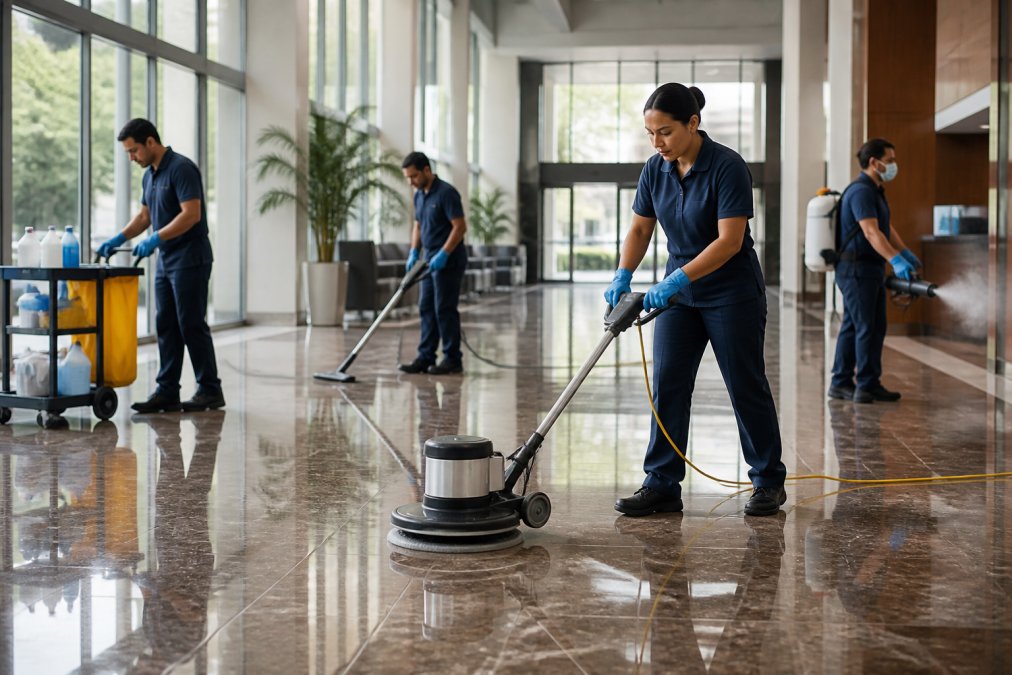
One vendor's "$0.15 per square foot" might include floor stripping and waxing; another's might cover only trash removal and vacuuming. Understanding the scope of work matters more than chasing the lowest number.
Labor often represents a significant portion of janitorial services pricing. Facility complexity drives labor hours up: a 5,000-square-foot office with standard carpet takes less time than a 5,000-square-foot medical facility with biohazard protocols and electrostatic disinfection requirements.
Supply costs, equipment maintenance, insurance, and bonding round out the remaining expenses. Healthcare settings, food preparation areas, and electronics manufacturing often have higher pricing because the liability and compliance burden is higher. Transparent pricing starts with understanding exactly what you're paying for, not just the per-square-foot number.
Average Cost of Office Cleaning Per Square Foot
Commercial cleaning pricing varies widely for standard office maintenance based on facility condition, cleaning frequency, and service depth.
A 10,000-square-foot office cleaned twice weekly costs differently per square foot than daily cleaning. High-traffic areas and older facilities with worn carpet require more aggressive floor care and cost more per square foot.
The real driver is labor hours required. A cluttered office takes longer to clean than an open-plan workspace. Multiple restrooms in a medical facility require more time per square foot than in a small office. Moving from weekly to daily service doesn't multiply costs by five because crews work more efficiently on repeat visits.
Ask vendors to estimate labor hours for your specific facility, not just plug square footage into a formula. Request references from similar-sized facilities to validate whether quoted rates are competitive.
| Facility Type | Typical Range | Key Cost Drivers |
|---|---|---|
| Standard office | $0.10-$0.18/sq ft | Traffic volume, restroom count, floor type |
| Medical/dental | $0.18-$0.30/sq ft | Disinfection protocols, biohazard compliance |
| Retail | $0.12-$0.22/sq ft | Customer-facing areas, high foot traffic |
| Industrial/warehouse | $0.08-$0.16/sq ft | Large open spaces, specialized floor care |
| Gym/fitness | $0.15-$0.25/sq ft | Equipment sanitization, locker room intensity |
Commercial Cleaning Insurance Requirements
Commercial janitorial contractors commonly carry liability insurance, and many facility managers set minimum coverage requirements as part of their vendor standards. Exact coverage levels should be confirmed directly with each provider and, where appropriate, with your legal or risk management advisors.
Workers' compensation insurance is a common requirement for employers. Verify your vendor carries appropriate coverage and request a certificate of insurance listing your facility as an additional insured party where applicable.
A fidelity bond covers loss of money or property due to dishonest acts by employees. For facilities with high-value equipment, sensitive documents, or cash handling, bonding is essential.
How State Labor Laws Drive Your Actual Costs
State-mandated labor regulations can directly affect janitorial services pricing. Minimum wage rates and related labor costs may increase over time, which can impact your contract costs even if service scope stays identical.
Worker classification is a hidden cost driver. Most legitimate janitorial services classify crews as employees, meaning the vendor absorbs payroll taxes, unemployment insurance, and state disability insurance. A vendor offering rates significantly below market may be cutting corners on worker classification, a red flag for legal exposure if an injury occurs.
Paid leave requirements affect pricing. Paid sick leave and paid family leave requirements can affect employer labor costs. Janitorial companies must budget for crew absences and still staff your facility, embedding this cost in labor rates.
Overtime rules can increase labor costs for hours worked beyond standard schedules. If your facility requires evening or weekend cleaning, your per-hour cost may be higher due to applicable overtime requirements.
Request an itemized quote that explains how labor costs are structured, including any assumptions about wages, payroll taxes, leave, and overtime. Ask how vendors handle annual minimum wage increases. Transparent vendors explain these costs upfront.
Janitorial Service Scope of Work Examples
The scope of work defines exactly what your contractor does and doesn't. One vendor includes window cleaning; another charges extra. One sweeps under desks; another only vacuums visible areas.
How Facility Type Affects Your Cleaning Costs
Corporate offices require standard janitorial services pricing based on square footage and traffic volume, with focus on professional appearance and minimal specialized training.
Service Frequency and Contract Models
How often you need cleaning directly impacts your total cost. Daily service costs more than weekly, but the per-visit cost is lower because crews work more efficiently on repeat visits.
Negotiating Better Janitorial Service Rates
Getting competitive janitorial services pricing requires strategy beyond requesting quotes. The difference between a fair deal and an expensive mistake lies in contract language, scope clarity, and understanding which add-ons drive costs up after you've signed.
Request Quotes Using Identical Specifications
Identify Hidden Costs and Add-Ons
-
Floor care beyond vacuuming: Stripping and waxing hard floors, carpet shampooing, and tile sealing are often billed separately. Clarify whether these services are included or priced as add-ons so you can understand your true annual cost.
-
Restroom supply restocking: Some vendors include toilet paper, paper towels, and soap; others charge per item. Supply costs can meaningfully increase your monthly spend, so clarify how these are billed.
-
Disinfection and electrostatic spraying: Electrostatic disinfection is typically billed above base cleaning. For larger facilities or frequent application, this can add a meaningful amount to your monthly spend, so request clear line items in any quote.
-
High-touch surface sanitization: Frequent sanitization of door handles, light switches, elevator buttons, and handrails is labor-intensive and often billed separately, so confirm how this is priced.
-
Window cleaning: Interior and exterior window washing is rarely included in base pricing. Clarify whether it is included or quoted as a separate service and how its cost is calculated.
-
Carpet spot-cleaning and stain removal: Spot-cleaning is often a separate line item, so ask how these incidents are billed.
Evaluate Contract Length and Rate Escalation
Negotiate Service Level Agreements (SLAs)
- Response time for complaints: "Vendor shall respond to service complaints within 24 hours and remedy issues within 48 hours."
- Quality standards: "Restrooms shall be inspected daily. Carpets shall be vacuumed with no visible debris. Hard floors shall be mopped with no streaks visible under standard lighting."
- Remedies for failure: "If vendor fails to meet service standards in two consecutive weeks, customer may deduct 10% from that month's invoice. If failure continues for four weeks, customer may terminate without penalty."
Bundle Services for Volume Discounts
Performance-Based Pricing
Red Flags in Quotes and Contracts
Watch for these warning signs:
- Quotes with no itemization: Demand a breakdown by task and frequency.
- Vague scope language: Specify every task, frequency, and area.
- No mention of insurance or bonding: Ask directly and get proof.
- Rates significantly below market: Ask why. Are they cutting corners on frequency, staff training, or insurance?
- Automatic renewal clauses: Mark your calendar and send cancellation notice in writing if you don't want to renew.
- Unilateral rate increase rights: Negotiate caps.
Frequently Asked Questions
What is the average cost per square foot for commercial cleaning?
Commercial cleaning costs typically range from $0.05 to $0.15 per square foot for standard office maintenance, though this varies based on facility type, service frequency, and regional labor rates. Medical facilities and high-traffic environments like gyms may cost more due to specialized disinfection and sanitization requirements. For an accurate estimate tailored to your specific facility, request a quote that accounts for your building's layout, foot traffic, and cleaning scope.
What commercial cleaning insurance requirements should I verify before signing a contract?
Verify that your janitorial service provider carries general liability insurance (minimum $1 million coverage) and workers' compensation insurance for all crew members. Request proof of bonding, which protects you if equipment is damaged or theft occurs. Ask for a certificate of insurance listing your facility as an additional insured. This protects both parties and ensures the provider can cover claims if injuries or property damage occur during service.
How do janitorial service frequency and contract length affect pricing?
More frequent service (daily versus twice-weekly) typically reduces the per-visit cost but increases total monthly expenses. Longer-term contracts often come with discounts of 10-20% compared to month-to-month arrangements. Recurring maintenance contracts are cheaper than one-time deep cleaning because providers can schedule crews efficiently. Discuss your facility's actual needs with potential providers, overbuying frequency wastes money, while underbuying creates hygiene gaps.
Does facility type really impact janitorial service pricing?
Yes, significantly. Medical and dental facilities require specialized electrostatic disinfection and compliance with health standards, increasing costs. Gym and fitness centers need intensive sanitization of equipment and locker rooms. Industrial parks with warehouse-office combinations may require specialized floor care for different zones. Corporate offices typically cost less than specialized facilities. Your facility type determines the cleaning scope, required certifications, and labor intensity, all major cost drivers.
What should a janitorial service scope of work include?
A clear scope of work specifies which areas are cleaned (restrooms, common areas, offices), cleaning frequency, specific tasks (floor care, disinfection, trash removal), equipment provided, and response time for issues. For medical facilities, it should detail electrostatic disinfection protocols and compliance standards. For multi-location contracts, specify that consistent quality applies across all buildings. A detailed scope prevents misunderstandings and ensures you pay only for services actually needed.