 Ultimate guide
Janitorial Service Insurance Requirements Explained
Table of Contents
- Core Janitorial Service Insurance Requirements Every Cleaning Business Needs
- Janitorial Bond vs Insurance: Key Differences and When You Need Both
- Commercial Cleaning General Liability Insurance Cost: What to Expect
- Certificate of Insurance Requirements for Cleaning Services
- Insurance for Subcontractors vs. Employees in Janitorial Operations
- Industry-Specific Endorsements and Additional Janitorial Service Insurance Coverage
- How to Verify a Janitorial Company Is Properly Bonded and Insured
- Frequently Asked Questions
Last Updated: August 22, 2026
Core Janitorial Service Insurance Requirements Every Cleaning Business Needs
Janitorial service insurance is the collective set of policies and bonds that protect a cleaning business, its employees, and its clients from financial losses arising from accidents, injuries, theft, or property damage. At Rangel Janitorial, with over 30 years of operating fully bonded and insured crews across California, we've seen firsthand how the right coverage separates professional operations from liability nightmares. A single general liability policy is not enough to satisfy most commercial contracts.
General Liability Insurance
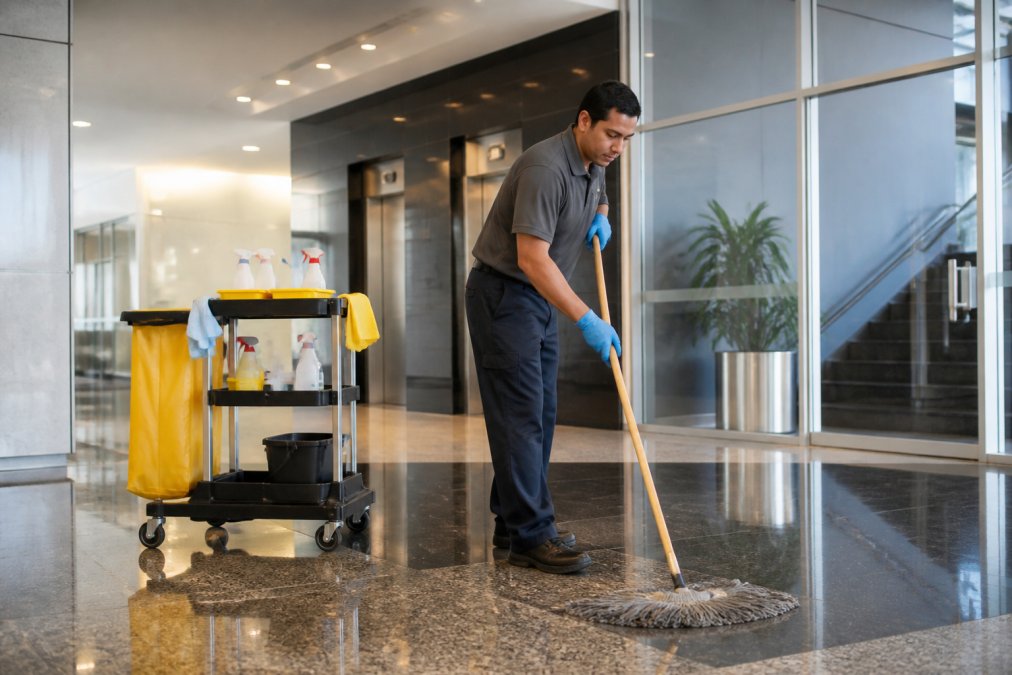
General liability insurance is the foundational coverage for any janitorial business. It protects against third-party claims for bodily injury and property damage during cleaning operations, such as a client slipping on a wet floor or cleaning chemicals damaging flooring. The policy pays for legal defense costs, medical expenses, and settlements up to your coverage limits. Most commercial clients require a per-occurrence limit of at least $1 million and an aggregate limit of $2 million.
According to Insureon's cleaning business insurance cost guide, general liability coverage for janitorial businesses starts around $48 per month, though premiums vary based on revenue, number of employees, and facility types serviced.
Workers' Compensation Requirements
Workers' compensation is legally mandated for janitorial businesses with employees in virtually every state. This coverage pays for medical treatment, rehabilitation, and lost wages when an employee suffers an on-the-job injury or work-related illness. Janitorial work carries real physical risk: repetitive motion injuries, chemical exposure, slips on wet surfaces, and musculoskeletal strain from heavy equipment.
According to NEXT Insurance's janitorial insurance cost breakdown, workers' compensation for cleaning businesses typically runs between $29 and $102 per month, with costs driven by payroll size, job classification codes, and state-specific rates. The employer's liability component, usually bundled with workers' comp, protects the business if an employee sues directly over a workplace injury.
Commercial Auto and Hired and Non-Owned Auto Coverage
If your crews drive vehicles to job sites, whether company-owned vans or personal cars, you need commercial auto coverage. Personal auto insurance explicitly excludes business use, leaving the business fully exposed in an accident.
Commercial auto insurance covers bodily injury and property damage liability when a business vehicle causes an accident. For businesses where employees use their own vehicles for work, hired and non-owned auto (HNOA) coverage protects the business from liability when an employee's personal vehicle is involved in a work-related accident.
Janitorial Bond vs Insurance: Key Differences and When You Need Both
The terms "bonded" and "insured" appear together constantly in commercial cleaning contracts, but they cover completely different risks. Insurance protects the cleaning company from financial loss. A bond protects the client.
What a Fidelity Bond Actually Covers
A janitorial bond, also called a fidelity bond or employee dishonesty bond, reimburses a client if a cleaning crew member steals money, property, or valuables from their premises. It is a surety agreement where a bonding company guarantees the cleaning business's honesty.
According to SuretyBonds.com's janitorial bond guide, basic janitorial bonds start around $125 per year, with costs based on the bond amount and number of employees. A fidelity bond only covers theft and dishonest acts, not accidental property damage, bodily injury, or operational risk.
Why Most Commercial Contracts Require Both
Commercial clients require both a janitorial bond and general liability insurance because they address separate exposures. The bond handles the trust risk: will your employees steal? The insurance handles the operational risk: will your crew accidentally damage something or cause an injury? A cleaning company carrying only one will fail most commercial contract requirements.
| Coverage Type | What It Protects | Who It Protects | Covers Theft | Covers Accidents |
|---|---|---|---|---|
| General Liability Insurance | Operational risk | The cleaning business | No | Yes |
| Fidelity/Janitorial Bond | Employee dishonesty | The client | Yes | No |
| Workers' Compensation | On-the-job injuries | Employees | No | Yes |
| Commercial Auto | Vehicle accidents | Business and third parties | No | Yes |
Commercial Cleaning General Liability Insurance Cost: What to Expect
Pricing for commercial cleaning general liability insurance depends on annual revenue, number of employees, types of facilities serviced, coverage limits, and claims history. Small janitorial operations typically pay less per month than larger companies servicing hospitals or industrial facilities. Healthcare and pharmaceutical facility cleaning carries higher premiums due to greater risk exposure.
A business owner's policy (BOP) bundles general liability and commercial property insurance into a single package and often costs less than purchasing both separately. According to TechInsurance's cleaning business insurance pricing, BOPs for cleaning businesses start around $76 per month. Coverage limits also drive cost; many large commercial contracts require aggregate limits above the standard $2 million, which pushes premiums higher.
Certificate of Insurance Requirements for Cleaning Services
A certificate of insurance (COI) is a standardized summary that proves your coverage is active. It lists your insurer, policy numbers, coverage types, limits, and effective dates.
What a COI Must Include to Satisfy Commercial Contracts
Most commercial contracts specify exactly what a COI must show. At minimum, expect to provide:
- General liability coverage with per-occurrence and aggregate limits meeting contract minimums
- Workers' compensation confirmation with employer's liability limits
- Commercial auto coverage if your crews drive to the site
- Janitorial bond confirmation
- Additional insured endorsement naming the client as an additional insured on your general liability policy
- Waiver of subrogation in some contracts
- 30-day notice of cancellation clause
The additional insured requirement is critical: simply having coverage is not enough. The client must be named on the policy through a formal endorsement.
How to Request and Manage COIs Across Multiple Clients
Maintain a master spreadsheet tracking each client's COI requirements, current certificate on file, and expiration dates. Request updated COIs from your broker at least 30 days before policy renewal. Store signed copies of each client's contract alongside the corresponding COI. When a new contract requires higher limits, contact your broker immediately rather than waiting for renewal.
Some commercial clients use third-party certificate tracking services that verify COI compliance automatically. If a client uses one, register your certificates directly in their portal to avoid contract holds.
Insurance for Subcontractors vs. Employees in Janitorial Operations
Employees are covered by your workers' compensation policy automatically. Subcontractors are a different story. If you hire independent subcontractors without their own workers' compensation and general liability insurance, many states will treat them as employees for insurance purposes, leaving you personally liable.
Require every subcontractor to provide their own certificate of insurance before they work. Verify that their general liability limits meet your contract requirements and that their workers' comp is active. Keep copies of their COIs on file and treat renewals the same way you track your own.
Industry-Specific Endorsements and Additional Janitorial Service Insurance Coverage
Standard janitorial service insurance packages cover most operational risks, but certain facility types require additional endorsements or specialized coverage.
Medical and Healthcare Facility Cleaning
Cleaning medical offices, dental practices, and healthcare facilities introduces risks that standard general liability policies may not fully address. Contamination from biohazardous materials and specialized disinfection protocols create elevated liability exposure. Healthcare facility cleaning contracts frequently require higher per-occurrence and aggregate liability limits, pollution liability endorsements covering chemical and biological contamination, and completed operations coverage extending protection after the cleaning service is finished.
For healthcare cleaning, occurrence-based coverage is generally safer than claims-made policies. An occurrence-based policy covers incidents that happen during the policy period, even if the claim is filed later.
Business Owner's Policy and Umbrella Coverage
A business owner's policy (BOP) combines general liability and commercial property insurance, covering both third-party claims and your own equipment and supplies. For small to mid-sized janitorial operations, a BOP is typically more cost-effective than separate policies.
A commercial umbrella policy extends liability limits when a major claim exhausts underlying policies. For janitorial businesses pursuing large commercial contracts, umbrella coverage is often contractually required. Enterprise clients routinely require total liability limits of $5 million or more.
How to Verify a Janitorial Company Is Properly Bonded and Insured
The phrase "fully bonded and insured" is easy to print on a website. Verifying it takes about five minutes and should be standard practice before signing any cleaning contract.

The verification process:
- Request a current certificate of insurance directly from the cleaning company's insurance broker, not from the company itself.
- Confirm the policy is active by calling the insurer listed on the COI with the policy number.
- Check coverage limits against your contract requirements.
- Verify the bond by requesting the bond certificate and contacting the surety company.
- Request to be named as an additional insured on their general liability policy.
- Ask for 30-day cancellation notice in writing.
A cleaning company that resists any of these steps is worth walking away from. Professional operations treat COI requests as routine.
| Verification Step | What to Check | Red Flag |
|---|---|---|
| Request COI from broker | Policy numbers, coverage types, limits | Company sends it themselves without broker |
| Call insurer to confirm | Policy is active and in force | Insurer cannot locate the policy |
| Review coverage limits | Meets your contract minimums | Limits below contractual requirements |
| Verify bond certificate | Bond is active, amount matches | Bond expired or amount insufficient |
| Request additional insured | Named on general liability policy | Company declines or delays |
| Confirm cancellation notice | 30-day written notice clause | No cancellation notification provision |
Janitorial service insurance requirements are not static. State regulations change, commercial contract standards evolve, and coverage gaps that were acceptable five years ago may disqualify a cleaning company from contracts today.
Rangel Janitorial's crews arrive fully bonded and insured, with certificates ready for review, additional insured endorsements available on request, and 30 years of experience backing every contract. Get a free quote from Rangel Janitorial and verify our coverage documentation before your next service agreement is signed.
=== FAQ ANSWERS (audit these too, same rules) ===
[1] Q: What type of insurance does a commercial cleaning business need? A: A commercial cleaning business typically needs general liability insurance, workers' compensation (required by law in most states for businesses with employees), a janitorial bond, and commercial auto coverage for any vehicles used on the job. Larger operations or those serving medical and corporate clients often add a business owner's policy, umbrella coverage, and tools and equipment insurance. The exact combination depends on contract requirements, the number of employees, and the types of facilities serviced.
[2] Q: What is the difference between bonded and insured for janitorial services? A: Being insured means the cleaning company carries policies like general liability and workers' compensation that pay out for accidents, injuries, or property damage. Being bonded means the company holds a janitorial or fidelity bond, which protects clients specifically against employee theft or dishonest acts. Insurance covers accidental harm; a bond covers intentional misconduct by employees. Most commercial contracts require both, since they address entirely different categories of risk exposure.
[3] Q: Do janitorial services need workers' compensation insurance? A: Yes, in most states, any janitorial business with one or more employees is legally required to carry workers' compensation insurance. This coverage pays medical bills and lost wages when an employee suffers an on-the-job injury, such as a slip and fall or a chemical exposure incident. Failing to carry it can result in fines, stop-work orders, and personal liability for the business owner. Even states with higher thresholds for employee count still strongly recommend it given the physical nature of cleaning work.
[4] Q: Why is a certificate of insurance required for janitorial contracts? A: A certificate of insurance (COI) is a one-page document that proves a cleaning company's coverage is active and meets the client's contractual requirements. Facility managers and property managers request COIs before awarding contracts to confirm that general liability limits, workers' compensation, and bonding are in place. Without a valid COI, a cleaning company cannot legally start work at most commercial properties. Clients may also require being listed as an additional insured on the policy, which the COI documents.
[5] Q: Does commercial cleaning insurance cover property damage? A: Yes, general liability insurance covers third-party property damage caused by the cleaning crew, such as a broken fixture, damaged flooring, or ruined office equipment. The per-occurrence limit defines the maximum payout for a single incident, while the aggregate limit caps total payouts across the policy period. Damage to the cleaning company's own equipment is a separate matter, covered by tools and equipment insurance or the commercial property portion of a business owner's policy.
[6] Q: How do I verify that a janitorial company is actually bonded and insured? A: Request a current certificate of insurance directly from the cleaning company's insurer, not from the company itself. The COI will list the insurer's name, policy numbers, coverage types, limits, and expiration dates. For bonding, ask for the surety bond certificate and confirm the bond amount is sufficient for your contract. You can also call the listed insurer to verify the policy is active. Reputable providers will supply updated COIs quickly and without hesitation whenever coverage renews or a new contract begins.
Frequently Asked Questions
What type of insurance does a commercial cleaning business need?
A commercial cleaning business typically needs general liability insurance, workers' compensation (required by law in most states for businesses with employees), a janitorial bond, and commercial auto coverage for any vehicles used on the job. Larger operations or those serving medical and corporate clients often add a business owner's policy, umbrella coverage, and tools and equipment insurance. The exact combination depends on contract requirements, the number of employees, and the types of facilities serviced.
What is the difference between bonded and insured for janitorial services?
Being insured means the cleaning company carries policies like general liability and workers' compensation that pay out for accidents, injuries, or property damage. Being bonded means the company holds a janitorial or fidelity bond, which protects clients specifically against employee theft or dishonest acts. Insurance covers accidental harm; a bond covers intentional misconduct by employees. Most commercial contracts require both, since they address entirely different categories of risk exposure.
Do janitorial services need workers' compensation insurance?
Yes, in most states, any janitorial business with one or more employees is legally required to carry workers' compensation insurance. This coverage pays medical bills and lost wages when an employee suffers an on-the-job injury, such as a slip and fall or a chemical exposure incident. Failing to carry it can result in fines, stop-work orders, and personal liability for the business owner. Even states with higher thresholds for employee count still strongly recommend it given the physical nature of cleaning work.
Why is a certificate of insurance required for janitorial contracts?
A certificate of insurance (COI) is a one-page document that proves a cleaning company's coverage is active and meets the client's contractual requirements. Facility managers and property managers request COIs before awarding contracts to confirm that general liability limits, workers' compensation, and bonding are in place. Without a valid COI, a cleaning company cannot legally start work at most commercial properties. Clients may also require being listed as an additional insured on the policy, which the COI documents.
Does commercial cleaning insurance cover property damage?
Yes, general liability insurance covers third-party property damage caused by the cleaning crew, such as a broken fixture, damaged flooring, or ruined office equipment. The per-occurrence limit defines the maximum payout for a single incident, while the aggregate limit caps total payouts across the policy period. Damage to the cleaning company's own equipment is a separate matter, covered by tools and equipment insurance or the commercial property portion of a business owner's policy.
How do I verify that a janitorial company is actually bonded and insured?
Request a current certificate of insurance directly from the cleaning company's insurer, not from the company itself. The COI will list the insurer's name, policy numbers, coverage types, limits, and expiration dates. For bonding, ask for the surety bond certificate and confirm the bond amount is sufficient for your contract. You can also call the listed insurer to verify the policy is active. Reputable providers will supply updated COIs quickly and without hesitation whenever coverage renews or a new contract begins.