 Ultimate guide
How to Clean Corporate Campuses Efficiently
Table of Contents
- Why Efficient Campus Cleaning Matters
- Daily Sanitation Protocols for High-Touch Surfaces
- Dust Reduction and Indoor Air Quality Strategies
- Routine Floor Maintenance and Vacuuming Systems
- Electrostatic Disinfection Benefits for Campus Facilities
- Commercial Cleaning Service Standards and Scheduling
- How to Handle Janitorial Service Complaints and Quality Issues
- Waste Management and Deep Cleaning Cycles
- Frequently Asked Questions
Last Updated: September 29, 2026
Why Efficient Campus Cleaning Matters
Maintaining spotless clean corporate campuses isn't just about appearances. It directly impacts occupant health, operational efficiency, and how your organization is perceived by clients and employees alike. When cleaning protocols fall short, cross-contamination spreads quickly across high-traffic areas, absenteeism rises, and productivity suffers. A comprehensive approach to campus cleaning requires coordination across multiple buildings, zones, and cleaning frequencies, something most facility managers struggle to execute consistently.
The difference between adequate cleaning and efficient cleaning comes down to strategy. Many facilities managers treat cleaning as a checkbox item rather than a core operational function. They schedule services reactively, use inconsistent protocols, and lack real-time oversight. This approach wastes resources and leaves gaps in coverage. Rangel Janitorial has helped facility managers across California develop cleaning systems that maximize coverage while reducing labor costs and environmental impact.
Efficient campus cleaning requires understanding how dirt, dust, and pathogens move through your facility. It means knowing which surfaces demand daily attention and which can be addressed on longer cycles. It means deploying the right sanitization technology, like electrostatic disinfection, where it delivers the most value. This guide walks through the operational framework that separates well-maintained facilities from those constantly playing catch-up.
Daily Sanitation Protocols for High-Touch Surfaces
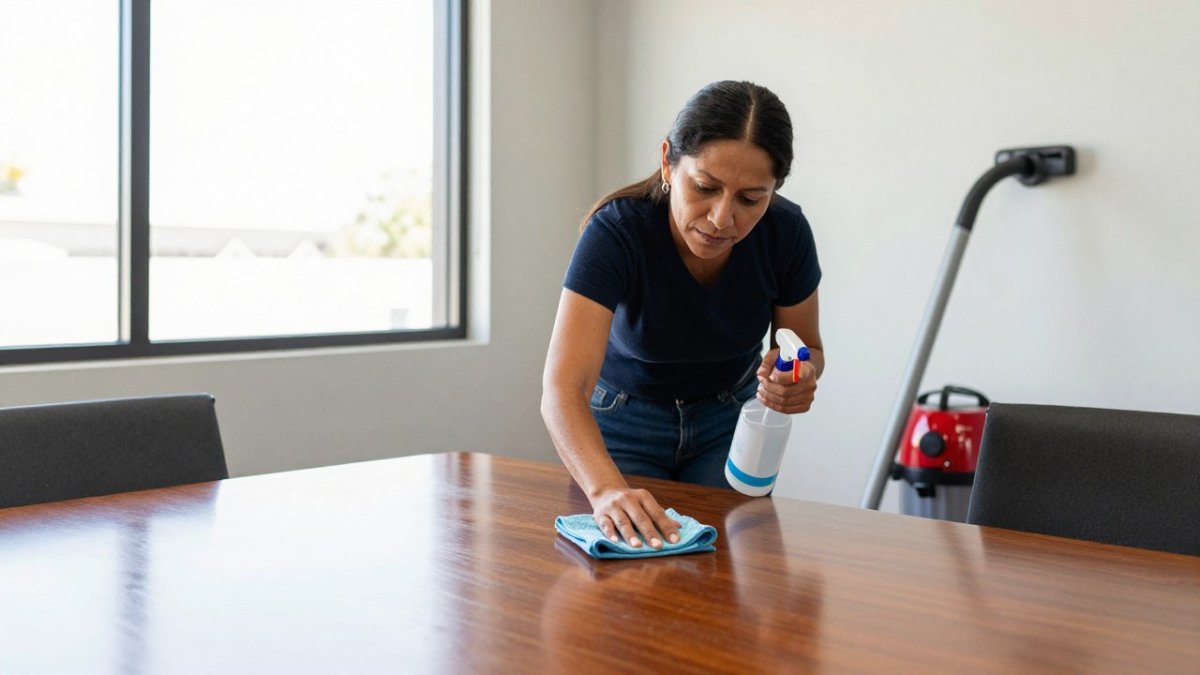
High-touch surfaces are the primary vectors for cross-contamination in any workplace. Door handles, light switches, elevator buttons, conference table edges, and restroom fixtures require daily disinfection to prevent pathogen transmission. A consistent protocol ensures these critical areas receive attention every single day without relying on memory or informal handoff systems.
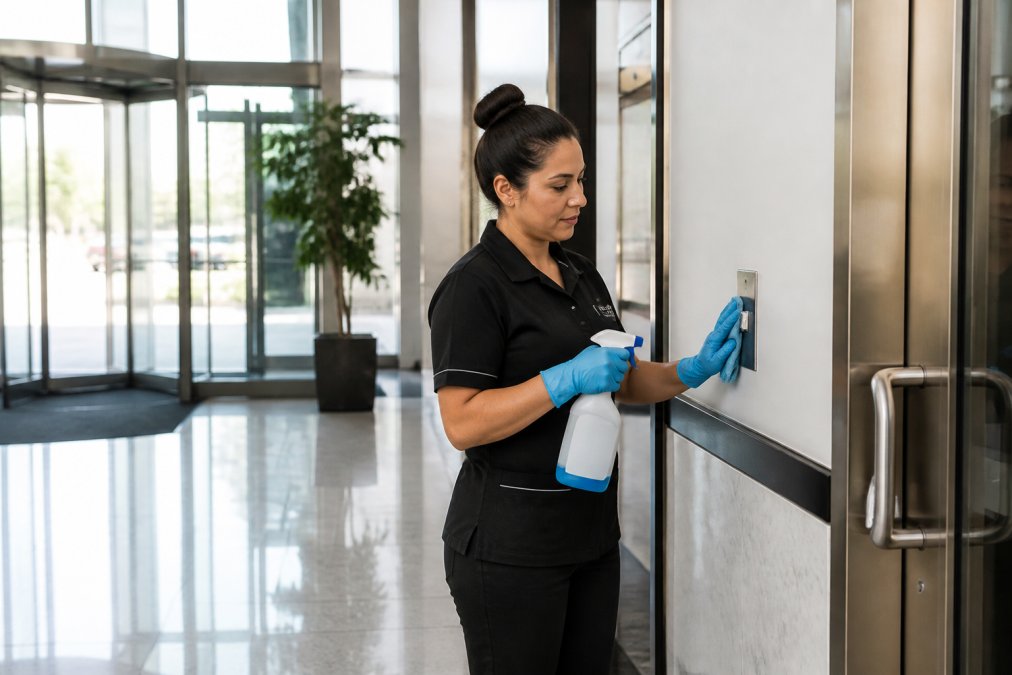
The most effective approach uses a checklist system tied to specific times of day. Morning sanitization should occur before occupants arrive, hitting restrooms, entry points, and common areas. Midday touch-ups target high-traffic zones during peak use periods. End-of-day disinfection covers surfaces accumulated throughout the business hours. Each shift should document completion with timestamps, creating accountability and visibility into coverage gaps.
Disinfectant selection matters significantly. EPA-registered hospital-grade disinfectants provide the broadest pathogen coverage and are appropriate for healthcare-adjacent facilities like medical offices and fitness centers. Standard commercial disinfectants work well for general office environments but may not meet compliance requirements in regulated settings. Contact time, how long the disinfectant must remain wet on the surface, varies by product and should be verified for each facility's chosen solution.
Training janitorial staff on proper technique prevents common mistakes. Many facilities experience poor sanitization results not because the disinfectant is inadequate, but because staff apply it incorrectly: insufficient contact time, improper dilution, or inadequate coverage. Clear written protocols with photos of proper technique reduce errors and ensure consistency across your janitorial team.
Dust Reduction and Indoor Air Quality Strategies
Dust accumulation degrades indoor air quality and creates an unprofessional appearance. Dust settles on surfaces, circulates through HVAC systems, and accumulates on equipment, all of which compound over time. Effective dust reduction requires both preventative measures and active removal at multiple stages.
The foundation is preventative maintenance: reducing dust at the source before it enters your facility. Entrance mats at all building entries capture soil and moisture from footwear, preventing tracked-in particles from spreading throughout the campus. Regular exterior maintenance, sweeping entryways and clearing landscaping debris, keeps outdoor dust from being carried indoors. These simple measures reduce indoor dust loads significantly.
Active dust removal happens through vacuuming and air filtration. High-efficiency particulate air (HEPA) filtration in vacuum systems captures fine particles that standard vacuums recirculate into the air. Vacuuming should occur daily in high-traffic corridors and at least twice weekly in office areas. Hard floor surfaces benefit from microfiber dust mopping, which captures particles rather than pushing them around with traditional brooms.
HVAC system maintenance directly impacts air quality. Clogged air filters reduce efficiency and allow dust to bypass filtration. Filters should be inspected monthly and replaced on a schedule appropriate to your facility's dust load, typically every 30-90 days depending on traffic and environmental conditions. Ductwork cleaning every 3-5 years removes accumulated dust that circulates through the system.
Routine Floor Maintenance and Vacuuming Systems
Floor care represents one of the largest labor investments in campus cleaning. Carpeted areas require different protocols than hard floors, and traffic patterns determine optimal cleaning frequency. High-traffic corridors need vacuuming daily, while perimeter areas may need attention only twice weekly. Establishing zone-based cleaning schedules prevents overallocation of resources to low-traffic areas while ensuring high-traffic zones receive adequate attention.
Vacuuming technique significantly impacts results. Slow, deliberate passes with proper overlap ensure complete coverage. Many facilities managers see poor vacuuming results because staff rush through corridors without adequate passes per area. Training should emphasize multiple passes in high-traffic zones and proper technique for corners and edges where dust accumulates. Commercial-grade equipment with sufficient suction and brush agitation outperforms consumer models and lasts longer under daily use.
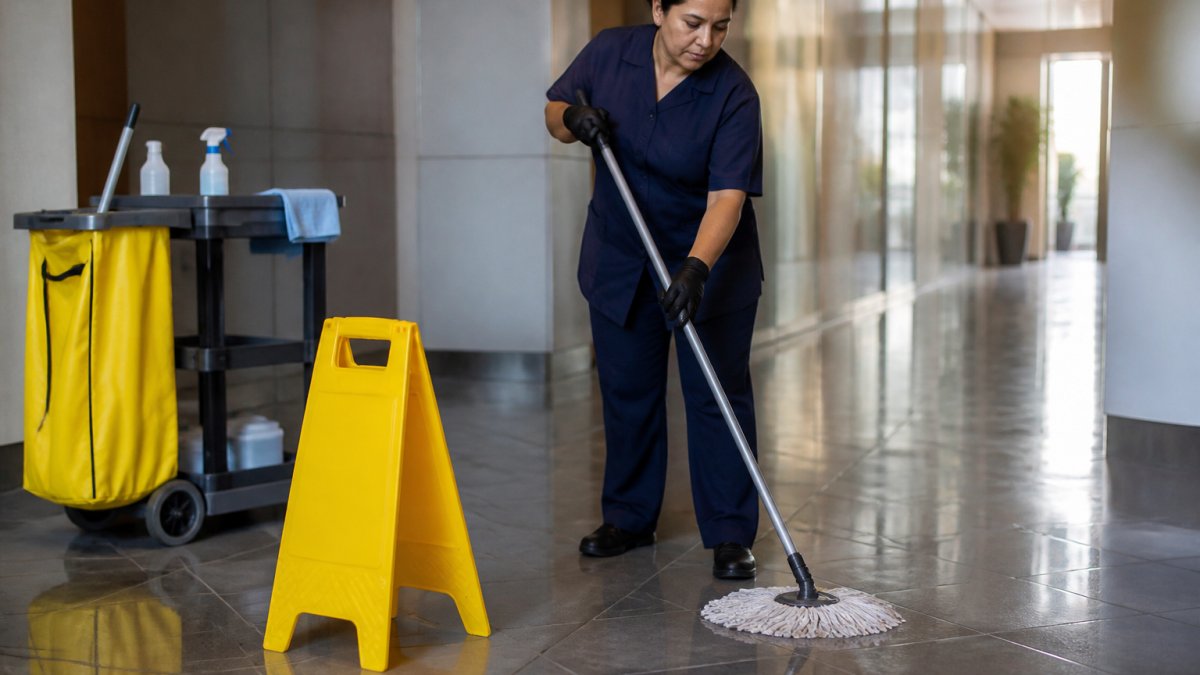
Hard floor maintenance follows a different cycle. Daily sweeping or dust mopping removes surface debris. Weekly or biweekly wet mopping with appropriate floor cleaner maintains appearance and prevents buildup. Strip-and-wax or burnishing cycles occur quarterly or semi-annually depending on traffic levels and desired appearance standards. Proper technique prevents water damage and slip hazards, critical considerations in multi-building campuses where consistency matters.
Carpet extraction (deep cleaning) should occur annually or semi-annually depending on traffic. Hot water extraction removes embedded dirt and allergens that regular vacuuming cannot reach. Scheduling extraction during low-occupancy periods (weekends or after-hours) minimizes disruption to operations. Professional equipment and trained operators deliver superior results compared to rental machines.
Electrostatic Disinfection Benefits for Campus Facilities
Electrostatic disinfection technology applies an electrostatically charged mist that adheres to all surfaces, visible and hidden, providing 360-degree coverage that traditional spray and wipe methods cannot achieve. The charged particles are attracted to surfaces and wrap around edges, crevices, and hard-to-reach areas where pathogens hide. This technology has become standard in healthcare facilities and is increasingly valuable for corporate campuses concerned with occupant health and environmental standards.
The process works by ionizing disinfectant particles, giving them a negative charge. As the mist is applied, particles naturally seek out and coat all surfaces, including undersides of furniture, behind equipment, and inside air vents. Coverage is significantly more thorough than manual application.
Electrostatic disinfection is particularly valuable for gyms and fitness centers where equipment contact and high-traffic locker rooms create elevated contamination risks. It's equally important in medical and dental facilities where healthcare compliance standards demand comprehensive disinfection. For general corporate offices, it provides an additional layer of protection during cold and flu season or in response to outbreaks.
The technology requires proper equipment and trained operators. Operators must understand proper technique: distance from surfaces, application speed, and dwell time all affect results. Facilities using electrostatic disinfection should verify that their janitorial provider uses EPA-registered hospital-grade disinfectants compatible with the equipment.
Commercial Cleaning Service Standards and Scheduling
Defining clear cleaning service standards prevents misunderstandings and ensures consistent quality across your campus. Standards should specify cleaning frequency for each area type, disinfectant types for different zones, and response times for special requests. Written service level agreements create accountability and give your janitorial provider explicit expectations.
Scheduling efficiency determines labor costs and coverage consistency. Most corporate campuses operate on a hybrid model: some areas receive daily attention, others weekly, and some monthly. High-touch surfaces and restrooms demand daily service. Offices and conference rooms typically need weekly cleaning. Exterior areas and storage zones may need monthly attention. The key is matching cleaning frequency to actual usage patterns rather than applying a one-size-fits-all approach.
Timing matters significantly. After-hours cleaning prevents disruption to business operations and reduces cross-contamination risk during occupancy. Most corporate campuses use evening or early morning schedules. Medical facilities and fitness centers may require specialized timing to accommodate operating hours and peak usage patterns. Weekend deep cleaning addresses areas that cannot be accessed during business hours.
Quality assurance requires ongoing monitoring. Regular facility inspections identify areas needing additional attention and verify that janitorial staff are following protocols. Many facilities use inspection checklists tied to specific areas and cleaning tasks. Photographic documentation creates a record of conditions and helps identify patterns in missed areas or inconsistent execution.
How to Handle Janitorial Service Complaints and Quality Issues
Even with clear protocols and trained staff, quality issues occasionally arise. The difference between a good janitorial partnership and a problematic one is how complaints are handled. A responsive provider acknowledges issues quickly, investigates root causes, and implements corrections before the same problem recurs.
Establish a clear complaint process with specific contact information and expected response times. Most quality issues fall into a few categories: missed areas, inadequate disinfection, damaged equipment, or scheduling inconsistencies. Each category requires different investigation and resolution. Missed areas may indicate training gaps or unrealistic scheduling.
Waste Management and Deep Cleaning Cycles
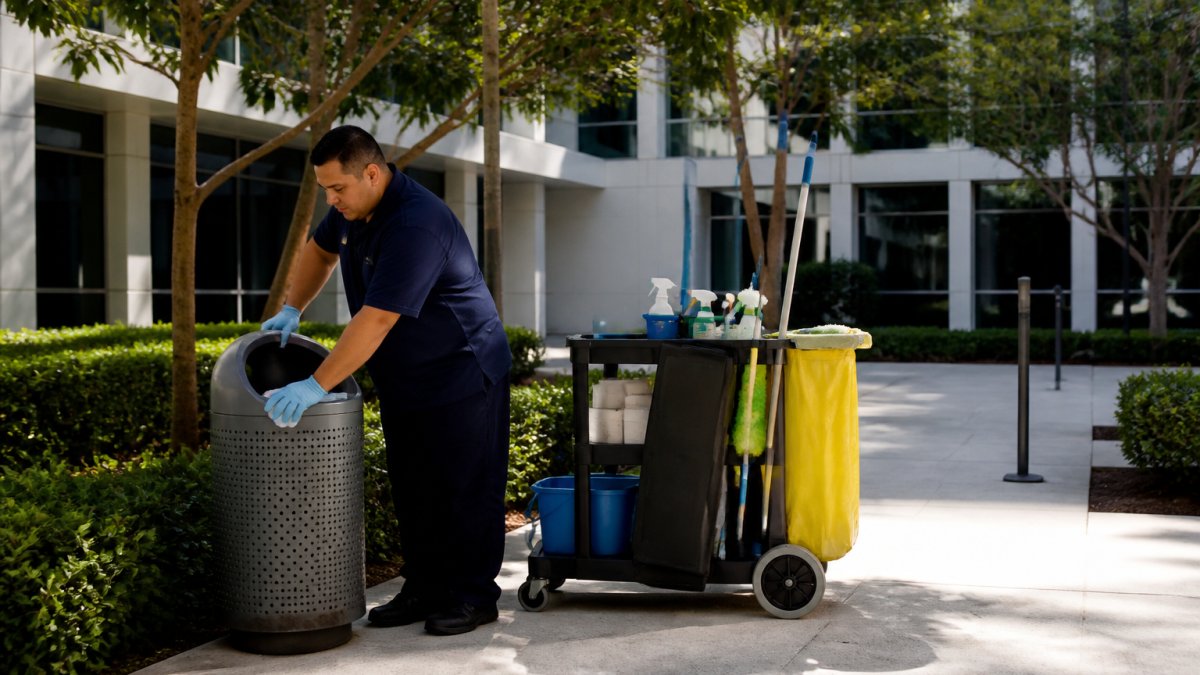
Waste management extends beyond trash removal to include recycling diversion, composting where applicable, and proper disposal of hazardous materials. A comprehensive waste program reduces landfill impact and often lowers disposal costs through volume reduction. Organized recycling and composting programs can reduce landfill impact and often lower disposal costs through volume reduction.
Frequently Asked Questions
What is the 20/10 rule for cleaning corporate campuses?
The 20/10 rule allocates 20 minutes to deep cleaning and 10 minutes to quick touch-ups per area. This approach maintains high standards of cleanliness without disrupting business operations. For corporate campuses, applying this rule to high-traffic zones like lobbies and restrooms ensures consistent facility maintenance throughout the day while optimizing janitorial staff productivity and resource allocation.
How does electrostatic disinfection improve campus hygiene?
Electrostatic disinfection uses charged particles to coat surfaces with disinfectant from all angles, reaching crevices and irregular surfaces that traditional spraying misses. This method provides 360-degree coverage, reducing cross-contamination risks and surface decontamination time. For corporate campuses with high-traffic areas and shared equipment, electrostatic disinfection creates a more thorough hygiene barrier than standard cleaning protocols alone.
How do you maintain high standards of cleanliness in large corporate facilities?
Maintain high cleanliness standards through preventative maintenance schedules, documented cleaning protocols, and regular compliance audits. Assign specific zones to janitorial teams, establish daily sanitization routines for high-touch surfaces, and implement deep cleaning cycles weekly or monthly. Tracking maintenance logs and conducting facility inspections ensures consistent operational efficiency and occupant health across multi-building campuses.
What should be included in a corporate campus cleaning checklist?
A comprehensive checklist covers daily sanitation of high-touch surfaces (doors, rails, light switches), floor care and vacuuming schedules, restroom disinfection, waste diversion and recycling procedures, dust accumulation control, and air filtration maintenance. Include frequency guidelines for each task, responsible staff assignments, and sign-off documentation. For large campuses, separate checklists by zone or building ensure thorough coverage and accountability across all facility operations.