 Comparison
Electrostatic Spray vs Manual Wiping for Office Cleaning
Table of Contents
- How Electrostatic Spraying and Manual Wiping Compare
- How Electrostatic Spraying Works
- Electrostatic Sprayer Dwell Time Requirements and Application
- EPA-Approved Disinfectants for Electrostatic Sprayers
- Efficiency, Coverage, and Labor Impact
- Electrostatic Disinfection for Small Businesses Guide
- Surface Compatibility and Hybrid Cleaning Protocols
- Cost-Effectiveness and ROI Considerations
- Frequently Asked Questions
Last Updated: October 3, 2026
How Electrostatic Spraying and Manual Wiping Compare
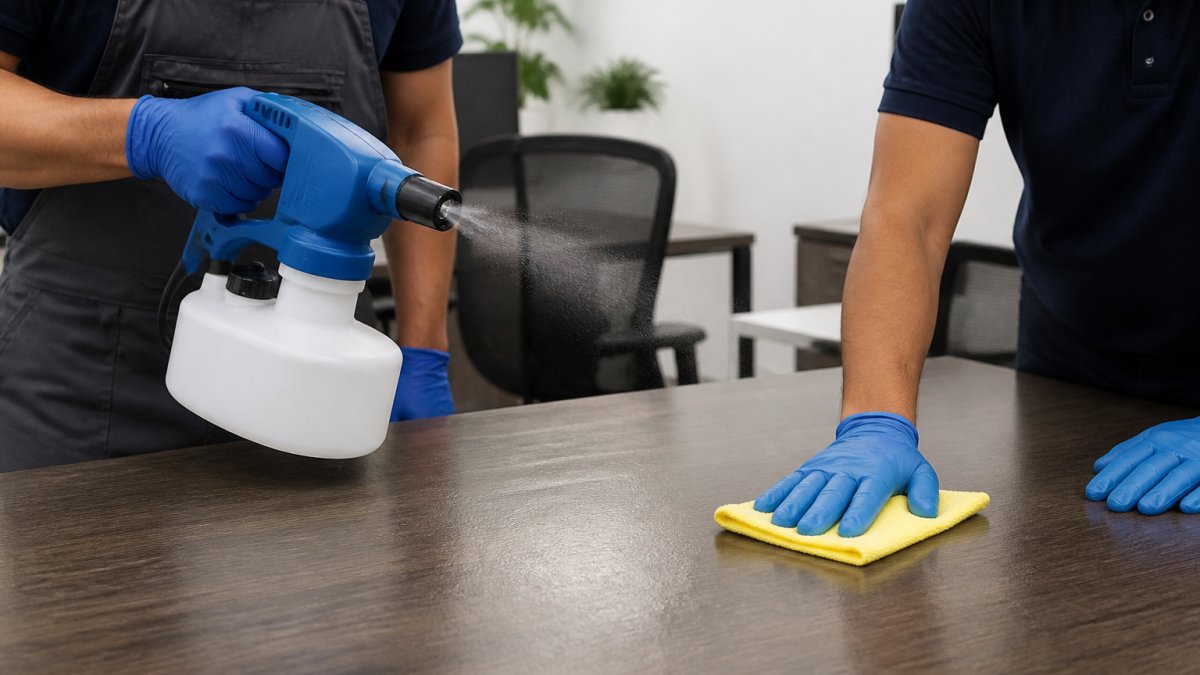
When it comes to disinfecting office spaces, facility managers face a fundamental choice between electrostatic spray vs manual wiping for office cleaning. The difference between these two approaches goes far beyond speed. Electrostatic spray delivers 360-degree coverage with charged droplets that wrap around surfaces, while manual wiping requires contact with every single spot.
The core tension is this: electrostatic spraying excels at coverage and dwell time consistency, but manual wiping offers precision and immediate visual confirmation. Neither approach is universally superior, the right choice depends on your facility type, budget, and disinfection standards.
Key Differences at a Glance
| Aspect | Electrostatic Spray | Manual Wiping |
|---|---|---|
| Coverage Speed | 3,000-5,000 sq ft per hour | 500-800 sq ft per hour |
| Surface Reach | 360-degree wrap-around | Direct contact only |
| Dwell Time | 30 seconds to 10 minutes | Immediate |
| Chemical Efficiency | 65-75% less product | 100% baseline |
| Labor Intensity | 1-2 technicians | 3-5 staff members |
| High-Touch Surface Consistency | Uniform | Variable |
| Equipment Cost | Initial investment required | Minimal |
| Downtime Required | 15-30 minutes | Minimal to none |
Electrostatic spray technology covers more ground faster and uses less disinfectant overall. Manual wiping, by contrast, demands more hands but allows immediate verification of cleaned surfaces. The choice hinges on your facility's traffic patterns, surface complexity, and compliance requirements.
How Electrostatic Spraying Works
Electrostatic spraying uses charged liquid droplets to coat surfaces with disinfectant. The sprayer applies an electrical charge to the liquid as it exits the nozzle, causing droplets to repel one another and spread evenly. This charged mist seeks out surfaces naturally, clinging to vertical planes, undersides, and hard-to-reach areas that manual wiping would miss.
The technology works because of electrostatic charge, the droplets are negatively charged, and they're attracted to neutral or positively charged surfaces. This creates what manufacturers call the wrap-around effect. A single pass with an electrostatic sprayer can coat chair legs, desk undersides, and equipment crevices without the technician having to physically reach every angle.
The application process is straightforward. A trained operator fills the sprayer tank with EPA-approved disinfectant, powers on the device, and moves through the space in systematic patterns. The mist settles on surfaces and begins its dwell time, the period during which the chemical actively kills pathogens. Unlike manual wiping, which stops working the moment the cloth dries, electrostatic application creates a residual film on many surfaces that continues disinfecting for minutes after application.
Electrostatic Sprayer Dwell Time Requirements and Application
Dwell time is the critical variable that separates effective disinfection from theater. Dwell time is the duration a disinfectant must remain wet on a surface to achieve pathogen reduction (the EPA). Different EPA-approved disinfectants have different dwell time requirements, typically ranging from 30 seconds to 10 minutes depending on the chemical formulation and the pathogens it targets (the EPA).
Electrostatic sprayers excel at maintaining dwell time because the charged droplets create a uniform, wet film across surfaces. The mist doesn't dry unevenly like manual application. A facility using electrostatic technology can ensure every surface receives the required contact time without guesswork.
Application timing matters. Electrostatic spraying works best when facilities are unoccupied or during off-hours. The mist takes 15 to 30 minutes to settle completely, and occupants should avoid contact with treated surfaces during this window. For office environments, this typically means scheduling applications after business hours or during lunch breaks.
The operator moves systematically through the space, ensuring complete coverage. Walls, desks, chairs, and equipment all receive treatment. The wrap-around effect means technicians don't need to spray every surface individually, the charged mist naturally reaches crevices and corners that would require multiple wipes with traditional methods.
EPA-Approved Disinfectants for Electrostatic Sprayers
Not every disinfectant works in electrostatic equipment. The EPA maintains a list of approved disinfectants specifically tested and verified for use in electrostatic sprayers. These products have documented efficacy against specific pathogens and meet the agency's safety standards for application in occupied spaces.
Approved disinfectants for electrostatic use typically contain active ingredients like quaternary ammonium compounds, hydrogen peroxide, or hypochlorous acid. The chemical must be compatible with the sprayer's electrical system, some formulations can damage equipment if they're too conductive.
The EPA's approval process requires manufacturers to demonstrate that the disinfectant achieves the required dwell time and pathogen reduction when applied via electrostatic technology. This testing ensures that the charged droplet application method delivers the same kill rate as traditional spray or wipe methods. Using unapproved products risks both equipment damage and regulatory non-compliance.
Medical facilities face stricter requirements. Healthcare environments often require disinfectants that meet both EPA approval and additional standards set by infection control guidelines (the CDC). Dental practices and surgical centers frequently specify hospital-grade disinfectants with documented efficacy against bloodborne pathogens and multi-drug-resistant organisms. Rangel Janitorial maintains current knowledge of EPA-approved products suitable for healthcare settings.
Efficiency, Coverage, and Labor Impact
Electrostatic spraying dramatically reduces the labor required to disinfect large spaces. A single technician with an electrostatic sprayer can treat 3,000 to 5,000 square feet per hour.
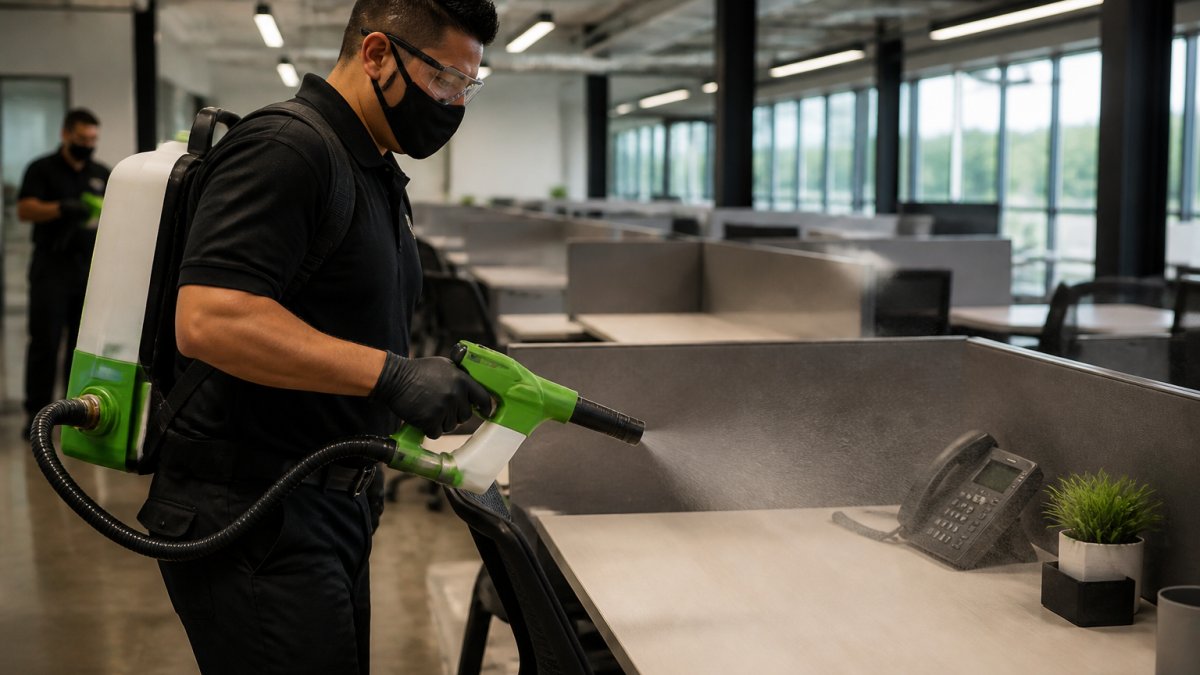
Surface coverage consistency is where electrostatic technology truly separates itself. Manual wiping depends on technician attention and technique.
For facilities with complex geometries, the advantage is pronounced. Open-plan offices with numerous desk surfaces, conference rooms with varied furniture, and industrial spaces with equipment and machinery all benefit from electrostatic's wrap-around effect.
Downtime is a trade-off. Electrostatic application requires 15 to 30 minutes for the mist to settle and surfaces to dry. During this window, occupants should avoid the treated space.
Electrostatic Disinfection for Small Businesses Guide
Small businesses often assume electrostatic technology is only for large enterprises. The reality is more nuanced. Electrostatic disinfection works well for small offices when the business can work around application schedules and when the facility layout suits the technology.
For small medical practices, dental offices, and professional service firms with fewer than 20 employees, electrostatic spraying offers significant advantages.
The decision depends on three factors: facility size, budget flexibility, and disinfection standards. Small businesses with tight budgets might prefer manual wiping's lower upfront cost. Those with compliance requirements or infection control concerns should consider electrostatic technology despite the initial equipment investment.
Outsourcing disinfection is often more practical for small businesses than purchasing equipment. Hiring a professional service like Rangel Janitorial to provide electrostatic spraying eliminates the need for capital investment and ongoing equipment maintenance.
Surface Compatibility and Hybrid Cleaning Protocols
Not all surfaces tolerate electrostatic disinfection equally. Some materials, certain plastics, unsealed wood, and delicate electronics, can be damaged by prolonged chemical exposure or electrical charge. Facility managers must understand surface compatibility before committing to electrostatic-only protocols.
Hard, non-porous surfaces like glass, stainless steel, laminate, and sealed tile handle electrostatic application well. These materials resist chemical damage and dry quickly. Soft surfaces, upholstered furniture, carpets, curtains, can absorb excessive moisture if over-sprayed.
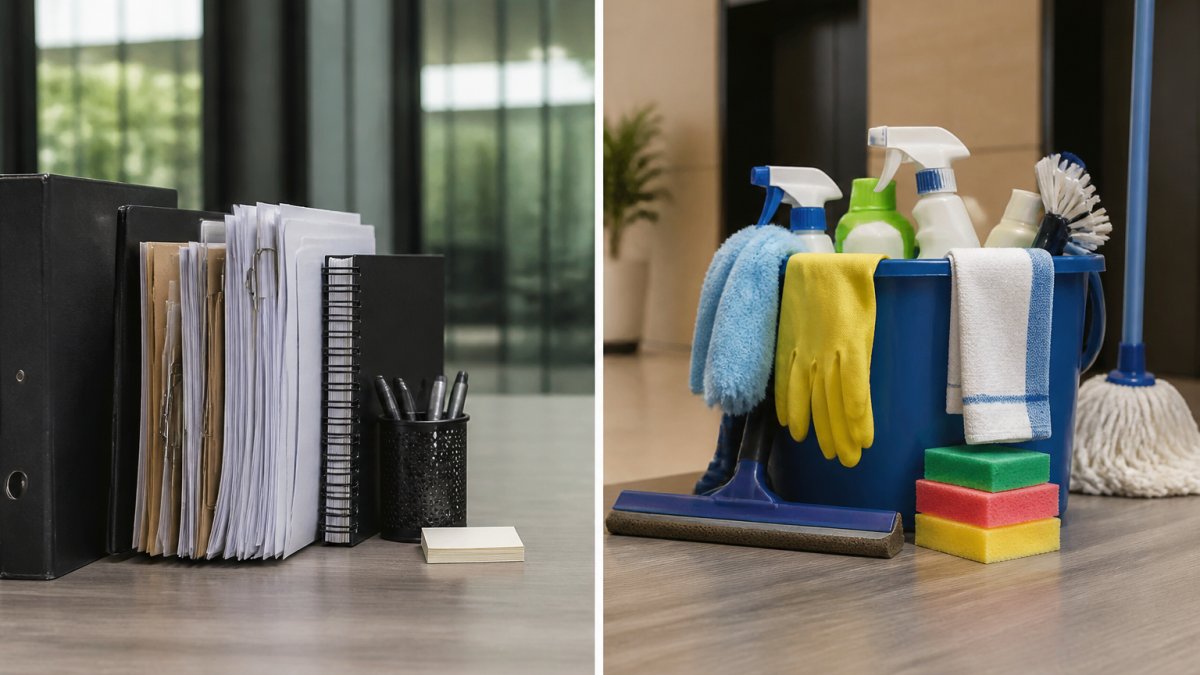
The most effective approach for many facilities is a hybrid protocol that combines both methods. Pre-cleaning with manual wiping removes visible debris, dust, and bioburden from surfaces.
Hybrid protocols address several real-world challenges. They ensure that visible contamination doesn't reduce disinfectant effectiveness. They accommodate surface compatibility concerns by allowing selective manual treatment of delicate items. They reduce dwell time requirements by combining application methods.
Cost-Effectiveness and ROI Considerations
The cost comparison between electrostatic and manual wiping extends beyond equipment and labor. Chemical consumption, facility downtime, and labor retention all factor into the true cost of each approach.
Electrostatic sprayers use 65 to 75 percent less disinfectant than manual wiping because the charged droplets distribute more efficiently.
Labor costs tell a different story depending on facility size.
Equipment maintenance and training represent hidden costs. Electrostatic sprayers require regular servicing, filter replacement, and tank cleaning. Staff need training on proper operation, safety protocols, and disinfectant compatibility.
Downtime costs vary by facility type. A corporate office can schedule electrostatic applications after hours with minimal impact.
The strongest ROI case for electrostatic technology appears in large facilities with consistent disinfection requirements and the operational flexibility to accommodate application schedules.
Choosing between electrostatic spray vs manual wiping for office cleaning requires understanding your facility's specific needs. Electrostatic technology excels at coverage speed and chemical efficiency, while manual wiping offers flexibility and immediate surface verification. Many facilities benefit most from hybrid approaches that combine both methods. Rangel Janitorial brings 30 years of experience evaluating these options for diverse facility types across California. Our fully bonded and insured crews deliver tailored disinfection protocols, whether electrostatic spraying, manual wiping, or hybrid approaches, ensuring your office maintains high hygiene standards. Get a free quote and let our team assess your facility's specific requirements.
Frequently Asked Questions
Is electrostatic spraying more effective than manual wiping for disinfection?
Electrostatic spraying offers superior coverage and pathogen reduction on surfaces that manual wiping might miss. The charged droplets wrap around objects and reach crevices, corners, and complex geometries that hand-wiping cannot access consistently. However, effectiveness depends on proper dwell time, EPA-approved disinfectant selection, and surface compatibility. For high-touch surfaces in offices, electrostatic methods reduce cross-contamination risk more thoroughly when applied by trained professionals.
What are EPA-approved disinfectants for electrostatic sprayers?
EPA-registered disinfectants must be specifically formulated for electrostatic application to ensure the charged droplet technology works as intended. These products are listed on the EPA's List N and must meet contact time and microbial load reduction standards. Your cleaning provider should verify that any disinfectant used maintains its efficacy when atomized and achieves the required dwell time on your facility's surfaces. Always confirm EPA registration before selecting a disinfectant for your office environment.
How often should offices use electrostatic disinfection services?
Frequency depends on traffic volume, facility type, and occupant health needs. High-traffic corporate offices typically benefit from weekly or bi-weekly electrostatic disinfection combined with daily manual cleaning of high-touch areas. Medical and dental practices may require more frequent protocols. Small businesses with lower occupancy can operate on monthly schedules. A professional assessment of your specific facility layout, occupancy patterns, and risk factors will determine the optimal frequency for your office.
Does electrostatic disinfection replace manual cleaning entirely?
No. A hybrid protocol works best: manual pre-cleaning removes visible dirt and debris, then electrostatic spraying applies disinfectant with 360-degree coverage. This combination ensures surfaces are both clean and sanitized. Manual wiping of high-touch areas (desks, door handles, keyboards) between electrostatic applications maintains hygiene standards. Electrostatic technology enhances manual cleaning rather than replacing it, especially in offices where sanitation standards and occupant safety are priorities.