 Comparison
Electrostatic Disinfection vs Standard Cleaning: 2026 Guide
Table of Contents
- What Sets Electrostatic Disinfection Apart from Standard Cleaning
- Side-by-Side Comparison: Electrostatic vs Manual Cleaning
- Electrostatic Disinfection Benefits for Offices and Commercial Facilities
- Cost of Electrostatic Disinfection vs Manual Cleaning
- Surface Compatibility, Environmental Impact, and PPE Requirements
- Commercial Disinfection Service Frequency: How Often Your Facility Needs It
- Training, Equipment Maintenance, and What to Look for in a Provider
- Which Approach Is Right for Your Facility
- Frequently Asked Questions
Last Updated: August 21, 2026
What Sets Electrostatic Disinfection Apart from Standard Cleaning
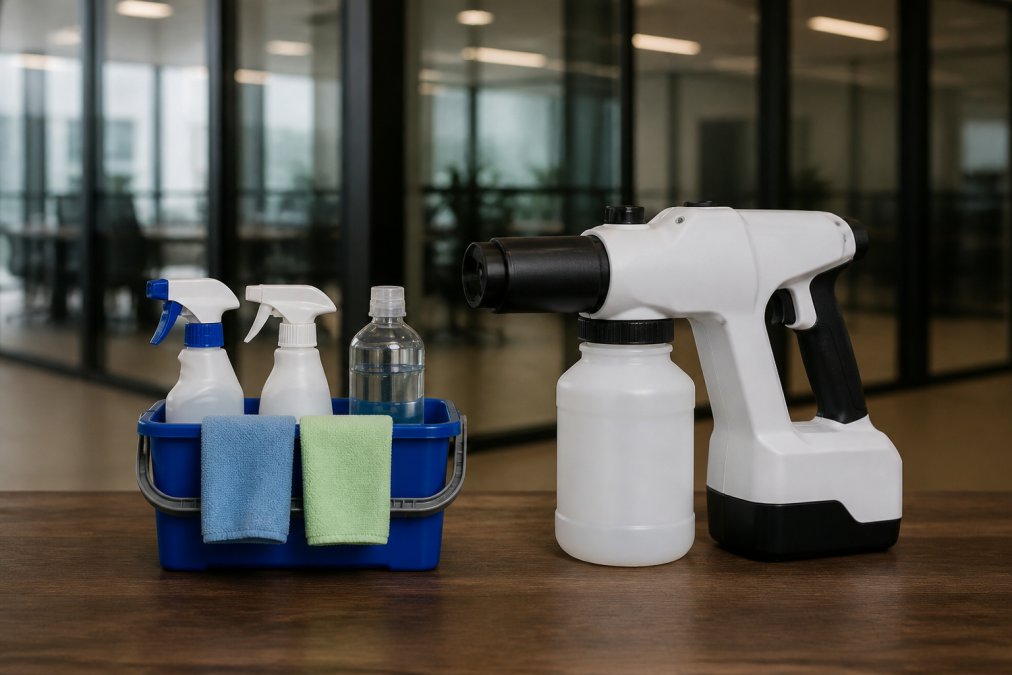
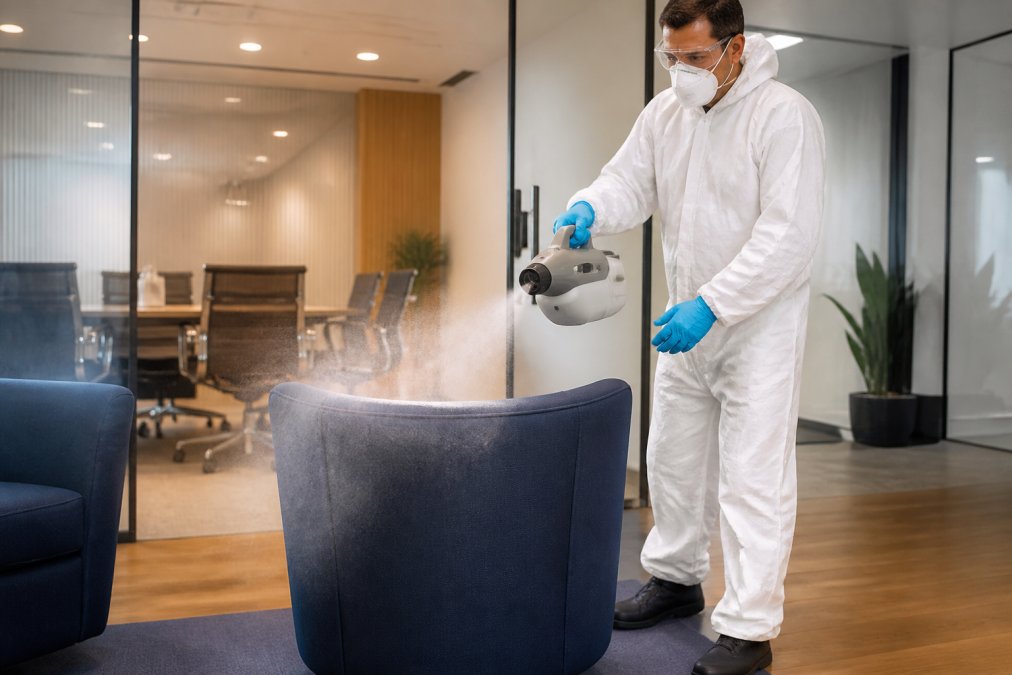
Electrostatic disinfection and standard cleaning represent fundamentally different approaches to pathogen control. Electrostatic disinfection applies disinfectant through a sprayer that imparts a positive electrical charge to atomized droplets, causing them to wrap around surfaces, including vertical faces, undersides, and hard-to-reach areas, through electrostatic attraction. This delivers coverage uniformity that manual methods cannot replicate.
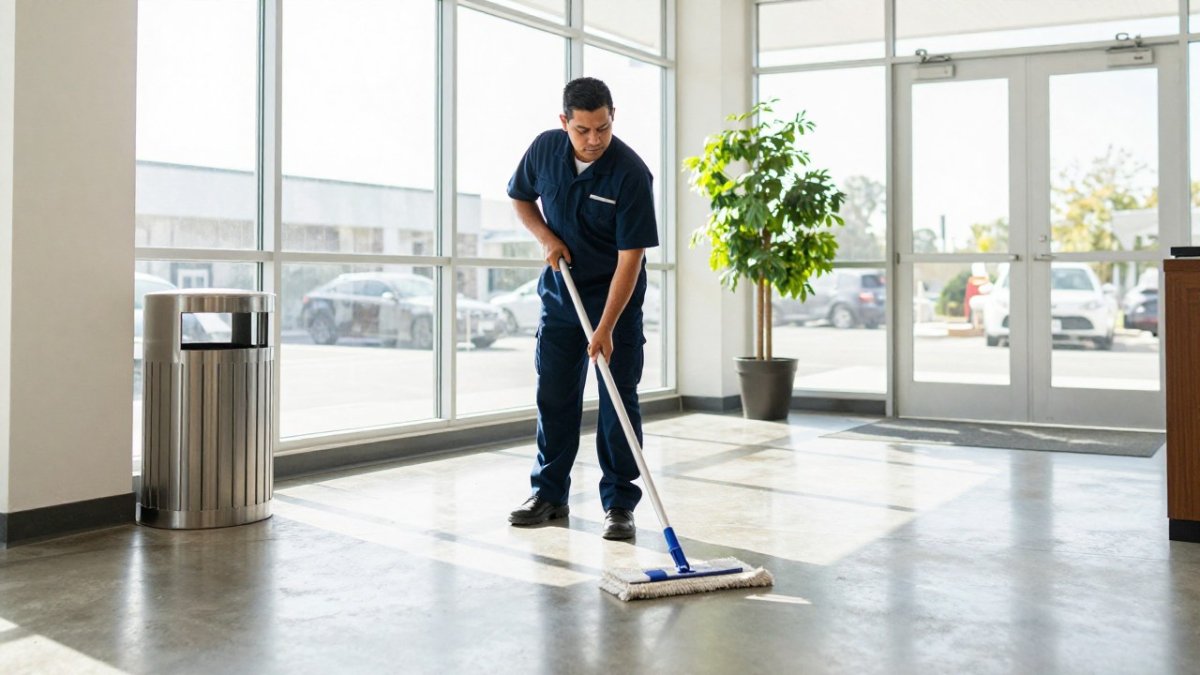
Standard cleaning relies on direct contact: a technician applies solution to a cloth or mop and physically wipes surfaces. It's effective at removing visible soils and reducing microbial load on accessible surfaces, but leaves gaps wherever the cloth doesn't reach.
How Electrostatic Sprayers Work
An electrostatic sprayer charges disinfectant droplets as they pass through the nozzle, typically generating positively charged particles in the 40-110 micron range. Because most surfaces carry a neutral or slightly negative charge, the positively charged particles are drawn toward them through electrostatic attraction, the same physics that makes a balloon stick to a wall after being rubbed.
This wrap-around effect is the defining technical advantage. Charged droplets migrate around edges, beneath shelves, and onto undersides of chairs and desks. For infection prevention in high-touch environments, this matters enormously. Dwell time still applies: the disinfectant must remain wet on a surface for the contact time specified on the EPA-registered product label, typically one to ten minutes depending on the pathogen target.
What Standard Cleaning Actually Covers
Standard cleaning encompasses both cleaning (physical removal of dirt, debris, and organic matter) and disinfection (application of EPA-registered disinfectants to kill pathogens). As defined by the CDC cleaning and disinfection guidance, cleaning must precede disinfection; organic matter like grease and soil can neutralize disinfectants before they reach microbial targets.
A well-executed manual protocol covers high-touch surfaces thoroughly: door handles, light switches, shared equipment, desktops. Where it struggles is consistency across large areas and the physical geometry of modern office furniture. Spray-and-wipe methods apply solution unevenly, and technician fatigue affects coverage uniformity in ways difficult to audit.
Side-by-Side Comparison: Electrostatic vs Manual Cleaning
| Factor | Electrostatic Disinfection | Standard Manual Cleaning |
|---|---|---|
| Surface coverage | 360-degree wrap-around, including undersides | Front-facing surfaces only |
| Hard-to-reach areas | Reaches shadowed, vertical, and curved surfaces | Requires direct contact; gaps common |
| Application speed | Covers large areas quickly | Slower; labor-intensive for large spaces |
| Chemical consumption | Lower; precise aerosolization reduces waste | Higher; over-application common |
| Pathogen reduction | Targets broader surface area per pass | Effective on directly wiped surfaces |
| Replaces routine cleaning | No; must follow pre-cleaning | Yes; foundational step |
| Equipment cost | Higher upfront | Low; standard supplies |
| Labor productivity | Higher for disinfection-only passes | Higher for cleaning tasks requiring agitation |
| Best for | High-touch, high-risk, or post-illness disinfection | Routine soil removal and surface maintenance |
| PPE requirements | Respirator, gloves, eye protection recommended | Gloves and eye protection standard |
Electrostatic disinfection wins on coverage uniformity and efficiency for disinfection passes. Standard cleaning wins on soil removal and cost for routine maintenance. The best outcomes use both methods.
Electrostatic Disinfection Benefits for Offices and Commercial Facilities
Open-plan offices, shared conference rooms, gym equipment, and medical waiting areas share a common challenge: many surfaces, many users, and microbial load that accumulates faster than manual cleaning can address.
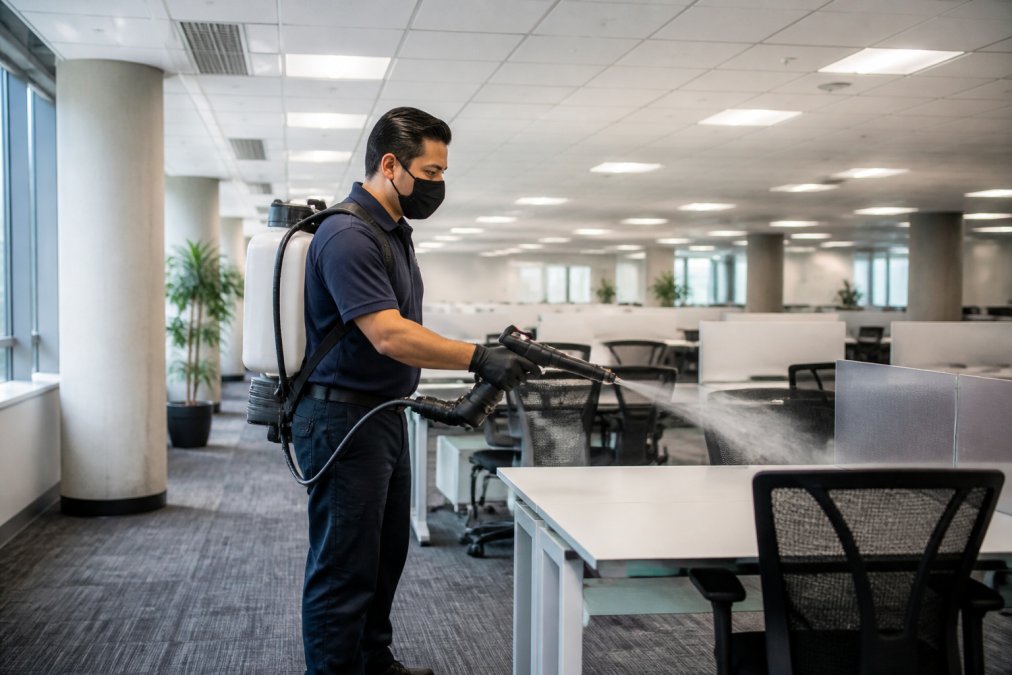
Electrostatic disinfection benefits are most pronounced in three scenarios: post-illness response, routine high-touch disinfection in shared spaces, and facilities with complex furniture geometry. Gyms exemplify this, the underside of a weight bench or cable machine handle is exactly the kind of surface manual cleaning misses and electrostatic application reaches.
According to EPA guidance on disinfecting public spaces, facilities should use EPA-registered disinfectants with documented efficacy against target pathogens. Electrostatic delivery doesn't change which disinfectant you use; it changes how thoroughly it reaches the surfaces that need it.
Surface Coverage, Dwell Time, and Pathogen Reduction
Coverage uniformity and dwell time determine whether a disinfection protocol actually reduces pathogen load. Electrostatic sprayers address the first; proper protocol addresses the second.
The wrap-around effect means a single pass can coat the front, back, and sides of a chair, the underside of a keyboard tray, and vertical partition faces, surfaces requiring separate attention with spray-and-wipe methods. In a 20,000 square foot office, that difference compounds into meaningful reductions in cross-contamination risk.
Dwell time is non-negotiable regardless of application method. If a disinfectant requires four minutes of wet contact to achieve its labeled kill claim, the surface must stay wet for four minutes. Electrostatic application improves dwell time consistency through more uniform coating, but doesn't replace the need to confirm contact time before wiping or air drying.
Biofilm, the thin microbial matrix on frequently touched surfaces, is particularly resistant to quick wipe-downs. Consistent electrostatic disinfection after cleaning is more effective at disrupting biofilm than intermittent manual application.
Why Electrostatic Disinfection Does Not Replace Routine Cleaning
Electrostatic disinfection does not replace cleaning. Disinfectants kill pathogens on clean surfaces. When organic matter, grease, dust, skin cells, and food residue are present, they physically shield microorganisms and chemically neutralize disinfectant solutions. The ISSA cleaning industry best practices consistently emphasize that cleaning precedes disinfection.
The correct protocol is sequential: clean first to remove soil and reduce microbial load, then apply electrostatic disinfection to kill remaining pathogens on the cleaned surface.
Cost of Electrostatic Disinfection vs Manual Cleaning
The cost comparison involves equipment, labor productivity, chemical consumption, and frequency. Equipment is the most visible cost difference. Professional-grade electrostatic sprayers range from handheld units to backpack and cart systems. Facilities contracting with a professional service provider shift this cost to a service fee, typically the more practical model for most commercial buildings.
Labor productivity is where electrostatic disinfection often recovers its cost premium. A technician using an electrostatic sprayer covers substantially more surface area per hour than one performing manual spray-and-wipe disinfection. For large facilities, that efficiency gain translates directly into fewer labor hours per disinfection pass.
Chemical consumption tends to be lower with electrostatic application. The aerosolization process and electrostatic attraction mean disinfectant is applied more precisely, with less overspray and pooling than manual methods.
Electrostatic disinfection costs more per visit than basic manual cleaning for most facilities, but less per effective disinfection outcome when accounting for coverage gaps that manual methods leave behind.
Surface Compatibility, Environmental Impact, and PPE Requirements
Not every surface is appropriate for electrostatic disinfection. The disinfectant solution determines surface compatibility, but the application method affects how much solution contacts sensitive materials.
Surface compatibility considerations:
- Hard, non-porous surfaces (desks, chairs, door handles, equipment): fully compatible; electrostatic application is ideal
- Electronics and screens: use only disinfectants rated for electronics; avoid oversaturation
- Upholstered furniture: fabric-safe disinfectants required; check manufacturer guidance
- Painted or coated surfaces: verify disinfectant compatibility to avoid finish damage
- Food-contact surfaces: use food-safe sanitizers only, following EPA label requirements
Reduced chemical consumption is a genuine environmental benefit, less disinfectant used means less chemical runoff and lower packaging waste. However, aerosolization increases disinfectant concentration in the air during application, making adequate ventilation and appropriate PPE non-negotiable.
PPE requirements for electrostatic disinfection typically include chemical-resistant gloves, eye protection, and respiratory protection appropriate to the disinfectant being used. Facilities should verify that service providers follow OSHA Hazard Communication Standard requirements and that technicians are trained on specific products.
Commercial Disinfection Service Frequency: How Often Your Facility Needs It
Commercial disinfection service frequency depends on facility type, occupancy density, and current infection risk. A practical framework:
- High-risk facilities (medical and dental offices, urgent care, physical therapy): daily disinfection of high-touch surfaces; electrostatic disinfection weekly or after confirmed illness
- Medium-risk facilities (corporate offices, schools, gyms): daily high-touch cleaning; electrostatic disinfection two to four times per month
- Lower-risk facilities (warehouses, industrial spaces with limited shared surfaces): routine cleaning daily; electrostatic disinfection monthly or seasonally
- Post-illness response (any facility type): immediate electrostatic disinfection of affected areas
Seasonal factors matter. Cold and flu season, local outbreaks, and facility-specific events like large meetings are triggers to increase electrostatic disinfection frequency temporarily.
Training, Equipment Maintenance, and What to Look for in a Provider
Training and equipment maintenance separate effective electrostatic disinfection from ineffective application. A poorly trained technician or malfunctioning sprayer both produce unreliable results.
Training requirements for electrostatic disinfection technicians:
- Understanding of the cleaning-before-disinfecting protocol and why sequence matters
- Familiarity with EPA-registered disinfectants, label requirements, and contact times
- Correct sprayer operation: optimal spray distance (typically 2-3 feet), nozzle settings, and application speed
- PPE donning and doffing procedures to prevent cross-contamination
- Surface compatibility assessment before application
- Documentation of areas treated, products used, and dwell times observed
No federal certification is required for commercial disinfection technicians, but providers should demonstrate documented training on specific products and equipment. Ask for training records.
Equipment maintenance directly affects application quality. Electrostatic sprayers require regular cleaning of nozzles and electrodes, battery maintenance for cordless units, and periodic calibration to verify charge output. A degraded electrode produces droplets with reduced charge, meaning reduced wrap-around effect and lower coverage uniformity, without visible indicators of performance decline.
When evaluating a provider, ask:
- What disinfectants do you use, and are they EPA-registered for my facility type?
- How do you verify coverage after application?
- What is your equipment maintenance schedule?
- Are your crews trained on the specific products they apply?
- Are you fully bonded and insured, and can you provide documentation?
Which Approach Is Right for Your Facility
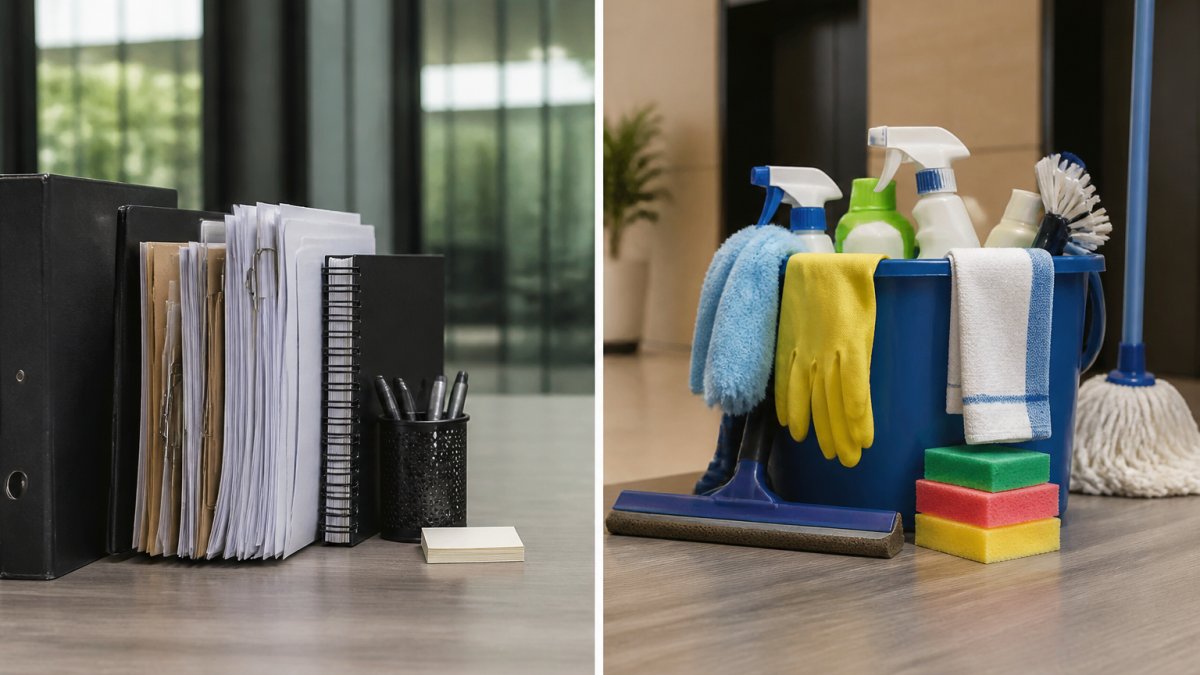
The answer isn't either/or. Standard cleaning handles soil removal, physical agitation of biofilm, and foundational hygiene that makes disinfection work. Electrostatic disinfection handles consistent, uniform pathogen reduction across complex surface geometries at scale.
The best outcomes treat these as complementary protocols. Routine cleaning runs daily. Electrostatic disinfection runs on a schedule calibrated to the facility's risk profile, more frequently for medical and high-traffic environments, less frequently for lower-density spaces.
For medical and dental practices, regular electrostatic disinfection is clear. Infection prevention is a compliance and liability issue. For corporate offices, the calculus involves occupancy density and employee health outcomes. For gyms and fitness centers, the combination of sweat, skin contact, and shared equipment creates a pathogen environment that manual cleaning alone struggles to control.
As documented in OSHA guidance on workplace sanitation, employers have a general duty to maintain workplaces free from recognized hazards, and facility hygiene is an increasingly scrutinized component of that obligation.
Rangel Janitorial has served over 500 commercial facilities across California with both standard cleaning and specialized electrostatic disinfection, backed by 30 years of operational experience and fully bonded and insured professional crews. The right protocol for your facility depends on your specific layout, occupancy, and risk profile.
Choosing between electrostatic disinfection and standard cleaning is less about picking a winner and more about understanding what each method is designed to do. Facilities that try to replace one with the other end up with gaps in either hygiene or cleanliness. Rangel Janitorial builds integrated cleaning programs that combine routine maintenance with scheduled electrostatic disinfection, tailored to your facility's specific needs. Get a free quote and find out what the right protocol looks like for your space.
Frequently Asked Questions
What is the primary difference between electrostatic disinfection and standard cleaning?
Standard cleaning removes visible dirt and debris from surfaces using cloths, mops, and spray-and-wipe methods. Electrostatic disinfection goes further by applying an EPA-registered disinfectant solution through a sprayer that charges droplets so they attract and wrap around surfaces, including vertical sides and undersides that manual cleaning routinely misses. The result is more uniform coverage with less chemical waste, which is especially valuable in high-traffic or infection-sensitive environments.
Is electrostatic disinfection safe for sensitive electronic equipment?
Most commercial electrostatic sprayers produce droplets fine enough to evaporate quickly, reducing moisture risk on electronics. That said, direct spraying of exposed ports, keyboards, and screens is not recommended. A trained technician will adjust spray distance, droplet size, and dwell time to match the surface. Always confirm that the disinfectant solution used is listed as safe for electronics on its EPA-registered label before application.
How often should a facility undergo electrostatic disinfection?
Commercial disinfection service frequency depends on facility type and foot traffic. Medical and dental offices often schedule electrostatic disinfection daily or after each patient session. High-traffic corporate offices and gyms typically benefit from weekly or biweekly treatments, supplemented by daily standard cleaning. Warehouses and lower-traffic spaces may only need monthly electrostatic disinfection. A professional provider can assess your microbial load risk and recommend a disinfection protocol tailored to your environment.
Does standard cleaning meet EPA disinfection standards?
Standard cleaning alone does not meet EPA disinfection standards because it focuses on removing surface soils rather than reducing microbial load to a safe level. Disinfection requires an EPA-registered disinfectant applied at the correct concentration and allowed to remain on the surface for the full contact time specified on the label. Standard spray-and-wipe methods often remove the product before it reaches that contact time, leaving pathogens behind. Electrostatic application improves contact time compliance by delivering a more even, controlled coat.
What are the cost differences between electrostatic disinfection and manual cleaning?
Manual cleaning generally carries lower upfront labor and equipment costs, but it uses more chemical solution and takes longer to cover the same area. Electrostatic sprayer systems require a higher initial equipment investment, yet they reduce chemical consumption and cut application time significantly. Over time, facilities with large square footage or strict infection prevention requirements often find electrostatic disinfection more cost-effective per treated area. Pricing for professional commercial disinfection services varies by facility size and frequency, so request a customized quote for accurate figures.