 Ultimate guide
Electrostatic Disinfection for High-Traffic Gyms
Table of Contents
- What Is Electrostatic Disinfection and How It Works in Gyms
- Why High-Traffic Gyms Need Electrostatic Disinfection
- EPA-Registered Disinfectants for Gyms and Safety Standards
- Commercial Gym Sanitization Frequency and Best Practices
- How to Disinfect Fitness Equipment Effectively
- Equipment Material Compatibility and Dwell Time Requirements
- Integrating Electrostatic Disinfection Into Your Gym's Daily Workflow
- Frequently Asked Questions
Last Updated: August 26, 2026
What Is Electrostatic Disinfection and How It Works in Gyms
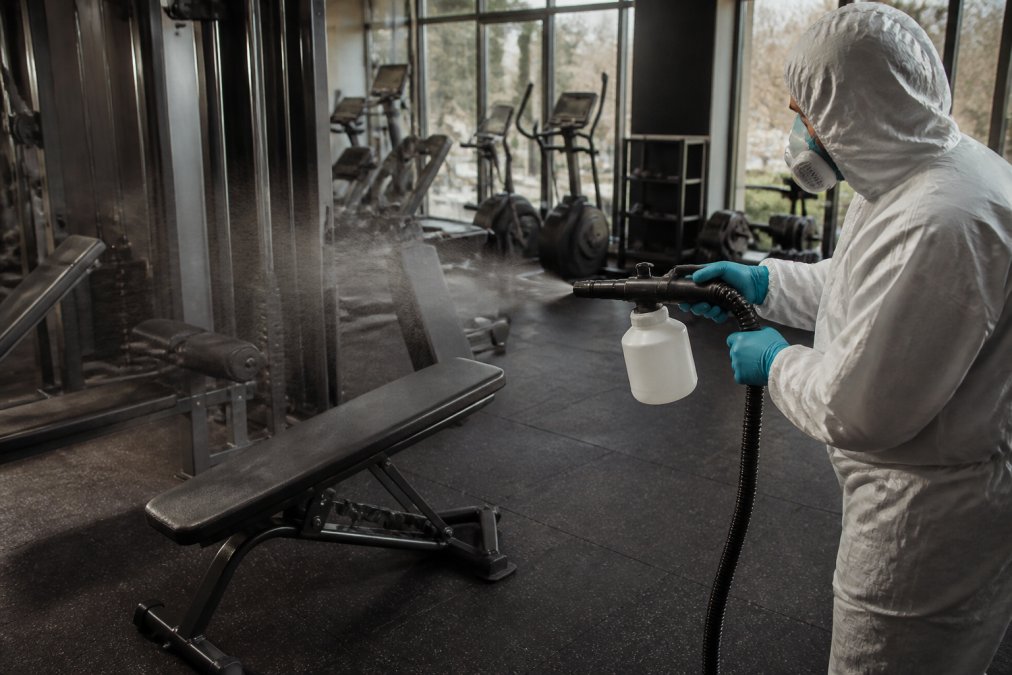
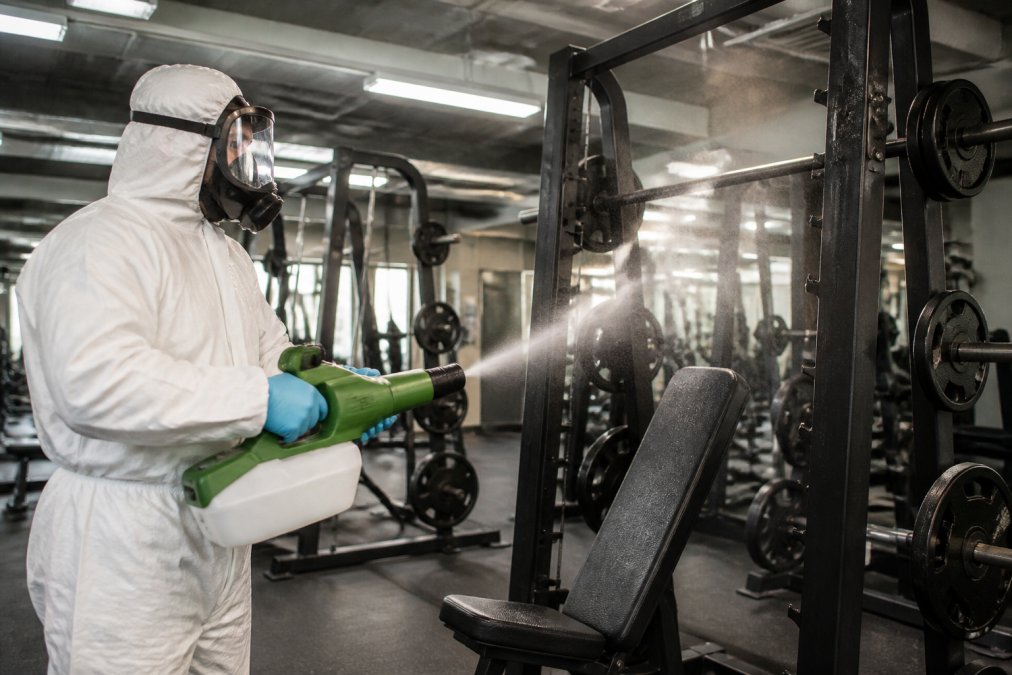
Electrostatic disinfection applies EPA-registered disinfectants using equipment that charges liquid particles into a fine mist that clings to surfaces through electrostatic attraction. In high-traffic gyms, this technology delivers 360-degree coverage that manual wiping cannot achieve, reaching crevices, undersides of equipment, and hard-to-access corners where pathogens hide.
The process ionizes disinfectant particles, giving them a positive or negative charge. When sprayed, these charged droplets are naturally attracted to surfaces and wrap around them, adhering far more effectively than traditional spray-and-wipe methods. The mist settles into seams, textured grip areas, and spaces between equipment where bacteria and viruses accumulate.
High-traffic gyms present unique challenges. Peak hours create windows where dozens of people touch the same equipment within minutes. Electrostatic disinfection addresses this by reducing time between uses and improving coverage consistency. A single pass with an electrostatic sprayer reaches surfaces that would take 10 minutes to manually wipe down (the EPA).
The technology has been used in healthcare settings for years and is increasingly applied to commercial gyms as facility managers recognize the operational advantage. Instead of assigning staff to spend hours wiping equipment between classes, a trained technician can disinfect an entire gym floor in a fraction of the time.
Why High-Traffic Gyms Need Electrostatic Disinfection
Fitness centers operate in an environment where cross-contamination risk is inherently high. Members share equipment, locker rooms, and common areas without barriers. Sweat, respiratory droplets, and skin contact create multiple pathways for pathogen transmission. Traditional cleaning methods, spray bottles and microfiber cloths, work on a visible-surface basis, missing undersides, adjustment buttons, and crevices.
Electrostatic disinfection solves this coverage gap. The charged mist reaches surfaces a cloth never touches. Research consistently shows that high-touch surfaces in shared facilities harbor the highest microbial loads (peer-reviewed research). Treadmill handles, barbell collars, locker room door handles, and bench press seats are touched by dozens of different people daily, making them prime vectors for infection.
Peak hours create impossible timelines for manual sanitization. If a class ends at 6 p.m. and the next starts at 6:15 p.m., manual wiping of 20 pieces of equipment is unrealistic. Electrostatic disinfection completes the same task in minutes, allowing equipment turnover without compromising hygiene standards.
Member confidence also matters. Visible sanitization signals a facility's commitment to health. Facilities that invested in electrostatic disinfection reported improved member retention and reduced cancellations.
EPA-Registered Disinfectants for Gyms and Safety Standards
Not every disinfectant works with electrostatic application. The Environmental Protection Agency maintains a list of approved antimicrobial products, and for electrostatic use in gyms, your chosen disinfectant must be EPA-registered and specifically tested for electrostatic application.
EPA-registered disinfectants for gym environments typically target virucidal and bactericidal efficacy. A virucidal product kills enveloped viruses like influenza and respiratory pathogens. A bactericidal product kills bacteria, including staph and streptococcus species common in gyms. Many EPA-registered products are both, offering broad-spectrum protection.
When selecting a disinfectant, check the product label for dwell time requirements, the amount of time the disinfectant must remain wet on a surface to achieve its stated kill claims. Some products require only 30 seconds, while others need 10 minutes (the EPA). In a high-traffic gym, faster dwell times allow quicker equipment turnover.
Safety standards for electrostatic disinfection require proper personal protective equipment, adequate ventilation, and clear signage warning members that disinfection is in progress. Many facilities schedule electrostatic disinfection during off-peak hours or after closing to minimize member exposure to aerosolized disinfectant.
Some EPA-registered products are corrosive to certain materials. Stainless steel, rubber, or plastic components on equipment can be damaged by harsh chemicals. Selecting a disinfectant compatible with your equipment's materials prevents deterioration and extends equipment life. Rangel Janitorial's team understands material compatibility and can recommend disinfectants that deliver efficacy without damaging your facility's assets.
Commercial Gym Sanitization Frequency and Best Practices
How often should you apply electrostatic disinfection? The answer depends on member volume, equipment density, and your facility's health standards. Most commercial gym sanitization frequency guidelines recommend daily electrostatic disinfection of high-touch surfaces during peak-use seasons (fall and winter, when respiratory illness increases). During off-peak seasons, many facilities shift to 3-4 times weekly.
High-touch zones require the most frequent attention: treadmill handles, weight machine seats and handles, barbell collars, dumbbell racks, locker room door handles, and light switches. Apply electrostatic disinfection to these surfaces daily, either before opening or after closing. For equipment in less-trafficked areas, twice-weekly disinfection is often sufficient.
Locker rooms deserve special attention. The combination of high-touch surfaces, moisture, and warm temperature creates an ideal environment for microbial growth. Bench surfaces, door handles, locks, and shower areas should receive electrostatic disinfection daily.
A practical approach integrates electrostatic disinfection with routine daily cleaning. Morning crews handle light tidying and trash removal. Electrostatic disinfection happens once daily, typically in the evening after the last class or early morning before members arrive. Between electrostatic applications, high-touch surfaces receive spot cleaning with disinfectant wipes during peak hours as a supplementary measure.
How to Disinfect Fitness Equipment Effectively
Effective disinfection of fitness equipment requires identifying all high-touch points on each piece. On a treadmill, this includes the display screen, buttons, handrails, and belt area. On free weights, it's the grips, collars, and bar surface. On machines, it's the handles, seat, and adjustment points.
Before electrostatic application, remove visible dirt and debris from equipment surfaces. Dust, sweat residue, and gym chalk can interfere with disinfectant adhesion. A quick wipe with a damp cloth removes these barriers, allowing the electrostatic mist to make full contact with the surface.
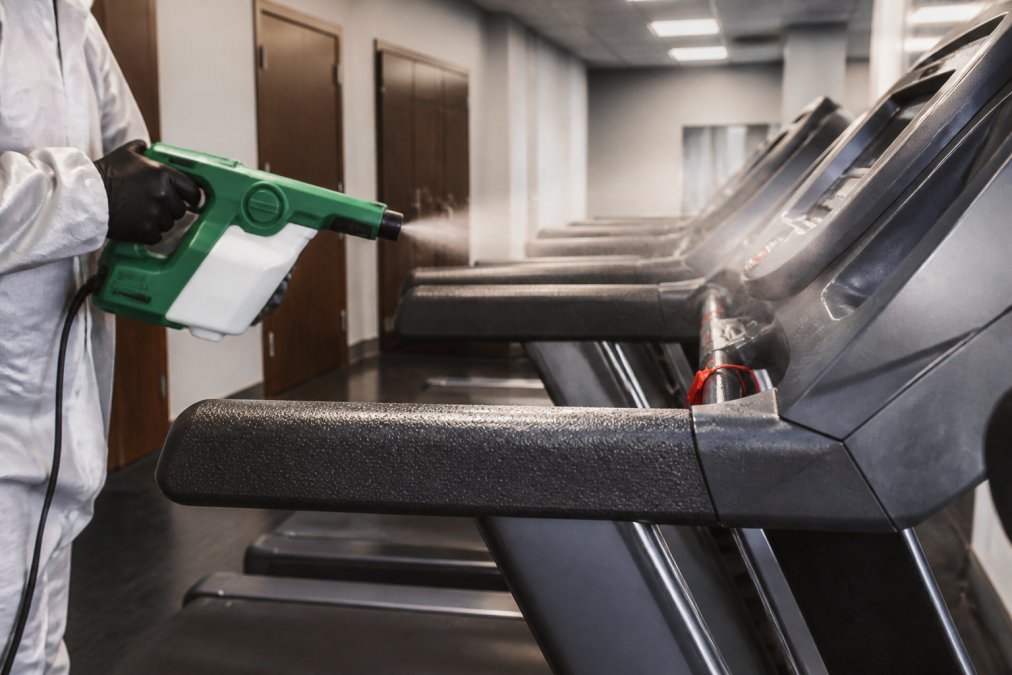
Apply electrostatic disinfectant using slow, deliberate passes. A trained technician holds the sprayer 6-12 inches from the surface and moves methodically across each piece of equipment, ensuring the mist covers all sides. For equipment with crevices or textured surfaces, multiple angles are necessary.
Allow adequate dwell time for the disinfectant to work. If your chosen product requires 30 seconds of wet contact, wait before allowing equipment use. If it requires 10 minutes, clearly mark the equipment as "disinfecting" and prevent member access during that window. Cutting dwell time short compromises the kill claims of the disinfectant.
For equipment material compatibility, use disinfectants specifically formulated for gym equipment. Avoid bleach-based products on colored surfaces and acidic disinfectants on certain metals. After dwell time expires, allow surfaces to air dry or use lint-free towels if quick equipment turnover is necessary.
Equipment Material Compatibility and Dwell Time Requirements
Equipment material compatibility directly affects both equipment longevity and disinfection effectiveness. Stainless steel resists most disinfectants but can be damaged by prolonged exposure to chlorine-based products. Rubber grips can degrade if exposed to harsh solvents or high-concentration alcohol-based disinfectants. Plastic components may crack or discolor under certain chemical exposures.
Dwell time requirements create a practical constraint in high-traffic gyms. A 30-second dwell time allows equipment to return to service quickly, supporting fast turnover during peak usage. However, textured surfaces, rubber grips, and crevices may require longer contact time to ensure the disinfectant reaches all microbial populations. A 10-minute dwell product provides more thorough pathogen reduction but creates scheduling challenges.
Select a disinfectant that balances both factors. Look for EPA-registered products with dwell times under 60 seconds that are compatible with your specific equipment materials. Test the disinfectant on non-critical equipment first, observing for discoloration, degradation, or damage over several weeks. Rangel Janitorial recommends disinfectants proven safe for stainless steel, rubber, and plastic components, ensuring your facility maintains both hygiene standards and equipment integrity.
Integrating Electrostatic Disinfection Into Your Gym's Daily Workflow
Successful integration requires planning, staff training, and clear scheduling. Identify the optimal timing for electrostatic disinfection. For most gyms, early morning (before 6 a.m.) or late evening (after 9 p.m.) works best. These windows avoid peak usage and allow adequate dwell time without keeping equipment offline during high-traffic periods.
Create a disinfection schedule designating which areas receive treatment on which days. A common approach is daily disinfection of high-touch zones with 3-4 times weekly treatment of secondary areas. Document this schedule and post it where staff can reference it.
Many facility managers find that outsourcing electrostatic disinfection to a specialized provider like Rangel Janitorial is more efficient. Our trained technicians handle the process consistently, freeing your staff to focus on member experience and routine cleaning tasks.
Coordinate electrostatic disinfection with your daily cleaning crew. Morning staff should know which equipment was disinfected the previous evening. Evening staff should know which areas will receive electrostatic treatment. Spot cleaning of high-touch surfaces during peak hours complements scheduled electrostatic applications, creating a layered approach to infection prevention.
Communicate the disinfection schedule to members through signage, your website, and app notifications. Clear messaging that your facility uses professional electrostatic disinfection builds confidence in your hygiene protocols. Many members specifically seek out gyms with advanced disinfection methods, making this a competitive advantage.
Monitor the results of your disinfection program. Track member feedback about cleanliness and hygiene. Note any equipment damage that might indicate disinfectant incompatibility. After several months, assess whether your current schedule and product choices are meeting your facility's needs.
Keeping a high-traffic gym clean requires more than good intentions. Members expect professional-grade sanitization, especially in locker rooms and on shared equipment where cross-contamination risk is highest. Electrostatic disinfection delivers that level of protection while fitting into realistic operational schedules.
At Rangel Janitorial, we've helped fitness centers across California implement electrostatic disinfection programs that balance effectiveness with operational efficiency. Our 30+ years of experience in commercial facility management, combined with specialized training in disinfection protocols, means your gym gets consistent, professional results. We handle everything from selecting EPA-registered disinfectants compatible with your equipment to scheduling applications that work with your peak-usage patterns. Our fully bonded and insured crews deliver the reliability and thoroughness that facility managers expect. Get a free quote from Rangel Janitorial today and discover how professional electrostatic disinfection can elevate your gym's hygiene standards while simplifying your cleaning operations.
| Component | Frequency | Best Time | Equipment Impact |
|---|---|---|---|
| High-touch surfaces (handles, buttons) | Daily | Before opening or after closing | Immediate availability |
| Locker room areas | Daily | Evening or early morning | Moisture control critical |
| Secondary equipment (machines, benches) | 3-4 times weekly | Off-peak hours | Flexible scheduling |
| Textured/creviced surfaces | Daily | With main disinfection | Full pathogen reduction |
Frequently Asked Questions
What is electrostatic disinfection and how does it work in a gym?
Electrostatic disinfection uses a sprayer to apply positively charged disinfectant particles that are attracted to negatively charged surfaces. In gyms, this creates uniform coverage on equipment, locker room surfaces, and hard-to-reach areas that manual wiping misses. The charged mist adheres to gym equipment, benches, handles, and walls, ensuring consistent pathogen reduction across high-traffic zones without pooling or dripping.
How often should high-traffic gyms be disinfected with electrostatic spraying?
High-traffic gyms should receive electrostatic disinfection at least 2-3 times per week, with daily manual wipe-downs of high-touch surfaces between applications. Locker rooms, shower areas, and equipment with the highest contact frequency may need more frequent treatment. Frequency depends on member volume, facility layout, and infection prevention protocols. Professional janitorial services can assess your specific gym's needs and recommend an optimal sanitization schedule.
Are EPA-registered disinfectants safe for gym equipment and electronics?
Yes, EPA-registered disinfectants used in electrostatic spraying are formulated for safety on most gym equipment when applied correctly. However, dwell time (contact duration) and material compatibility matter. Some electronics and certain upholstered surfaces require precautions. Professional technicians know which EPA-approved solutions work on treadmills, weight machines, mirrors, and locker room fixtures. Always verify dwell time requirements and material compatibility before application to avoid damage.
Is electrostatic disinfection better than manual wiping for gym sanitization?
Electrostatic disinfection offers advantages over manual wipe-down alone: it reaches 360-degree coverage, including crevices and hard-to-access areas that sponges and cloths miss. It reduces turnaround time significantly and provides consistent surface adhesion of disinfectant. However, the most effective approach combines electrostatic application with daily manual cleaning of frequently touched surfaces. This integrated workflow ensures both thorough coverage and immediate cross-contamination prevention in high-traffic gym environments.