 Ultimate guide
Commercial Cleaning for Medical Facilities: A Complete Guide
Table of Contents
- What Commercial Cleaning for Medical Facilities Involves
- Infection Control and Prevention Standards
- OSHA Bloodborne Pathogens Standard for Cleaning
- Terminal Cleaning Protocols and Best Practices
- Electrostatic Disinfection for Medical Offices
- Medical Office Cleaning Checklist and Daily Maintenance
- Choosing the Right Cleaning Service for Your Facility
- Frequently Asked Questions
Last Updated: August 28, 2026
What Commercial Cleaning for Medical Facilities Involves
Commercial cleaning for medical facilities is a specialized service that goes far beyond standard office janitorial work. It encompasses comprehensive disinfection, infection prevention, and adherence to strict regulatory standards designed to protect patient safety and staff health. Medical facilities, including clinics, dental offices, surgical centers, and outpatient labs, require cleaning protocols that eliminate pathogens, reduce cross-contamination risk, and maintain environments where healthcare delivery can happen safely.
At Rangel Janitorial, we understand that medical facilities face unique cleaning challenges. A standard office cleaning misses critical requirements: bloodborne pathogen protocols, terminal disinfection after patient procedures, high-touch surface management, and compliance documentation that regulators expect to see. The stakes are higher. A missed spot in a corporate lobby is an inconvenience. A missed spot in a surgical suite is a patient safety issue.
Commercial cleaning for medical facilities involves multiple layers of service. Daily maintenance cleaning keeps common areas, waiting rooms, and corridors sanitary. Deep cleaning targets areas where pathogens concentrate: examination tables, doorknobs, light switches, and equipment surfaces. Terminal cleaning happens after patient discharge or between major procedures, using hospital-grade disinfectants and specialized protocols. Biohazard cleanup addresses blood, bodily fluids, and contaminated materials. Staff training ensures crews understand infection prevention, proper PPE use, and documentation requirements.
The difference between adequate and exceptional medical facility cleaning often comes down to three factors: understanding regulatory requirements, using appropriate disinfection methods, and maintaining consistency across every visit. Facilities that partner with providers experienced in healthcare cleaning see fewer infections, better compliance audit results, and staff confidence that their workplace is genuinely safe.
Infection Control and Prevention Standards
Infection control is the foundation of medical facility cleaning. Healthcare-associated infections (HAIs) represent a significant patient safety concern, and environmental contamination is a known transmission route (the CDC). Effective cleaning directly reduces pathogen presence on surfaces, limiting opportunities for cross-contamination between patients and staff.
The CDC emphasizes that environmental cleaning is a critical component of infection prevention. High-touch surfaces, areas contacted frequently by multiple people, are primary vectors for pathogen transmission. Doorknobs, light switches, computer keyboards, examination table edges, and armrests require frequent disinfection. Standard cleaning removes visible dirt; disinfection kills microorganisms. Medical facilities need both, applied systematically.
Proper infection control cleaning follows a sequence. First, cleaning removes organic matter (blood, body fluids, tissue) that can shield pathogens. Second, disinfection applies antimicrobial agents that kill remaining microorganisms. Third, validation confirms the process worked, either through visual inspection or environmental sampling. Many facilities miss the validation step, assuming disinfection happened without confirming it.
Common mistakes in infection control cleaning include using water-only cleaning on contaminated surfaces, failing to allow proper dwell time for disinfectants, mixing incompatible cleaning chemicals, and not addressing hidden surfaces where pathogens accumulate. A disinfectant must contact the surface for a specific duration to be effective (the CDC). Spraying and immediately wiping defeats the purpose. Crews that understand these details deliver measurably safer environments.
OSHA Bloodborne Pathogens Standard for Cleaning
The OSHA Bloodborne Pathogens Standard (29 CFR 1910.1030) establishes mandatory requirements for handling blood and other potentially infectious materials (osha.gov). While OSHA primarily regulates employers, the standard directly impacts cleaning protocols and crew training. Facilities must ensure cleaning staff understand bloodborne pathogen risks and follow prescribed safety procedures.
The standard requires employers to establish exposure control plans that address cleaning and decontamination of equipment and surfaces. Surfaces contaminated with blood or body fluids must be decontaminated using appropriate disinfectants. Cleaning staff must wear personal protective equipment (PPE), gloves at minimum, often including gowns, eye protection, and respiratory protection depending on the contamination level. Sharps (needles, scalpels, broken glass) require special handling and disposal in puncture-resistant containers.
Cleaning crews handling potentially infectious materials must receive training on bloodborne pathogen risks, appropriate PPE, safe work practices, and exposure response procedures. This training must be documented and updated annually. Facilities that fail to provide this training face OSHA citations and potential fines. Cleaning service providers must either conduct this training themselves or verify that facility staff have done so.
A practical consideration: not all medical facility cleaning involves bloodborne pathogens. Dental offices, for example, generate minimal blood exposure compared to surgical centers. But the standard applies whenever there's potential exposure, and crews must be prepared. The safest approach is training all medical facility cleaning staff as if bloodborne pathogen exposure is possible, even if it's uncommon at a specific location.
Terminal Cleaning Protocols and Best Practices
Terminal cleaning is deep disinfection performed after patient discharge, between major procedures, or at the end of a facility's operating day. It differs from daily maintenance cleaning in scope, intensity, and disinfectant selection. Terminal cleaning targets all surfaces, including those not touched during routine cleaning, baseboards, light fixtures, ceiling corners, and equipment housings where dust and pathogens accumulate.
Terminal cleaning protocols typically follow this sequence:
- Preparation - Remove visible clutter, move portable equipment, and ensure adequate ventilation
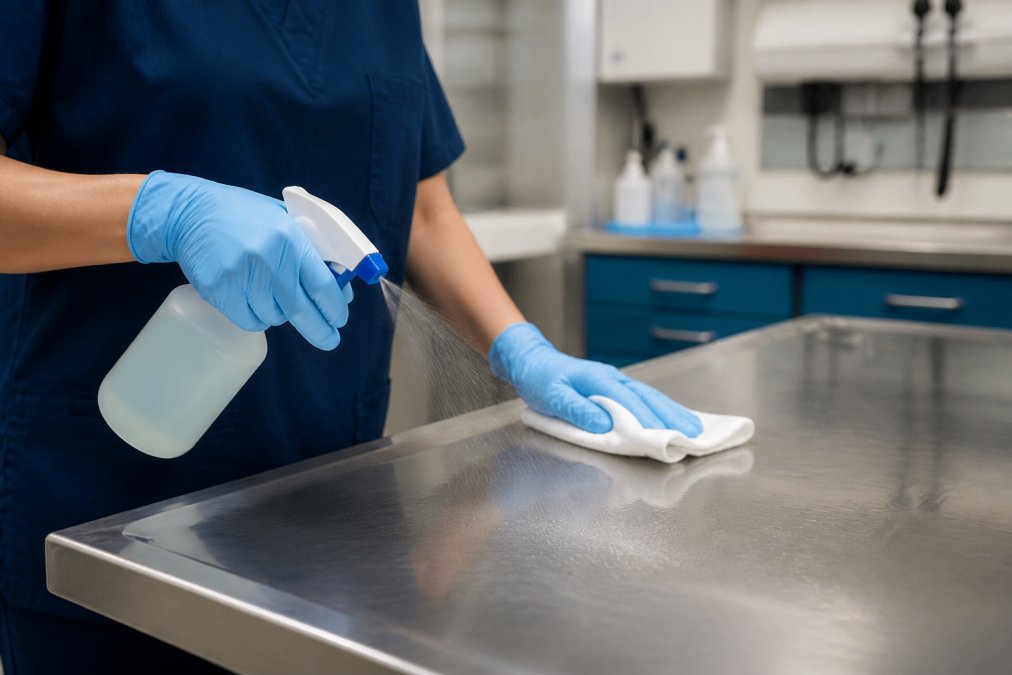
- Removal of organic matter - Clean surfaces with detergent and water to remove blood, body fluids, and tissue
- Disinfection - Apply hospital-grade disinfectant appropriate to the contamination level and surface type
- Dwell time - Allow disinfectant to remain on surfaces for the manufacturer-specified duration (typically 10 minutes)
- Removal - Wipe or rinse surfaces as required by the disinfectant instructions
- Final check - Inspect for missed areas and document completion
The choice of disinfectant matters significantly. Quaternary ammonium compounds (quats) work well on most surfaces and dry quickly. Phenolics penetrate biofilm and handle heavy contamination but can damage some materials. Hypochlorite (bleach-based) solutions are effective against a broad pathogen spectrum but corrosive and require careful handling. Alcohol-based products work fast but may not penetrate organic matter effectively. Facilities often use multiple disinfectants for different contamination levels and surface types.
Dwell time is where many facilities cut corners. A disinfectant sprayed and immediately wiped may only contact the surface for 30 seconds, when the label specifies 10 minutes for effectiveness. This creates a false sense of security, surfaces appear clean but pathogens survive. Proper terminal cleaning takes time. A typical examination room requires 30-45 minutes for thorough terminal disinfection.
Documentation is essential. Facilities need records showing which areas were cleaned, when, with what disinfectant, and by whom. This documentation protects the facility during regulatory inspections and infection investigations. If a patient develops an infection, regulators will ask whether proper cleaning occurred. Documentation proves it did.
Electrostatic Disinfection for Medical Offices
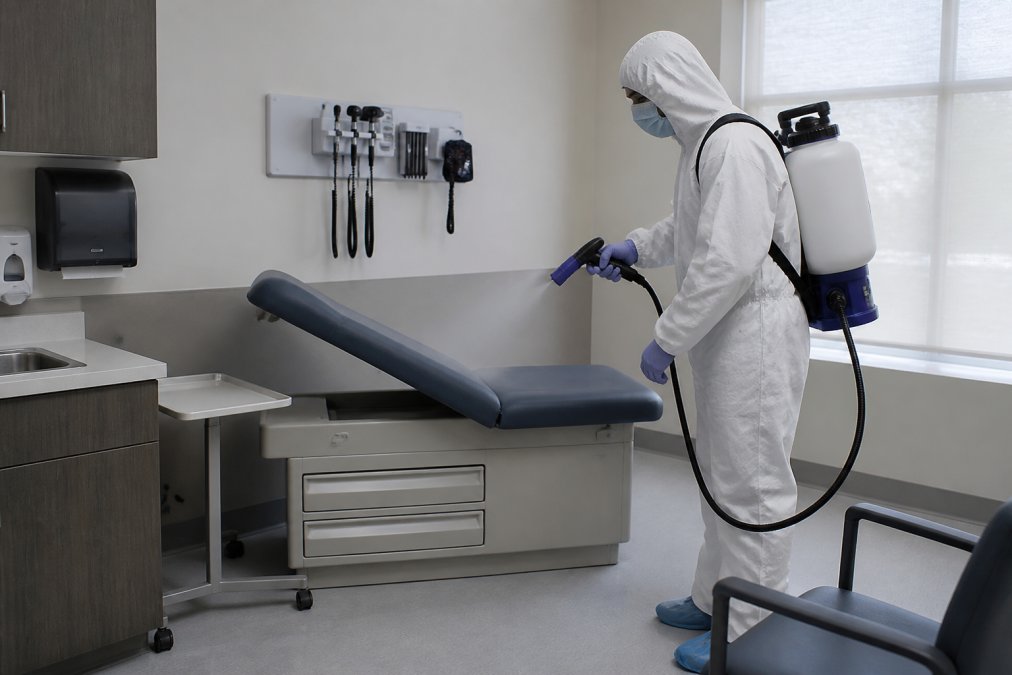
Electrostatic disinfection represents an evolution in medical facility cleaning technology. Unlike traditional spraying, electrostatic systems apply an electrical charge to disinfectant particles, causing them to cling to and coat all surfaces, including hard-to-reach areas, undersides of equipment, and complex geometries that manual spraying misses.
The process works through electrostatically charged particles. The disinfectant solution is atomized and given a positive electrical charge. Surfaces in the environment naturally hold a negative charge, so charged particles are attracted to and adhere to every surface they encounter. This creates uniform coverage that would be nearly impossible to achieve with manual application. A 1,000-square-foot room can be disinfected in 10-15 minutes using electrostatic equipment, versus 45 minutes or more with manual methods.
For medical offices, electrostatic disinfection offers specific advantages. Surgical suites benefit from comprehensive coverage of instrument trays, light fixtures, and equipment. Dental offices see improved disinfection of chair crevices and dental unit waterlines where pathogens hide. Waiting rooms with high patient volume get thorough coverage of seating, armrests, and shared surfaces. The technology is particularly valuable for facilities with complex layouts or equipment arrangements where traditional cleaning leaves gaps.
The disinfectants used in electrostatic systems are typically hospital-grade solutions approved by the EPA for use on medical equipment and surfaces. They must be compatible with the equipment and safe for the facility environment. Some systems use quaternary ammonium-based disinfectants; others use hypochlorite or alcohol-based formulas. The choice depends on the facility's contamination profile and surface materials.
A key consideration: electrostatic disinfection supplements but does not replace manual cleaning. Surfaces with visible organic matter (blood, body fluids, tissue) must be manually cleaned first. Disinfectants cannot penetrate organic matter effectively. The sequence is manual cleaning, followed by electrostatic disinfection for comprehensive coverage. Facilities that skip the manual cleaning step and rely only on electrostatic systems achieve poor results.
Rangel Janitorial's specialized electrostatic disinfection provides 360-degree coverage, ensuring that overlooked surfaces receive the same level of disinfection as high-traffic areas. This approach significantly reduces the risk of cross-contamination and gives facility managers confidence that their environment meets the highest hygiene standards.
Medical Office Cleaning Checklist and Daily Maintenance
Daily maintenance cleaning keeps medical facilities sanitary between deep cleaning events. A structured checklist ensures consistency and prevents missed areas. Medical office cleaning checklists differ from standard office cleaning because they address infection prevention and regulatory compliance.
A comprehensive daily cleaning checklist for medical offices includes:
Waiting and Reception Areas
- Vacuum or sweep floors, removing visible debris
- Disinfect all high-touch surfaces: door handles, light switches, reception desk, armrests, chairs
- Empty and replace trash liners
- Clean and disinfect restroom fixtures, mirrors, and dispensers
- Restock paper towels and soap
Examination and Treatment Rooms
- Remove visible contamination and dispose of biohazardous waste properly
- Disinfect examination tables, chairs, and stools
- Clean and disinfect all equipment surfaces touched during patient care
- Disinfect door handles, light switches, and cabinet handles
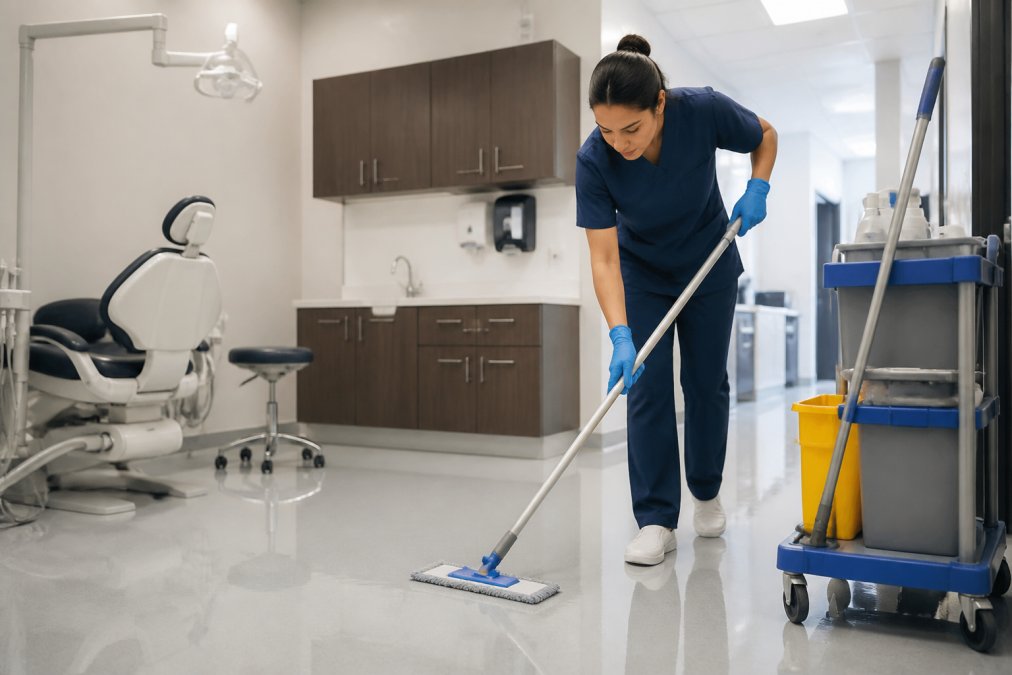
- Sweep and mop floors
Clinical Areas (Labs, Procedure Rooms)
- Remove sharps and biohazardous waste using proper containers
- Disinfect work surfaces and equipment
- Clean and disinfect sinks and faucets
- Mop floors with appropriate disinfectant
- Ensure proper ventilation
Staff Areas
- Clean and disinfect break room surfaces
- Empty trash and sanitize receptacles
- Disinfect restroom fixtures and surfaces
- Mop floors
Common Areas
- Vacuum carpeted areas; mop hard floors
- Disinfect high-touch surfaces throughout
- Clean glass doors and windows
- Dust furniture and equipment
The frequency of cleaning varies by area. High-traffic zones like waiting rooms may need cleaning twice daily. Examination rooms require cleaning between each patient. Laboratory areas may need hourly surface checks during operating hours. Facilities should establish cleaning schedules that match their patient volume and contamination risk.
Documentation of daily cleaning is important. Staff should initial or sign off on checklists confirming tasks were completed. This record demonstrates due diligence to regulators and provides evidence if an infection investigation occurs.
Choosing the Right Cleaning Service for Your Facility
Selecting a commercial cleaning provider for medical facilities requires evaluating criteria beyond price and availability. The wrong choice creates infection control risks, regulatory compliance gaps, and staff frustration. The right choice delivers peace of mind and measurable hygiene improvements.
Experience and Specialization
A provider with dedicated medical facility experience understands regulatory requirements, infection prevention protocols, and the specific contamination challenges healthcare environments present. General commercial cleaners often lack this expertise. Ask potential providers how many years they've served medical facilities, what types of facilities they've cleaned, and whether they maintain staff training on bloodborne pathogens and infection control.
Training and Certification
Cleaning staff should receive formal training on bloodborne pathogen standards, HIPAA compliance, proper PPE use, and disinfection protocols. Ask for documentation of training completion and frequency of refresher training. Certified staff typically deliver better results than untrained crews.
Equipment and Technology
Modern medical facility cleaning uses appropriate equipment for the task. This includes electrostatic disinfection systems, HEPA-filtered vacuums, and hospital-grade disinfectants. Ask what equipment the provider uses and why. Providers investing in technology typically deliver superior outcomes.
Regulatory Knowledge
The provider should understand OSHA, CDC, and state health department requirements applicable to your facility type. They should be able to explain how their protocols meet these standards and provide documentation of compliance. A provider unfamiliar with regulatory requirements is a liability.
Flexibility and Customization
Medical facilities have varying needs. A surgical center requires different protocols than a dental office. A high-volume urgent care clinic needs different scheduling than a low-volume specialty practice. Look for providers willing to develop customized cleaning plans rather than applying a one-size-fits-all approach.
Responsiveness and Accountability
Ask how the provider handles complaints or missed cleaning. A responsive provider addresses issues within hours. A provider that takes days to respond creates ongoing frustration. Request references from current medical facility clients and ask specifically about responsiveness and problem resolution.
Bonding and Insurance
The provider should be fully bonded and insured, protecting your facility if equipment is damaged or staff is injured. Ask for proof of coverage and verify that coverage is current. This protects both parties.
Rangel Janitorial brings over 30 years of experience serving medical facilities across California. Our fully bonded and insured crews receive comprehensive training on infection control, bloodborne pathogen standards, and HIPAA compliance. We develop customized cleaning plans tailored to each facility's specific needs, from routine daily maintenance to specialized electrostatic disinfection. Our approach combines proven protocols with modern technology, ensuring your facility meets the highest hygiene and regulatory standards. We're committed to consistent quality and rapid response to any concerns, because your facility's cleanliness and safety are our priority.
Frequently Asked Questions
What are the CDC and OSHA cleaning standards for medical facilities?
The CDC and OSHA establish separate but complementary standards. OSHA's Bloodborne Pathogens Standard (29 CFR 1910.1030) requires employers to implement exposure control plans, use universal precautions, and ensure proper disinfection of surfaces contaminated with blood or body fluids. The CDC provides guidance on environmental infection prevention, including cleaning frequency for different areas and appropriate disinfectants. Medical facilities must comply with both standards, which means regular disinfection of high-touch surfaces, terminal cleaning after patient contact, and documented cleaning protocols.
How does electrostatic disinfection for medical offices improve infection control?
Electrostatic disinfection uses charged particles to coat surfaces with disinfectant, reaching areas standard spraying misses. This technology provides 360-degree coverage of high-touch surfaces, equipment, and hard-to-reach spots in examination rooms and surgical areas. The charged particles cling to surfaces more effectively, reducing cross-contamination risk and pathogen transmission. For medical facilities, this means faster disinfection cycles, more thorough coverage, and reduced healthcare-associated infection risk compared to traditional wiping methods.
What should a medical office cleaning checklist include?
A medical office cleaning checklist must address high-touch surfaces (door handles, light switches, countertops), examination tables, medical equipment, flooring, and restrooms. It should specify disinfectants appropriate for each surface, frequency of cleaning (typically daily for high-traffic areas, terminal cleaning between patients), and documentation of completed tasks. The checklist must align with OSHA bloodborne pathogens standards and CDC infection prevention guidelines. Include separate protocols for biohazard cleanup, proper disposal of contaminated materials, and staff safety procedures.
How often should high-touch surfaces be disinfected in a medical facility?
High-touch surfaces in medical facilities should be disinfected at minimum daily, but frequency depends on patient volume and facility type. Surgical centers and hospitals require more frequent disinfection, often between patient appointments. Dental offices should disinfect surfaces after each patient. Common areas like restrooms and waiting rooms need multiple disinfections throughout the day. Terminal cleaning, comprehensive disinfection after patient discharge or at end of day, is essential for infection prevention. Facilities with high-traffic areas may benefit from continuous disinfection programs.
How do you ensure HIPAA compliance during janitorial service visits?
HIPAA compliance during cleaning requires controlled access, trained staff, and documentation protocols. Cleaning crews should be bonded, insured, and trained on patient privacy requirements. Establish procedures to prevent exposure to protected health information (PHI) during cleaning, this means securing patient records, controlling access to sensitive areas, and using discretion around patient conversations. Staff should sign confidentiality agreements and understand that accidental exposure to PHI during cleaning must be reported. Verify that your cleaning service provider has HIPAA compliance procedures in place before contracting.
What qualifies as commercial cleaning versus standard office janitorial services?
Commercial cleaning for medical facilities goes beyond standard office janitorial work. It includes infection control protocols, use of medical-grade disinfectants, compliance with OSHA and CDC standards, terminal cleaning procedures, and handling of biohazardous materials. Standard office cleaning focuses on general tidiness and basic sanitation. Medical facility cleaning requires specialized training, knowledge of bloodborne pathogens, understanding of cross-contamination prevention, and documentation of disinfection procedures. The difference is regulatory compliance, specialized equipment, and infection prevention expertise.
What are the best practices for preventing cross-contamination in medical offices?
Cross-contamination prevention requires multiple strategies: segregate cleaning supplies and equipment by area, use color-coded cleaning tools to prevent mixing, disinfect high-touch surfaces between patient appointments, implement proper hand hygiene protocols for cleaning staff, use appropriate personal protective equipment (PPE), and establish clear workflows that prevent contaminated items from touching clean surfaces. Staff training is critical, crews must understand how pathogens spread and follow disinfection protocols consistently. Regular audits and quality assurance checks verify that cross-contamination prevention measures are working.
Choosing a medical facility cleaning provider is one of the most important operational decisions you'll make. Your facility's hygiene directly impacts patient outcomes, staff safety, and regulatory standing. The right partner delivers spotless facilities, consistent quality, and peace of mind. Get a free quote from Rangel Janitorial today and discover how specialized medical facility cleaning can transform your environment.