 Ultimate guide
Commercial Cleaning for Fitness Centers: A 2026 Guide
Table of Contents
- Why Fitness Center Cleanliness Drives Member Retention
- Fitness Center Sanitation Standards You Should Know
- Cleaning vs. Disinfecting: What Changes in a Gym
- Electrostatic Disinfection for Gyms: How It Works
- Your Gym Cleaning Checklist for Daily, Weekly, and Deep Tasks
- Specialized Equipment Care and Eco-Friendly Agents
- Building a Staff Training Plan for Consistent Hygiene
- When to Hire Professional Janitorial Services
- Frequently Asked Questions
Last Updated: September 7, 2026
A sweaty treadmill console can harbor more bacteria than a toilet seat, which is why commercial cleaning for fitness centers is non-negotiable for retention (peer-reviewed research). When members walk into a gym that smells of disinfectant and sees spotless mirrors, they feel valued; when they see grime, they mentally cancel their membership. At Rangel Janitorial, we have spent over 30 years perfecting facility hygiene for high-traffic environments across California, and we know that a clean gym is the single strongest signal of professionalism you can send. Below, we break down the exact protocols, schedules, and technologies that keep fitness facilities safe, including the electrostatic disinfection methods that set modern standards apart.
Why Fitness Center Cleanliness Drives Member Retention
Member retention hinges on the perception of safety and care. A gym that looks clean invites confidence, while visible dust, sticky floors, or smeared mirrors trigger an immediate negative judgment about the entire operation. This is why commercial cleaning for fitness centers must be treated as a revenue driver, not an expense line item.
The psychology is straightforward: members sweat, touch equipment, and share locker rooms, so they are acutely aware of germs. When they see staff actively sanitizing between users, they trust the facility with their health. That trust translates directly into renewals and word-of-mouth referrals, which are the lifeblood of any fitness business.
Fitness Center Sanitation Standards You Should Know
Fitness center sanitation standards are not just best practices; they are expectations that protect both members and staff from pathogen transmission. While specific local health codes vary, the baseline for any professional facility includes documented cleaning logs, approved disinfectants, and visible protocols for high-touch areas. The CDC guidelines on environmental cleaning emphasize that regular cleaning with soap and water removes germs, while disinfecting kills them, a distinction that shapes every schedule.
To meet these standards, gyms must designate which products are approved for which surfaces. Equipment manufacturers often void warranties if harsh chemicals are used, so using the correct pH-balanced solutions protects your investment. Furthermore, maintaining proper air quality through HVAC upkeep and ventilation reduces airborne particles, contributing to overall member wellness and aligning with health club standards that members now expect.
Cleaning vs. Disinfecting: What Changes in a Gym
Cleaning removes visible dirt and organic matter, but it does not kill pathogens. Disinfecting uses chemicals to destroy germs on surfaces, which is the critical step for preventing illness in shared spaces. In a fitness center, both actions are required, but they serve different purposes and must be sequenced correctly.
The practical workflow is to clean first, then disinfect. If you spray disinfectant on a dirty surface, the organic matter shields the pathogens, rendering the chemical ineffective. This is why commercial cleaning for fitness centers relies on a two-step process: a general cleaner or detergent to remove sweat and grime, followed by an EPA-registered disinfectant with appropriate dwell time, usually meaning the surface must stay wet for several minutes to achieve full efficacy.
Electrostatic Disinfection for Gyms: How It Works
Electrostatic disinfection is a method where a specialized sprayer charges disinfectant particles so they wrap around and evenly coat surfaces, including hard-to-reach areas. Unlike traditional wiping, which can miss crevices, this technology provides 360-degree coverage, making it highly effective for complex equipment like cable machines and dumbbell racks. Rangel Janitorial uses this advanced system to ensure that every contour of your facility receives a protective layer of disinfectant.
The benefit for gym owners is speed and reliability. A technician can cover an entire workout floor in a fraction of the time it takes to wipe down each machine manually, reducing facility downtime. This method is particularly valuable after an illness outbreak or during flu season, serving as a post-outbreak deep cleaning procedure that reassures members you take their safety seriously.
Your Gym Cleaning Checklist for Daily, Weekly, and Deep Tasks
A consistent schedule prevents the buildup of grime and pathogens that leads to equipment degradation and health risks. The most effective gym cleaning checklist divides tasks into daily maintenance, weekly upkeep, and monthly or quarterly deep cleaning. This tiered approach ensures nothing is overlooked while allocating staff hours efficiently.
Daily Tasks for High-Touch Surfaces and Floors
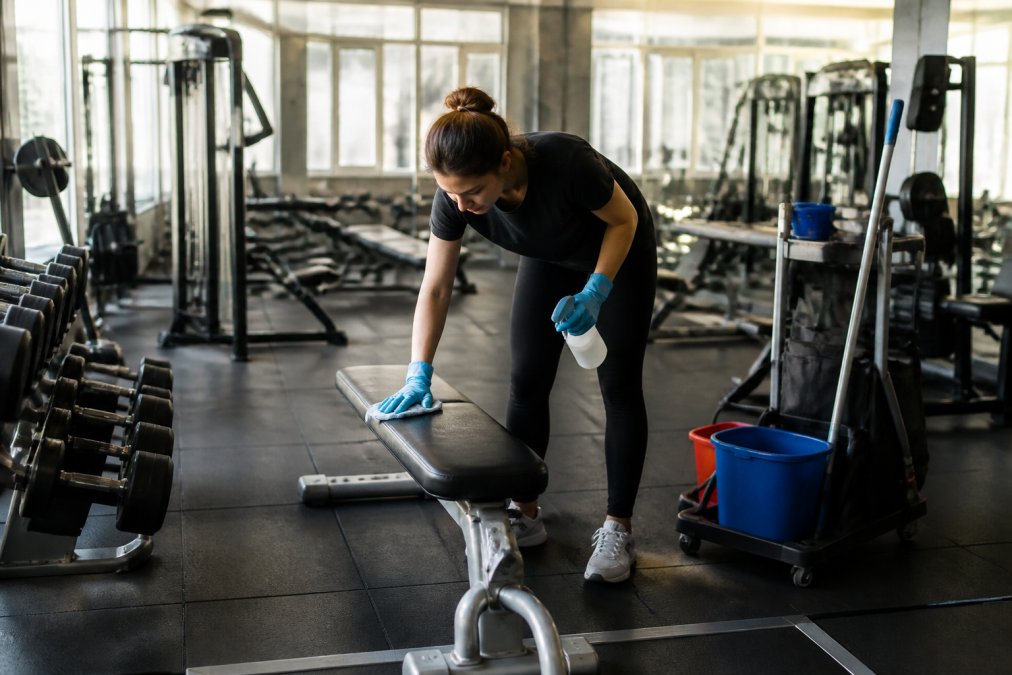
Daily focus should be on high-touch surfaces and visible floor care. This includes wiping down locker handles, faucets, door push bars, and every piece of exercise equipment after use. Hard floor care involves sweeping and mopping with a commercial-grade disinfectant to handle tracked-in dirt and sweat. Trash removal and restroom sanitation must also happen multiple times per day to maintain hygiene standards and prevent odors.
Weekly and Monthly Deep Cleaning Procedures
Weekly tasks should target areas that accumulate hidden grime, such as baseboards, vents, and locker room benches. Monthly deep cleaning should include carpet extraction for any studio or lobby carpeting, upholstery cleaning on benches and mats, and a full locker room sanitation protocol that includes scrubbing tile grout. This preventative maintenance extends the life of your flooring and equipment while ensuring the facility looks new.
Specialized Equipment Care and Eco-Friendly Agents
Fitness equipment is a significant capital investment, and the wrong cleaning product can void a warranty or cause premature wear. While general-purpose disinfectants are effective on non-porous surfaces, they can be too aggressive for the sensitive materials found on modern gym floors. A truly comprehensive program segments equipment by material type and applies a protocol that balances efficacy with preservation.
Protecting Electronics and Touchscreens
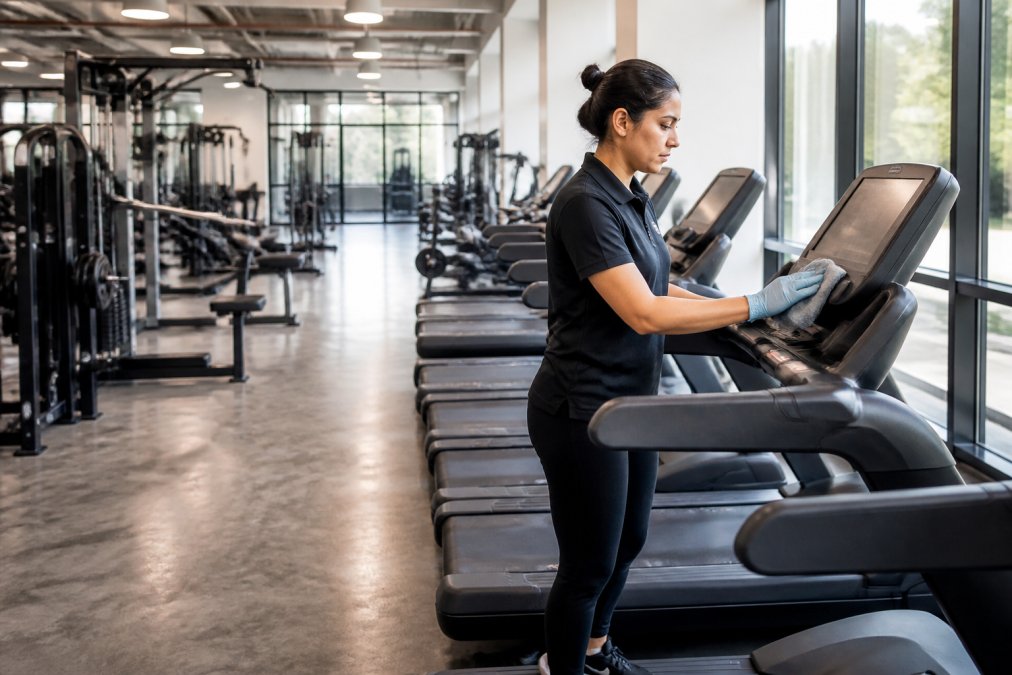
Treadmill consoles, elliptical displays, and smart strength equipment feature sensitive touchscreens that are easily damaged by ammonia-based or alcohol-heavy sprays. These agents can strip the oleophobic coating that repels fingerprints, leading to permanent smudging and a degraded user experience. For these surfaces, use a 70% isopropyl alcohol wipe or a dedicated electronics-safe disinfectant that is designed for screens. The key is to apply the solution to a microfiber cloth, never directly onto the console, to prevent liquid from seeping into seams and damaging internal circuitry. This is a critical distinction from the protocol used on metal frames or rubber grips.
Caring for Upholstery and Rubber
Vinyl upholstery on benches and padded levers requires a pH-neutral cleaner to prevent cracking and discoloration. Harsh degreasers can break down the plasticizers in vinyl, making it brittle over time. For rubber-coated dumbbells, kettlebells, and floor mats, a simple solution of water and a mild detergent is often sufficient for daily cleaning. For disinfection, choose a quaternary ammonium compound (quat) that is labeled as safe for rubber. A common pattern is for gyms to use a single 'one-size-fits-all' disinfectant, which often leads to premature degradation of these high-cost items. A better approach is to have a color-coded system: one solution for electronics, one for vinyl, and one for rubber and hard plastics.
The Shift to Eco-Friendly and Non-Toxic Agents
The demand for green cleaning products is no longer a niche preference; it is a member expectation. Many fitness enthusiasts are sensitive to the harsh fumes of traditional bleach-based or high-VOC (volatile organic compound) disinfectants, which can trigger asthma or respiratory irritation during a workout. This is where the industry is moving: toward EPA-registered disinfectants that use hydrogen peroxide or citric acid as the active ingredient. These agents are effective against a broad spectrum of pathogens, including norovirus and influenza, but they break down into water and oxygen, leaving no harmful residue. The EPA's Safer Choice program provides a searchable database of products that meet strict human and environmental health standards, offering a reliable benchmark for selecting agents that protect member wellness without sacrificing cleaning power.
Yoga Mats and Shared Accessories
Yoga mats are notoriously porous and absorb sweat, making them a breeding ground for bacteria like Staphylococcus aureus. A simple spray-and-wipe is insufficient. For shared mats, the protocol should involve a thorough cleaning with a dedicated mat wash that is enzyme-based to break down organic matter, followed by a disinfectant spray. Many facilities are moving toward a 'bring-your-own-mat' policy for hygiene, but for those that provide them, a rigorous soak-and-rinse cycle is necessary. Similarly, shared accessories like resistance bands and foam rollers should be wiped down with a non-damaging disinfectant after each use, as they are often overlooked in standard high-touch surface checklists.
Building a Staff Training Plan for Consistent Hygiene
Consistency is the hardest part of gym hygiene, and it is impossible without a documented training plan that goes beyond a simple checklist. Staff must know not just what to clean, but why the order of operations matters, how to mix chemicals safely, and how to recognize when a surface is truly sanitized. A common mistake is assuming that a quick spritz and wipe removes pathogens; training should emphasize dwell time and the difference between cleaners and disinfectants.
Core Certification and Safety Standards
For in-house staff, a foundational training module should cover the principles of OSHA's Bloodborne Pathogens Standard (29 CFR 1910.1030). While this standard is technically required for employees who have occupational exposure to blood or other potentially infectious materials, a gym environment, where sweat, minor cuts, and bodily fluids are common, demands that all cleaning staff understand the protocols for spill response and personal protective equipment (PPE). Training should include how to properly dispose of contaminated waste and the correct procedure for cleaning up a blood spill, which involves using an EPA-registered disinfectant with a tuberculocidal claim.
Beyond OSHA, staff should be trained on the specific label requirements of each chemical they use. This is not just a best practice; it is a legal requirement under the Hazard Communication Standard (29 CFR 1910.1200). Staff must know how to read a Safety Data Sheet (SDS) and understand the specific first-aid measures for each product. A practical training session should include a 'chemical pass-off' test, where employees must correctly identify the appropriate disinfectant for a given surface and demonstrate the correct mixing ratio and dwell time without referring to notes.
The 'Why' Behind the Order of Operations
The most effective training plans use a 'train-the-trainer' model, where a lead staff member is certified to train others. This ensures that the institutional knowledge is not lost with turnover. The curriculum should cover the 'why' behind the sequence: why you clean a surface before you disinfect it (organic matter inactivates many disinfectants), why you use color-coded microfiber cloths (to prevent cross-contamination from restrooms to food prep areas or equipment), and why you work from top to bottom in a locker room (to prevent dirty water from dripping onto clean surfaces).
Audits and Accountability Systems
A training plan is only as good as its enforcement. Implement a routine audit system where a manager uses a digital checklist to score each zone on a pass/fail basis. A common pattern in high-performing facilities is to use a 'secret shopper' approach, where a manager inspects a locker room or piece of equipment 30 minutes after it was cleaned to check for missed spots or lingering odors. This creates a culture of accountability. Assigning specific zones to specific staff members creates ownership, and posting a cleaning log with timestamps and initials provides a transparent record for members and health inspectors alike. Investing in proper training also reduces chemical safety incidents, protects your team from exposure, and ensures that your commercial cleaning for fitness centers delivers a consistently high standard regardless of who is on shift.
When to Hire Professional Janitorial Services
Managing a gym requires constant attention to member experience, and your in-house team often lacks the time or specialized equipment for deep sanitation. Hiring professional janitorial services becomes essential when you need electrostatic disinfection, high-volume floor care, or a reliable schedule that guarantees results. Professional crews bring commercial-grade machinery and certified expertise that outperforms standard mops and spray bottles.
For facilities that operate extended hours, a professional service offers flexible scheduling that minimizes disruption, cleaning during low-traffic overnight windows. Rangel Janitorial provides fully bonded and insured crews with over 30 years of experience, ensuring consistent quality across your facility. Our trained professionals use tailored cleaning solutions and electrostatic disinfection to deliver spotless results, giving you peace of mind and more time to focus on your members.
Frequently Asked Questions
How often should fitness equipment be disinfected?
High-touch surfaces like dumbbells, benches, and machine handles should be disinfected after each use, or continuously throughout the day in busy areas. For most fitness centers, this means a staff member wiping down equipment every 1-2 hours during peak times. Locker rooms and showers need daily disinfection, with a deeper clean weekly. A written schedule helps ensure consistency and protects members.
What is the difference between cleaning and disinfecting in a fitness center?
Cleaning removes visible dirt, sweat, and debris using soap or detergent and water. Disinfecting uses EPA-registered chemicals to kill pathogens on surfaces after cleaning. In a gym, you must clean a surface before you can effectively disinfect it. Skipping the cleaning step leaves a film that can block disinfectants from working properly.
Why is electrostatic disinfection important for gyms?
Standard spray-and-wipe methods can miss the undersides of benches or the backs of machines. Electrostatic disinfection for gyms applies a charged mist that wraps around surfaces for 360-degree coverage. This method is particularly useful for large areas like group fitness studios, where it can be done quickly after a class.
What should be included in a gym cleaning checklist?
Your gym cleaning checklist should cover daily tasks like trash removal, dusting, and disinfecting high-touch surfaces. Weekly tasks should include mopping all hard floors, cleaning locker room showers, and sanitizing equipment. Monthly deep cleaning should address carpets, upholstery, and behind-equipment areas. Include a column for the cleaner's initials and a supervisor sign-off to maintain standards.
Maintaining a spotless fitness environment is a continuous challenge that requires the right protocols, equipment, and expertise. Whether you need daily upkeep or specialized deep cleaning, Rangel Janitorial offers tailored cleaning solutions backed by trained professional crews and a satisfaction guarantee. Get started with Rangel Janitorial and secure a facility that keeps members healthy and coming back.