 Ultimate guide
Commercial Cleaning for Corporate Buildings: A Complete Guide
Table of Contents
- What Commercial Cleaning for Corporate Buildings Includes
- Why Professional Janitorial Services Matter for Your Facility
- Office Cleaning Checklist for Corporate Facilities
- Cleaning Frequency and Service Schedules That Work
- Commercial Cleaning Cost Calculator and Budget Planning
- Janitorial Service Contract Template and Key Terms
- Specialized Cleaning for High-Traffic and Sensitive Areas
- Frequently Asked Questions
Last Updated: September 2, 2026
What Commercial Cleaning for Corporate Buildings Includes
Commercial cleaning for corporate buildings encompasses far more than sweeping floors and emptying trash bins. It's a comprehensive approach to maintaining facilities that directly impacts employee productivity, client impressions, and operational efficiency. At Rangel Janitorial, we've spent over 30 years refining what truly matters in corporate facility maintenance.
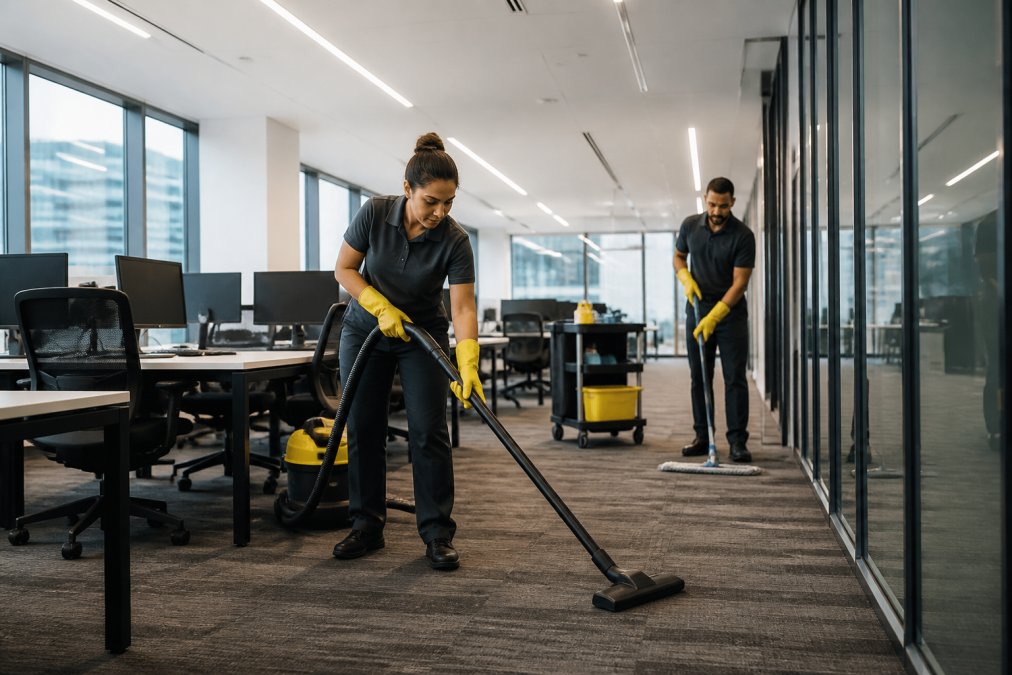
A professional janitorial program typically covers daily office cleaning, restroom sanitation, floor care and maintenance, high-touch point disinfection, waste removal, and carpet extraction. But the scope varies significantly based on your specific facility needs, building layout, and industry requirements.
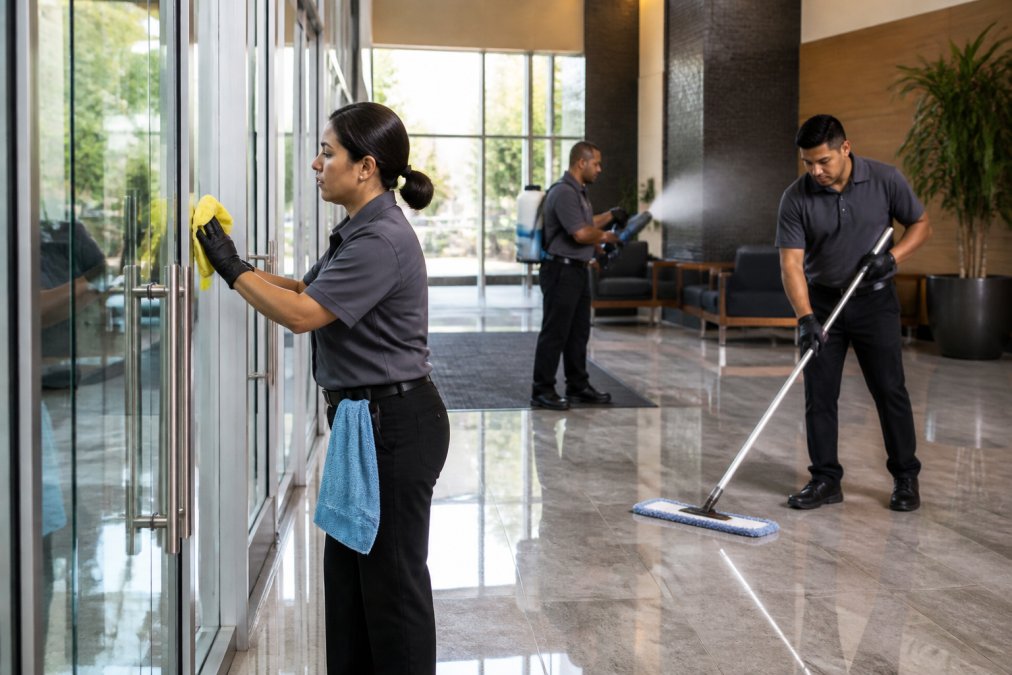
The core services include routine surface cleaning of desks, tables, and workstations; restroom hygiene including toilet, sink, and fixture sanitization; floor stripping and waxing for high-traffic areas; window cleaning; common area maintenance like break rooms and lobbies; and waste removal and recycling management. Many facilities also require specialized services like carpet extraction, upholstery cleaning, and day porter services for continuous tidiness throughout business hours.
What separates adequate cleaning from exceptional cleaning is attention to detail in areas most companies overlook. This includes sanitization protocols for high-touch surfaces like light switches, door handles, and elevator buttons; preventative maintenance to extend the life of flooring and furnishings; and supply replenishment to ensure restrooms and common areas stay stocked. Professional commercial cleaning for corporate buildings also addresses indoor air quality through proper HVAC maintenance and dust control, which directly affects employee health and focus.
Why Professional Janitorial Services Matter for Your Facility
The decision to invest in professional janitorial services isn't about aesthetics alone. It's about workplace wellness, liability management, and operational credibility. A clean facility signals competence to clients, reduces sick days among staff, and extends the lifespan of your building infrastructure.
Employee productivity drops measurably in poorly maintained environments (peer-reviewed research). Beyond the obvious morale impact, cluttered and dirty spaces increase cognitive load, your team's brains work harder just processing the visual chaos. Professional janitorial services eliminate that friction. When restrooms are spotless, break rooms are organized, and desks are dust-free, employees focus on actual work instead of facility frustrations.
From a liability perspective, professional cleaning protects you. Proper sanitization protocols reduce cross-contamination risk. Certified crews understand occupational health and safety standards and follow documented procedures. If an incident occurs, you have evidence of preventative maintenance and professional care. This matters especially for medical practices, dental offices, and fitness facilities where hygiene standards carry legal weight.
Client perception is equally critical. A prospect walks into your office lobby and makes judgments in seconds. A pristine, well-maintained facility communicates stability and professionalism. A neglected one suggests operational problems. For corporate buildings hosting client meetings, investor presentations, or facility tours, professional commercial cleaning for corporate buildings isn't optional, it's a business development tool.
Office Cleaning Checklist for Corporate Facilities
A comprehensive office cleaning checklist ensures nothing gets missed and accountability stays clear. This becomes especially important when managing multiple properties or rotating through different teams. Here's what a professional office cleaning checklist for corporate facilities should cover:
Daily Tasks:
- Empty all trash and recycling bins
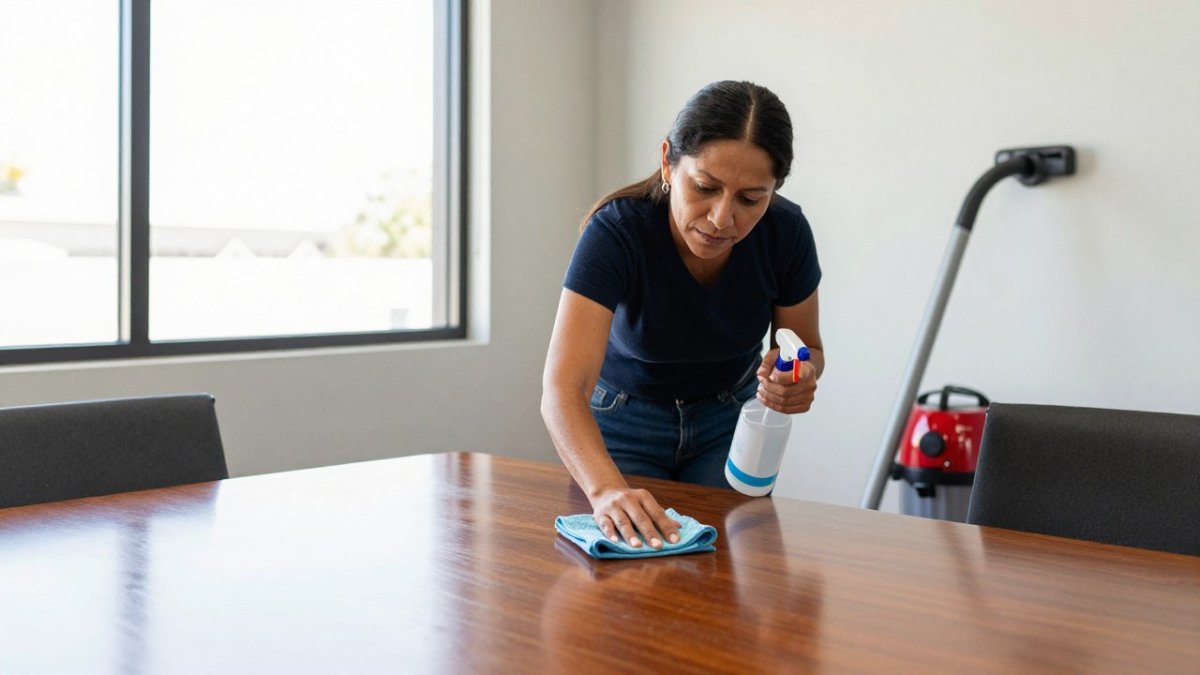
- Wipe down desks, tables, and workstations
- Clean and sanitize restroom fixtures
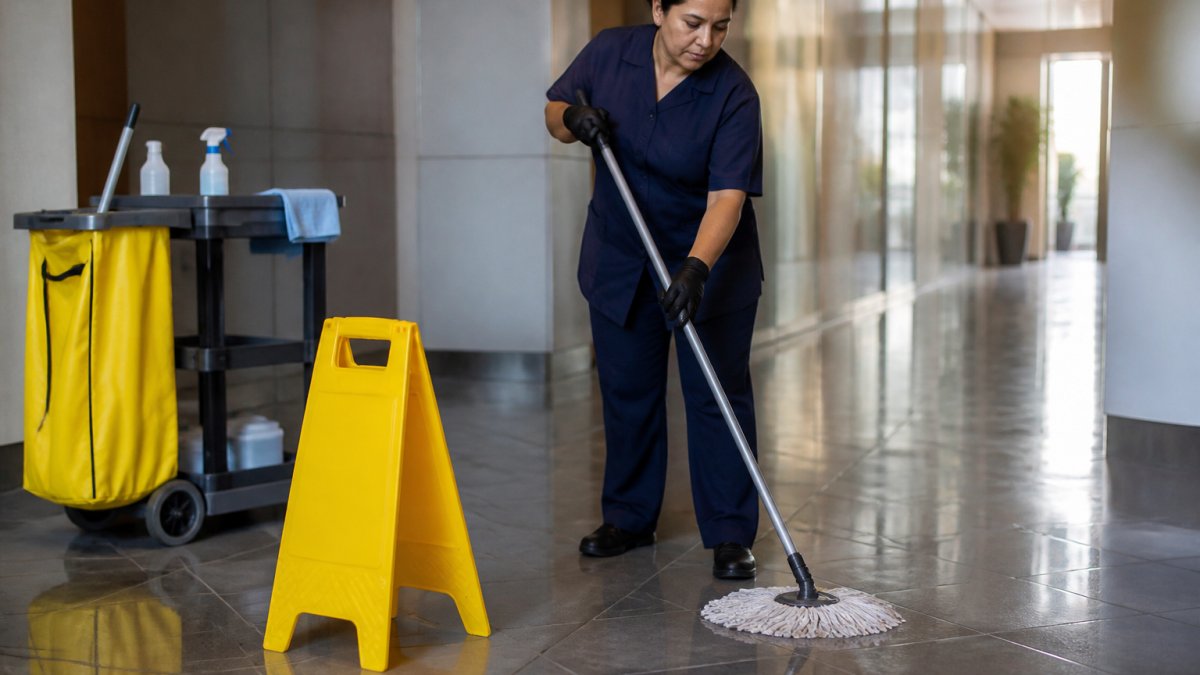
- Sweep and mop hard floors
- Restock restroom supplies and paper products
- Disinfect high-touch surfaces (door handles, light switches, elevator buttons)
- Dust common areas and furniture
- Clean windows and glass partitions
Weekly Tasks:
- Deep clean restrooms including tile grout and baseboards
- Strip and wax high-traffic floor areas
- Clean inside refrigerators and microwaves in break rooms
- Dust ceiling vents and light fixtures
- Clean window sills and frames
- Sanitize office equipment (phones, keyboards, shared devices)
Monthly Tasks:
- Carpet extraction and deep cleaning
- Wall washing and spot removal
- HVAC vent cleaning for indoor air quality
- Baseboards and trim cleaning throughout facility
- Upholstery cleaning on common area furniture
Quarterly Tasks:
- Floor stripping and waxing for high-traffic zones
- Deep cleaning of entryways and lobbies
- Window treatment cleaning (blinds, shades)
- Facility exterior maintenance (entryway, landscaping)
The key to an effective checklist is specificity. Rather than "clean restrooms," list each element: toilets sanitized, sinks cleaned, mirrors wiped, floors mopped, grout scrubbed. This clarity prevents misunderstandings and ensures consistent quality across visits.
Cleaning Frequency and Service Schedules That Work
Determining the right cleaning frequency depends on traffic volume, facility type, industry standards, and budget constraints. There's no universal answer, what works for a law office differs significantly from a medical practice or gym.
Most corporate office buildings benefit from daily janitorial service, particularly in high-traffic areas like lobbies, restrooms, and break rooms. This frequency maintains professional appearance, prevents dirt accumulation, and keeps sanitization current. For smaller offices with lower occupancy, three-times-weekly service may suffice for general cleaning, with daily restroom maintenance.
Medical and dental facilities typically require daily or twice-daily service due to hygiene compliance requirements and infection control protocols (the American Dental Association). High-touch point disinfection, restroom sanitization, and equipment sterilization support cannot be deferred. Fitness facilities and gyms need similar frequency due to equipment sweat, locker room usage, and moisture control needs.
Industrial parks and warehouse-office combinations often operate on customized schedules. Office areas may receive daily service while warehouse zones get weekly deep cleaning. Day porter services, staff present during business hours for continuous tidiness, work well for high-traffic facilities that need real-time upkeep throughout the day.
The most cost-effective approach pairs frequency with timing. Evening cleaning after staff departure avoids disruption and typically costs less than daytime service. However, if your facility hosts client meetings throughout the day, a combination of evening deep cleaning plus morning touch-ups or day porter service maintains professional appearance without downtime.
A preventative maintenance mindset reduces overall cleaning frequency needs. Regular floor care prevents buildup that requires intensive stripping. Consistent sanitization prevents bacterial growth that demands emergency deep cleaning. Professional janitorial providers understand this trade-off and can recommend schedules that balance cost with facility condition.
Commercial Cleaning Cost Calculator and Budget Planning
Pricing for commercial cleaning for corporate buildings varies based on square footage, service frequency, facility type, and geographic location. Rather than generic estimates, effective budget planning starts with understanding the factors that drive costs.
Square footage is the primary cost driver. A 5,000-square-foot office costs less than a 25,000-square-foot facility, but per-square-foot pricing typically decreases at scale.
Service frequency multiplies the base cost. Daily service costs more than three-times-weekly service. Specialized services, electrostatic disinfection, floor stripping and waxing, carpet extraction, window cleaning, add to the base price but often represent better value than attempting these in-house or hiring separate contractors.
Facility type affects pricing significantly. A basic office building costs less to maintain than a medical facility with strict sanitization protocols or a gym with high-moisture, high-bacteria environments. Industrial facilities with warehouse components may have different pricing for office versus warehouse zones.
When evaluating proposals, focus on what's actually included. Some providers quote low base prices but add fees for supplies, equipment, or specialized services. Others include everything. Understanding the full scope prevents budget surprises and enables accurate comparisons across providers.
Rangel Janitorial provides customized quotes based on your specific facility, location, and service needs. Rather than applying a generic formula, our team conducts facility assessments to understand your actual requirements. This approach ensures you pay for the services you need without overpaying for unnecessary add-ons. For current pricing and a personalized estimate, contact Rangel Janitorial for a free quote.
Janitorial Service Contract Template and Key Terms
A strong janitorial service contract protects both parties by establishing clear expectations, responsibilities, and dispute resolution processes. Key sections should include scope of work, frequency and timing, pricing and payment terms, liability and insurance requirements, and performance standards.
Scope of Work should list specific services included (daily cleaning, floor care, restroom maintenance, etc.) and explicitly state what's excluded (carpet replacement, major repairs, landscaping). This prevents misunderstandings about whether tasks like window washing or HVAC vent cleaning are included.
Service Schedule specifies frequency (daily, three-times-weekly, etc.), timing (evening hours, weekend service, etc.), and holidays. It should address how service adjustments work, whether holidays reduce service, and how vacation periods are handled.
Pricing and Payment Terms outline the monthly or annual cost, what's included in the base price, and how additional services are billed. It should specify payment schedule (net 30, net 15, etc.) and whether pricing is fixed or subject to adjustment.
Performance Standards define what "clean" means. Rather than subjective language, use specific metrics: restrooms cleaned daily, floors vacuumed and mopped, high-touch surfaces disinfected, supplies restocked. Include inspection procedures and dispute resolution, how problems are reported, response timeframes, and remedies for non-compliance.
Liability and Insurance requires the janitorial provider to carry general liability insurance and workers' compensation. Specify minimum coverage amounts and whether you need to be named as an additional insured. This protects you if a crew member is injured or causes property damage.
Termination Clauses establish notice periods for cancellation (typically 30 days) and conditions under which either party can terminate without penalty (material breach, failure to maintain standards, etc.).
A well-drafted contract reduces disputes and clarifies expectations. Many janitorial providers offer standard templates, but having legal review ensures the contract protects your facility's interests. The investment in proper contracting typically pays for itself by preventing costly misunderstandings.
Specialized Cleaning for High-Traffic and Sensitive Areas
Certain facility areas require specialized attention beyond routine cleaning. High-traffic zones accumulate dirt and bacteria faster, while sensitive areas like restrooms and medical facilities demand specific protocols.
High-traffic areas like lobbies, entryways, and main corridors see constant foot traffic and require frequent attention. These zones benefit from day porter services, staff present during business hours for continuous tidiness, immediate spill response, and floor maintenance. Without this real-time upkeep, high-traffic areas deteriorate visibly within hours.
Restroom sanitation demands specific protocols. Beyond basic cleaning, professional restroom maintenance includes disinfection of all fixtures, grout cleaning, and supply management. Proper sanitization protocols prevent cross-contamination and reduce illness transmission among staff.
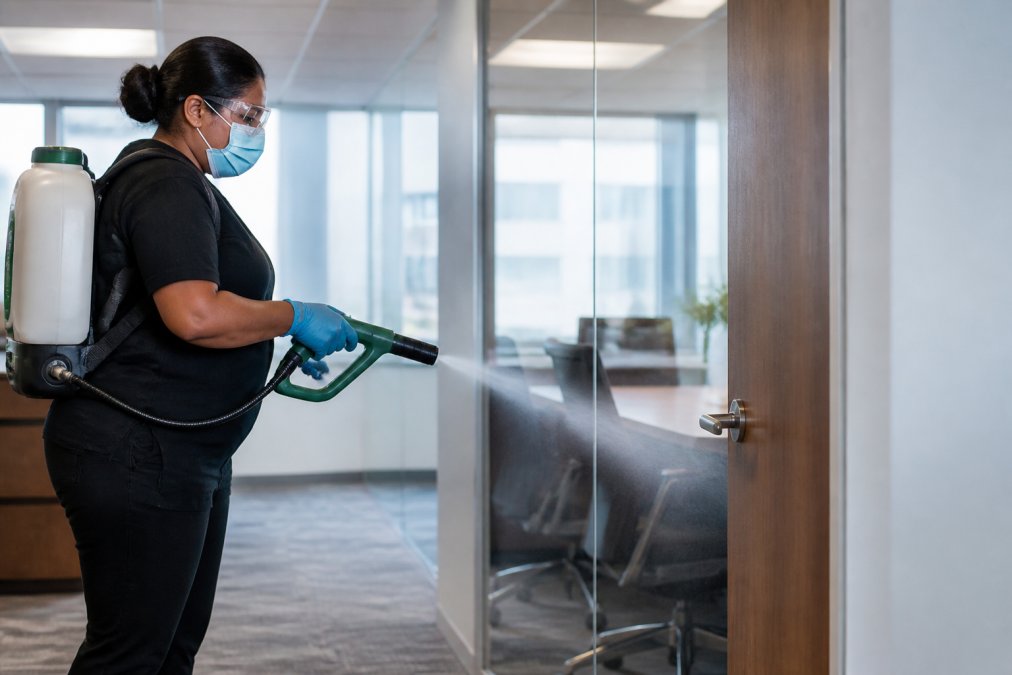
Medical and dental facilities operate under strict hygiene compliance requirements. Electrostatic disinfection technology applies a fine disinfectant mist that reaches surfaces a spray bottle cannot, providing 360-degree coverage of equipment, instruments, and facility surfaces (the CDC). This technology ensures compliance with healthcare facility standards and protects patient safety.
Fitness facilities and gyms present unique challenges due to sweat, moisture, and bacterial growth on equipment. Specialized cleaning includes equipment disinfection after each use, locker room sanitization, shower area maintenance, and moisture control to prevent mold. These environments require more frequent deep cleaning than typical offices.
Electrostatic disinfection technology has become essential for facilities requiring high-level sanitization. Unlike traditional spraying, electrostatic application charges disinfectant particles so they're attracted to and coat all surfaces, visible and hidden. This method reaches crevices, undersides, and complex equipment that standard cleaning misses. For corporate buildings with shared equipment, high-touch surfaces, or sensitive operations, electrostatic disinfection provides measurable protection against cross-contamination.
Rangel Janitorial's specialized electrostatic disinfection service offers 360-degree coverage for facilities requiring advanced sanitization. Our trained crews apply the technology correctly, ensuring compliance with facility standards and protecting employee and client health. This specialized service is particularly valuable for medical practices, dental offices, and corporate buildings with high-touch shared spaces.
Professional commercial cleaning for corporate buildings is an investment in facility condition, employee wellness, and operational credibility. The right janitorial partner maintains your facility to standards that reflect your business's professionalism while reducing the operational burden on your internal team.
Rangel Janitorial brings 30 years of experience, fully bonded and insured crews, and specialized capabilities like electrostatic disinfection to corporate facilities across California. Our tailored cleaning solutions ensure spotless facilities with consistent quality, whether you manage a single building or multiple properties. We guarantee satisfaction with every service and provide real-time facility upkeep that keeps your workplace operating at its best.
Ready to experience the difference professional janitorial service makes? Get a free quote from Rangel Janitorial and discover how we can maintain your corporate building to the standards your business deserves.
Frequently Asked Questions
How often should commercial cleaning for corporate buildings take place?
Most corporate facilities require daily or nightly cleaning for restrooms, break rooms, and high-traffic areas, with weekly deep cleaning for carpets and floors. The frequency depends on foot traffic volume, facility size, and industry requirements. Medical offices and fitness centers typically need more frequent sanitization, sometimes daily. Your facility manager should assess traffic patterns and establish a service schedule that maintains professional standards without disrupting business hours.
What should be included in an office cleaning checklist for corporate facilities?
A comprehensive checklist covers restroom sanitation, floor care, high-touch point disinfection (door handles, light switches, keyboards), trash removal, window cleaning, carpet extraction, and common area maintenance. It should specify cleaning frequency for each task, supply replenishment schedules, and quality standards. Your janitorial service should provide a detailed checklist aligned with your facility's layout and occupancy. This ensures nothing is missed and accountability is clear between your team and the cleaning contractor.
What does a janitorial service contract template need to cover?
A solid contract includes scope of work, cleaning frequency and schedule, pricing structure, service level agreements (response time for issues), liability and insurance requirements, termination clauses, and performance standards. It should specify what happens if services are missed or substandard, outline supply responsibilities, and detail any specialized services like electrostatic disinfection or floor stripping and waxing. Having clear terms in writing protects both parties and prevents disputes about expectations or costs.
Is electrostatic disinfection worth the cost for corporate buildings?
Electrostatic disinfection provides 360-degree coverage and reaches areas standard cleaning misses, making it valuable for facilities with high-touch points, shared equipment, or health-sensitive environments like medical offices or fitness centers. It reduces cross-contamination risk and improves indoor air quality when combined with proper HEPA filtration. For general corporate offices, it's most effective during high-disease periods or when deep sanitization is needed. Discuss your facility's occupancy patterns and health standards with your janitorial service to determine if it fits your preventative maintenance strategy.
How can I verify that a janitorial company is fully bonded and insured?
Request a Certificate of Insurance from your cleaning contractor before signing a service agreement. The certificate should list your facility as an additional insured party and specify coverage limits for general liability and workers' compensation. You can also contact the insurance carrier directly to confirm the policy is active. For bonded companies, ask for proof of a fidelity bond, which protects against employee theft or damage. Verify all credentials in writing, this is standard practice and any reputable company will provide documentation without hesitation.
What's the difference between janitorial services and commercial cleaning?
Janitorial services focus on routine, ongoing maintenance: trash removal, restroom stocking, floor sweeping, and common area upkeep. Commercial cleaning covers deeper, more intensive work like carpet extraction, floor stripping and waxing, window cleaning, and high-touch point disinfection. Most facilities need both: janitorial crews handle daily upkeep while commercial cleaning teams handle periodic deep cleaning. Your service level agreement should specify which tasks fall under routine maintenance and which are billed separately as specialized services.
How do I calculate commercial cleaning costs for my facility?
Costs depend on square footage, facility type, cleaning frequency, and specialized services needed. A basic formula factors in hourly labor rates, number of crew members required, and frequency of service. For example, a 10,000 sq ft office cleaned nightly costs more than one cleaned twice weekly. Specialized services like electrostatic disinfection, floor stripping, or carpet extraction add to the total. Request a detailed quote from your janitorial provider that breaks down labor, supplies, and specialized services so you understand what drives the cost.