 Comparison
Aria Cleaning Alternative for Businesses: 2026 Guide
Table of Contents
- What Businesses Actually Need From an Aria Cleaning Alternative
- Service Provider vs. Janitorial Software: Know Which You're Buying
- Quick Comparison: Commercial Cleaning Options for 2026
- Top Aria Cleaning Alternative for Businesses: Rangel Janitorial
- Software Alternatives: Jobber, ZenMaid, Swept, and BookingKoala
- Janitorial Service Contract Checklist for Switching Providers
- Benefits of Electrostatic Disinfection for Offices and Medical Facilities
- How to Switch Commercial Cleaning Companies Without Disrupting Operations
- Frequently Asked Questions
Last Updated: September 17, 2026
What Businesses Actually Need From an Aria Cleaning Alternative
An Aria Cleaning alternative is a commercial cleaning provider or janitorial management platform that replaces an existing vendor while matching or improving on service consistency, accountability, and reporting. Most facility managers aren't shopping for a brand name. They're shopping for reliability.
Service Provider vs. Janitorial Software: Know Which You're Buying
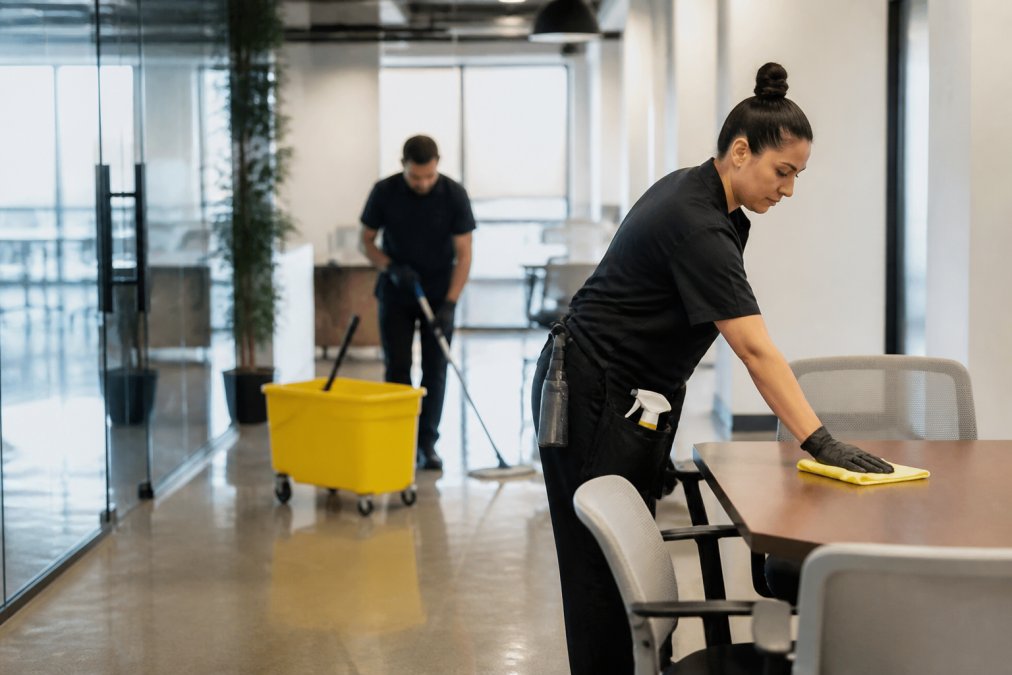
These are two different purchases, and confusing them wastes time and budget. A service provider sends trained crews to clean your facility; janitorial software gives your in-house team or existing vendor tools to schedule, track, and report on work.
Quick Comparison: Commercial Cleaning Options for 2026
| Option | Type | Best For | Starting Price |
|---|---|---|---|
| Rangel Janitorial | Service provider | Offices, medical, industrial, multi-site | Quote-based |
| Jobber | Field service software | Growing cleaning businesses | Contact for pricing |
| ZenMaid | Cleaning business software | Owner-operators | Contact for pricing |
| Swept | Janitorial software | Commercial quality control | $99/month (annual) |
| BookingKoala | Booking software | Custom client booking | $27/month |
How We Evaluated These Options
We weighed four factors: coverage for commercial and medical environments, quality control and inspection capability, reporting and client visibility, and multi-location contract handling. Software was assessed on scheduling, time and attendance, and mobile accessibility; providers on crew reliability, insurance, and documented inspection processes.
Top Aria Cleaning Alternative for Businesses: Rangel Janitorial
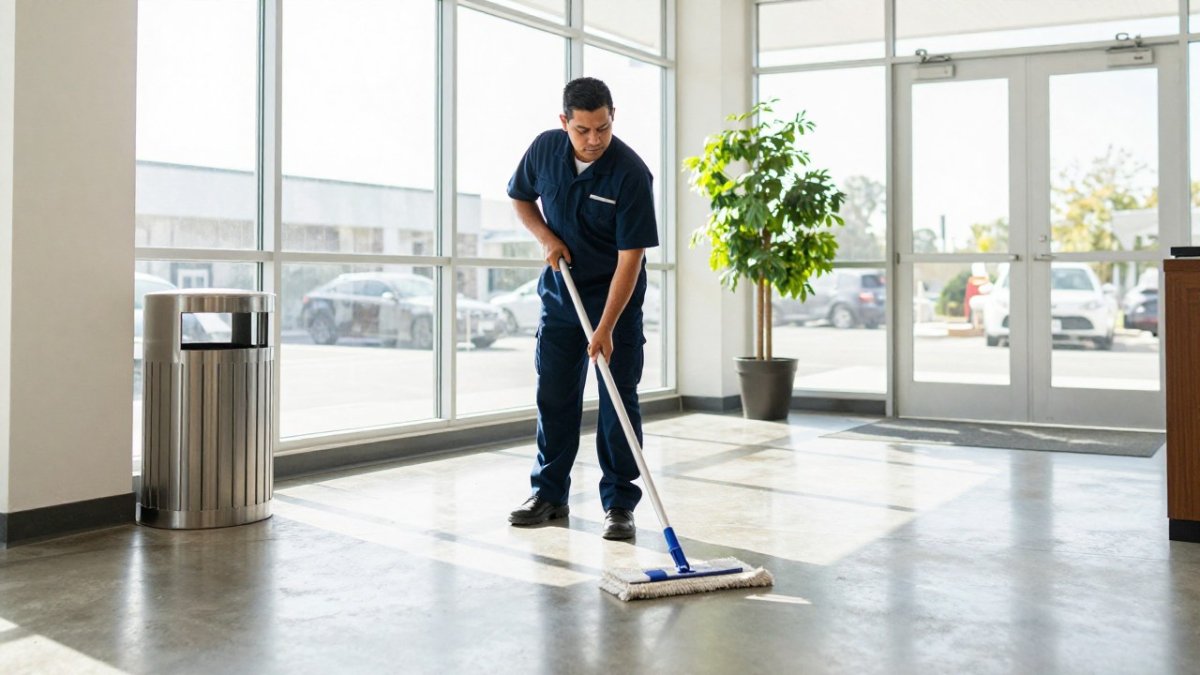
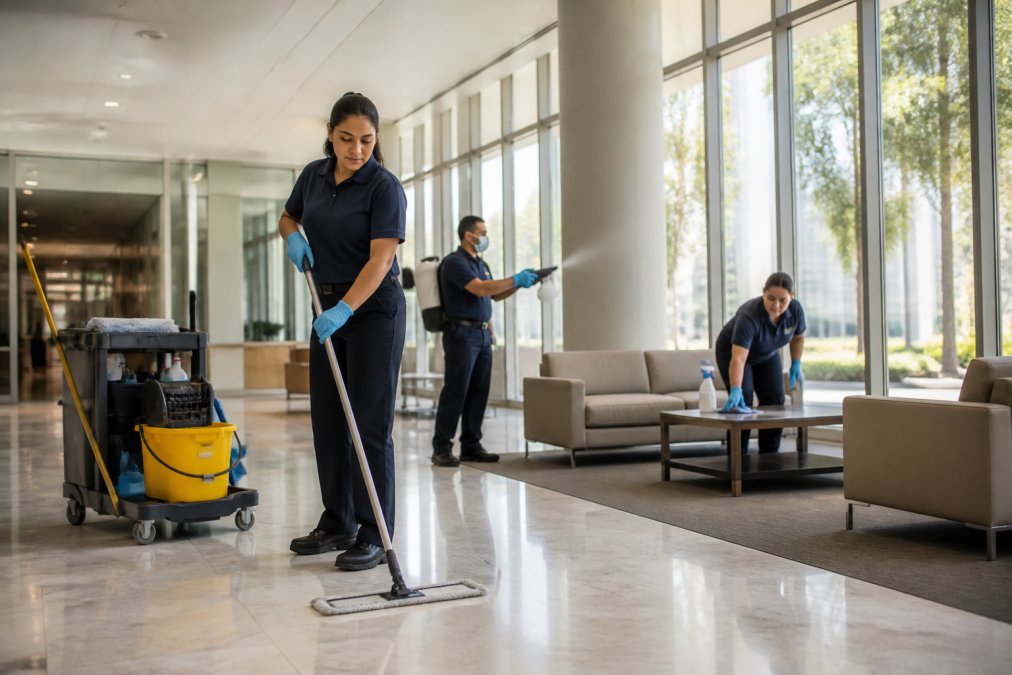
For businesses that need a cleaning partner rather than a scheduling tool, Rangel Janitorial is the strongest replacement: 30+ years of experience, fully bonded and insured crews, a satisfaction guarantee, and a client list of over 500 businesses.
Pros and Cons
Pros:
- 30+ years of commercial cleaning experience
- Fully bonded and insured, with a satisfaction guarantee
- Electrostatic disinfection for offices and medical facilities
- Consistent quality across multiple properties
- Tailored plans for offices, medical, industrial, and gym environments
Cons:
- Pricing is quote-based, so you need a walkthrough before you see numbers
- Service is focused on commercial facilities rather than residential cleaning
Software Alternatives: Jobber, ZenMaid, Swept, and BookingKoala
If you run a cleaning company and need tools rather than a vendor, these four platforms cover most operational needs. The right pick depends less on the feature list than on crew count, contract mix, and how much back-office work you want to automate.
Frame the decision by business size:
- 1-5 employees (owner-operator): prioritize low monthly cost, simple scheduling, and client reminders. Setup time matters more than feature depth because you are the one configuring it after hours.
- 6-25 employees (growing commercial shop): prioritize recurring contract scheduling, time and attendance, invoicing with online payment, and a mobile app crews will actually use.
- 26-50+ employees (multi-crew or multi-site): prioritize quality-control inspections, geofenced clock-in, reporting exports, and integrations with payroll or accounting so admin headcount does not scale with crew count.
Jobber: Best for Growing Cleaning Businesses
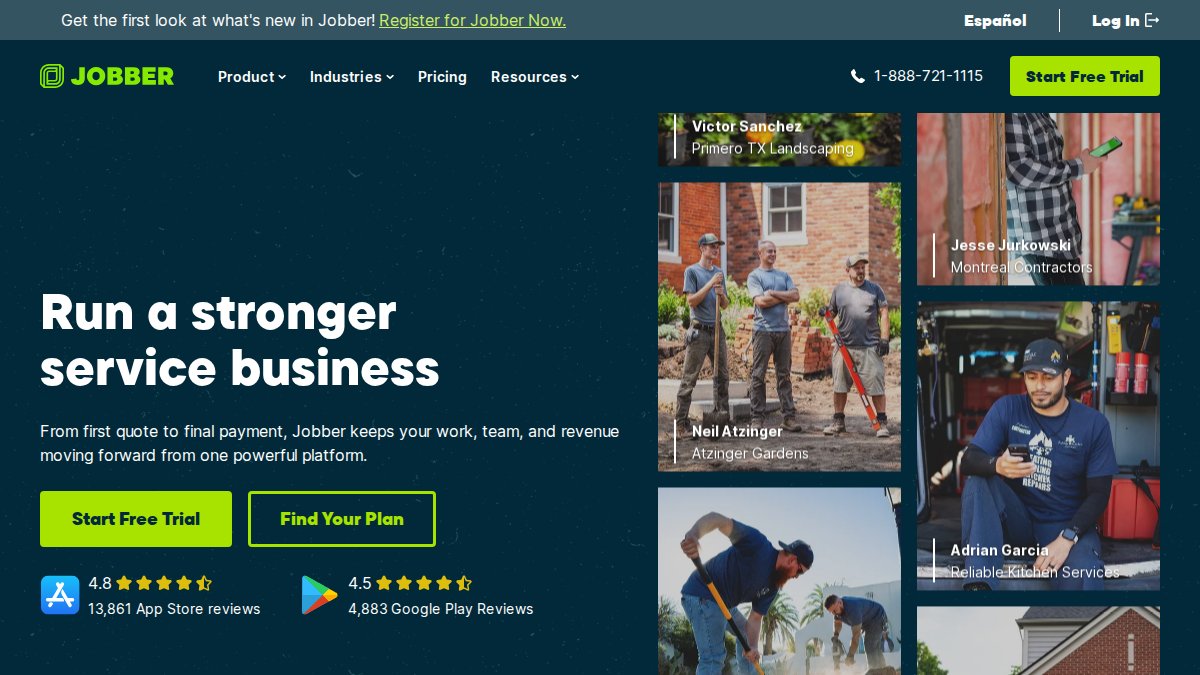
Jobber handles automated recurring scheduling for janitorial contracts, CRM with communication history, a mobile app for field crews, and integrated invoicing with online payments. It suits companies scaling past a handful of crews, and its reporting covers job completion rates and revenue per client, useful when deciding which contracts to renew.
ZenMaid: Best for Cleaning Business Owners
ZenMaid is built specifically for cleaning businesses. Automated SMS and email reminders, payroll and time-tracking, a drag-and-drop calendar, and payment gateway integrations cover the daily admin load. For a 1-5 person operation, that focus is an advantage: less to configure, and the interface assumes cleaning jobs rather than generic field service.
Swept: Best for Commercial Janitorial Quality Control
Swept is the most janitorial-specific option here: real-time messaging with translation for diverse crews, digital inspection tools that produce QA reports, geofenced time and attendance tracking, and supply inventory tracking across facilities.
BookingKoala: Best for Customizable Client Booking
BookingKoala lets you build custom booking forms, automate staff scheduling and dispatching, and manage reviews. It's the most affordable entry point and most flexible on the client-facing side, a fit for cleaning businesses taking inbound bookings directly rather than recurring commercial contracts.
Cost-Benefit and Integration Notes
Before committing, run the numbers on what the platform replaces. A $99/month tool that eliminates five hours of admin weekly is cheaper than a $27/month tool that leaves those hours in place. Ask each vendor three questions:
- What does it integrate with? Payroll, accounting (QuickBooks, Xero), and payment processors matter most for cleaning businesses. Poor integration means duplicate data entry.
- How does pricing scale? Per-user pricing punishes growth; flat-rate pricing can be cheaper at scale. Confirm what happens when you add a tenth crew.
- What does reporting actually show? Completion rates, inspection scores, and revenue per client are the metrics that drive decisions. Vanity dashboards are not.
Janitorial Service Contract Checklist for Switching Providers
A janitorial service contract checklist prevents the gaps that cause most vendor disputes. Use this before signing with any new provider:
- Written scope of work by area, including restrooms, lobbies, break rooms, and stairwells
- Cleaning frequency per area, with daily, weekly, and monthly tasks separated
- Inspection schedule and who performs quality control inspections
- Response time commitment for complaints, in hours, not days
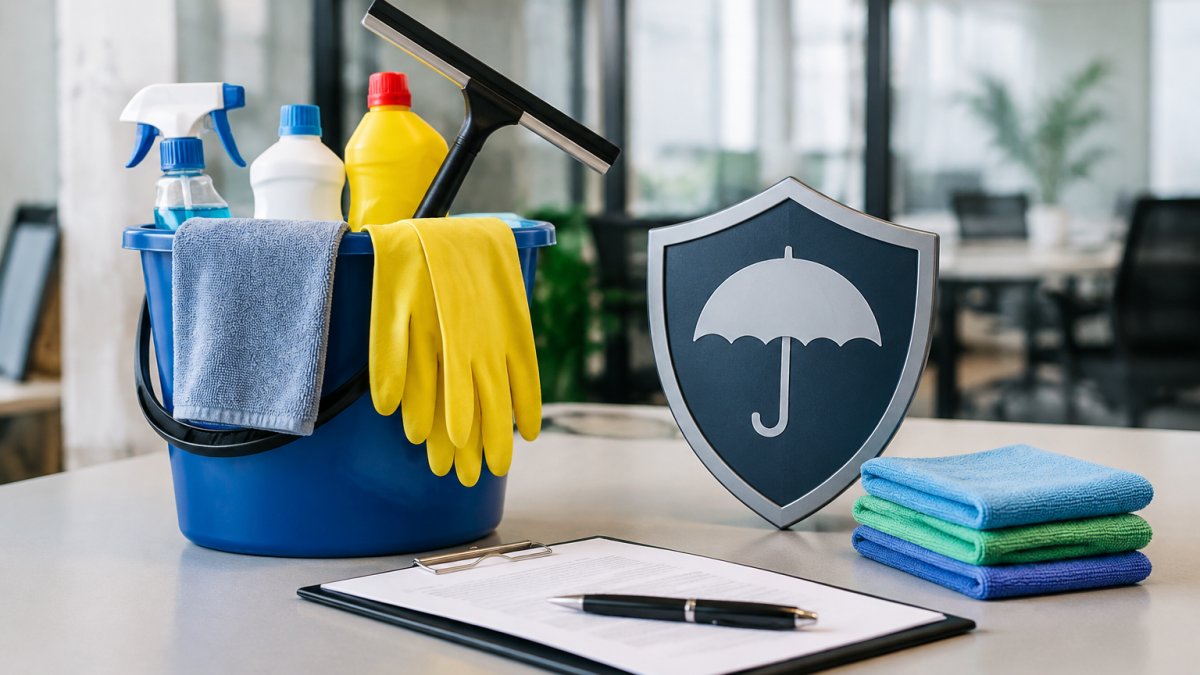
- Proof of bonding and insurance, with certificates you can verify
- Named account contact and escalation path
- Supply and inventory management responsibilities
- Incident reporting procedure for damage or safety issues
- Service level agreements with measurable standards
- Termination terms and notice period
Benefits of Electrostatic Disinfection for Offices and Medical Facilities
Electrostatic disinfection applies a positive electrical charge to cleaning solution, causing droplets to wrap around and cling to surfaces rather than fall flat. The result is 360-degree coverage on complex shapes: keyboards, chair arms, equipment housings, and undersides manual wiping reaches inconsistently.
How to Switch Commercial Cleaning Companies Without Disrupting Operations
Switching commercial cleaning companies comes down to sequencing: overlap the outgoing and incoming providers for at least one cycle, and document conditions before the transition. The goal is zero coverage gap and a clear record at handoff.
A practical sequence:
- Document current conditions. Photograph each area before the old provider's final week. This protects you on damage claims and sets the baseline for the new crew.
- Confirm the new scope. Walk the facility with the incoming provider and mark every area, including the ones your old contract forgot.
- Schedule a one-week overlap. Have both providers on site briefly so the new crew learns the building while coverage continues.
- Transfer access and supplies. Keys, codes, alarm procedures, and inventory should move before day one, not during it.
- Run a 30-day review. Inspect against the checklist and raise issues in writing while the contract is still fresh.
Migration and Data Portability: The Step Most Guides Skip
If you are switching software rather than (or in addition to) a service provider, the operational sequence above is only half the job. The other half is migrating your data, and this is where most switching projects stall. Businesses fear losing years of client history, inspection records, and billing data, and that fear is the single biggest reason operators stay on a platform they have outgrown.
- Export before you cancel. Request a full data export from your current platform while your account is still active. Most platforms provide CSV exports of clients, jobs, invoices, and inspection history; some charge for it or limit it to certain plans. Confirm what you can pull before you give notice.
- Inventory what you actually need. You rarely need every historical record. Client contact lists, active recurring schedules, open invoices, and the last 12 months of inspection reports are usually the priority. Archive the rest to a spreadsheet rather than importing it.
- Map fields before importing. Column names rarely match between platforms. Map your old fields to the new platform's fields in a spreadsheet first, then import, this catches mismatches before they corrupt your client list.
- Run parallel for one billing cycle. Keep the old platform active for one cycle so you can verify that recurring jobs, reminders, and invoices fire correctly in the new one. Cancel only after a clean cycle.
- Recreate what cannot be exported. Inspection templates, custom forms, and automated workflows often do not transfer. Budget time to rebuild these by hand; it is usually the longest part of the migration.
Compliance and Safety Documentation During the Switch
Cleaning contracts in medical, dental, and food-service facilities carry documentation requirements that do not pause during a transition. Before the switch, confirm that the incoming provider can supply safety data sheets (SDS) for every chemical they use, proof of OSHA-aligned training for crews, and a written bloodborne-pathogen procedure if the facility requires one. Keep the outgoing provider's records on file until the new documentation is in hand, auditors and inspectors do not accept a gap in coverage.
Frequently Asked Questions
What should I look for in an Aria Cleaning alternative for my business?
Compare providers on four things: written scope of work, verified bonding and insurance, a named account manager, and quality control inspections with digital reporting. Ask for references from facilities similar to yours, such as Class A offices or medical suites. Confirm the contract states response times for complaints, since slow follow-up is the most common reason businesses switch commercial cleaning providers.
How do I verify a cleaning company is actually bonded and insured?
Request a certificate of insurance directly from the provider and call the issuing carrier to confirm the policy is active. Check that general liability and workers' compensation coverage are both listed, and ask to be named as an additional insured. A legitimate bonded and insured company will send these documents within a day, no hesitation.
What belongs on a janitorial service contract checklist before I sign?
Your janitorial service contract checklist should cover cleaning frequency per area, supplies included, restroom and breakroom protocols, complaint response windows, insurance requirements, termination notice, and price adjustment terms. Add a section for specialized services like electrostatic disinfection if your facility needs it. Review the checklist with your operations team before signing so nothing gets missed.
Is electrostatic disinfection worth it for offices and gyms?
Electrostatic sprayers apply disinfectant with a positive charge, so the solution wraps around surfaces rather than soaking them. That 360-degree coverage reaches chair backs, equipment undersides, and locker room fixtures that wipe-down cleaning misses. For high-traffic gyms, medical suites, and shared offices, the benefits of electrostatic disinfection for offices include faster coverage and more consistent results between deep cleans.
How long does it take to switch commercial cleaning companies?
Most transitions take two to four weeks. Review your current contract's termination clause first, then set a start date that gives the new provider time for a walkthrough and a written scope. Keep your existing provider through the final billing cycle to avoid coverage gaps. A provider experienced with multi-site portfolios can usually onboard several buildings on a staggered schedule.