 How-to
Understanding Janitorial Insurance Claims: A Step-by-Step Guide
Table of Contents
- How the Janitorial Insurance Claims Process Works
- Step 1: Document the Incident With a Janitorial Incident Report Template
- Step 2: Follow the Insurance Claim Documentation Checklist
- Step 3: File the Claim and Track the Response
- How Long Does a Janitorial Insurance Claim Take?
- Preventing Cleaning Business Insurance Claims Before They Happen
- What to Do When a Claim Is Denied
- Frequently Asked Questions
Last Updated: October 17, 2026
How the Janitorial Insurance Claims Process Works
A janitorial insurance claim is a formal request to your insurer to pay for a loss your cleaning business caused or suffered, such as damaged property, an injury, or a broken fixture.
Most cleaning companies lose money on claims for one boring reason. Not bad luck. Bad records.
Below, we walk through each step, from the first incident report to a denial appeal.
Cleaning, Disinfection, and What Insurance Actually Covers
Before you file anything, know what your policy does and does not touch. A general liability policy typically responds to third-party bodily injury and property damage.
Here is the split most owners miss:
- Cleaning removes visible soil. No coverage question here.
- Disinfection kills germs on a surface. If a disinfectant damages a client's finish, that damage may fall under liability.
- Sterilization destroys all microbes, usually in medical settings. This is a clinical process, not a janitorial one.
So when a disinfectant etches a conference table, the claim is about property damage, not about the cleaning itself. The EPA registered disinfectant guidance explains why label directions matter for both safety and liability.
Step 1: Document the Incident With a Janitorial Incident Report Template
A janitorial incident report template is a one-page form your crew fills out the moment something goes wrong, capturing what happened, where, when, and who saw it.
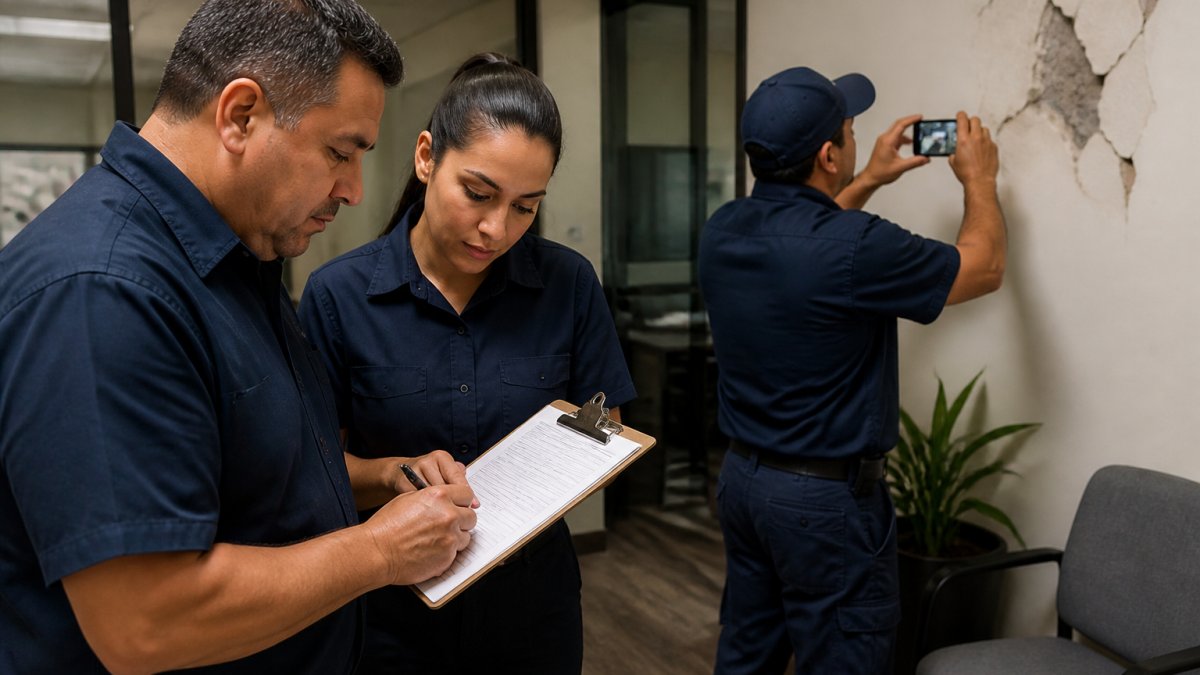
Fill it out before the crew leaves the building; insurers weigh same-day reports far more heavily than one written two days later.
Use this template:
Incident Report Date and time of incident: ______ Location (building, floor, room): ______ Staff member(s) involved: ______ What happened (plain facts, no opinions): ______ Property or person affected: ______ Photos taken (yes/no, how many): ______ Witness name and contact: ______ Client representative notified (name, time): ______ Immediate action taken: ______ Supervisor signature and date: ______
A common mistake is writing opinions instead of facts. "The janitor was careless" hurts you. "The cart wheel struck the door frame at 2:14 p.m." helps you.
Step 2: Follow the Insurance Claim Documentation Checklist
The insurance claim documentation checklist is the packet your insurer needs to evaluate the loss. A thin packet means a slow claim; a complete one organized the way an adjuster reads it moves faster.
Work through this list before you file:
- Signed incident report from the day of the loss
- Dated photos of the damage from multiple angles, plus a wide shot showing the room
- The client's written statement or email
What Each Document Actually Proves
A checklist is only useful if you know why each item is on it. Adjusters are not evaluating whether you are a good cleaning company; they are testing three things: did the loss happen, did it happen during your policy period, and does a coverage grant apply while no exclusion removes it.
- Incident report, anchors the loss to your policy period. A report written two days later invites a late-notice argument.
- Dated photos, establish the condition of the property; a wide shot plus close-ups shows context, not just a dramatic crop.
- Client statement, corroborates your account. A short email is enough; a signed letter is stronger.
- SOPs and schedule, show the loss happened during work you were hired to perform, which triggers most general liability coverage.
Assemble the Packet in Adjuster Order
A packet ordered the way the adjuster will read it gets a faster first response. A workable order:
- Cover sheet with claim number, policy number, insured name, date of loss, and a one-paragraph summary.
- Incident report.
- Photos, labeled by date and location.
- Client statement and witness statements.
- SOPs, schedule, and product labels/SDS.
- Repair estimates and invoices.
- A short index listing every item and its page number.
Keep copies. Send the insurer a clean set and store your originals. If a claim is disputed later, your file is your defense.
The Quality-Assurance Paper Trail That Doubles as Claim Evidence
This is where most janitorial operators leave money on the table. The same records that prove your work was done correctly are the records that defeat a claim. Build them before you need them:
- Completed-task logs with time stamps for each room or zone.
- Supply and dilution logs showing which product was mixed at what ratio and where it was used.
- Tool-change logs for restrooms versus exam or office areas, so you can show cross-contamination controls were followed.
- Periodic inspection checklists signed by a supervisor, with re-clean notes when something was missed.
A simple completion rate, rooms logged as cleaned divided by rooms scheduled, and a re-clean frequency count give you two numbers to hand an adjuster or client. They are evidence your operation was controlled on the day of the loss. When a claim alleges your crew tracked contamination from a restroom into an office, a tool-change log beats any statement written after the fact.
Step 3: File the Claim and Track the Response
Filing is the easy part. Tracking is where claims quietly die.
Report the loss to your insurer as soon as your policy requires. Most commercial general liability policies require prompt notice, and many specify a set number of days. The first call is the first notice of loss, or FNOL. Have your policy number, date and time of loss, location, a plain-language description, and the names of anyone injured or property damaged before you dial.
What Happens After You File
A typical claim moves through a predictable sequence, and knowing it lets you anticipate requests.
- FNOL and assignment. The claim is logged and assigned to an adjuster, who sets an initial reserve, an internal estimate, not an offer, that moves as information arrives.
- Investigation. The adjuster reviews your packet, may request a recorded statement, and may send an inspector to the site.
- Coverage determination. The adjuster matches the facts to a coverage grant and checks exclusions. This is where missing documents and late notice do the most damage.
- Evaluation and negotiation. Repair estimates are reviewed, and the adjuster may ask for a second quote or push back on scope.
- Payment or denial. A payment is issued, or a denial letter states the reason.
Handling a Recorded Statement Request
Adjusters often ask for a recorded statement early, but you are generally not required to give one on the spot. Ask for the questions in writing first, review them with your file in hand, then schedule the call. Answer only what is asked, stick to facts you can support with documents, and do not speculate about cause or fault. If the claim involves an injury, consult your insurer or an attorney first.
Track Every Contact in One Place
Log every contact in one place: date, who you spoke with, what they asked for, and what you sent. A simple tracker keeps the file alive:
| Date | Contact | What They Asked For | What You Sent | Next Step |
|---|---|---|---|---|
| Oct 2 | Claims adjuster | Photos and incident report | Full packet | Await inspection |
| Oct 9 | Adjuster | Repair estimate | Vendor quote | Confirm receipt |
| Oct 16 | Adjuster | None | None | Follow up on decision |
Responding to Spills and Suspected Contamination Between Rooms
A claim does not always start with a broken fixture. Blood or body-fluid spills, a missed surface, or suspected contamination carried from a restroom into an office can become a liability claim if a client or occupant is affected. Have a written exposure-response procedure ready:
- Isolate the area and restrict access until the surface is cleaned and disinfected per the product label.
- Use the personal protective equipment the label and your SOPs require, and change gloves between zones.
- Use dedicated or color-coded tools for restrooms and for food or patient-adjacent areas, and log the tool change.
- Document the spill, the response, the products used, and the contact time observed.
That documentation turns a scary incident into a closed file instead of a claim, and it is the record an adjuster will ask for first if a claim is filed weeks later.
Speed on first notice, a complete packet, and a written log of every contact do more to move a claim than any follow-up call. Silence is not progress, but a documented file is.
How Long Does a Janitorial Insurance Claim Take?
Most straightforward janitorial insurance claims resolve in a few weeks to a couple of months, but the timeline depends on the loss. A simple property damage claim with clean photos often moves faster than an injury claim that needs investigation.
Here is what stretches the clock:
- Missing documentation that the adjuster has to chase
- Disagreement over the cause of the damage
- Injury claims that require medical records
- Large repair estimates that need a second review
You can shorten the wait: send a complete packet up front, respond to requests the same day, and follow up in writing weekly. Silence is not progress.
Preventing Cleaning Business Insurance Claims Before They Happen
Preventing cleaning business insurance claims comes down to boring discipline. Trained crews, clear procedures, and honest client communication stop most losses before they start.
What actually works:
- Train on equipment handling. Most damage claims start with a cart, a vacuum, or a ladder.
- Match products to surfaces. A disinfectant meant for hard non-porous surfaces can ruin wood or stone.
- Walk the site with the client. Note pre-existing damage in writing before your first shift.
- Keep a supply log. Know which chemical touched which surface and when.
At Rangel Janitorial, our trained professional crews and satisfaction guarantee are exactly the kind of paper trail that keeps small issues from becoming claims. The OSHA guidance on workplace safety is also worth reading for injury prevention basics that apply to cleaning staff.
What to Do When a Claim Is Denied
A denial is not the end. It is a request for more information, even when it does not read that way.
Read the denial letter closely. Insurers must state the reason, a coverage exclusion, a late report, or missing proof, and that reason tells you your next move.
Then:
- Request the specific policy language they relied on.
- Gather any documents that address their stated reason.
- Submit a written appeal with the facts in order.
- Ask about your insurer's internal review process.
If the amount is significant, a consultation with an insurance attorney is worth the cost. The National Association of Insurance Commissioners consumer resources explains how state insurance departments handle consumer complaints if you need an outside route.
Frequently Asked Questions
What documents are needed to file a janitorial insurance claim?
You will typically need a completed incident report, dated photos of the damage, the cleaning crew's service log, witness statements, repair estimates, and proof of the janitorial company's insurance coverage. A written insurance claim documentation checklist keeps this organized. Send copies, not originals, and keep a dated record of every submission to the insurer or adjuster.
How long does a janitorial insurance claim take to process?
Timelines vary by insurer and claim complexity, but straightforward property damage claims often move faster than injury claims that require investigation. Delays usually come from missing documentation or disputed fault. Submitting a complete incident report and photo evidence upfront shortens the process. Ask the adjuster for a written timeline and follow up weekly.
Does general liability insurance cover damage caused by a cleaning company?
General liability policies typically cover third-party property damage and bodily injury caused by the cleaning crew's work, subject to deductibles and exclusions. Coverage depends on the specific policy terms, so request a certificate of insurance and confirm what is excluded before signing a janitorial contract. Your facility manager should keep that certificate on file.
What happens if a janitorial insurance claim is denied?
A denial letter should state the reason, such as an exclusion, late reporting, or insufficient proof. Review the policy language, gather additional evidence like photos or maintenance records, and request a written reconsideration from the insurer. If the dispute continues, you can escalate to the insurer's claims supervisor or a state insurance department complaint process.
A single missed step can turn a clean claim into a months-long fight. Rangel Janitorial has spent 30+ years building the kind of documented, trained, fully bonded and insured operation that keeps claims rare and small, with tailored cleaning plans and electrostatic disinfection for medical and corporate facilities. Get a free quote and see how consistent, professional crews protect your building and your peace of mind.