 Listicle
Signs of Unreliable Commercial Cleaning Providers
Table of Contents
- Why Service Reliability Matters for Your Facility
- 8 Red Flags That Signal an Unreliable Cleaning Provider
- Inconsistent cleaning quality and missed tasks
- Poor communication and slow response to complaints
- High staff turnover without proper training
- No verifiable insurance or bonding
- Unprofessional behavior and lack of accountability
- Vague contracts and hidden fees
- No compliance with safety or environmental standards
- Inability to customize cleaning schedules
- Questions to Ask Commercial Cleaning Companies Before Hiring
- How to Handle Janitorial Service Complaints Effectively
- Janitorial Service Performance Evaluation Checklist
- Technology-Driven Accountability: What Modern Providers Offer
- The Hidden Cost of Staff Turnover in Cleaning Services
- Frequently Asked Questions
Why Service Reliability Matters for Your Facility
Unreliable commercial cleaning providers cost facilities far more than the contract price. When janitorial services fail to deliver consistent quality, the effects ripple through employee morale, client impressions, compliance risk, and your bottom line. A neglected facility signals mismanagement to anyone who walks through the door.
Warning signs often emerge slowly, which is why many facility managers don't catch problems until they become expensive to fix. You might notice a missed corner one week, then inconsistent restroom maintenance the next. By the time you realize you have a systemic problem, you've already invested months with a vendor who isn't delivering. At Rangel Janitorial, we've worked with facilities recovering from cleaning relationships, and the pattern is often the same: the warning signs were visible early, but nobody knew what to look for.
This guide walks you through the red flags that separate reliable providers from those cutting corners. You'll learn what questions to ask before signing a contract, how to evaluate performance objectively, and what to do when problems emerge.
8 Red Flags That Signal an Unreliable Cleaning Provider
Identifying signs of unreliable commercial cleaning providers requires knowing what consistency actually looks like. These eight red flags separate providers worth keeping from those worth replacing.

Inconsistent cleaning quality and missed tasks
Reliable cleaning happens on a predictable schedule. You check the restroom at 8 a.m. on Monday and it's spotless. You check again on Wednesday at the same time and it's clean again. That consistency is the baseline for acceptable service.
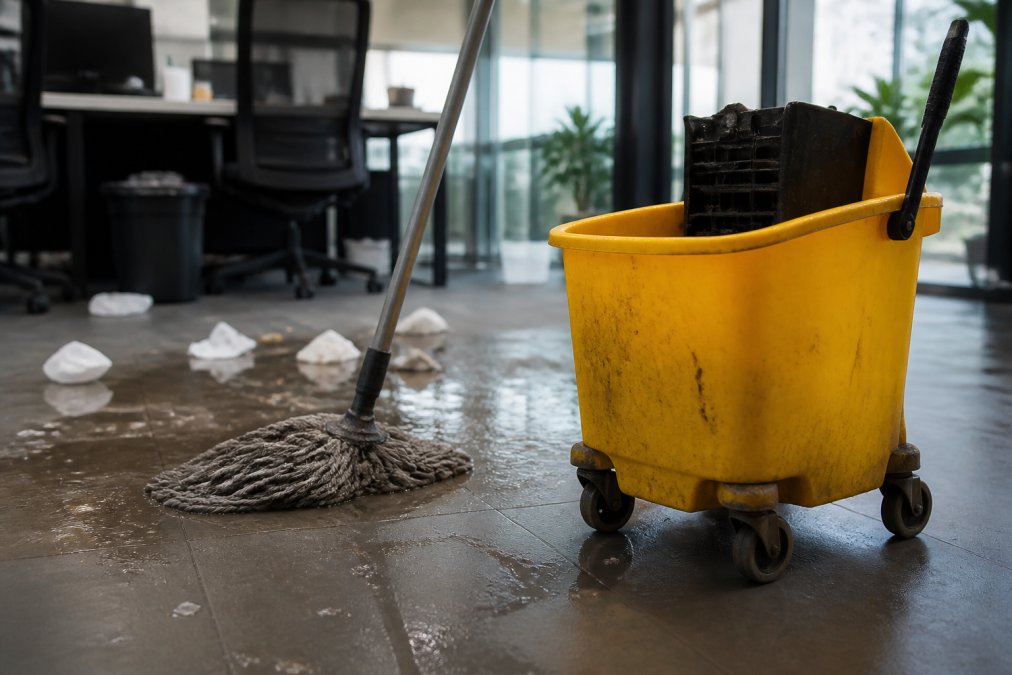
Inconsistent quality shows up as unpredictable standards. One week the lobby floor is buffed and gleaming. The next week it's dull and sticky. Missed tasks compound the problem: trash cans overflow, restrooms aren't restocked, corners collect dust. The real issue isn't occasional lapses, every team has an off day. The problem is when lapses happen regularly without improvement. This pattern signals either poor training, inadequate supervision, or staff who simply don't care about quality.
Poor communication and slow response to complaints
A reliable provider responds to complaints within 24 hours (issa.com). A mediocre one takes days. An unreliable one ignores you until you escalate.
When you contact your cleaning company about a problem and hear nothing back for 48 hours, that's a warning. Reliable providers treat complaints as information, a chance to improve. Unreliable ones treat them as attacks. Watch how your provider communicates about scheduling changes too. If you request a special cleaning for an event and the company is vague about whether they can accommodate it, that's a red flag. Clear, prompt communication about what they can and can't do is the standard.
High staff turnover without proper training
Staff turnover in cleaning services is normal. What separates reliable providers from unreliable ones is what they do about it. A reliable company invests in training, so new staff maintain the same standards (issa.com). An unreliable one just cycles people through without proper onboarding.
When you notice different crew members every few weeks, ask your provider about their training process. A good answer sounds like: "New team members spend their first week shadowing experienced staff, then work under supervision for two weeks before working independently." High turnover without training creates two problems: quality drops because inexperienced staff miss details, and you lose institutional knowledge about your facility's specific needs.
No verifiable insurance or bonding
A reliable provider carries general liability insurance and bonding as standard (osha.gov). An unreliable one might not, or might have policies that don't actually cover the work they're doing.
Ask to see proof of insurance before signing a contract. Specifically, request a certificate of insurance naming your facility as an additional insured. If your provider hesitates or refuses, you've found a red flag. Bonding matters too. If a crew member damages your property or steals something, bonding protects you. Without it, you're pursuing a claim against an individual contractor with no assets to recover from.
Unprofessional behavior and lack of accountability
Professionalism shows up in small ways: crew members arrive on time, wear clean clothes, greet facility staff respectfully, and follow instructions without argument. Unprofessional behavior includes showing up late or not at all, being dismissive when facility staff point out problems, or leaving equipment scattered around.
Reliable providers take ownership. When something goes wrong, they fix it and adjust their process so it doesn't happen again. Unreliable ones make excuses and repeat the same mistakes.
Vague contracts and hidden fees
A contract should be specific about what gets cleaned, how often, and what's included. If your contract says "general cleaning" without defining what that means, you have a problem. Reliable providers spell out details: "Restrooms cleaned and restocked daily," "Floors swept and mopped three times per week," "Trash removed daily."
Hidden fees emerge after you've committed. "That area requires special equipment, extra charge." A reliable provider quotes the full cost upfront. An unreliable one reveals additional costs after you're locked in.
No compliance with safety or environmental standards
Commercial cleaning involves chemicals, and chemicals require proper handling. A reliable provider follows OSHA standards for chemical storage, labeling, and safety data sheets. An unreliable provider cuts corners on safety.
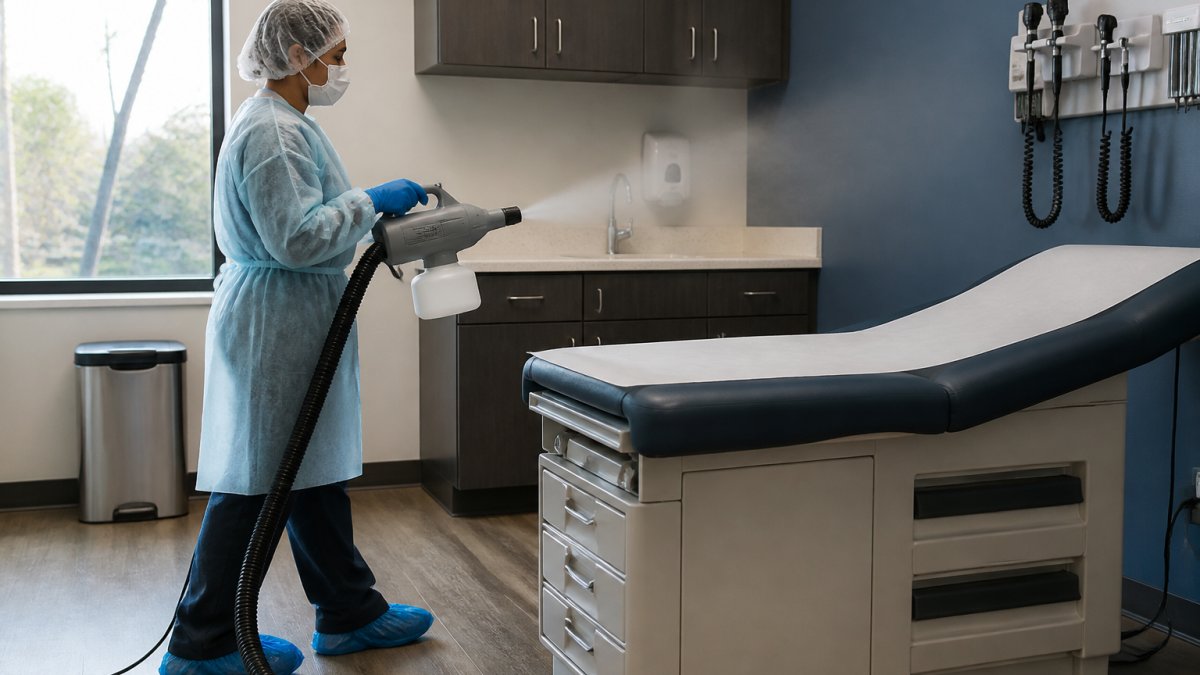
For medical and dental facilities, compliance becomes even more critical. Healthcare providers must follow specific disinfection protocols. If your cleaning company doesn't understand or follow these standards, you're at regulatory risk.
Inability to customize cleaning schedules
Every facility has unique needs. A medical practice needs different cleaning protocols than a corporate office. A reliable provider adapts to these differences.
When you explain your facility's specific needs and a provider responds with "we have a standard process we use for everyone," that's a red flag. If you need electrostatic disinfection for healthcare compliance and the provider says "we just do regular cleaning," they're not the right fit.
Questions to Ask Commercial Cleaning Companies Before Hiring
Before you commit to a cleaning provider, ask these questions to assess reliability.
Start with staff and training: "How do you train new team members, and how long does it take before they work independently?" Listen for a structured process. Ask about turnover: "What's your average staff retention rate, and what do you do to keep experienced people?"
Move to accountability: "How do you track quality and ensure cleaning standards are met consistently?" Look for answers mentioning checklists, inspections, or reporting systems. Ask about problem resolution: "If I report a missed area or quality issue, what's your response time and process?" The answer should be specific.
Question their compliance: "Can you provide proof of general liability insurance and bonding?" For healthcare facilities: "Do you understand the specific disinfection requirements for medical facilities, and can you provide documentation of compliance?"
Ask about customization: "How do you tailor your cleaning approach to different facility types and layouts?" Finally, ask for references: "Can you provide references from three facilities similar to ours?" Call those references and ask specifically about consistency, responsiveness, and professionalism.
How to Handle Janitorial Service Complaints Effectively
When problems emerge, how you respond determines whether you can fix the relationship or need to end it.
Document everything first. Take photos of missed areas, note the date and time, and describe the specific problem. Contact your provider within 24 hours with specific complaints: "The men's restroom wasn't restocked on Tuesday morning" beats "cleaning quality is bad."
Give the provider a chance to respond. A reliable provider will acknowledge the problem and commit to correcting it. An unreliable one will make excuses or dismiss your concern.
If the same problem happens again after you've reported it, escalate. Request a meeting with management to discuss the issue and agree on specific corrective actions. This is where you separate providers worth keeping from those worth replacing. Keep records of all complaints and responses. This documentation protects you legally and helps you make an informed decision about whether to continue the relationship.
Janitorial Service Performance Evaluation Checklist
Objective evaluation prevents you from tolerating mediocrity or overreacting to minor issues. Use this checklist monthly to assess whether your provider is delivering consistent service.
| Evaluation Category | What to Check | Frequency |
|---|---|---|
| Cleaning Quality | Floors clean and dry, no visible dust, restrooms spotless, trash removed | Daily observation + weekly detailed inspection |
| Responsiveness | Response time to complaints, follow-up on reported issues | Track each complaint |
| Staff Professionalism | Punctuality, appearance, courtesy, attention to detail | Weekly observation |
| Consistency | Same standards across all scheduled days, no significant variation | Weekly comparison |
| Customization | Focus areas match your facility's needs, schedule accommodates your requirements | Monthly review |
| Compliance | Insurance current, safety protocols followed, required certifications maintained | Quarterly verification |
| Communication | Proactive updates about staffing changes, scheduling adjustments, service improvements | Ongoing |
Rate each category on a simple scale: Meets Standards, Needs Improvement, Unacceptable. If you're consistently rating items as "Needs Improvement" or "Unacceptable," that's evidence you have a reliability problem that needs addressing.
Technology-Driven Accountability: What Modern Providers Offer
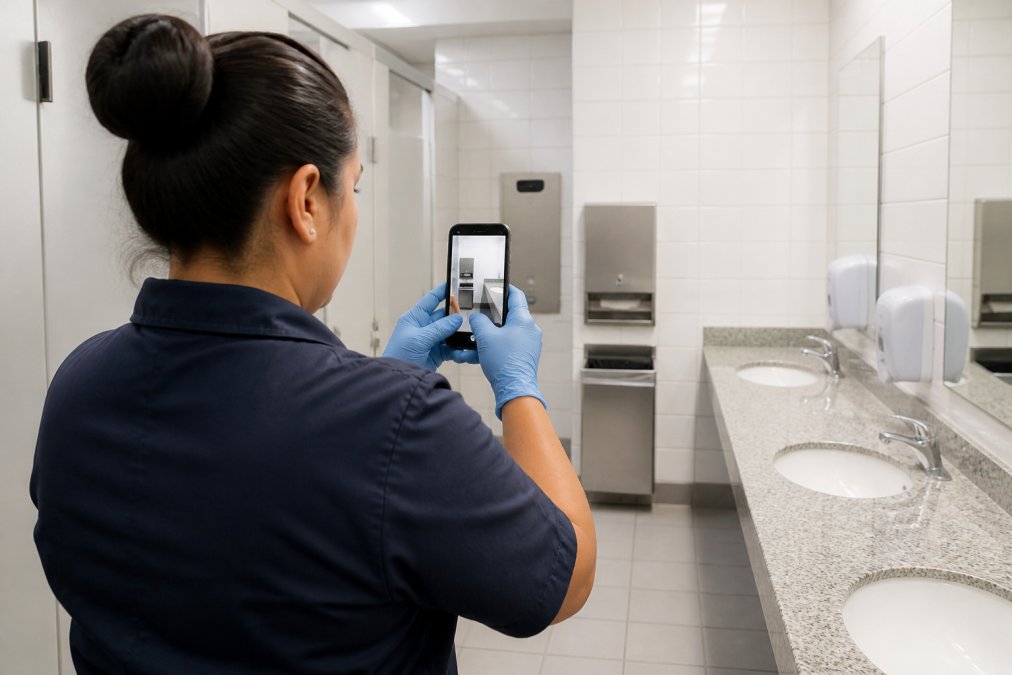
Smart providers now use technology to create transparent accountability and objective performance measurement. Digital checklists replace paper forms. Crew members photograph completed work and submit checklists through a mobile app, creating a real-time record of what was done and when.
Photo-based quality scoring systems provide objective assessments. Instead of relying on subjective visual inspections, AI-powered tools analyze facility photos and return cleanliness scores. Accountability dashboards show you performance metrics in real time: response times to complaints, staff arrival times, completion rates, and customer satisfaction scores.
Providers using these systems tend to be more reliable because the technology creates visibility. Staff know their work is being documented and reviewed. Managers can identify problems quickly and address them.
The Hidden Cost of Staff Turnover in Cleaning Services
Most facility managers focus on the direct cost of hiring a cleaning provider and choose the lowest bid. What they miss is how staff turnover creates hidden costs that often exceed the savings from a cheaper contract.
When a cleaning company has high turnover, you lose continuity. The crew that learned your facility's specific needs is replaced by people starting from scratch. Quality drops during the transition period. Repeated training cycles mean inconsistent quality. If turnover happens frequently, you're perpetually dealing with inexperienced crews.
The real cost shows up in complaints and rework. You spend time documenting missed areas and following up with management. A provider with low turnover and proper training costs more upfront but delivers consistent quality. You spend less time managing complaints. Your facility looks better, which affects how clients and employees perceive your organization.
Rangel Janitorial understands this dynamic. Our 30+ years of experience means we've built systems that retain experienced staff and maintain training standards. We invest in our crews because we know that trained, stable teams deliver the consistent quality our clients expect.
Facility reliability starts with choosing the right cleaning partner. The signs of unreliable commercial cleaning providers are visible if you know what to look for: inconsistent quality, poor communication, high staff turnover, missing insurance, unprofessional behavior, vague contracts, compliance gaps, and inability to customize service.
Rangel Janitorial brings 30+ years of experience, fully bonded and insured professional crews, and tailored cleaning solutions designed for your facility's specific needs. Our specialized electrostatic disinfection provides 360-degree coverage, and our commitment to consistent quality means you can trust us to maintain your facility to the highest standards. Get a free quote from Rangel Janitorial and discover the difference that reliable, professional cleaning makes for your facility.
Frequently Asked Questions
What are the most common signs of unreliable commercial cleaning providers?
The most telling signs include inconsistent cleaning quality with missed areas, slow response times to complaints, frequent crew changes without proper training, lack of verifiable insurance or bonding, and vague service agreements with hidden fees. A reliable provider maintains accountability through clear service standards, responds quickly to issues, invests in staff training, carries proper coverage, and provides transparent contracts. Watch for providers who cannot explain their quality control processes or refuse to provide references from current clients.
How should I verify that a commercial cleaning company is properly insured and bonded?
Ask for proof of general liability insurance and bonding certificates before signing any contract. Request the insurance provider's contact information and verify coverage limits directly with the insurer. A legitimate provider will have no problem providing this documentation without delay. Check that the coverage amounts are adequate for your facility type and size. Bonding protects you if the company fails to complete work or causes damage, while liability insurance covers accidents or injuries on your property. Never rely solely on verbal assurances.
What questions should I ask commercial cleaning companies about their training and staff retention?
Ask about staff training frequency, and what their average employee tenure is. High-quality providers invest in ongoing training and typically have lower turnover rates because they value their teams. Ask how new staff members are onboarded and whether they use checklists or standardized procedures. Request information about background checks and verification processes. A provider with stable, well-trained crews delivers consistent service and better understands your facility's specific needs over time.
How can I track cleaning quality and hold my provider accountable?
Establish a janitorial service performance evaluation checklist that covers all critical areas: restrooms, common spaces, offices, and equipment. Conduct regular site walkthroughs and document findings with photos. Request that your provider submit photo documentation or reports showing completed tasks. Use tools like cleanliness scoring systems to track consistency. Include specific performance metrics in your service agreement, such as response time to complaints and completion timelines. Schedule monthly reviews with your provider to discuss any issues and confirm service standards are being met consistently.