 How-to
Office Floor Maintenance: Best Practices Guide
Table of Contents
- Daily Floor Maintenance Routines for Office Spaces
- Identifying Floor Materials and Selecting Appropriate Cleaners
- Best Floor Cleaning Equipment for Offices
- Managing High-Traffic Areas and Spill Response
- Commercial Floor Cleaning Schedule Template
- Preventative Floor Maintenance Strategies
- Troubleshooting Common Floor Damage and Maintenance Mistakes
- Frequently Asked Questions
Last Updated: September 19, 2026
Daily Floor Maintenance Routines for Office Spaces
Proper office floor maintenance prevents costly repairs. Neglecting these routines allows dirt and debris to accumulate, accelerating wear and creating slip hazards.
Dry Soil Removal as the Foundation
Dry soil removal is your first line of defense in office floor maintenance, removing loose dirt before it gets ground into the surface.
Start each morning with a dust mop or HEPA-filter vacuum. HEPA-filter vacuums capture allergens and fine particles that regular vacuums miss.
Focus on these high-traffic zones first:
- Entryways and lobbies
- Hallways between departments
- Break rooms and kitchenettes
- Areas near exterior doors
Move the dust mop or vacuum in overlapping passes. Work from the far corner toward the exit. This prevents pushing dirt back into already-cleaned areas.
Damp Mopping Techniques to Prevent Damage
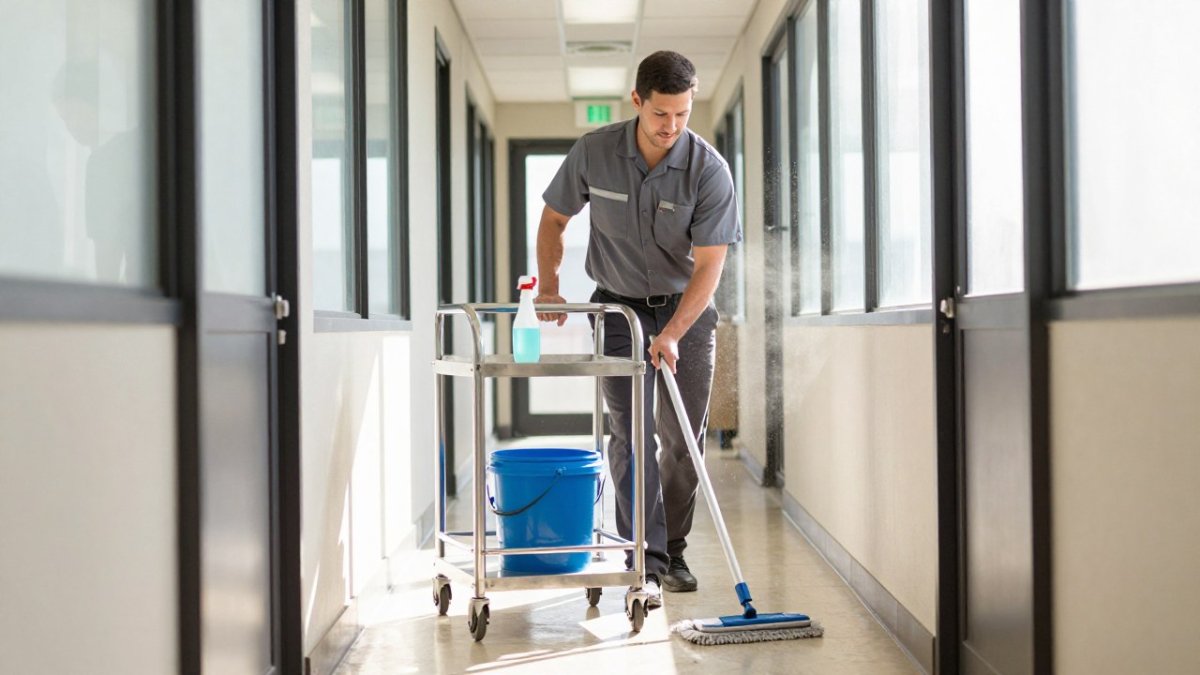
After dry removal, damp mopping removes residual dust and brightens the surface. Wet mopping causes water damage, warping, and slip hazards.
Wring your mop until barely moist, no puddles or wet streaks. If water takes more than 30 seconds to dry, your mop is too wet.
Use a neutral pH cleaner designed for your floor type. Acidic or alkaline cleaners strip finishes and create dull spots. Neutral cleaners preserve the floor's protective coating while removing soil.
Mop in figure-eight patterns to prevent streaking, working methodically from one end to the other.
Allow 15-20 minutes of drying time before allowing foot traffic. Wet floors create liability. Place caution signs if needed.
Identifying Floor Materials and Selecting Appropriate Cleaners
Different floor materials require different cleaning approaches. Using the wrong cleaner damages the surface and voids warranties.
Vinyl composition tile (VCT) is sensitive to alkaline cleaners. Use only neutral pH products labeled safe for VCT.
Polished concrete requires pH-neutral cleaners to prevent etching. Acidic products pit the surface permanently.
Laminate and wood-look floors need minimal moisture. Damp mopping is acceptable, but never wet-mop these surfaces. Water seeps into seams and causes swelling.
Natural stone (marble, granite, limestone) demands specialized care. Acidic cleaners etch stone immediately. Use only products labeled for natural stone.
Before selecting a cleaner, confirm your floor type with your facilities team or building documentation. The wrong product costs more in repairs than it saves in cleaning efficiency.
Best Floor Cleaning Equipment for Offices
The right equipment makes daily maintenance faster and more effective. Choosing between purchasing, renting, or upgrading requires understanding upfront costs and long-term ROI.
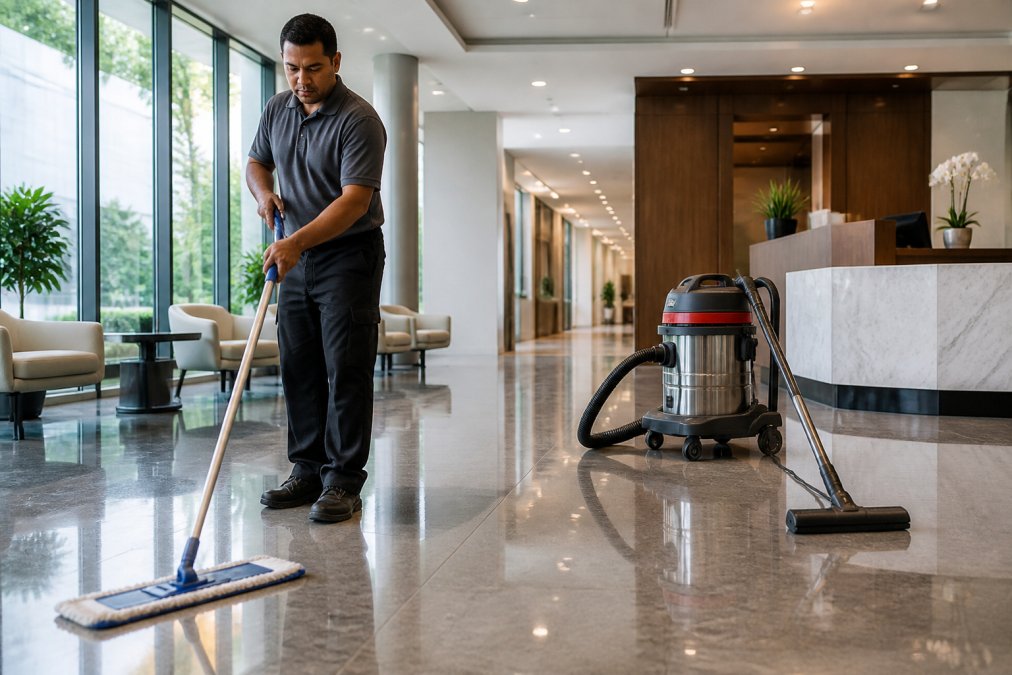
HEPA-Filter Vacuums and Dust Mops
HEPA-filter vacuums capture particles as small as 0.3 microns, improving air quality and reducing allergens compared to standard vacuums.
Microfiber Pads and Floor Scrubbers
Microfiber mop pads absorb more moisture, dry faster, and last longer, a single pad outlasts five cotton pads.
Equipment Purchase vs. Rental Decision Framework
When to rent equipment:
- Offices under 5,000 square feet with light to moderate traffic
- Facilities needing specialized equipment for occasional deep cleaning (quarterly or less)
- Organizations with limited capital budgets or seasonal cleaning needs
- Post-construction or renovation projects requiring temporary intensive cleaning
Rental costs range from $50-$150 per day. For occasional use (2-4 times annually), rental avoids storage and maintenance overhead.
When to purchase equipment:
- Offices over 10,000 square feet with daily or multiple-times-weekly deep cleaning
- Facilities operating continuously (24/7 operations, medical offices, gyms) requiring consistent equipment availability
- Organizations planning to maintain the same space for 5+ years
Equipment Maintenance Requirements
Owned equipment requires regular servicing to maintain performance and extend lifespan. Budget 10-15% of equipment purchase price annually for maintenance.
| Equipment Type | Best For | Maintenance Need | Typical Lifespan |
|---|---|---|---|
| HEPA-filter vacuum | Daily dry removal | Empty bag/filter weekly; professional service annually | 5-7 years |
| Dust mop | High-traffic areas | Replace head every 2-3 weeks | Indefinite (heads replaced) |
| Microfiber mop pads | Damp mopping | Wash after each use; replace every 6-12 months | 6-12 months |
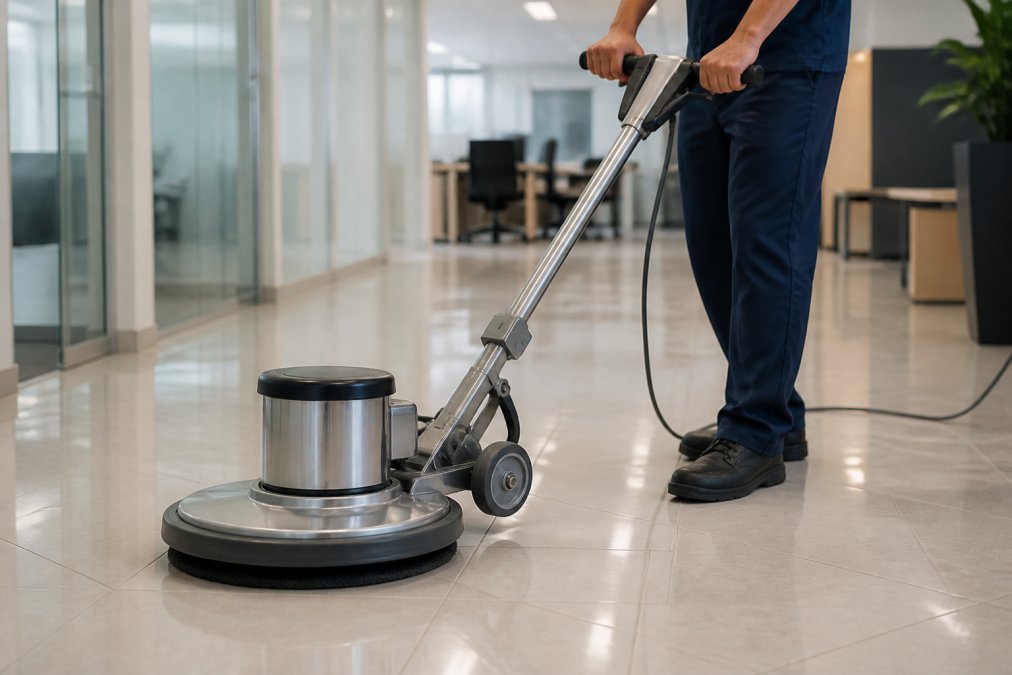
| Floor scrubber (automatic) | Large open spaces | Professional servicing quarterly; battery replacement every 3-5 years | 7-10 years |
| Handheld scrubber | Spot cleaning | Battery charge between uses; professional service annually | 4-6 years |
Green and Sustainable Equipment Options
Microfiber mop systems reduce chemical consumption by 50-70% compared to cotton mops. Battery-powered scrubbers eliminate emissions and reduce noise, suitable for occupied spaces during business hours.
Managing High-Traffic Areas and Spill Response
High-traffic areas wear faster than surrounding floors. These zones need extra attention and faster response times to spills and damage.
Floor Mats and Preventative Walkway Safety
Floor mats are your first defense against tracked-in soil. They capture moisture and dirt before it reaches the finished floor. Position mats at all exterior doors and transitions between spaces.
Immediate Spill Response Protocols
Place caution signs immediately to prevent injuries and alert staff.
Commercial Floor Cleaning Schedule Template
A structured schedule ensures consistency and prevents gaps in coverage. This template adapts to your office size and traffic patterns.
Daily Tasks (30 minutes for 5,000 sq ft):
- Dust mop or vacuum all floors
- Damp mop high-traffic areas
- Empty trash and spot-clean spills
- Check and replace floor mats
Weekly Tasks (2 hours for 5,000 sq ft):
- Deep vacuum carpeted areas if present
- Damp mop all hard floors thoroughly
- Clean and sanitize entry areas
- Inspect for damage or safety hazards
Monthly Tasks (4 hours for 5,000 sq ft):
- Scrub baseboards and corners
- Clean under furniture and equipment
- Strip and rewax high-traffic zones if needed
- Inspect floor finish condition
Quarterly Tasks (8 hours for 5,000 sq ft):
- Deep clean all floors with appropriate equipment
- Address any damaged areas
- Assess finish condition and plan restorative work
Annually (16 hours for 5,000 sq ft):
- Full floor restoration (strip, wax, or refinish as needed)
- Professional deep cleaning of all surfaces
- Evaluate maintenance plan effectiveness
Preventative Floor Maintenance Strategies
Preventative maintenance costs less than repairs. A dollar spent on prevention saves five dollars in restoration.
Deep Cleaning and Restorative Care
Deep cleaning removes embedded soil. Schedule quarterly for high-traffic areas, semi-annually for moderate areas.
Post-Construction Floor Care
Begin with thorough dry removal using HEPA-filter vacuums to capture fine construction dust.
Troubleshooting Common Floor Damage and Maintenance Mistakes
Even with proper care, floors develop problems. Identifying issues early prevents escalation and determines whether remediation or replacement is necessary.
Diagnosing Floor Damage: Reversible vs. Permanent
Dull or hazy spots indicate finish failure. Spot recoating restores appearance if caught early; full restoration is more cost-effective if dullness covers 30%+ of the floor. Dull spots result from insufficient dry removal or wrong pH cleaner.
Common Maintenance Mistakes and Prevention
Excess water during mopping is the most frequent error, causing swelling and mold growth. Use the 30-second dry test: if water takes longer than 30 seconds to dry, your mop is too wet. This mistake accounts for 40% of water damage claims.
When to Call a Professional
Some floor issues exceed in-house capability. Contact a professional floor restoration company if you observe:
- Widespread water damage or structural softening
- Deep cracks or pitting that affects more than 5% of the floor
- Staining that does not respond to standard cleaning within 48 hours
- Finish failure across more than 30% of the floor
- Chemical damage (acidic or alkaline cleaner applied to wrong material)
- Mold or mildew growth indicating moisture problems
Professional assessment typically costs $200-$500 and provides a clear remediation plan. Early intervention often saves 30-50% compared to addressing damage after it has spread.
Frequently Asked Questions
What is the 20/10 rule for commercial floor cleaning?
The 20/10 rule allocates 20 minutes for deep cleaning and 10 minutes for restocking supplies during each maintenance visit. This framework ensures office floor maintenance remains efficient without sacrificing quality. Apply it by scheduling deep cleaning tasks (vacuuming, mopping, grit removal) in the first 20 minutes, then use the final 10 minutes to restock cleaning supplies, empty trash, and address any spills. This structure prevents crews from rushing and maintains consistent floor condition across high-traffic areas.
How often should high-traffic office floors be deep cleaned?
High-traffic areas require deep cleaning weekly or bi-weekly, depending on foot traffic volume and floor type. Entryways, hallways, and break rooms accumulate more debris and moisture, necessitating more frequent restorative cleaning. Standard office areas benefit from monthly deep cleaning combined with daily dust mopping and weekly damp mopping. Quarterly or semi-annual professional floor scrubbing and burnishing extends floor finish lifespan. A commercial floor cleaning schedule template should account for your specific traffic patterns and material compatibility.
What are the most common mistakes when mopping office floors?
The most frequent errors include using excessive water, which causes slip hazards and floor damage; applying the wrong pH cleaner for the material type; and skipping dry soil removal before wet cleaning. Many facilities mop without first vacuuming, which grinds grit into the surface and causes abrasion. Using dirty mop water reduces cleaning effectiveness and spreads contamination. Avoid these by always dust mop first, use neutral pH cleaners, wring mop water thoroughly, and follow preventative floor maintenance strategies that prioritize material compatibility and safety protocols.
What is the difference between daily maintenance and restorative floor care?
Daily maintenance includes dust mopping, damp mopping, and spill response to keep floors clean and safe. Restorative care involves deep cleaning, floor scrubbing, buffing, and burnishing to restore the floor finish and address accumulated damage. Daily routines prevent dirt accumulation and maintain slip resistance; restorative care extends floor lifespan by removing embedded grit and reapplying protective finishes. Most offices need both: daily floor maintenance routines for appearance and safety, plus quarterly or semi-annual restorative services to prevent premature replacement and maintain professional appearance.