 How-to
How to Hire Professional Office Cleaning Crews
Table of Contents
- Assess Your Facility's Cleaning Needs
- Vet Professional Cleaners and Verify Credentials
- Understanding Commercial Cleaning Service Scope of Work
- Review and Negotiate Your Commercial Cleaning Service Contract Template
- Evaluate Average Cost of Office Cleaning Services Per Square Foot
- How to Handle Janitorial Service Complaints and Performance Issues
- Hiring Professional Office Cleaning Crews: Final Checklist
- Frequently Asked Questions
Last Updated: September 4, 2026
Assess Your Facility's Cleaning Needs
Hiring professional office cleaning crews starts with a detailed audit of your facility, not a price comparison. The scope of work you define here determines everything downstream: the contract terms, the staffing model, and the hourly rate you ultimately negotiate.
Walk every square foot of your property and document what actually needs attention. Class A corporate offices require daily trash removal, restroom sanitation, and surface dusting, but the frequency of floor maintenance and deep cleaning depends on foot traffic and square footage. Medical and dental practices face stricter disinfection protocols that go beyond standard commercial cleaning, so their assessment must account for exam room turnover and biohazard waste handling. Multi-tenant properties need a schedule that aligns with each tenant's operating hours without disrupting their workflow.
Build a written inventory organized by zone and task frequency. Note which areas need nightly coverage versus weekly attention, and flag any specialized requirements like electrostatic disinfection for high-touch surfaces. This document becomes the backbone of your service agreement, so the more specific you are now, the fewer disputes you will have later.
Vet Professional Cleaners and Verify Credentials
Once your needs are documented, the vetting process separates dependable providers from companies that cut corners. Professional office cleaning crews should arrive as W-2 employees, not day laborers pulled from a rotating subcontractor pool, because employee status directly affects accountability and quality control.
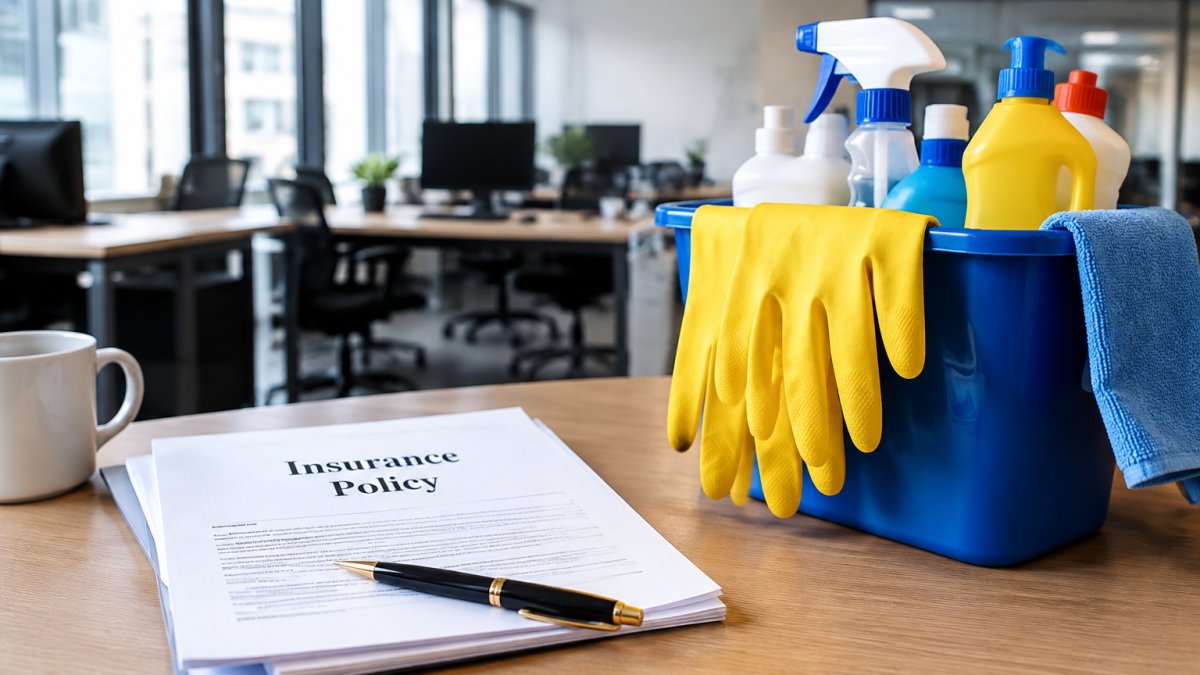
Ask every candidate for proof of insurance and bonding before you discuss pricing. A legitimate provider carries general liability and workers' compensation coverage, and they should supply certificates of insurance naming your facility as additionally insured. Verify these documents directly with the issuing agency rather than accepting a photocopy, since coverage can lapse between renewals.
Background checks are non-negotiable for crews entering your building after hours. Request written confirmation that every staff member passed a criminal background screening and employment verification, and ask whether the company conducts random drug testing. On-site management matters too: a dedicated supervisor who conducts quality inspections and handles client communications prevents the "no-show crew" problem that plagues contract cleaning.
Compliance and Safety Certifications
Beyond insurance and background checks, professional cleaning providers should hold certifications that demonstrate compliance with industry safety standards. Ask whether the company and its crew members hold OSHA (Occupational Safety and Health Administration) training certifications, particularly in bloodborne pathogen handling if they service medical offices (osha.gov). For healthcare facilities, HIPAA compliance training is essential, crews must understand patient privacy requirements and proper handling of protected health information during cleaning operations.
If your facility requires disinfection services, verify that the provider's staff are certified in EPA-approved disinfectant application. This certification confirms they understand contact times, dilution ratios, and surface compatibility, which directly affects the effectiveness of pathogen elimination. For medical and dental offices, ask whether the provider holds certifications in biohazard waste management and sharps disposal, since improper handling creates regulatory violations and liability exposure.
Green cleaning certifications (such as those offered through the Green Seal or Safer Choice program) indicate that a provider uses environmentally responsible products and methods. While not legally required, these certifications matter if your facility has sustainability commitments or if staff members have chemical sensitivities. Request a copy of the Safety Data Sheets (SDS) for all cleaning products the provider uses, and confirm that they align with your facility's environmental or health policies.
Ask the provider to document their training schedule for crew members. Reputable companies conduct quarterly or semi-annual refresher training on safety protocols, proper equipment use, and updated disinfection standards. A provider that treats training as a one-time onboarding event rather than an ongoing practice is signaling that they do not prioritize safety evolution.

Understanding Commercial Cleaning Service Scope of Work
A commercial cleaning service scope of work is the detailed list of tasks, frequencies, and quality standards that define what the cleaning crew must deliver. This document prevents the most common source of client-provider conflict: the assumption that "general cleaning" includes services like carpet extraction or window washing when it does not.
Write the scope of work in plain language with measurable outcomes. Instead of "clean restrooms," specify "restrooms sanitized nightly including toilets, sinks, mirrors, counters, and floors, with dispensers refilled." Include disinfection protocols for high-touch surfaces like door handles, light switches, and elevator buttons. Clarify which tasks fall under daily cleaning versus weekly or monthly rotations, and state whether floor maintenance, stripping and waxing, and deep cleaning are included or billed separately.
The scope also defines your relationship with supplies and equipment. Some providers include cleaning supplies and tools in their contract, while others require you to stock the facility. Decide which model fits your operation. A turnkey solution where the provider brings everything simplifies your vendor management but often carries a higher contract price.
Review and Negotiate Your Commercial Cleaning Service Contract Template
A commercial cleaning service contract template should lock in the scope of work, the schedule, and the remedies when performance falls short. Most providers offer their own template, but you should treat it as a starting point for negotiation rather than a final document.
The contract must specify the service level agreement with response times for complaints. If a missed area or equipment damage occurs, how quickly will the provider correct it? A provider that commits to a 24-hour response window demonstrates operational maturity; one that leaves response times vague is signaling trouble. Include a clause for unscheduled deep cleaning or emergency services, and state whether those carry additional charges.
Termination terms deserve equal scrutiny. Look for automatic renewal clauses that lock you in for another year unless you give notice 60 to 90 days in advance. Negotiate a trial period of 60 to 90 days so you can evaluate performance without a long-term commitment. Confirm that the contract names a dedicated account manager and spells out the escalation path when you need to file a janitorial service complaint.
Evaluate Average Cost of Office Cleaning Services Per Square Foot
The average cost of office cleaning services per square foot varies widely based on your building's use, your region, and the frequency of service. Rather than anchoring on a single number, request itemized quotes from three to five providers and compare them against your scope of work line by line.
Pricing models generally fall into two categories: a flat monthly rate based on square footage and visit frequency, or an hourly rate for labor plus materials. Flat rates are easier to budget but can hide upcharges for services outside the base scope. Hourly rates give you line-item transparency but require accurate time tracking to prevent billing creep. Ask each provider to estimate total labor hours per visit and the number of crew members assigned, since a crew that rushes through your facility in half the time is not delivering the same quality.
In-House Versus Outsourced: The Total Cost of Ownership
Before you commit to outsourcing, evaluate whether hiring in-house cleaning staff makes financial sense for your operation. This decision hinges on total cost of ownership, not just the per-square-foot rate.
Outsourcing costs include the monthly service fee, but also account for transition costs (initial deep cleaning, setup of supply storage, coordination time during the first 30 days). Outsourced providers typically charge 15-30% premium over in-house labor rates because they absorb payroll taxes, workers' compensation insurance, training, and equipment maintenance (bls.gov). For a 10,000-square-foot office requiring nightly cleaning, outsourced service might run $2,000-$4,000 per month depending on region and service frequency.
In-house hiring requires you to manage payroll, employment taxes, benefits (if you offer them), workers' compensation insurance, and staff turnover. A full-time in-house cleaner earning $28,000-$35,000 annually, plus 15-20% in payroll taxes and workers' compensation, costs roughly $32,000-$42,000 per year, or $2,667-$3,500 per month for one employee (bls.gov). For a facility requiring two full-time cleaners, you are looking at $5,300-$7,000 monthly, plus the hidden costs of recruiting, training, and covering absences.
The trade-off is control and consistency. In-house staff develop deep familiarity with your facility, respond immediately to urgent cleaning needs, and are fully accountable to you. Outsourced providers offer flexibility, you can scale service up or down without hiring or terminating employees, and they handle all HR and compliance overhead. If your facility has unpredictable cleaning demands or seasonal fluctuations in occupancy, outsourcing is usually cheaper. If you have stable, predictable needs and value consistency, in-house hiring may be competitive or even cheaper once you factor in the provider's markup.
Evaluating Quotes and Hidden Costs
The lowest bid is rarely the best value. A provider quoting significantly below market averages is likely cutting corners on staffing, supplies, or insurance. When comparing quotes, request an itemized breakdown that separates labor, supplies, equipment, and any specialized services like disinfection or floor care. Ask whether the quote includes:
- Cleaning supplies and restroom consumables (paper towels, soap, toilet paper)
- Equipment maintenance and replacement (vacuums, mops, electrostatic sprayers)
- Supervision and quality inspections
- Emergency or after-hours services
- Deep cleaning or floor stripping (if applicable)
Many providers quote a base rate that excludes supplies, then bill supplies separately at markup rates. Others include supplies but charge extra for specialized tasks. Request a 12-month cost projection so you can see the true annual expense, including any seasonal adjustments or anticipated price increases.
Factor in the cost of rework, missed cleanings, and the management time you spend chasing a provider that underdelivers. A provider 10% cheaper but requiring constant follow-up will cost you more in lost productivity than a provider charging 5% more but delivering consistent, complaint-free service. When you compare quotes, weight the provider's vetting credentials, scope of work clarity, and service level agreement terms as heavily as the price.
How to Handle Janitorial Service Complaints and Performance Issues
When performance slips, a structured complaint process protects both your facility and your contract. The first step is documentation: note the date, the specific issue, and photographic evidence if applicable, then submit it through the provider's formal channel rather than a casual email to the crew.
Most contracts define a response window for corrections, commonly 24 to 48 hours. If the issue is not resolved within that window, escalate to the account manager in writing and reference the service level agreement. Persistent problems around missed areas, late arrivals, or equipment damage may justify withholding payment for the affected visit, but review your contract first to confirm you have that right.
For chronic underperformance, schedule a formal review meeting with the provider's operations manager. Bring your documentation and propose a corrective action plan with measurable benchmarks over a 30-day period. If the provider cannot meet those benchmarks, exercise your termination clause and begin the vetting process again with a new provider.
Hiring Professional Office Cleaning Crews: Final Checklist
Before you sign, run every candidate through this checklist to confirm you have covered the essentials.
| Checklist Item | What to Verify | Why It Matters |
|---|---|---|
| Insurance and bonding | Certificates naming your facility | Protects you from liability claims |
| Employee status | W-2 employees, not subcontractors | Ensures accountability and consistent training |
| Background checks | Written confirmation of screenings | Keeps your facility and staff safe |
| Scope of work | Detailed tasks and frequencies | Prevents scope disputes |
| Service level agreement | Response times for complaints | Holds the provider accountable |
| References | Calls to current clients | Validates performance claims |
Rangel Janitorial has spent over 30 years refining this exact process for California businesses. Our fully bonded and insured professional crews are W-2 employees who undergo background checks, and our satisfaction guarantee backs every service. We build tailored cleaning plans for corporate offices, medical facilities, multi-tenant properties, and industrial parks, and our specialized electrostatic disinfection delivers 360-degree coverage for facilities that demand higher hygiene standards.
The right cleaning partner becomes an extension of your facility management team, not a vendor you chase. When you hire professional office cleaning crews that pass this checklist, you gain consistent quality, real-time facility upkeep, and the peace of mind that comes from knowing your building is genuinely clean.
Frequently Asked Questions
What should I look for when hiring professional office cleaning crews?
Prioritize bonded and insured crews with background checks, verifiable references, and experience in your facility type. Request proof of insurance, worker classification documentation, and ask about their training protocols. For medical offices, confirm electrostatic disinfection capabilities and compliance with healthcare sanitation standards. Check how they handle customized cleaning plans and whether they offer real-time upkeep across multiple locations if needed.
How do I verify a cleaning company is actually bonded and insured?
Request a Certificate of Insurance directly from the company and verify it with their insurance provider. The certificate should list your facility as an additional insured party. Check that coverage includes general liability and workers' compensation. Ask for their bonding information and confirm it's active through the bonding company. Never rely on verbal assurances, always request official documentation and verify independently before signing any contract.
What's the difference between janitorial services and commercial cleaning?
Janitorial services focus on routine, daily maintenance like trash removal, restroom restocking, and light vacuuming. Commercial cleaning includes deep cleaning, floor stripping and waxing, window cleaning, and specialized treatments like electrostatic disinfection. Professional office cleaning crews typically offer both, combining regular janitorial maintenance with periodic deep cleaning to maintain facility hygiene and workplace sanitation standards.
How often should I schedule professional office cleaning crews to visit?
Most corporate offices require nightly or daily cleaning for high-traffic areas and restrooms, with deep cleaning weekly or monthly. Medical offices need more frequent disinfection protocols, often daily or multiple times weekly. The frequency depends on foot traffic, facility type, and your specific sanitation requirements. Discuss flexible scheduling options with your provider to create a customized cleaning plan that fits your operational needs and budget.
Choosing a cleaning provider is a decision about risk management as much as cleanliness. Rangel Janitorial addresses that risk with 30+ years of experience, trained professional crews, and a satisfaction guarantee trusted by over 500 California businesses. Get a free quote today and see how a tailored cleaning plan performs in your facility.