 How-to
How to Compare Janitorial Service Quotes: A 2026 Guide
Table of Contents
- Why Comparing Janitorial Service Quotes on Price Alone Fails
- Step 1: What to Include in a Commercial Cleaning Scope of Work
- Step 2: Compare Labor Hours, Not Just the Bottom Line
- Step 3: Janitorial Service Insurance Requirements Explained
- Step 4: Questions to Ask a Commercial Cleaning Company
- Step 5: Build a Quote Comparison Spreadsheet to Normalize Bids
- Conclusion: Choose the Janitorial Service Quotes That Deliver Value
- Frequently Asked Questions
Last Updated: September 6, 2026
Comparing janitorial service quotes means normalizing each bid to the same scope of work, labor hours, and service standards rather than choosing the lowest number. The cheapest proposal often wins because it promises less cleaning, not better value.
Most guides treat a cleaning bid as a single price tag. In practice, it bundles assumptions about labor hours, included tasks, and cleanliness standards. Below, we break each quote apart and compare the components that drive cost.
Why Comparing Janitorial Service Quotes on Price Alone Fails
A low bid usually signals reduced labor hours, cleaning frequency, or scope of work, not an efficiency advantage. Commercial cleaning is labor-intensive, so the largest cost driver is the number of hours a crew spends in your building.
When a contract is priced too low to cover adequate staffing, you see missed tasks, high crew turnover, and frequent complaints. Comparing quotes on price alone ignores the quality assurance systems, training programs, and supervision ratios that keep your facility consistently clean.
Step 1: What to Include in a Commercial Cleaning Scope of Work
A commercial cleaning scope of work is the detailed list of tasks, frequencies, and performance standards a janitorial vendor must meet under the contract. It forces every bidder to price the same work.
Start with a site walkthrough and document every area. For each space, define the task, frequency, and expected outcome. A usable scope covers these elements:
- Daily tasks: trash removal, restroom cleaning and disinfection, vacuuming, mopping, surface wiping
- Periodic tasks: carpet extraction, floor stripping and waxing, window cleaning, high dusting
- Supplies and equipment: who provides them, what quality standards apply, and how inventory is managed
- Disinfection protocols: which areas require hospital-grade disinfectants and electrostatic disinfection
- Quality standards: what "clean" means for each surface, such as no visible dust, no streaks, and no odors
Send this exact scope to every vendor. If a vendor refuses to price the full scope or proposes reducing frequencies, get that in writing so you can compare trade-offs. A detailed scope also protects you during the contract term.
Step 2: Compare Labor Hours, Not Just the Bottom Line
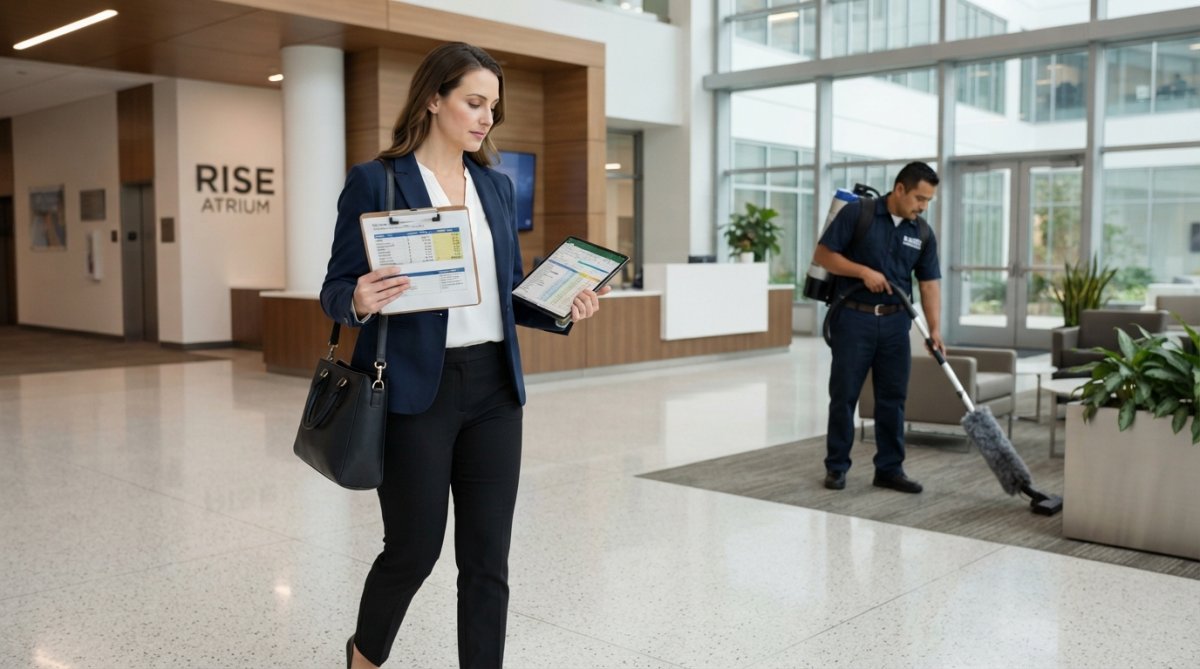
Labor hours are the most transparent metric in any janitorial bid because cleaning is labor-driven. Total price divided by proposed labor hours gives an effective hourly rate, which should fall within a reasonable range across vendors.
The Labor-Hour Normalization Formula
To compare quotes fairly, convert each bid into a common unit: cost per productive hour. The formula is straightforward:
Effective Hourly Rate = Total Monthly Price ÷ Total Monthly Labor Hours
A typical U.S. commercial office requires between 0.5 and 1.5 labor hours per 1,000 square feet per week; a medical facility often requires 2 to 3 times that (issa.com). If a vendor quotes 10 hours per week for a 20,000-square-foot office, they are either planning a light dust-and-vacuum pass or understaffing your scope.
Why the Hourly Rate Range Matters
Most professional U.S. cleaning companies operate with an effective hourly rate between $35 and $65 per hour (cleanlink.com). This range covers wages, payroll taxes, workers compensation, supplies, equipment depreciation, supervision, and profit margin. Below $30 per hour, the vendor cannot legally staff minimum wage workers in most states while covering overhead.
The Staffing Plan Audit
Ask each vendor to provide a written staffing plan that includes:
- Total weekly labor hours allocated to your facility
- Number of crew members per shift and their assigned zones
- Shift start and end times, including whether breaks are paid or unpaid
- Supervisor visit frequency and whether that time is billed separately
- Backup coverage for sick days, vacations, and holidays
A common pattern is for vendors to quote "4 hours per night" but send a two-person crew for two hours. That is still 4 labor hours, but cleaning density changes: a single worker covering a 20,000-square-foot office in 4 hours performs roughly 5,000 square feet per hour, only feasible for a basic trash-and-vacuum pass.
The Hidden Cost of Turnover
The U.S. janitorial industry faces annual crew turnover rates between 100% and 200% in many metropolitan markets. Every departure forces the vendor to recruit, background-check, train, and onboard a replacement. A bid without a training line item will cut corners on onboarding; a professional vendor allocates 8 to 16 hours of supervised training before a new hire works alone.
The Productivity Benchmark Test
To validate proposed hours, apply the industry productivity benchmark: a trained cleaner should complete approximately 2,500 to 4,000 square feet per hour for routine office cleaning, but only 1,000 to 1,500 square feet per hour in restroom-heavy or high-touch environments. Divide your facility's square footage by the vendor's proposed weekly hours to calculate their implied productivity rate.
The Overtime Trap
Some vendors bid low by scheduling a single 8-hour shift for a facility that requires 10 hours of work. The crew then works overtime, triggering time-and-a-half wages under the Fair Labor Standards Act. The vendor either absorbs that cost and cuts corners, or bills you a surcharge later.
The Unique Angle: Labor Hours as a Service Level Agreement Metric
Most comparison guides stop at calculating the hourly rate. The stronger approach is to write labor hours into the contract as a service level agreement (SLA) metric, committing the vendor to a minimum weekly total with a remediation clause if they fall below it. A contract specifying "minimum 20 labor hours per week" is enforceable; one stating only "routine cleaning services" is not.
Step 3: Janitorial Service Insurance Requirements Explained
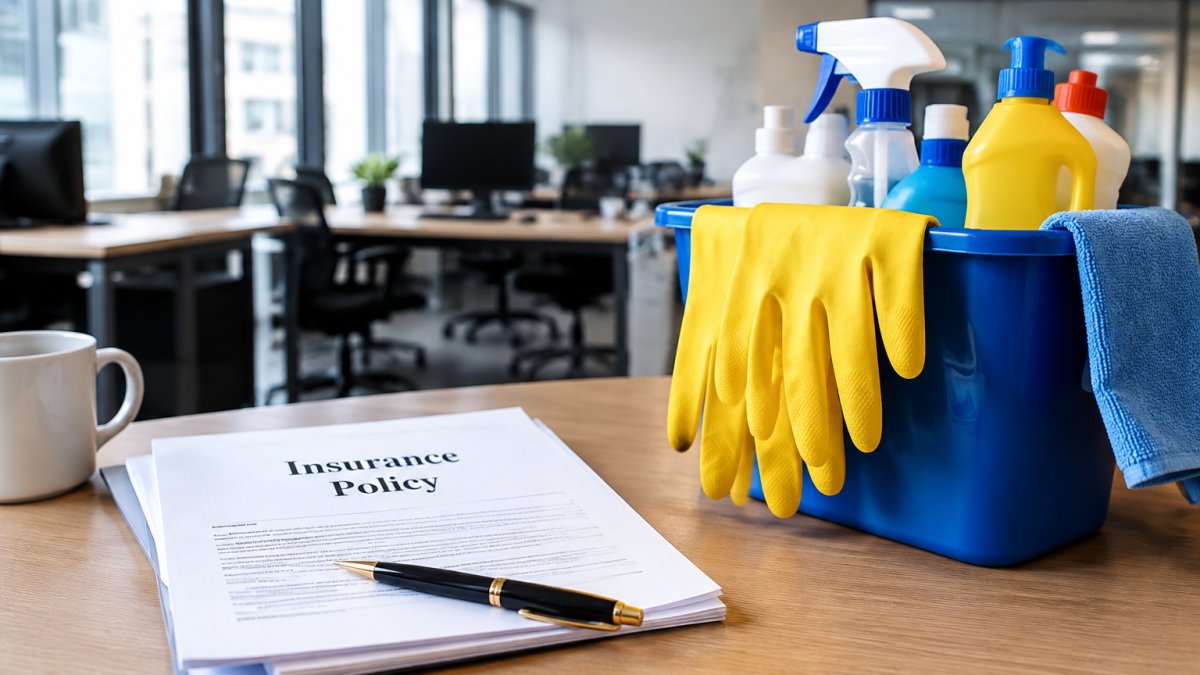
Janitorial service insurance requirements explained simply: a commercial cleaning company should carry general liability insurance, workers compensation, and bonding to protect your facility and your business from financial risk. These are the baseline for a professional vendor.
General liability covers property damage and bodily injury caused by the crew on your premises. Workers compensation covers injuries to the cleaning staff. Bonding protects you if a crew member steals property.
Ask for a certificate of insurance before the contract is signed and verify that the coverage is active. Check that the policy names your company as an additional insured where appropriate. Rangel Janitorial operates as a fully bonded and insured provider, which means our clients do not carry the risk of on-site incidents. The Occupational Safety and Health Administration guidance on employer responsibilities outlines the workplace safety obligations that professional cleaning companies must meet for their employees, which is worth reviewing as part of your due diligence.
Step 4: Questions to Ask a Commercial Cleaning Company
The right questions separate a vendor that understands your facility from one simply pricing a square footage formula. Ask these during the interview or site walkthrough.
Core Operational Questions
- How do you handle quality control and inspections? Who performs them and how often?
- What is your training program for new hires and your turnover rate for cleaning staff?
- How quickly do you respond to complaints or missed areas, and what is the escalation process?
- Can you provide references from facilities similar to yours in size and use type?
- How do you handle supply procurement and equipment maintenance, and who owns that cost?
- What disinfection protocols do you follow, and are your staff trained on them?
The answers reveal operational maturity. A company that cannot articulate its quality assurance process or inspection checklist likely does not have one. A vendor that responds within a defined SLA window, like 24 hours for complaint resolution, demonstrates accountability.
The Post-Pandemic Health Protocol Gap
Most comparison guides ignore how the COVID-19 pandemic permanently changed commercial cleaning expectations. The CDC now recommends daily disinfection of high-touch surfaces in commercial settings, and the EPA maintains a registered disinfectant list (List N). When comparing quotes, ask specifically:
- Does your standard scope include daily disinfection of high-touch points (door handles, light switches, elevator buttons, faucet handles, breakroom appliances)?
- Which EPA-registered disinfectants do you use, and what contact time (dwell time) do you follow?
- Do you use electrostatic sprayers or foggers for periodic deep disinfection, and is that a separate line item or included?
- What is your protocol for responding to a confirmed illness outbreak in the building?
- Are your staff trained on bloodborne pathogen standards under OSHA's 29 CFR 1910.1030?
A vendor that cannot name the specific disinfectant chemistry and its required dwell time is not following a verifiable protocol. For example, many quaternary ammonium compounds require a 10-minute dwell time to kill viruses, but crews often wipe surfaces dry after 30 seconds.
Technology Integration Questions
Modern janitorial vendors differentiate themselves through digital reporting and quality assurance technology. Ask each vendor:
- Do you provide a client portal or mobile app where I can submit service requests and track completion?
- How do you document completed tasks? Do you use barcode scanning, photo verification, or digital checklists?
- Can you provide real-time labor hour tracking, or do you only report hours on the invoice?
- Do you use sensor-based monitoring for restroom traffic or supply levels, or is that a future upgrade?
- How do you handle electronic communication for schedule changes or emergency requests?
A vendor using digital checklists with timestamps and photo evidence gives verifiable proof that tasks were completed; a vendor relying on paper logs or verbal confirmation leaves room for dispute.
Green Cleaning and Sustainability Verification
If sustainability matters to your organization, ask whether the vendor holds any third-party green cleaning certification. The Green Seal certification and the ISSA Cleaning Industry Management Standard (CIMS) with Green Building criteria are the most recognized in the U.S. market. Ask:
- What percentage of your cleaning products are Green Seal or UL ECOLOGO certified?
- Do you use HEPA-filter vacuums that capture fine particulates?
- How do you manage chemical dilution to avoid overuse and waste?
- Do you provide a sustainability report as part of your quarterly review?
A vendor using certified green products may charge a modest premium, but that cost often offsets reduced chemical exposure for occupants and staff. For facilities pursuing LEED certification, the vendor's cleaning practices directly affect credit achievement.
The Unique Angle: Ask for a Written Response Matrix
Instead of relying on verbal answers during a walkthrough, send each vendor the same written questionnaire and require written responses. This creates a document you can compare side-by-side and reference during contract disputes; vague answers like "we handle that" signal operational weakness.
Step 5: Build a Quote Comparison Spreadsheet to Normalize Bids
A quote comparison spreadsheet turns subjective impressions into a clear decision. Create columns for each vendor and rows for every variable that affects cost and quality, then fill in the data from each proposal.
| Comparison Factor | Vendor A | Vendor B | Vendor C |
|---|---|---|---|
| Total monthly price | $ | $ | $ |
| Weekly labor hours | |||
| Cleaning frequency | |||
| Scope of work included | |||
| Insurance and bonding | |||
| Quality control process | |||
| Response time to complaints | |||
| Training and background checks |
Populate the spreadsheet with data from each proposal and your interview notes. Calculate the effective hourly rate by dividing the monthly price by total monthly labor hours. Review rows for hidden fees, such as separate charges for supplies, equipment, or periodic tasks like floor care.
The spreadsheet also highlights gaps in the proposals. If a vendor left labor hours blank or would not commit to a response time, that signals how they operate.
Conclusion: Choose the Janitorial Service Quotes That Deliver Value
Comparing janitorial service quotes is ultimately an exercise in risk management. The lowest bid carries the highest risk of missed tasks, high turnover, and contract disputes, while a bid covering adequate labor hours and documented quality standards delivers consistent results. Decide based on value rather than price.
Rangel Janitorial brings over 30 years of experience to commercial cleaning across California, with fully bonded and insured professional crews, tailored cleaning solutions, and specialized electrostatic disinfection for facilities that demand high hygiene standards. Our satisfaction guarantee and real-time facility upkeep ensure consistent quality across corporate offices, medical facilities, and multi-tenant buildings. Get a free quote from Rangel Janitorial and compare our detailed proposal against your current bids.
Frequently Asked Questions
What should be included in a commercial cleaning quote?
A comprehensive commercial cleaning quote must list the detailed scope of work, cleaning frequency, specific tasks per area, labor hours, and supplies included. It should also specify insurance coverage, background check policies, and quality assurance procedures. If a quote lacks these details, request a revised version before comparing it to others.
How do janitorial companies calculate their pricing?
Most janitorial companies calculate pricing using a cost-per-square-foot model or by estimating total labor hours required. Labor hours are multiplied by a fully burdened hourly rate that includes wages, taxes, insurance, supplies, and overhead. Understanding this calculation helps you spot low-ball bids that may cut corners on staffing or use substandard products.
Should I prioritize price or quality when comparing janitorial service quotes?
Prioritize value over the lowest price. A quote that is 20% cheaper but allocates half the labor hours will likely result in poor cleaning standards and more management time spent on complaints. Compare the scope of work, staffing ratios, and quality assurance processes first, then evaluate price within that context.
What are the red flags to look for in a janitorial service proposal?
Red flags include vague scope descriptions, missing insurance documentation, refusal to provide client references, high turnover rates, and hidden fees for standard supplies or trash removal. Also, be wary of quotes that do not include a site walkthrough or service level agreement. These issues often indicate the company lacks the infrastructure to deliver consistent, professional results.