 How-to
How Long Does Electrostatic Spray Disinfection Last?
Table of Contents
- What "Lasts" Actually Means After Electrostatic Spray Disinfection
- How to Judge Electrostatic Disinfection Dwell Time on Any Surface
- EPA-Registered Disinfectant Contact Time Sets the Clock
- How Often to Use Electrostatic Disinfection in a Working Facility
- Electrostatic Spraying Safety Precautions Before Anyone Reenters
- What Shortens or Extends How Long Electrostatic Spray Disinfection Lasts
- Conclusion: Match the Schedule to the Label, Not the Calendar
- Frequently Asked Questions
Last Updated: October 6, 2026
What "Lasts" Actually Means After Electrostatic Spray Disinfection
Electrostatic spray disinfection does not "last" for a set number of days after you spray. It works once, during the wet contact time listed on the product label.
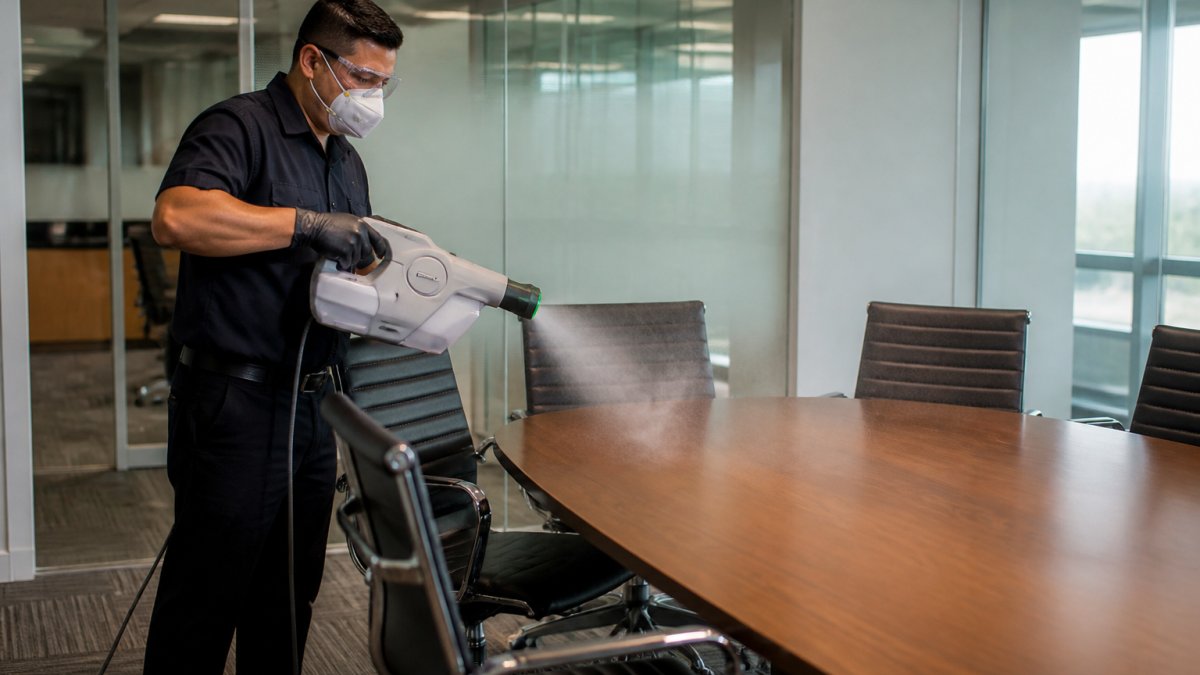
At Rangel Janitorial, we run electrostatic disinfection for offices, clinics, and gyms, and the same question comes up every week: how long does electrostatic spray disinfection last?
Electrostatic spray disinfection is a method of applying disinfectant as charged droplets that wrap around surfaces for full coverage. The disinfectant still has to sit wet for its labeled contact time to kill germs.
Contact Time, Drying Time, and Residual Protection Are Three Different Things
Most people mix these up, and that mix-up leads to bad cleaning schedules.
- Contact time (or wet contact time): how long the surface must stay visibly wet for the product to kill the germs it claims to kill.
- Drying time: how long the surface takes to dry after spraying. This is usually longer than contact time.
- Residual protection: any continued germ-killing after the surface dries. Most disinfectants provide none.
So when someone asks how long disinfection lasts, they usually mean residual protection. For most products, the answer is: not at all once it's dry.
How to Judge Electrostatic Disinfection Dwell Time on Any Surface
Electrostatic disinfection dwell time is simply how long you leave the disinfectant wet on the surface before it dries or you wipe it. The product label tells you the number. You don't guess it.
Here's how to judge it in practice:
- Read the label's contact time for the specific germ you're targeting.
- Spray until the surface is visibly wet, not just damp.
- Start your timer the moment you finish spraying that surface.
- Watch for the surface to stay wet for the full contact time.
- If it dries too fast, reapply and start again.
Charged droplets help here. The electrical charge pulls the spray to surfaces and wraps around them for a more uniform coating. That even coating helps the surface stay wet for the full contact time, especially on hard-to-reach surfaces.
What Actually Changes How Long a Surface Stays Wet
The sprayer doesn't set dwell time, the surface and the room do. A few variables decide whether your disinfectant stays wet long enough to hit its labeled contact time:
- Surface orientation. Horizontal surfaces like counters and tables hold liquid far longer than vertical surfaces like walls or cabinet fronts, where gravity pulls the film down and thins it.
- Porosity. Non-porous surfaces such as stainless steel, glass, and sealed laminate hold a wet film. Porous surfaces like unfinished wood, fabric, and cardboard wick liquid in and can dry out before contact time is met.
- Temperature and airflow. Warm air and moving air, HVAC vents, fans, open windows, speed evaporation. Cool, still, humid rooms extend wet time.
- Droplet size and application rate. A finer mist covers more area but carries less liquid per square inch, so it dries faster. A heavier application holds wet longer but can leave residue or streaks.
- Direct sun or radiant heat. Surfaces near windows or heat sources dry quickly and may need a second pass.
A common pattern in commercial work is to spray in smaller sections so you can finish a section and start its contact-time clock before the first surfaces dry. On a warm day with strong airflow, that window can be short.
A Quick Way to Separate the Three Time Periods
Readers often treat contact time, drying time, and residual protection as the same thing. They aren't:
| Time period | What it means | Typical range |
|---|---|---|
| Contact (wet) time | Surface must stay visibly wet for the label's kill claim | Often 1-10 minutes, depending on product and organism |
| Drying time | Time for the surface to dry after spraying | Usually longer than contact time |
| Residual protection | Continued germ-killing after the surface dries | Most disinfectants provide none |
If you remember only one thing: the germ-killing happens during contact time, and it stops when the surface dries. Dwell time is the clock you're racing against, and the surface and room conditions decide how fast that clock runs.
EPA-Registered Disinfectant Contact Time Sets the Clock
The clock is set by the EPA-registered disinfectant contact time on the product label, not by the sprayer. An EPA-registered disinfectant is one the agency has reviewed for the kill claims printed on its label.
According to the EPA's guidance on registered disinfectants, you must follow the label's contact time and use directions for the product to work as claimed. Skip the wet time and you get a surface that looks treated but isn't.
Why the Same Product Has Different Kill Times on the Label
One disinfectant often lists several contact times, and that trips people up.
- A short time for easy-to-kill germs like many enveloped viruses.
- A longer time for tougher organisms like norovirus, C. difficile spores, or fungi.
- Sometimes a separate time for specific bacteria such as E. coli.
So "how long" depends on what you're fighting. A product might need one minute for one pathogen and ten for another. Always match the contact time to the germ you actually care about.
How Often to Use Electrostatic Disinfection in a Working Facility
How often to use electrostatic disinfection depends on traffic and risk, not a fixed calendar. High-touch, high-traffic spaces need it more often than a closed office.
A practical schedule for most facilities:
- Daily: high-touch points in busy areas, like door handles, shared desks, and gym equipment.
- Weekly: full-room electrostatic treatment in offices, clinics, and locker rooms.
- After outbreaks or illness: a targeted pass in affected areas.
- After any contamination event: clean first, then disinfect.
The key is that disinfection is a repeated task, not a one-time event. Because there's little residual protection, the protection you get is only as fresh as your last application.
Electrostatic Spraying Safety Precautions Before Anyone Reenters
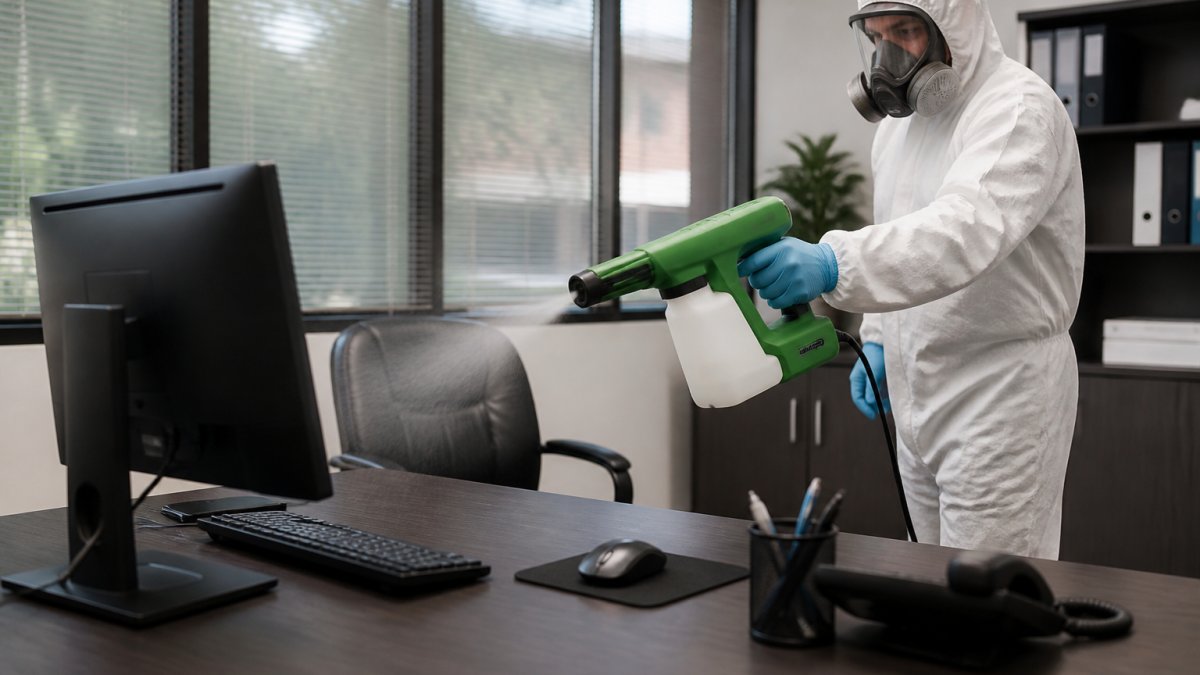
Electrostatic spraying safety precautions matter because you're applying a chemical as a fine mist. The right steps protect your crew and everyone who uses the space.
Follow these before anyone reenters:
- Wear personal protective equipment: gloves, eye protection, and a mask.
- Ventilate the area and keep people out during application.
- Keep the sprayer at the distance the product label recommends.
- Let the surface reach its contact time, then allow it to dry.
- Follow the label's reentry time before staff or visitors return.
The CDC's cleaning and disinfecting guidance stresses using products according to their labels and keeping people away from wet surfaces. When in doubt, wait longer and ventilate more.
What Shortens or Extends How Long Electrostatic Spray Disinfection Lasts
Several factors change how long a surface stays wet and how well the spray works. None of them extend germ-killing past the dry point, but they do affect the wet window you need.
| Factor | Effect on Wet Time | What to Do |
|---|---|---|
| Warm, dry air | Shortens wet time | Reapply or work in smaller sections |
| Direct sunlight or heat | Dries surface fast | Spray out of direct heat |
| Porous or soft surfaces | Absorbs liquid fast | Use more product, check the label |
| Heavy soil or grime | Blocks contact | Pre-clean before spraying |
| Cold or humid air | Extends wet time | Still respect reentry and dry time |
| Spray distance too far | Uneven coating | Follow label distance |
Two things shorten results more than anything: skipping pre-cleaning and spraying too far from the surface. Dirt and biofilm block the disinfectant from reaching germs, and a distant spray gives a thin, patchy coating.
The Distinction Most Guides Skip
The question "how long does it last" usually hides three different questions. Separating them is the fastest way to get the right answer:
- How long does the surface stay wet? That's drying time, and it's set by the surface and the room, not the sprayer.
- How long does the disinfectant kill germs? That's contact time, and it's set by the product label for the specific organism.
- How long does protection remain after the surface dries? For most disinfectants, that's zero. There is no residual antimicrobial layer waiting to keep working.
Electrostatic spraying improves coverage and adhesion during application. It does not change the label's contact time and it does not create residual protection. That's the piece competitors tend to blur.
When to Reapply
Because residual protection is minimal, reapplication is driven by use and risk, not by a fixed number of days:
- High-touch points in busy areas, door handles, shared desks, gym equipment, may need attention daily.
- Full-room treatment in offices, clinics, and locker rooms is commonly done weekly.
- After an outbreak or illness in a space, do a targeted pass in the affected areas.
- After any contamination event, clean first, then disinfect.
A practical rule: if a surface has been used or touched since the last application, treat the protection as expired.
Pre-Cleaning Is Not Optional
Spraying does not replace cleaning. Soil, oils, and biofilm can shield germs from the disinfectant and can also consume the active ingredient before it reaches the target. On visibly dirty surfaces, clean first, then spray. Surface compatibility matters too, some finishes, electronics, and fabrics may not tolerate certain disinfectants, so check the label before treating a new material.
Conclusion: Match the Schedule to the Label, Not the Calendar
The real answer to how long electrostatic spray disinfection lasts is that it lasts for the labeled contact time, and then it's gone. There's no long residue waiting to keep killing germs for days.
Getting this right takes the right product, the right dwell time, and a crew that follows the label every time. That's where Rangel Janitorial comes in. We bring 30+ years of experience, fully bonded and insured teams, and specialized electrostatic disinfection with 360-degree coverage.
Get a free quote from Rangel Janitorial and keep your facility genuinely clean, not just looking clean.
Frequently Asked Questions
How long does electrostatic spray disinfection last on a surface?
It lasts as long as the product's labeled wet contact time, not the length of the spray job. A disinfectant labeled for a one-minute contact time needs the surface to stay visibly wet for one full minute to kill the listed pathogens. Once the surface dries, the kill claim is spent unless the label also states a residual claim. Most general disinfectants carry no lasting residual, so electrostatic spray disinfection is a point-in-time treatment, not a coating that keeps working for days.
How long should a surface stay wet after electrostatic spraying?
Exactly as long as the EPA-registered disinfectant contact time printed on the label, and no shorter. If the label says three minutes, the surface must remain visibly wet for three minutes. In warm, dry rooms with airflow, droplets can evaporate before that window closes, so a second pass is often needed. A trained crew watches the clock and the surface, not just the sprayer.
How soon can people reenter a space after electrostatic disinfection?
Wait until the labeled contact time has passed and the surfaces are dry, then follow any reentry instructions on the product label. Some disinfectants require ventilation before occupancy. As a practical rule for offices, gyms, and medical suites, plan on 10 to 30 minutes of cleared time depending on the product and airflow. Schedule treatment after hours or during a lunch block so no one walks through wet surfaces.
How often should a business schedule electrostatic disinfection?
Frequency depends on traffic and risk, not a fixed interval. High-touch settings like gyms, locker rooms, and medical exam rooms may need daily or several-times-weekly treatment, while standard corporate offices often do well with weekly or outbreak-triggered service. Electrostatic spraying does not replace routine cleaning, so it should sit on top of a normal pre-clean and wipe-down schedule. Build the calendar around occupancy and illness reports.