 How-to
Why Electrostatic Disinfection Matters for Corporate Offices
Table of Contents
- Why Corporate Offices Need Electrostatic Disinfection
- How Electrostatic Sprayers Work
- Electrostatic Disinfection vs Traditional Cleaning Methods
- Electrostatic Sprayer Safety Precautions for Your Facility
- Office Disinfection Best Practices and Implementation
- Measuring Results and ROI in Your Disinfection Program
- Making the Decision: Is Electrostatic Disinfection Right for Your Office?
- Frequently Asked Questions
Last Updated: October 9, 2026
Why Corporate Offices Need Electrostatic Disinfection
Electrostatic disinfection corporate offices represent a significant shift in how facility managers approach contamination control. Traditional wiping and spraying methods miss up to 40% of surfaces in a typical office space. Electrostatic sprayers use charged droplets that wrap around and coat every surface, including the backs of chairs, undersides of desks, and intricate equipment, in ways manual methods simply cannot achieve.
The difference matters. High-touch surfaces in offices become vectors for pathogen transmission. Doorknobs, elevator buttons, conference table edges, and shared equipment get touched hundreds of times daily. When one person introduces a virus, it spreads quickly through a facility.
Speed is another critical factor. A cleaning crew using traditional methods might spend 4-6 hours disinfecting a 10,000-square-foot office. The same space takes 1-2 hours with electrostatic spraying. That efficiency matters when you manage multiple locations or need rapid turnaround between tenants.
How Electrostatic Sprayers Work
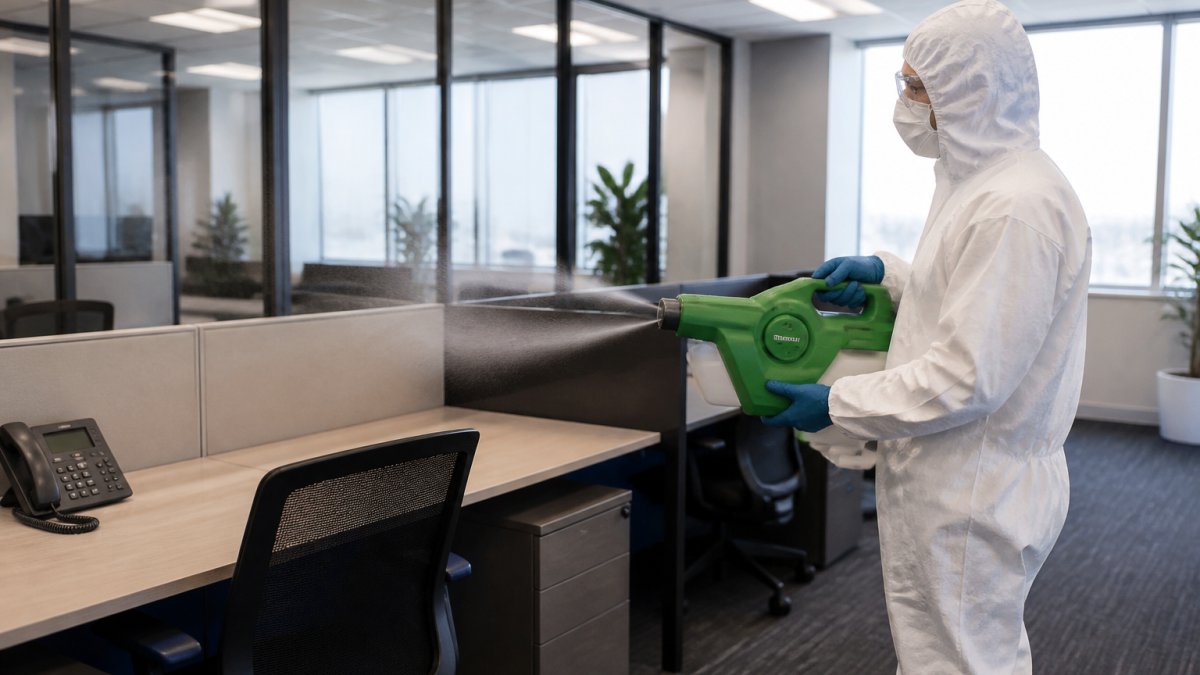
Electrostatic sprayers apply a positively charged disinfectant solution through a nozzle that atomizes the liquid into fine droplets. Each droplet carries the same positive electrical charge. Because like charges repel each other, the droplets spread apart and avoid clumping.
When you spray a surface with an electrostatic sprayer, the charged droplets seek out areas the spray stream didn't directly hit. This wraparound effect is what sets electrostatic disinfection apart from conventional spraying or wiping.
The contact time, how long the disinfectant must remain wet on a surface, varies by product. EPA-registered disinfectants used in electrostatic applications typically require 10-30 seconds of dwell time to kill pathogens. The uniform coating ensures the disinfectant stays on the surface long enough to work.
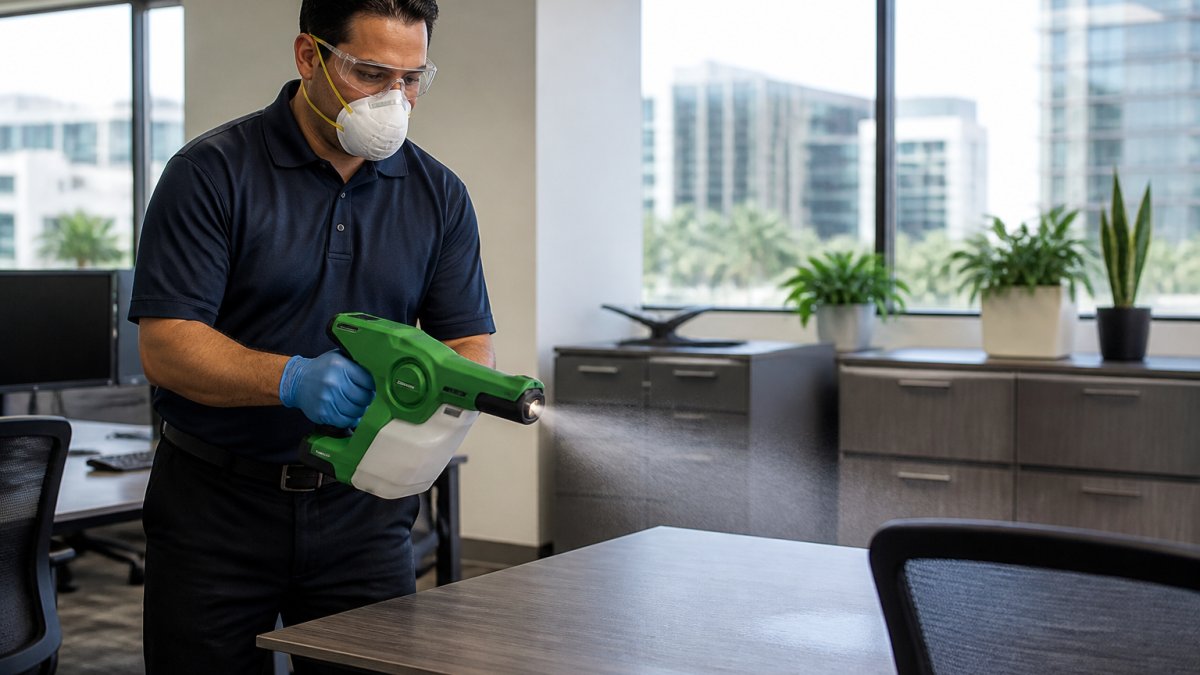
The technology itself is straightforward. A battery-powered sprayer generates an electrical charge as the disinfectant passes through the nozzle. The operator moves the sprayer across surfaces at a controlled distance, typically 12-18 inches. Coverage is faster and more consistent than manual wiping because the charged droplets do the work of finding and coating surfaces.
The key advantage over traditional sprayers: electrostatic disinfection doesn't require direct contact with every surface. The electrical charge pulls droplets into hard-to-reach areas that manual crews often miss or skip due to time constraints.
Electrostatic Disinfection vs Traditional Cleaning Methods
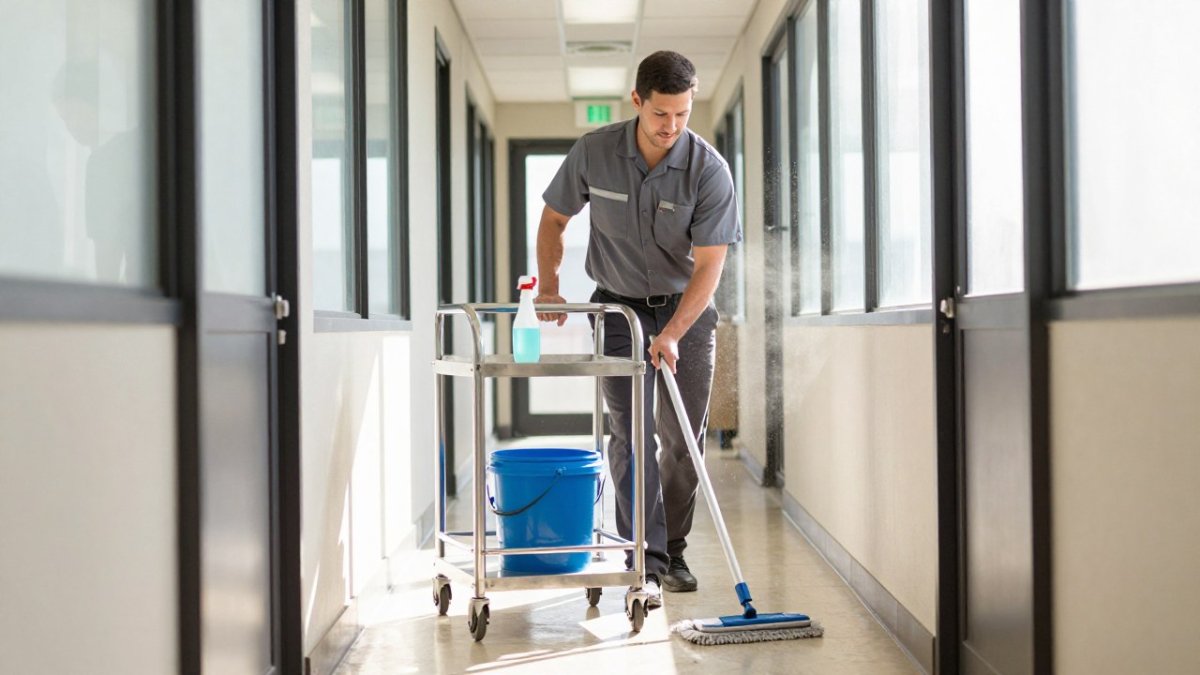
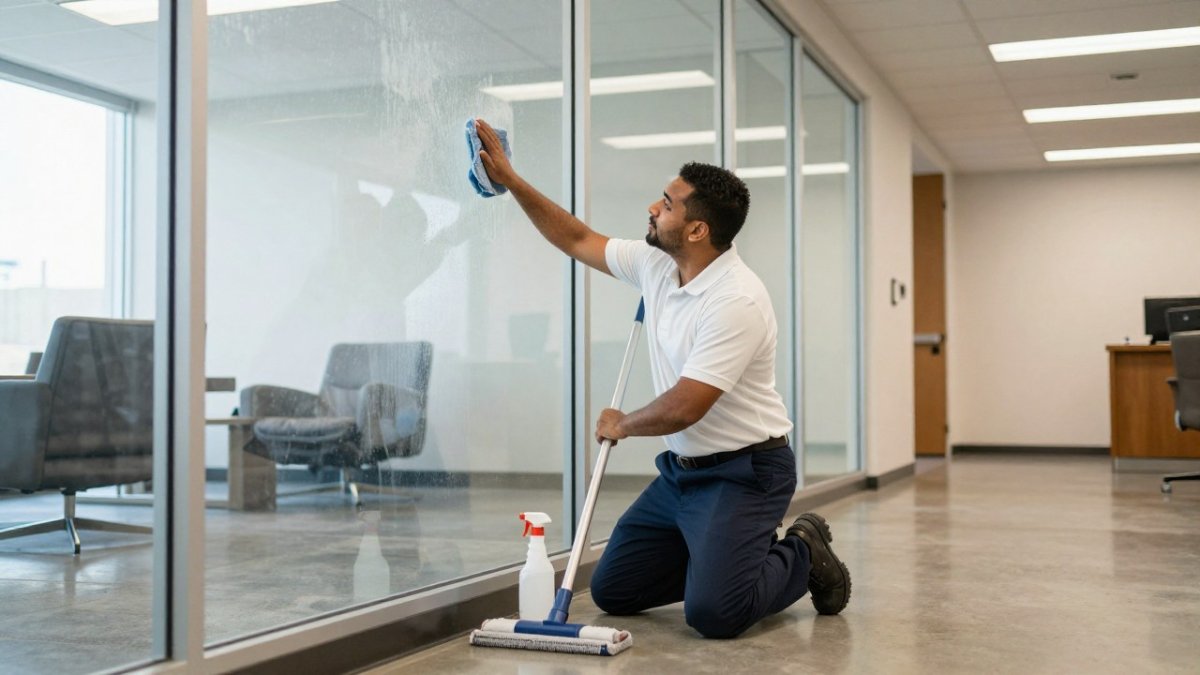
Manual wiping with disinfectant cloths remains common in many offices. It's thorough on surfaces the cleaner actually touches, but it's labor-intensive and inconsistent. One crew member might spend 20 minutes on a conference room; another might spend 5. Coverage depends entirely on the worker's attention and training.
Conventional spray bottles and pump-up sprayers offer faster application than wiping, but they have significant limitations. The spray pattern is directional, it only coats what the nozzle points at. Backsides of chairs, undersides of desks, and vertical surfaces between furniture remain untouched.
Electrostatic spraying addresses both problems. It covers surfaces faster than wiping and reaches areas conventional spraying misses. The charged droplets seek out surfaces automatically, so the operator doesn't need to manually aim at every crevice. This reduces operator error and ensures consistent coverage across the facility.
The trade-off is equipment cost and training. Electrostatic sprayers require an initial investment and staff who understand electrical charge, proper dilution of disinfectants, and safety protocols. Traditional wiping requires only cloths and a bucket.
| Method | Coverage Speed | Hard-to-Reach Areas | Labor Cost | Equipment Cost |
|---|---|---|---|---|
| Manual Wiping | Slow | Poor | High | Low |
| Conventional Spray | Medium | Poor | Medium | Low |
| Electrostatic Spraying | Fast | Excellent | Medium | Medium |
From a practical standpoint, electrostatic disinfection corporate offices works best when you need speed and consistency across large spaces. For small offices or detail work in sensitive areas, traditional methods may still play a role as a complement.
Electrostatic Sprayer Safety Precautions for Your Facility
Electrostatic disinfection involves electrical equipment and chemical disinfectants. Both require proper handling. The primary safety concerns are inhalation exposure, skin and eye irritation, and surface compatibility.
Inhalation exposure is the most significant risk. Electrostatic sprayers create a fine mist that can linger in the air. Workers applying the disinfectant must wear respiratory protection, at minimum, an N95 mask or respirator rated for the specific chemical being used. Some facilities require full-face respirators for added protection.
Building occupants must vacate the space during application and remain out until the disinfectant has dried. The contact time for most EPA-registered disinfectants is 10-30 seconds, but the space should be ventilated afterward. Opening windows and running HVAC systems accelerates drying.
Skin and eye irritation can occur if the disinfectant contacts exposed skin or eyes. Operators should wear gloves, eye protection, and long sleeves. If contact occurs, rinse immediately with water and follow the disinfectant label instructions.
Surface compatibility matters more than many facility managers realize. Some disinfectants can damage certain plastics, rubber, or finishes. Always test the disinfectant on inconspicuous areas first. Leather chairs, certain computer equipment, and sensitive electronics may require special precautions or alternative disinfection methods.
Personal protective equipment for operators should include:
- Respirator or N95 mask (rated for the specific chemical)
- Eye protection (goggles or face shield)
- Gloves (nitrile or chemical-resistant)
- Long sleeves and pants
The disinfectant label always specifies PPE requirements. Follow the label exactly, it's not a suggestion, it's a legal requirement under EPA regulations.
Office Disinfection Best Practices and Implementation
A successful electrostatic disinfection program starts with a clear plan. Before your first application, identify which surfaces need disinfection, how often, and which disinfectant product to use.
Pre-disinfection preparation is critical. Remove clutter from surfaces so the spray can reach them. Papers, personal items, and equipment should be moved or covered. Desks should be cleared.
Choose an EPA-registered disinfectant that's appropriate for your surfaces and your facility type. Medical offices, dental practices, and gyms have different requirements than general corporate offices. The disinfectant label specifies what pathogens it kills and what surfaces it's safe for.
Schedule disinfection during off-hours. Most corporate offices get sprayed after 6 PM or on weekends. This minimizes disruption and ensures occupants aren't present during application or the drying period.
Establish a frequency schedule. Daily disinfection is common for high-traffic areas like lobbies and restrooms. Weekly or biweekly is typical for offices and conference rooms.
Train your cleaning staff. Electrostatic sprayers require different techniques than traditional methods. Operators need to understand:
- Proper dilution of the disinfectant
- Correct sprayer distance and speed
- How to maintain the equipment
- Safety protocols and PPE requirements
- Re-entry timing and ventilation
At Rangel Janitorial, our crews undergo regular training to ensure consistency. One poorly trained operator can create gaps in coverage or expose staff to unnecessary risk.
Document each application. Keep records of when disinfection occurred, which areas were covered, what disinfectant was used, and any issues encountered. This documentation protects you legally and helps identify patterns if problems arise.
Measuring Results and ROI in Your Disinfection Program
Measuring the success of an electrostatic disinfection program requires looking beyond the spray application itself. The real outcomes are reduced illness, improved employee confidence, and operational consistency.
Sick day tracking is one practical metric. Compare sick days before and after implementing electrostatic disinfection. Many facilities report modest reductions in sick days. The reduction is real but not dramatic, because disinfection is just one factor in illness transmission. Vaccination, hand hygiene, and remote work policies all play roles.
Employee perception matters for retention and morale. Surveys asking about confidence in workplace cleanliness often show improvement after switching to electrostatic disinfection. Employees see the visible mist application and perceive the facility as cleaner and safer. This perception has real business value, especially for recruiting and retention.
Operational consistency is measurable through application records. Track whether disinfection is happening on schedule, whether coverage is uniform across all areas, and whether any surfaces are being missed. Consistency itself is an outcome, you know the facility is being disinfected reliably rather than depending on individual crew member effort.
Cost comparison should account for labor time saved versus equipment costs. Electrostatic spraying typically costs more per application than traditional wiping, but covers space faster.
Making the Decision: Is Electrostatic Disinfection Right for Your Office?
Electrostatic disinfection corporate offices works best in specific situations. Before committing, consider your facility size, occupant density, and current disinfection challenges.
Choose electrostatic disinfection if:
- Your office is larger than 5,000 square feet
- You have dense furniture or complex layouts with hard-to-reach areas
- You need consistent coverage across multiple locations
- You have high-traffic areas with significant pathogen transmission risk
- Your current disinfection method is labor-intensive or inconsistent
- You want to reduce sick days and improve employee confidence
Traditional methods may be sufficient if:
- Your office is small (under 2,000 square feet)
- Your layout is open with minimal furniture
- You have low occupancy density
- Your current wiping or spraying method is working adequately
- Budget constraints make equipment investment difficult
Consider a hybrid approach:
- Use electrostatic disinfection for common areas, restrooms, and high-traffic zones
- Use traditional wiping for sensitive equipment, desks, and personal workspaces
- Apply electrostatic spraying during deep cleaning cycles (monthly or quarterly)
- Use traditional methods for routine daily or weekly maintenance
The decision ultimately depends on your facility's specific needs, budget, and risk tolerance. A facility manager at a medical practice faces different pressures than one managing a small professional office. A gym with heavy equipment and high occupancy needs a different approach than a call center.
When you're ready to implement electrostatic disinfection, partner with a provider who understands your facility type. Rangel Janitorial has spent over 30 years building expertise in commercial disinfection across corporate offices, medical facilities, and industrial spaces. We offer tailored electrostatic disinfection programs with fully trained crews, EPA-registered disinfectants, and guaranteed coverage. Our 360-degree approach ensures no surface gets missed, and our real-time facility management means you get consistent results across multiple locations.
Electrostatic disinfection corporate offices isn't a one-size-fits-all solution, but for most modern office environments, it's the most effective way to ensure uniform pathogen reduction while saving labor time. The initial investment in equipment and training pays dividends through improved employee health, reduced absenteeism, and the confidence that your facility is being disinfected consistently and thoroughly. Get a free quote from Rangel Janitorial to see how electrostatic disinfection can transform your facility's cleanliness and safety standards.
Frequently Asked Questions
How does electrostatic disinfection actually reach hard-to-access surfaces in an office?
Electrostatic sprayers charge disinfectant droplets with an electrical charge, causing them to wrap around and coat surfaces from all angles. The charged droplets are attracted to surfaces through an effect called wraparound coverage, which means they reach undersides of desks, inside crevices, behind equipment, and other areas manual wiping cannot easily access. This uniform coating ensures comprehensive disinfection across high-touch points and irregular surfaces throughout your facility.
What are the main safety precautions when using electrostatic disinfection in a corporate office?
Proper ventilation is critical during and after application to minimize inhalation exposure. Building occupants should vacate the area during spraying, and adequate dwell time must pass before re-entry. Cleaning staff must wear appropriate personal protective equipment, including gloves and eye protection. Only EPA-registered disinfectants approved for electrostatic application should be used. Follow the disinfectant label instructions carefully, and ensure your facility manager or vendor coordinates re-entry procedures to protect employees and visitors.
Does electrostatic disinfection actually work better than traditional cleaning methods?
Electrostatic disinfection offers measurable advantages over manual wiping and conventional spraying. It provides uniform coating and consistent contact time across all surfaces, including areas difficult to reach with traditional methods. Studies show electrostatic application reduces labor time per square foot while improving surface coverage consistency. However, effectiveness depends on using an EPA-registered disinfectant with appropriate dwell time. It is most effective as part of a comprehensive disinfection protocol that includes pre-cleaning of visibly soiled surfaces and regular cleaning frequency.
What should our office consider before switching to electrostatic disinfection?
Evaluate your current disinfection frequency, budget constraints, and facility layout. Consider whether your building has complex layouts with hard-to-reach surfaces where electrostatic application adds value. Verify that all office equipment, electronics, and surfaces are compatible with spray application. Ensure your HVAC system provides adequate ventilation for safe occupant re-entry. Confirm that your cleaning vendor is trained in electrostatic application, follows EPA-registered disinfectant protocols, and can establish clear re-entry procedures. These factors determine whether electrostatic disinfection delivers meaningful ROI for your specific facility.