 How-to
Customized Cleaning Plans for Facilities: 2026 Guide
Table of Contents
- Why Customized Cleaning Plans Outperform One-Size-Fits-All Approaches
- Assessing Your Facility: The Foundation of a Tailored Plan
- How to Build a Commercial Cleaning Schedule Template
- Facility Cleaning Checklist Best Practices That Prevent Gaps
- OSHA Cleaning Requirements for Workplaces: What Facilities Must Know
- KPIs, Auditing, and Green Cleaning: Modernizing Your Customized Cleaning Plans
- Budgeting and Scope of Work: Setting Up a Service Level Agreement
- Frequently Asked Questions
Last Updated: August 23, 2026
Customized cleaning plans for facilities are the difference between a workplace that looks clean and one that actually is. At Rangel Janitorial, we've spent over 30 years building tailored cleaning programs for corporate offices, medical practices, gyms, and industrial parks. Generic schedules leave gaps, and gaps become problems. Below, we'll show you exactly how to build a cleaning program that fits your facility's real operational demands.
According to CDC guidance on environmental infection control, inadequate surface cleaning contributes to the spread of healthcare-associated infections. A one-size-fits-all janitorial contract won't account for your occupancy rates, compliance standards, or surfaces requiring daily disinfection versus weekly maintenance.
This guide covers assessing your facility, building a commercial cleaning schedule template, applying facility cleaning checklist best practices, understanding OSHA cleaning requirements, and modernizing your program with performance audits and green cleaning integration.
Why Customized Cleaning Plans Outperform One-Size-Fits-All Approaches
The biggest mistake facility managers make is treating janitorial services as a commodity. They sign a standard contract and wonder why certain areas look neglected while others get cleaned twice as often as necessary.
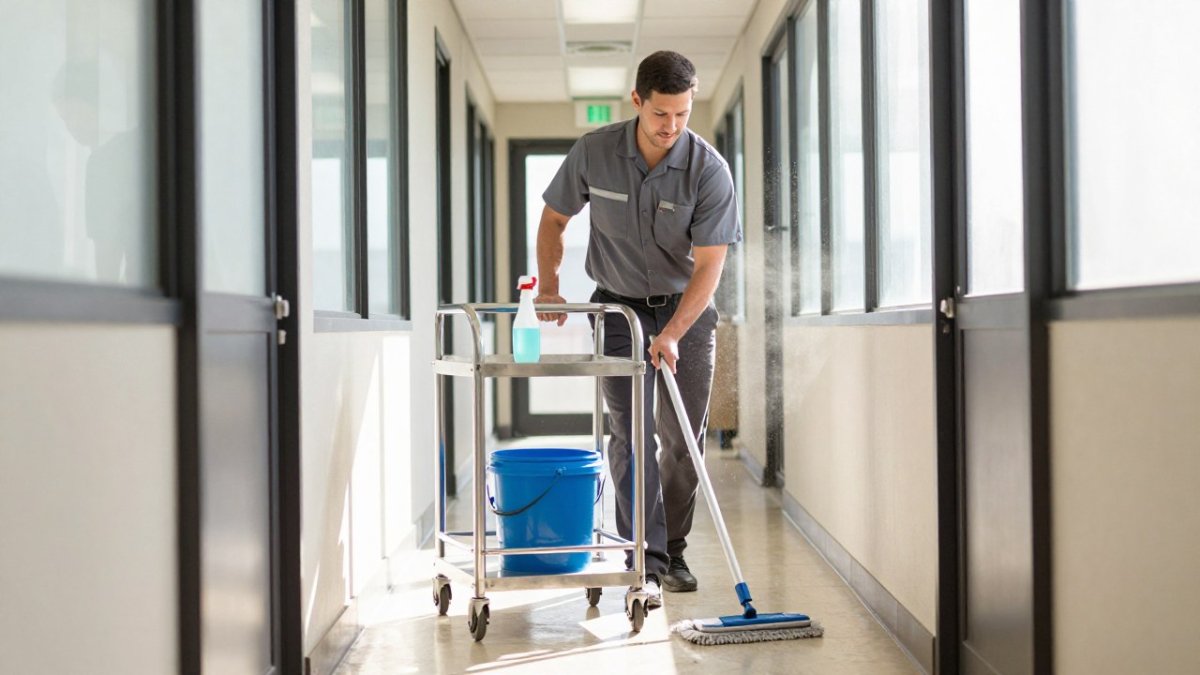
Customized cleaning plans align cleaning frequency, task types, and staffing to a building's actual use patterns, occupancy levels, and industry requirements. A customized plan for a medical office looks nothing like one for a warehouse.
Standard contracts consistently fail because they don't account for shift changes or extended operating hours, ignore industry-specific sanitization protocols, apply the same frequency to low-traffic storage rooms and high-traffic lobbies, and rarely include performance metrics or quality control checkpoints.
A tailored solution reallocates resources where they actually matter. Facilities operating with a customized program see fewer complaints, better compliance outcomes, and more predictable maintenance costs.
Assessing Your Facility: The Foundation of a Tailored Plan
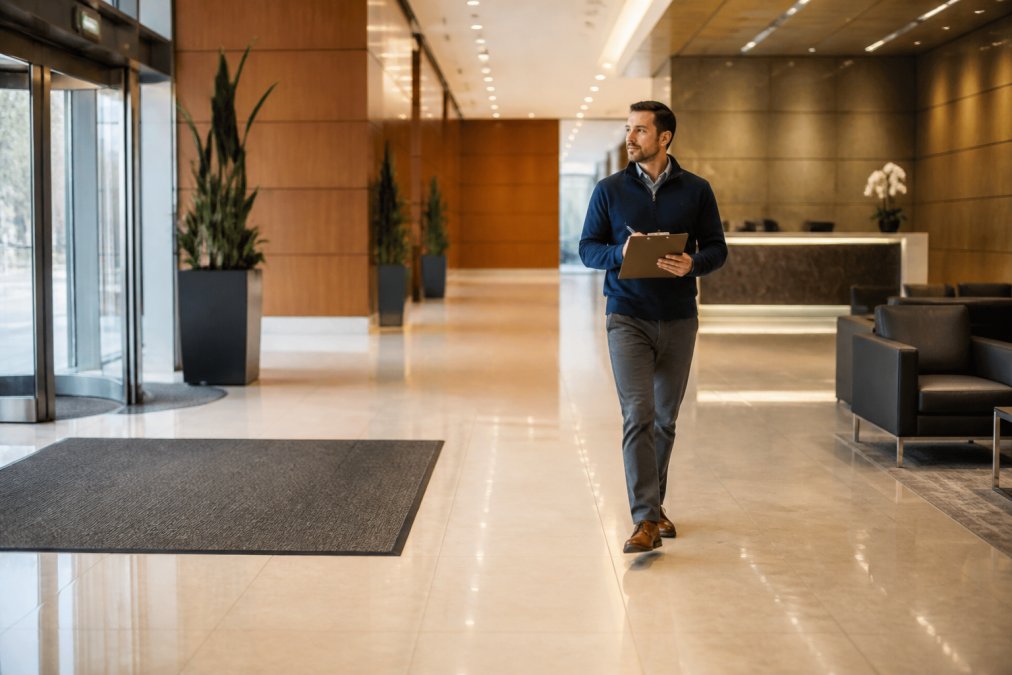
Every effective customized cleaning plan starts with a structured facility walkthrough that maps the building's physical layout, identifies risk zones, and documents operational patterns.
Mapping High-Traffic Areas and High-Touch Surfaces
High-traffic areas are zones where occupant density and movement are consistently elevated: lobbies, elevator banks, restrooms, break rooms, conference rooms, and gym locker rooms. High-touch surfaces are the specific points where hands contact repeatedly: door handles, light switches, elevator buttons, faucet handles, and shared equipment.
These categories drive your cleaning frequency decisions. A surface that hundreds of people touch daily needs a different disinfection standard than a private office occupied by one person. Walk each zone during peak occupancy and note which surfaces show visible wear or buildup within hours of cleaning, those are your priority targets for daily or multiple-times-daily attention.
Factoring in Occupancy Rates and Operating Schedules
Occupancy rates directly determine workload. A building running one 8 a.m. to 5 p.m. shift has a completely different cleaning window than a 24-hour industrial facility or a gym opening at 5 a.m.
Key questions to answer during assessment:
- When is the facility at peak occupancy, and when are there natural cleaning windows?
- Are there areas operating on different schedules than the main building?
- Does occupancy vary significantly by day of week or season?
- Do compliance-sensitive areas (medical exam rooms, food prep zones) require cleaning before each use cycle?
Operational downtime is your most valuable cleaning window. Schedule the heaviest floor care, disinfection protocols, and deep-cleaning tasks during low-occupancy periods to minimize disruption and maximize thoroughness.
How to Build a Commercial Cleaning Schedule Template
A commercial cleaning schedule template assigns specific tasks to specific frequencies, daily, weekly, monthly, and periodic, across every zone in your facility. The goal is a complete scope of work with no ambiguity about what gets cleaned, how often, and to what standard.
| Zone | Daily | Weekly | Monthly/Periodic |
|---|---|---|---|
| Lobbies & Entryways | Sweep, mop, wipe entry glass | Deep vacuum mats, polish floors | Pressure wash exterior entries |
| Restrooms | Full sanitization, restock supplies | Grout scrubbing, fixture descaling | Exhaust fan cleaning |
| Break Rooms | Wipe surfaces, empty trash, spot mop | Clean appliances, sanitize sink | Deep clean refrigerator, cabinets |
| Private Offices | Empty trash, vacuum | Dust surfaces, wipe electronics | Baseboards, vents, window sills |
| Conference Rooms | Wipe table, chairs, AV surfaces | Vacuum thoroughly, clean whiteboards | Deep upholstery cleaning |
| Restroom Hallways | Spot clean, mop | Full mop and surface wipe | Ceiling and vent cleaning |
| Gym / Fitness Areas | Equipment wipe-down, locker room sanitization | Deep machine cleaning, floor scrub | Drain cleaning, mat replacement |
This template is a starting point. Every facility requires adjustments based on assessment findings.
Daily, Weekly, and Periodic Maintenance Tasks
Daily tasks focus on hygiene maintenance and appearance: surface decontamination of high-touch points, restroom sanitation, waste management, and floor care in high-traffic zones. Weekly tasks address buildup that daily cleaning doesn't reach: grout lines, appliance interiors, upholstered surfaces, and detailed floor care. Monthly and periodic maintenance covers preventative items like HVAC vent cleaning, deep carpet extraction, and exterior surface washing that protect long-term facility condition.
Skipping periodic maintenance compounds into visible deterioration and, in regulated environments, compliance violations.
Customizing Tasks by Industry: Offices, Medical, Gyms, and Warehouses
Industry requirements change everything about a cleaning program's priorities and methods.
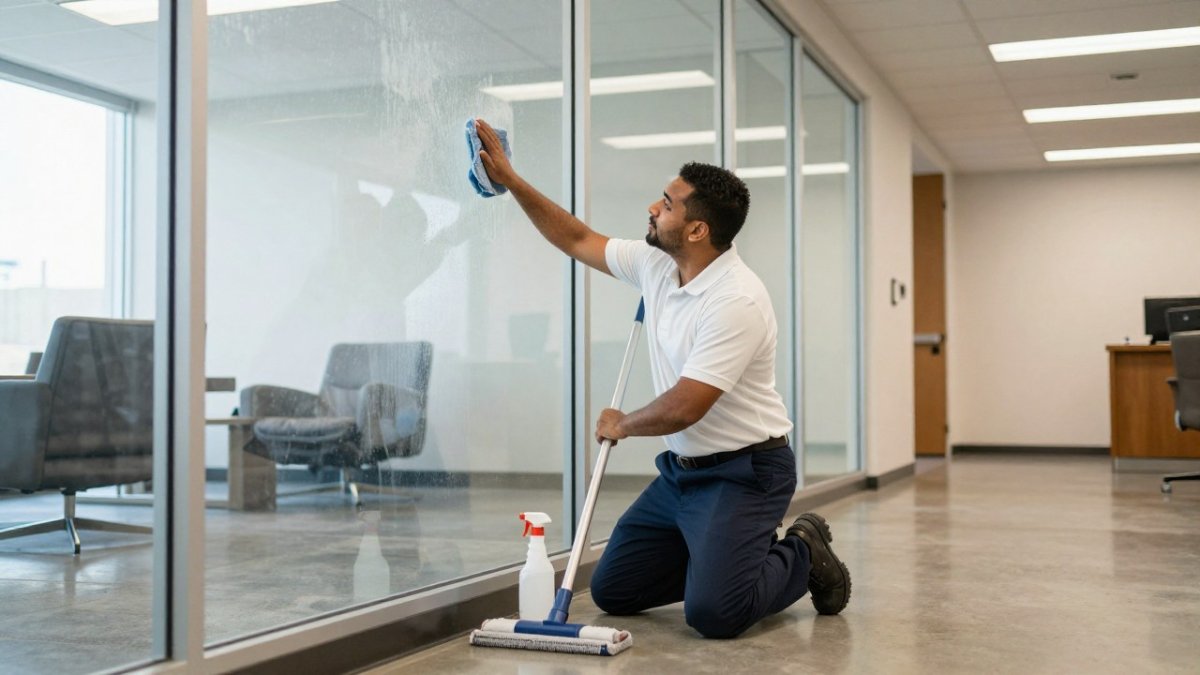
Corporate offices prioritize appearance and air quality. Focus on glass surfaces, shared workstation hygiene, conference room turnaround, and HVAC filter maintenance.
Medical and dental facilities operate under strict disinfection standards. Per OSHA's bloodborne pathogen and facility sanitation standards, healthcare environments require specific decontamination protocols for surfaces that may contact bodily fluids. Exam rooms need full disinfection between patient visits, not just end-of-day cleaning.
Gyms and fitness centers face high-touch equipment, moisture, and occupant volume. Locker rooms require multiple daily sanitization rounds. Equipment wipe-down stations need restocking throughout operating hours.
Warehouses and industrial parks deal with heavier soiling, larger floor areas, and hazardous material considerations. Floor care, concrete scrubbing, drain maintenance, and spill response dominate the scope of work.
Facility Cleaning Checklist Best Practices That Prevent Gaps
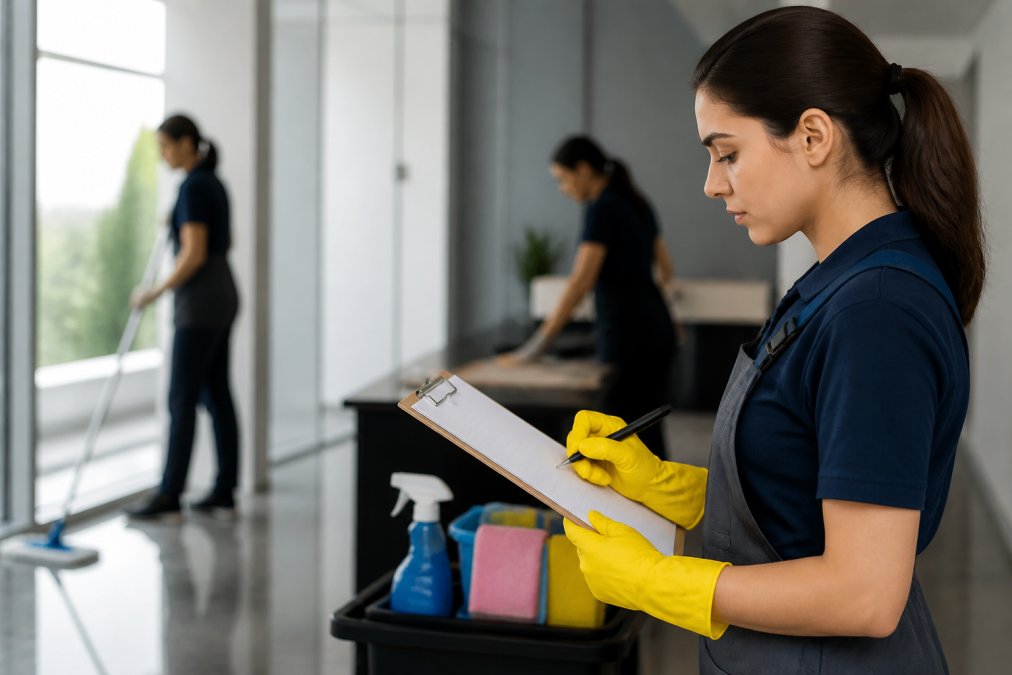
Facility cleaning checklist best practices center on one principle: if it isn't documented, it doesn't get done consistently. A checklist converts a scope of work into an accountable, verifiable process.
Effective checklists share these characteristics:
- Tasks are organized by zone so crews move efficiently through the building
- Each item specifies the cleaning method and product, not just the surface
- High-touch surfaces are listed individually, not grouped under vague headings
- Sign-off fields require crew initials and a timestamp for each completed zone
- A supervisor review field captures quality control sign-off before the crew leaves
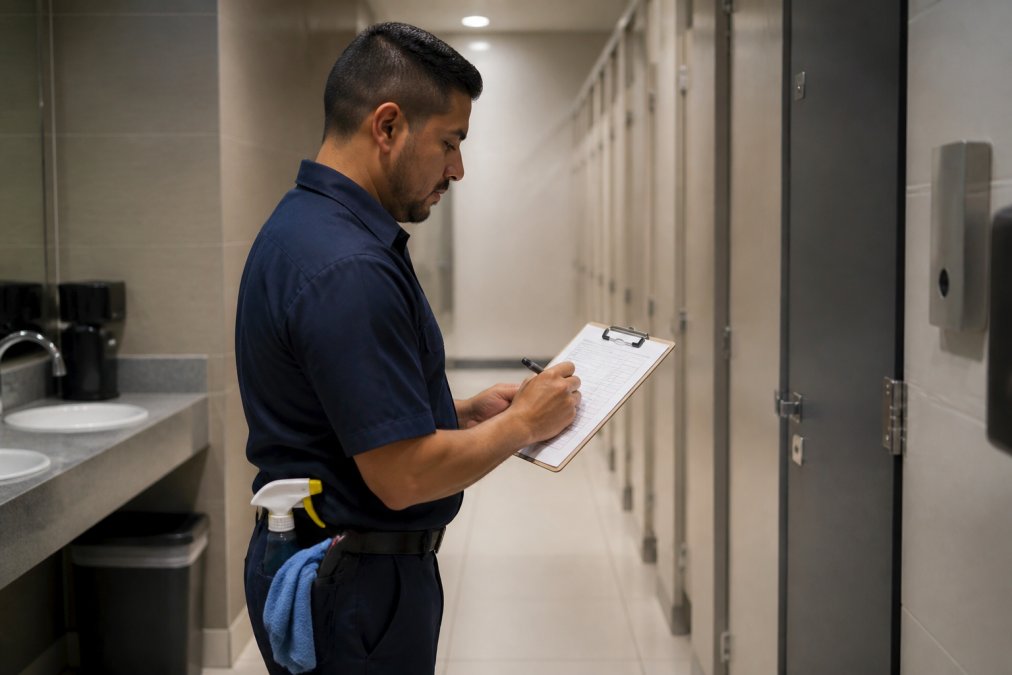
The most common checklist failure is over-consolidation. When a checklist item reads "clean restrooms," it tells the crew nothing specific. Break every task down to its component actions.
Rotate your checklists quarterly to reflect seasonal demands, occupancy changes, and new compliance requirements.
OSHA Cleaning Requirements for Workplaces: What Facilities Must Know
OSHA cleaning requirements for workplaces are enforceable federal standards that apply to most commercial facilities. Understanding them is essential for any facility manager building a compliant cleaning program.
Core OSHA standards relevant to commercial cleaning include:
- 29 CFR 1910.141 governs general industry sanitation, covering restroom facilities, potable water, and waste disposal based on employee count and facility type
- 29 CFR 1910.1030 (Bloodborne Pathogens Standard) applies to facilities where employees may be exposed to blood or other potentially infectious materials
- 29 CFR 1910.132-138 covers personal protective equipment requirements for cleaning staff handling hazardous chemicals
Per OSHA's general industry sanitation standard 29 CFR 1910.141, employers must maintain workplaces in a clean and sanitary condition with specific provisions for restroom access ratios, floor drainage, and waste container requirements.
Your cleaning program needs to document compliance. Maintain cleaning logs, product safety data sheets for all cleaning supplies, and records of crew training.
KPIs, Auditing, and Green Cleaning: Modernizing Your Customized Cleaning Plans
Modern customized cleaning plans build performance measurement into the program from day one rather than relying on reactive complaints.
Performance Metrics and Cleaning Audits
A cleaning audit is a structured evaluation that measures actual cleaning outcomes against the defined scope of work. Audits can be conducted internally, by a third-party inspector, or by the cleaning provider as part of quality control.
Useful KPIs for commercial cleaning programs include:
- Inspection pass rate: Percentage of zones meeting defined standards during unannounced audits
- Response time to complaints: Time from reported issue to verified resolution
- Restroom sanitation frequency compliance: Actual versus scheduled service intervals
- Supply consumption rates: Tracks whether cleaning products are being used at expected volumes
- Occupant satisfaction scores: Periodic surveys rating cleanliness across zones
Schedule formal audits at least quarterly. For high-compliance environments like medical facilities, monthly audits are more appropriate. Document findings and track trends over time.
Sustainability, Green Products, and IoT-Enabled Cleaning
Green cleaning integration is becoming a baseline expectation for facilities with sustainability commitments. The EPA's Safer Choice program for cleaning products certifies cleaning products meeting strict safety and environmental standards without sacrificing disinfection performance.
Switching to EPA Safer Choice-certified products typically requires no procedure changes. Many green formulations reduce VOC exposure for building occupants and cleaning staff.
IoT-enabled cleaning is the next frontier. Sensor-based systems can monitor restroom traffic and trigger cleaning alerts based on actual use rather than fixed schedules. Occupancy sensors inform real-time resource allocation decisions. For multi-property operators, IoT data can rationalize staffing requirements across locations in ways that fixed schedules never could.
Budgeting and Scope of Work: Setting Up a Service Level Agreement
A service level agreement (SLA) is the contractual foundation of any commercial cleaning relationship. It defines the scope of work, cleaning frequency, performance standards, response time commitments, and the process for addressing deficiencies.
Build your SLA in this sequence:
- Define the scope of work from your facility assessment: every zone, every task, every frequency
- Set measurable performance standards tied to your KPIs
- Specify staffing requirements: minimum crew size, required certifications, supervision ratios
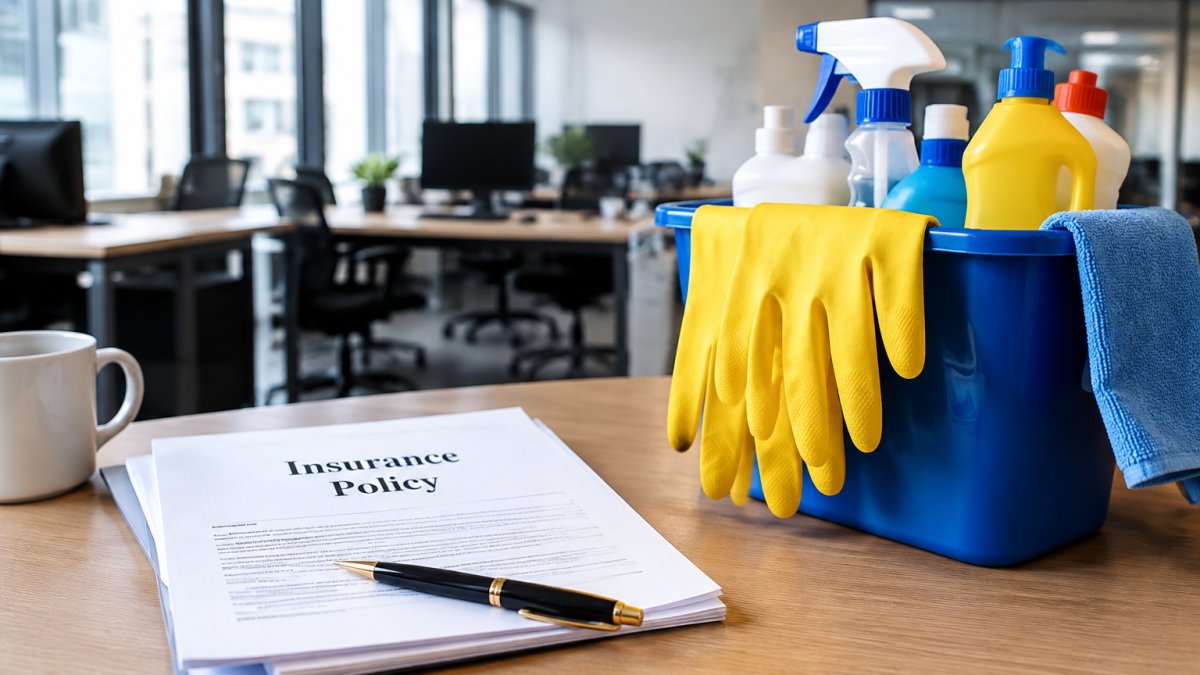
- Include compliance documentation requirements: insurance certificates, bonding verification, OSHA training records
- Establish escalation procedures: what happens when a standard isn't met and within what timeframe
- Negotiate pricing against the defined scope, not against a generic square-footage rate
| SLA Component | What to Include | Why It Matters |
|---|---|---|
| Scope of Work | Zone-by-zone task list with frequencies | Eliminates ambiguity about what's covered |
| Performance Standards | Inspection pass rate thresholds | Creates measurable accountability |
| Staffing Requirements | Crew size, certifications, supervision | Ensures consistent service delivery |
| Compliance Documentation | Insurance, bonding, training records | Protects facility from liability |
| Escalation Procedures | Response time commitments, remediation steps | Sets expectations for issue resolution |
| Pricing Structure | Itemized by scope, not flat rate | Allows accurate cost-efficiency analysis |
The escalation procedure section is where most SLAs fail. Specify: complaints acknowledged within two hours, corrective cleaning completed within 24 hours, written root cause analysis provided for repeat failures within 48 hours.
Building a cleaning program that actually performs requires a structured approach starting with honest facility assessment and ending with measurable accountability. Treat your cleaning program as a managed operational function, not a background expense. Rangel Janitorial has built customized cleaning plans for over 500 businesses across California, bringing 30 years of operational experience, specialized electrostatic disinfection, and fully bonded crews to every engagement. Get a free quote from Rangel Janitorial and start with a facility walkthrough that maps your actual needs to a scope of work built around them.
Frequently Asked Questions
What should be included in a commercial cleaning plan?
A complete commercial cleaning plan covers cleaning frequency for each zone, a breakdown of daily, weekly, and periodic maintenance tasks, a list of high-traffic and high-touch surfaces requiring priority attention, the sanitization protocols and disinfection standards that apply to your industry, assigned staffing requirements, approved cleaning supplies, and a quality control process. Facilities in healthcare or food service should also document compliance standards relevant to their sector.
How often should different areas of a facility be cleaned?
Cleaning frequency depends on occupancy rates, industry type, and surface use. Restrooms and high-touch surfaces like door handles, elevator buttons, and reception desks typically need daily or multiple-times-daily attention. Break rooms and common areas usually require daily service. Private offices, floor care in low-traffic corridors, and storage areas may only need weekly or periodic maintenance. A facility walkthrough with your janitorial provider helps set the right cadence for each zone.
What is the difference between cleaning, sanitizing, and disinfecting in facilities?
Cleaning removes visible dirt and debris from surfaces using soap or detergent. Sanitizing reduces the number of bacteria on a surface to a safe level as defined by public health standards. Disinfecting kills a broader range of pathogens, including viruses and fungi, using EPA-registered products. Medical facilities and gyms typically require full disinfection protocols on high-touch surfaces, while standard office environments may rely on cleaning and sanitizing for most daily tasks.
Why is a customized cleaning plan important for businesses?
Generic janitorial schedules often under-serve some areas and waste resources on others. Customized cleaning plans for facilities match service intensity to actual use patterns, which improves workplace hygiene, supports OSHA compliance, and controls costs. They also create a documented scope of work that holds your provider accountable, making it easier to run cleaning audits and catch issues before they affect staff, tenants, or clients.