 How-to
Can Professional Cleaning Improve Office Air Quality?
Last Updated: October 29, 2026
Quick Summary
Professional cleaning improves office air quality by removing pollutants at the source instead of spreading them around. HEPA vacuuming, damp wiping, and regular carpet extraction capture dust, allergens, and dander before they lift into the air. The EPA points to source control as the most effective way to reduce indoor pollutants.
- Dust collects in carpet edges, vent grilles, chair casters, and fabric partitions, not just on desks.
- Vacuum high-traffic floors and wipe desks daily; deep extract carpets quarterly.
- Clean vent grilles monthly to maintain airflow and reduce lint buildup.
- Watch for fewer dust complaints and fresher smell to confirm air quality is improving.
- Rangel Janitorial has more than 30 years of experience and serves over 500 California businesses.
Table of Contents
- How Professional Cleaning Improves Office Air Quality
- Common Office Pollutants and How Cleaning Addresses Them
- Office Dust and Allergen Removal: Where It Actually Collects
- Setting the Right Office Cleaning Frequency
- A Commercial Office Cleaning Checklist Built for Air Quality
- Electrostatic Disinfection and 360-Degree Surface Coverage
- How to Tell Whether Office Air Quality Is Improving
- Get a Free Quote for Air-Quality-Focused Office Cleaning
- Frequently Asked Questions
How Professional Cleaning Improves Office Air Quality
Improving office air quality through professional cleaning works because most indoor air problems start on surfaces. Dust, pollen, skin cells, and chemical residue settle on desks, carpets, and vents. Every time someone walks through or sits down, those particles lift back into the air. Professional crews remove the source instead of just moving it around.
At Rangel Janitorial, we clean corporate offices, medical facilities, and industrial parks. Buildings on a real cleaning schedule generally have fewer dust complaints and fresher air than buildings that only wipe down desks.
Below, we break down what actually pollutes office air, where it hides, and how to build a cleaning plan that fixes it.
The Pollutants That Build Up Between Cleanings
Office air quality is the measure of what employees breathe during a workday. It includes dust, allergens, volatile organic compounds from furniture and printers, and particles tracked in from outside.
Between cleanings, these pollutants concentrate. A carpet that goes a week without vacuuming holds a layer of fine dust that lifts with every step. A desk wiped with a dry cloth spreads dust rather than removing it. Vent grilles collect lint until airflow drops.
The fix is not more air freshener. It is removing the particles before they become airborne.
Common Office Pollutants and How Cleaning Addresses Them
Indoor air complaints often trace back to a short list of pollutants. Here is what they are and how cleaning can address each one.
- Dust and lint: HEPA vacuuming and damp wiping capture particles instead of scattering them.
- Pollen and outdoor debris: Entry mats and regular floor care stop tracking at the door.
- Pet and human dander: Upholstery and carpet extraction pulls dander out of fabric.
- Volatile organic compounds: Damp cleaning of hard surfaces reduces residue from cleaners and finishes.
- Mold spores: Moisture control and prompt spill cleanup remove the conditions mold needs (the EPA).
- Printer and toner particles: Wiping equipment surfaces and nearby floors keeps fine particles out of the air.
The U.S. Environmental Protection Agency's indoor air quality guidance points to source control as the most effective way to reduce indoor pollutants. Cleaning is source control in practice.
Office Dust and Allergen Removal: Where It Actually Collects
Dust does not settle evenly. It collects in predictable spots, and those spots are usually the ones a quick wipe-down skips.
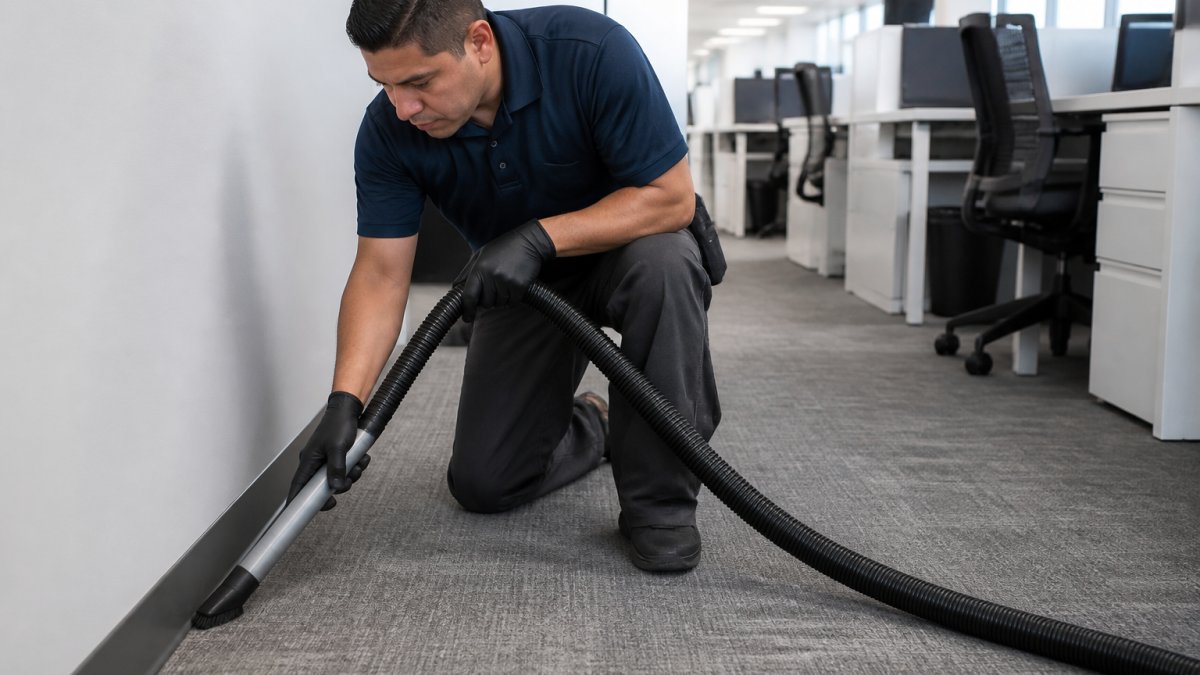
The biggest reservoirs in most offices:
- Carpet edges and baseboards, where dust drifts and stays
- Chair casters and the floor track under desks
- Vent grilles and the ceiling around them
- Fabric partitions and cubicle walls
- Under-desk cable trays and equipment shelves
- Window blinds and sills
A common mistake is focusing on visible surfaces. The dust you can see on a desk is a small share of what is in the room. The rest sits low, in fabric and along edges, and lifts when people move.
Carpets, Upholstery, and Hidden Reservoirs
Carpet can hold a significant amount of dust in most offices. It traps particles deep in the pile, and standard vacuuming only reaches the surface.
Upholstered chairs, fabric partitions, and curtains hold allergens the same way. These surfaces need attention on a set schedule, not just when they look dirty.
Setting the Right Office Cleaning Frequency
Office cleaning frequency is how often each task gets done, and it should match how hard a space is used. There is no single right schedule. There is a right schedule for your building.
A practical starting point:
| Space or Task | Suggested Frequency | Why It Matters for Air Quality |
|---|---|---|
| High-traffic floors and entryways | Daily | Stops tracked-in debris at the source |
| Desks and shared surfaces | Daily | Removes dust before it lifts |
| Carpet vacuuming (general) | 2-3 times weekly | Keeps surface dust down |
| Carpet deep extraction | Quarterly | Pulls allergens from deep in the pile |
| Vent grille cleaning | Monthly | Maintains airflow and reduces lint |
| Upholstery and partitions | Monthly | Clears fabric reservoirs |
| Full electrostatic disinfection | As scheduled | Reaches surfaces wipes miss |
Frequency should flex with occupancy. A floor that holds 40 people generally needs more cleaning than one that holds 10.
A Commercial Office Cleaning Checklist Built for Air Quality
A commercial office cleaning checklist keeps crews consistent and gives facility managers something to verify. Air quality belongs on that list as a named goal, not an afterthought.
Use this as a starting checklist:
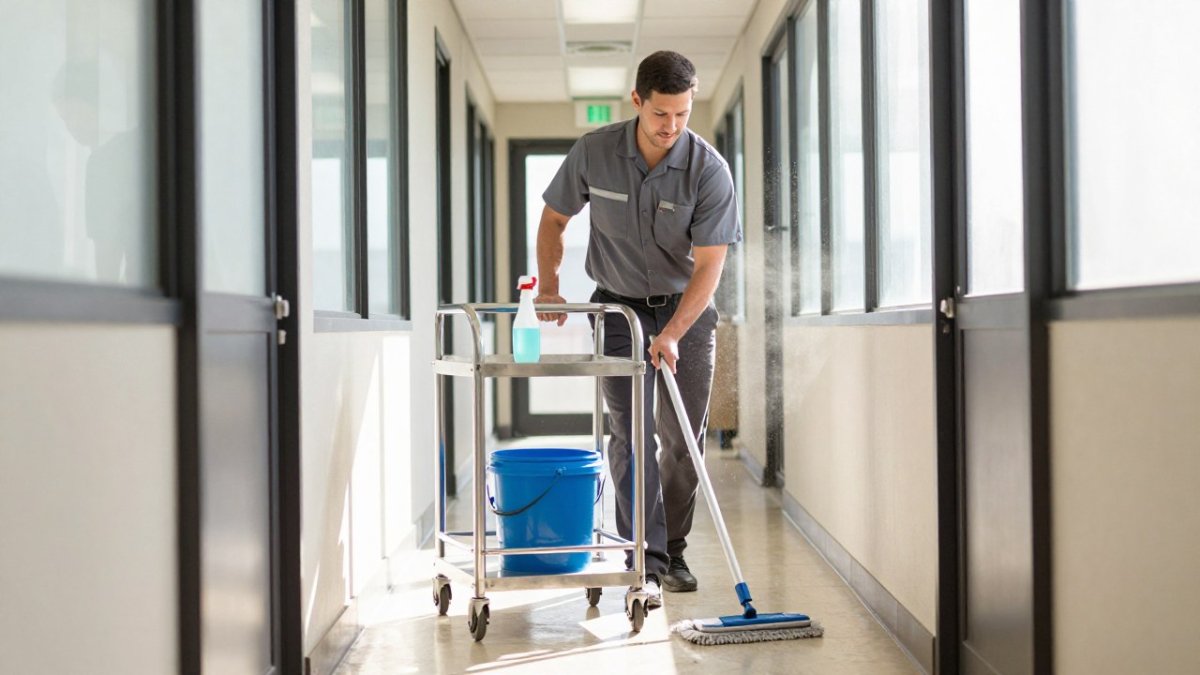
- Vacuum entry mats and high-traffic floors with a HEPA-filter vacuum
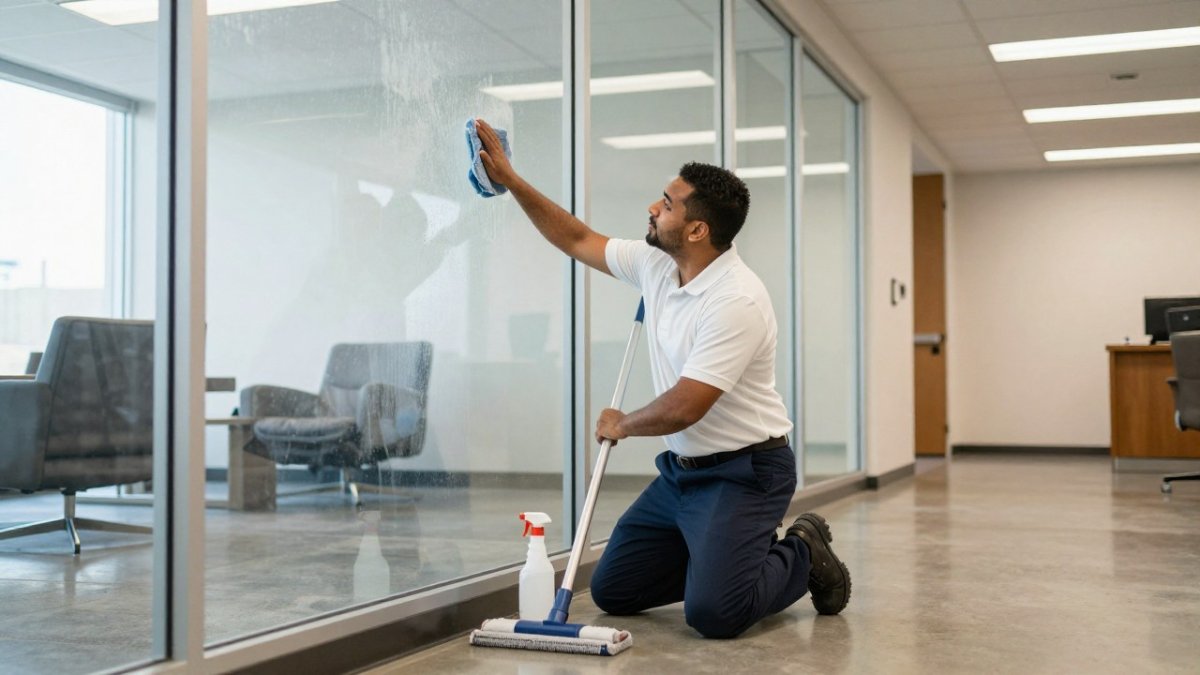
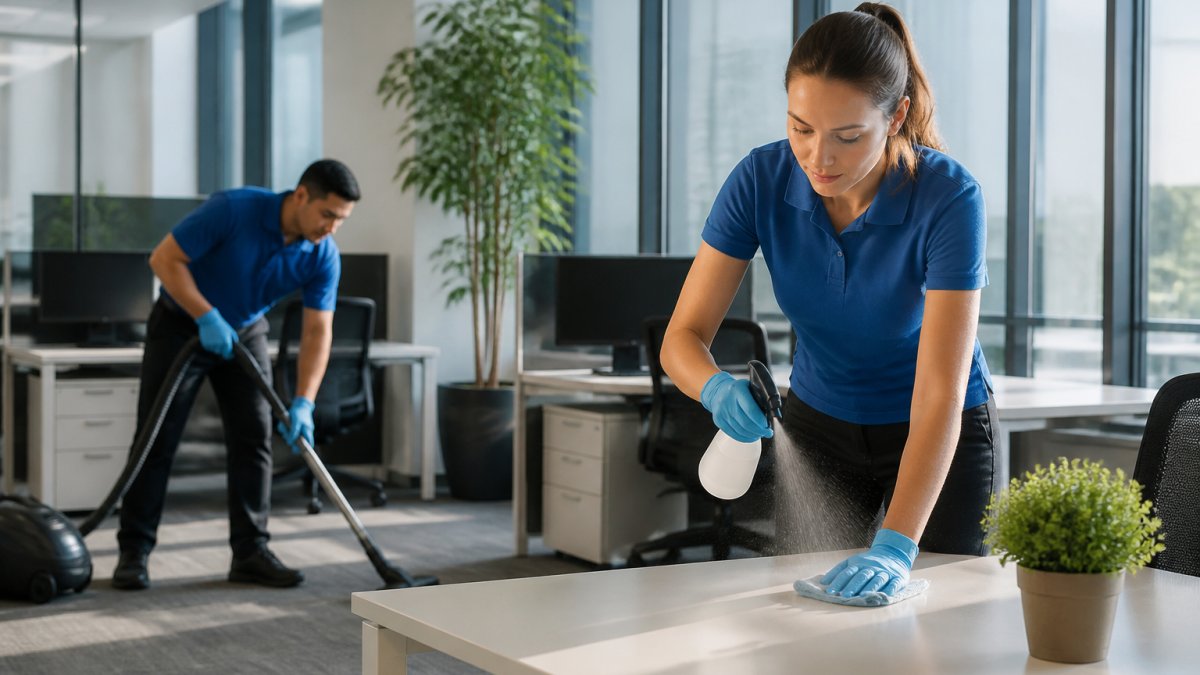
- Damp wipe desks, shared tables, and door handles
- Clean baseboards and carpet edges
- Dust vent grilles and check airflow
- Wipe chair casters and under-desk floor tracks
- Spot-clean fabric partitions and upholstery
- Empty and wipe waste and recycling bins
- Clean break room counters, sinks, and appliance exteriors
- Check restrooms for moisture and mold risk
- Log any area that needs deep extraction
For a fuller walkthrough of scheduling and focus areas, see our guide to office cleaning best practices.
The checklist matters most when crews actually follow it every visit. Consistency is where air quality gains hold.
Electrostatic Disinfection and 360-Degree Surface Coverage
You can see our electrostatic disinfection service or read how electrostatic disinfection works if you want the detail before booking.
How to Tell Whether Office Air Quality Is Improving
Changes in air quality are often noticed by occupants before any formal test. Watch for these signals in the weeks after a new cleaning schedule starts:
- Fewer dust complaints from staff
- Less visible dust on desks at the end of the day
- Fresher smell in the office without air fresheners
- Fewer allergy-type complaints during high-pollen months
- Cleaner vent grilles and steadier airflow
- Less buildup along baseboards and carpet edges
A simple staff check-in works well. Ask one question each month: does the office feel fresher than last month? Patterns in the answers tell you whether the schedule is working.
If complaints persist, the schedule is probably too light for the space. For practices that tie cleaning to employee health, our guide to office cleaning practices for a healthier workplace covers what top programs focus on.
Get a Free Quote for Air-Quality-Focused Office Cleaning
Most offices benefit from a schedule built around where pollutants actually collect, done consistently.
Rangel Janitorial brings more than 30 years of experience, fully bonded and insured crews, and tailored plans for single buildings or multiple properties. Our specialized electrostatic disinfection offers 360-degree coverage. We are trusted by more than 500 California businesses, and satisfaction is guaranteed on every service.
Get started with Rangel Janitorial and give your team cleaner air without adding work to anyone's plate. Request a free quote for your facility today.
Frequently Asked Questions
How can professional cleaning improve office air quality?
Professional cleaning removes the sources of airborne particles rather than just moving them around. Regular cleaning focuses on removing settled dust and allergen reservoirs, which reduces the particles that can be stirred back into the air when people walk, sit, or run equipment.
How often should an office be professionally cleaned to support better air quality?
The right office cleaning frequency depends on square footage, headcount, foot traffic, and whether the space has carpet or hard flooring. Contact Rangel Janitorial for a walkthrough to set a schedule for your facility.
Which office areas collect the most dust and airborne particles?
Carpets and rugs trap the most dust, lint, and tracked-in soil, followed by upholstered chairs and fabric partitions. High ledges, ceiling vents, light fixtures, and the tops of cabinets collect dust that eventually falls into breathing zones. Electronics and monitor tops attract dust through static, and entryways bring in outdoor particles on shoes. Break rooms and restrooms add moisture and organic matter that support mold and bacteria. A commercial office cleaning checklist should name each of these zones so nothing gets skipped between visits.
Can carpet and upholstery cleaning improve indoor air quality?
Yes. Carpet acts as a reservoir, holding dust, pollen, pet dander, and fine particles until foot traffic or vacuums lift them back into the air. Upholstered chairs and fabric partitions hold similar loads. Rangel Janitorial's specialized electrostatic disinfection offers 360-degree coverage; contact us to discuss how it fits your facility.
Cleaner air in your office starts with a plan built for your space, not a generic schedule. Rangel Janitorial offers tailored cleaning and electrostatic disinfection backed by 30+ years of experience, fully bonded and insured crews, and guaranteed satisfaction. Get started with Rangel Janitorial and breathe easier at work.