 How-to
Best Practices for Office Sanitization
Table of Contents
- What You'll Need Before You Start
- Step 1: Identify High-Touch Surfaces in Your Office
- Step 2: Understand Cleaning vs. Sanitizing vs. Disinfecting
- Step 3: Follow CDC Guidelines for Office Cleaning
- Step 4: Build a High-Touch Surface Disinfection Checklist
- Step 5: Decide If Electrostatic Disinfection for Small Businesses Fits Your Space
- Step 6: Set a Realistic Sanitization Schedule and Frequency
- Step 7: Handle Common Areas, Breakrooms, and Shared Workspaces
- Frequently Asked Questions
Last Updated: September 15, 2026
What You'll Need Before You Start
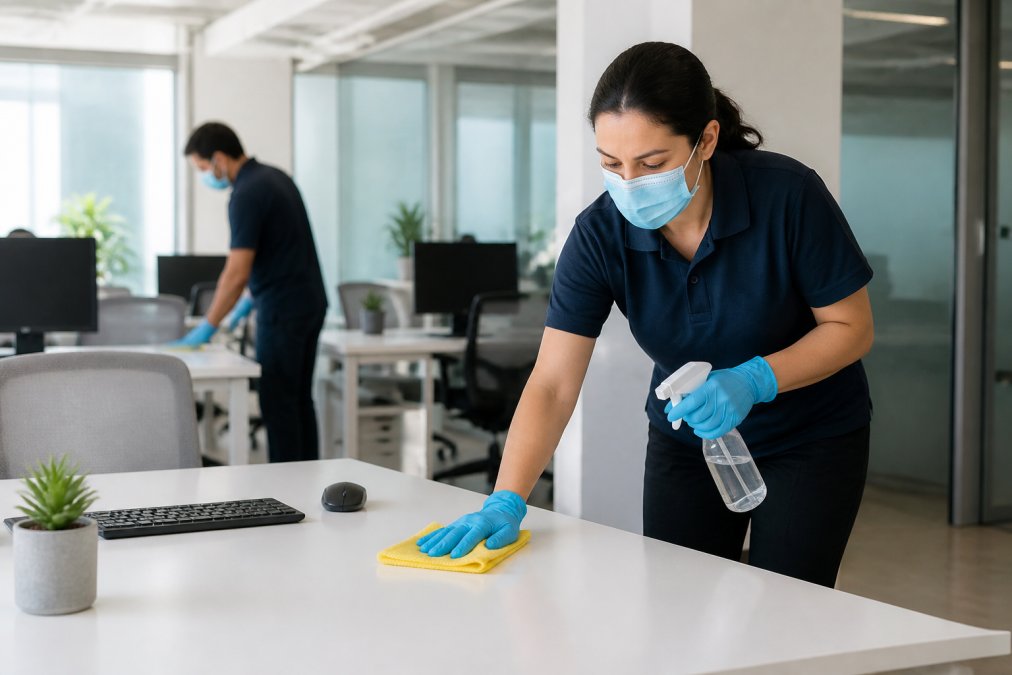
Effective office sanitization starts with the right supplies, not the right intentions. Before anyone picks up a spray bottle, gather these essentials:
- Disinfectant wipes and EPA-approved disinfectants matched to your surfaces. Look for an EPA registration number on the label, which confirms the product has been reviewed for the claims it makes (the EPA).
- Microfiber cloths in color-coded sets to prevent cross-contamination
- Electrostatic sprayers if your square footage or traffic volume justifies them
- Nitrile gloves and any PPE required by your chosen chemicals
- A written high-touch surface disinfection checklist for each zone
- No-touch bins, hand sanitizer stations, and signage for shared areas
This guide from Rangel Janitorial covers the best practices for office sanitization that hold up in real facilities, not just on paper. We've maintained corporate offices, medical suites, and industrial parks for over 30 years, and the gap between a clean-looking office and a hygienic one almost always comes down to process, not products.
One thing most guides skip: supplies mean nothing without a schedule. Decide who cleans what, how often, and how you'll verify it before you buy a single wipe.
How to Choose the Right Disinfectant for Each Surface
Not every product belongs on every surface. The label tells you what a disinfectant is approved to kill, what contact time it needs, and which materials it can damage. Match the product to the surface before you buy in bulk:
- Hard, non-porous surfaces (door handles, light switches, laminate desks): most EPA-registered disinfectants work here. Check the contact time, since some need as little as one minute and others need ten.
- Electronics and touchscreens: use products labeled safe for electronics, or apply disinfectant to a cloth rather than spraying the device directly. Never let liquid pool in seams or ports.
- Upholstery and fabric partitions: many standard disinfectants will discolor or saturate these. Use a fabric-safe cleaner or a disinfectant labeled for porous surfaces.
- Natural stone and specialty finishes: acidic or abrasive products can etch or dull these surfaces. Check the manufacturer's guidance first.
If you buy concentrates, dilute them exactly as the label directs. A stronger mix is not more effective, and it can leave sticky residue that actually attracts soil and irritates skin and lungs. Mix in a well-ventilated area, label every secondary bottle with the product name and dilution, and never store disinfectants in unmarked containers or food and beverage bottles.
Eco-Friendly and Non-Toxic Options Worth Considering
Most guides default to harsh chemicals, but a growing number of offices want effective sanitization without the fumes and residue. A few practical options:
- Hydrogen peroxide-based disinfectants break down into water and oxygen and are generally gentler on surfaces and indoor air than bleach-based products.
- Citric acid and plant-derived cleaners work well for routine cleaning and light sanitizing on non-porous surfaces, though they may need a longer contact time.
- EPA Safer Choice labeled products meet the agency's criteria for safer chemistry, which makes them an easy starting point when you want to reduce exposure.
Green products still need the same discipline as conventional ones: clean first, respect contact time, and follow the label. "Natural" on a bottle is a marketing word, not a safety or efficacy guarantee.
Storage, Safety, and Stocking
Keep chemicals in a locked or restricted storage area, away from food, and store them at the dilution and temperature the label specifies. Keep the safety data sheet for every product on hand and accessible to staff who use them. Stock your sanitization stations daily so wipes and sanitizer don't run out midweek, and rotate stock so older products get used first. A supply closet that's organized and labeled saves labor every single shift.
Step 1: Identify High-Touch Surfaces in Your Office
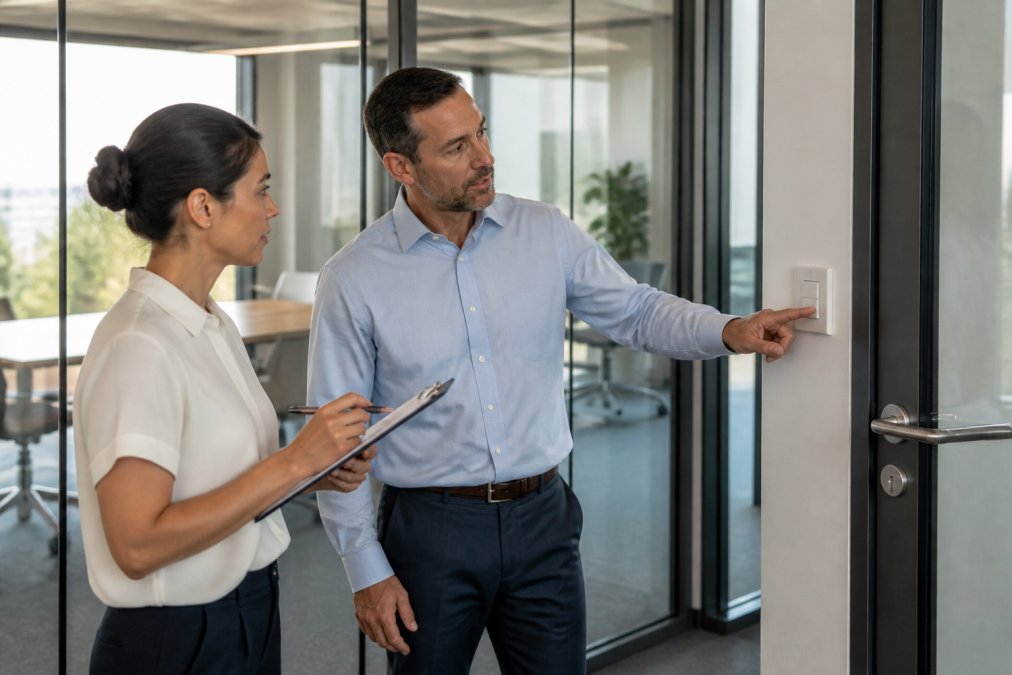
High-touch surfaces are the contact points that people touch repeatedly throughout the day, and they carry the highest risk of germ transmission in any facility. Door handles, light switches, elevator buttons, shared keyboards, and faucet handles top the list in nearly every office layout.
Walk your space room by room and mark every surface that hands meet more than a few times daily. Don't guess. Follow a real person's path from the parking lot to their desk and note each stop.
The Most Critical Contact Points to Sanitize Daily
Prioritize these contact points in your routine disinfection schedule:
- Door handles and push plates
- Light switches and thermostat controls
- Shared keyboards, mice, and conference room remotes
- Breakroom appliance handles, coffee stations, and water coolers
- Restroom faucets, flush handles, and stall latches
A common mistake is treating all surfaces equally. Your lobby artwork needs dusting; your elevator buttons need daily disinfection.
Step 2: Understand Cleaning vs. Sanitizing vs. Disinfecting
Cleaning, sanitizing, and disinfecting are three distinct processes, and confusing them wastes labor and leaves pathogens behind. Cleaning removes surface debris and soil. Sanitizing reduces bacteria to levels considered safe by public health standards. Disinfecting kills or inactivates pathogens on a surface after it has been cleaned.
The order matters: you clean first, then sanitize or disinfect. Applying disinfectant over visible grime is one of the most common errors we see, because soil blocks the chemical from reaching the microbes it's meant to kill.
Contact Time and Dwell Time: Why They Matter
Contact time, also called dwell time, is how long a disinfectant must stay wet on a surface to work as labeled. Wiping a surface dry seconds after spraying it defeats the purpose. Read the product label, note the required contact time, and let the surface stay visibly wet for that full duration.
Step 3: Follow CDC Guidelines for Office Cleaning
The CDC guidelines for office cleaning center on routine cleaning of frequently touched surfaces, with disinfection reserved for when someone is sick or when a surface is visibly contaminated. The CDC guidance on cleaning and disinfecting your facility recommends matching your approach to the situation rather than disinfecting everything indiscriminately.
For most offices, that means daily cleaning of high-touch surfaces and routine disinfection of restrooms and breakrooms. During cold, flu, and respiratory illness season, increase frequency on shared contact points and encourage hand hygiene throughout the day.
Keep in mind that overusing harsh disinfectants can damage surface integrity on finishes, electronics, and upholstery. Match the product to the material, and follow the label every time.
Step 4: Build a High-Touch Surface Disinfection Checklist
A high-touch surface disinfection checklist turns good intentions into a repeatable routine. Build one per zone, list every contact point, and assign an owner and frequency to each line.
A workable checklist format looks like this:
- Door handles and push plates, disinfected daily
- Light switches and shared controls, disinfected daily
- Conference room tables and remotes, disinfected after each meeting
- Breakroom counters and appliance handles, disinfected twice daily
- Restroom fixtures and dispensers, disinfected multiple times daily
- Shared keyboards and hot-desk equipment, wiped between users
Keep the checklist posted in the zone it covers, and have staff initial each pass. Verification is what separates a checklist that works from one that gets ignored.
Step 5: Decide If Electrostatic Disinfection for Small Businesses Fits Your Space
Electrostatic disinfection for small businesses makes sense when you have large surface areas, high traffic, or equipment that's hard to wipe by hand.
Step 6: Set a Realistic Sanitization Schedule and Frequency
Use this framework to set your baseline:
| Zone | Minimum Frequency | Escalate When |
|---|---|---|
| High-touch surfaces | Daily | Illness season or confirmed case |
| Restrooms | Multiple times daily | High foot traffic days |
| Breakrooms and kitchens | Twice daily | Peak lunch hours |
| Shared equipment | Between users | Hot-desk or shared-device setups |
| Private offices | Weekly | Guest visits or shared use |
Step 7: Handle Common Areas, Breakrooms, and Shared Workspaces
Zone-by-Zone Protocols
Post-Illness and Outbreak Response
Zones with shared equipment and high traffic need the tightest schedule. If you only have budget for one upgrade to your program, add a midday disinfection pass in the breakroom and shared workspaces, and write down a simple post-illness response so no one has to guess when it matters.
Frequently Asked Questions
What is the difference between cleaning, sanitizing, and disinfecting?
Cleaning removes surface debris, dirt, and some germs with soap or detergent. Sanitizing reduces bacteria to levels considered safe by public health standards. Disinfecting kills or inactivates pathogens on surfaces, but only after the surface has been cleaned and the product's dwell time has been met. Skipping the cleaning step first can prevent disinfectants from working properly because soil blocks contact with the surface.
How often should high-touch surfaces be disinfected in an office?
The CDC recommends cleaning and disinfecting high-touch surfaces at least once daily, and more often in high-traffic zones like breakrooms, reception desks, and shared conference rooms. During flu season or after a confirmed illness in the workplace, increase frequency to two or three times per day. A written high-touch surface disinfection checklist helps staff stay consistent and prevents contact points from being missed.
Is electrostatic disinfection for small businesses worth the investment?
Electrostatic sprayers apply EPA-approved disinfectant with a positive charge that wraps around surfaces for 360-degree coverage, reaching areas a cloth can miss like chair undersides, keyboards, and cubicle dividers. For small businesses with shared equipment or high-traffic common areas, this can reduce cross-contamination risk and cut labor time compared to manual wiping. Pricing depends on facility size and frequency, so request a quote based on your square footage.
How do I create an effective office sanitation schedule?
Start by mapping high-touch surfaces and high-traffic zones, then assign daily tasks. Daily tasks cover door handles, elevator buttons, shared keyboards, and restroom fixtures. Post the schedule where staff can see it, and review it quarterly to adjust for seasonal illness or occupancy changes.