 Listicle
Best Commercial Cleaning for Medical Offices
Table of Contents
- What Makes Medical Office Cleaning Different
- Medical Office Cleaning Checklist: Essential Tasks
- OSHA Standards for Medical Office Cleaning
- Electrostatic Disinfection for Healthcare Facilities
- Top Commercial Cleaning Providers for Medical Offices
- How to Choose the Right Cleaning Service for Your Medical Office
- In-house cleaning costs:
- Outsourced cleaning costs:
- Frequently Asked Questions
Last Updated: September 24, 2026
What Makes Medical Office Cleaning Different
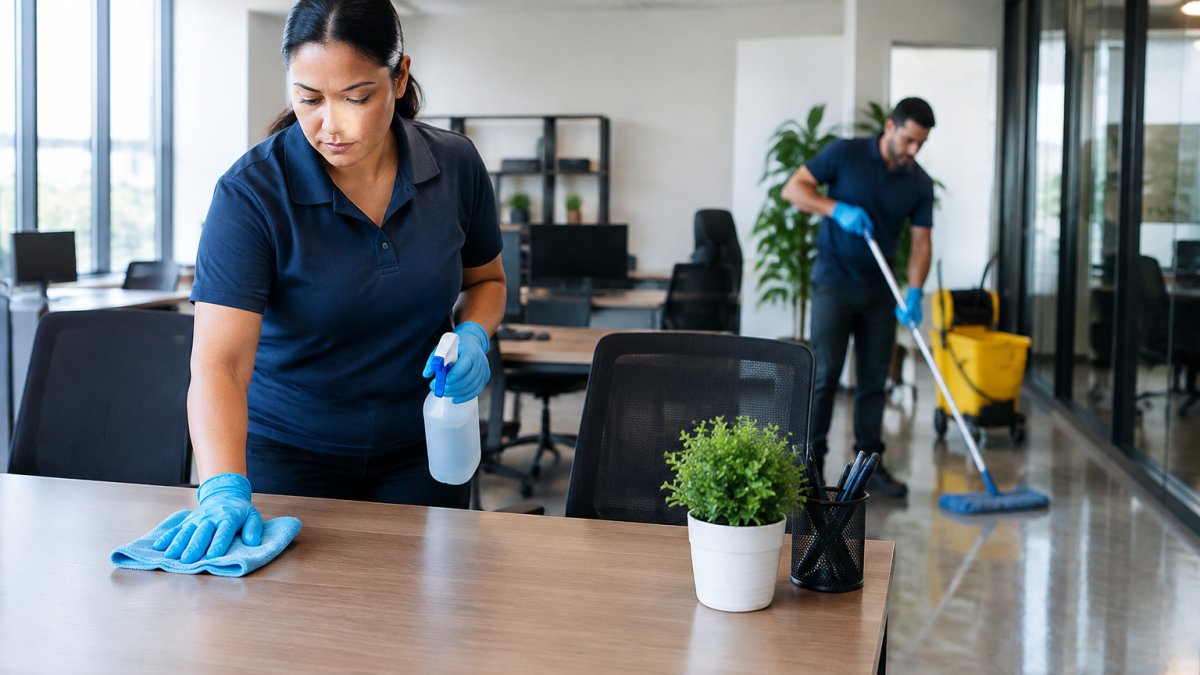
Medical office cleaning differs fundamentally from standard commercial cleaning because patient safety and regulatory compliance depend on eliminating pathogens, preventing cross-contamination, and meeting strict infection control standards that typical offices don't require.
The best commercial cleaning for medical offices requires specialized protocols for high-touch surfaces, bloodborne pathogen awareness, and knowledge of which disinfectants work against specific pathogens to prevent cross-contamination between exam rooms.
Rangel Janitorial has spent over 30 years refining cleaning protocols specifically for healthcare environments, delivering the precision that general janitorial services don't provide.
Medical Office Cleaning Checklist: Essential Tasks
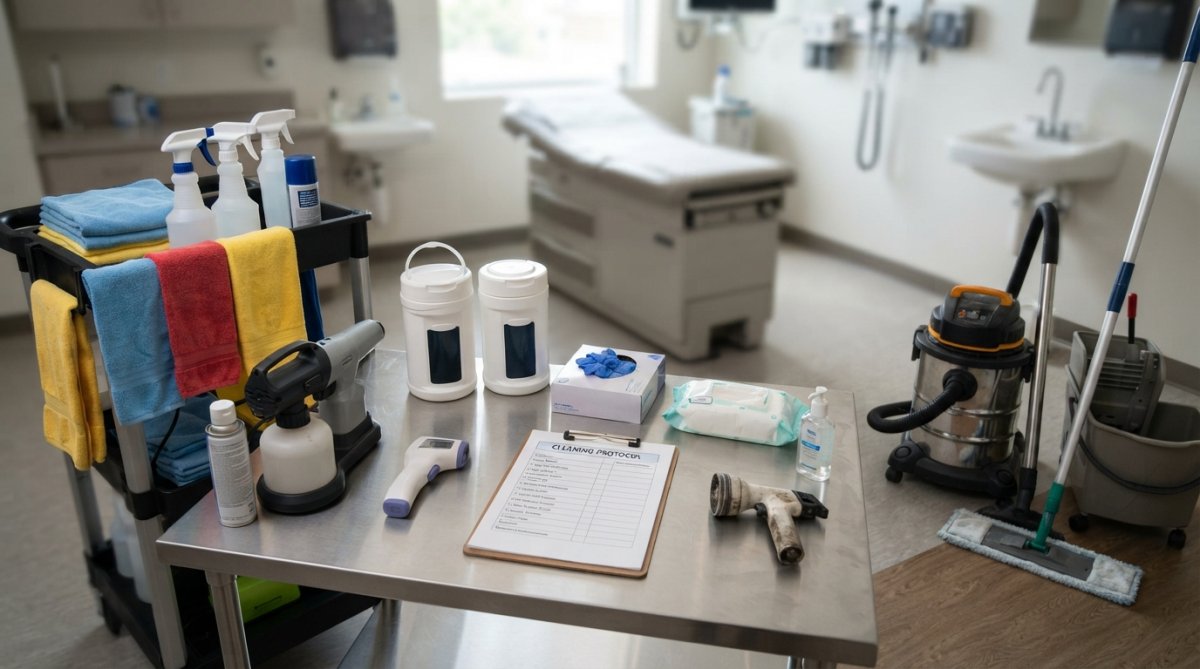
A comprehensive medical office cleaning checklist ensures nothing gets missed by following a systematic approach that covers every area patients and staff touch.
Daily cleaning tasks:
- Disinfect all high-touch surfaces (door handles, light switches, reception desk)
- Clean and sanitize exam room tables and equipment
- Empty and replace biohazard disposal containers
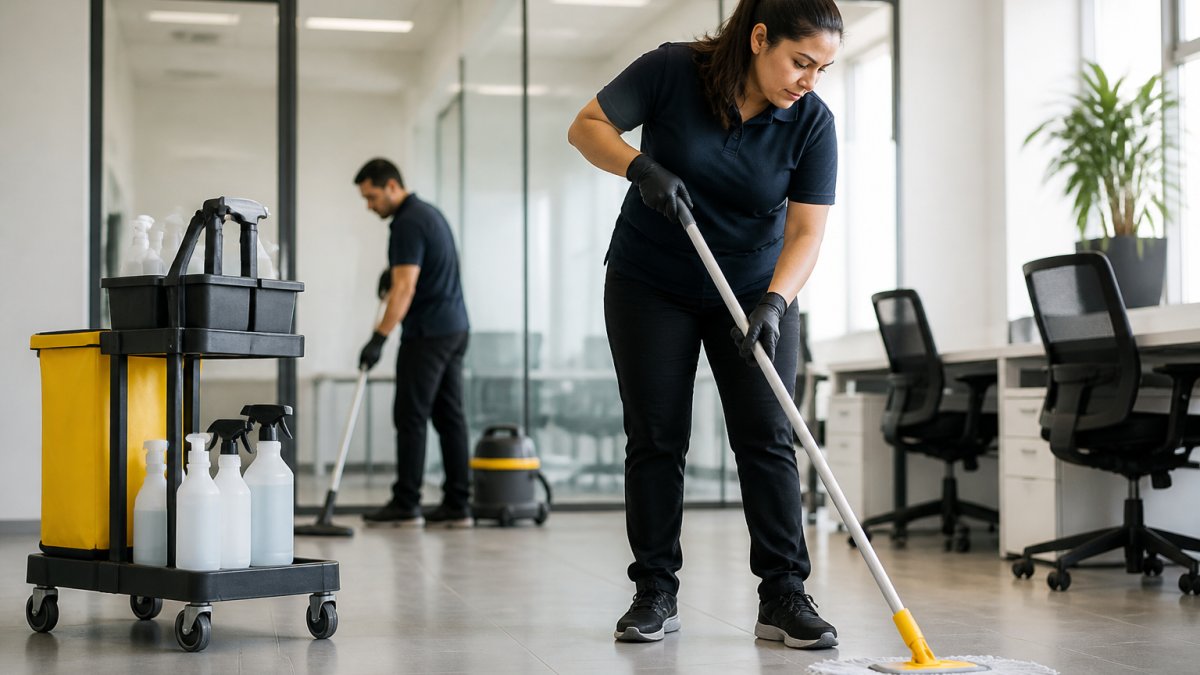
- Mop floors with hospital-grade disinfectant
- Clean and disinfect restrooms, including toilet seats and faucet handles
Weekly deep cleaning:
- Sanitize baseboards and door frames
- Clean inside cabinets and drawers where instruments are stored
- Disinfect waiting room chairs and furniture
- Clean HVAC vents and air return grilles
- Sanitize computer keyboards and mouse devices at front desk
Monthly specialized tasks:
- Strip and wax floors in non-patient areas
- Deep clean behind and under equipment
- Sanitize window sills and glass surfaces
- Clean inside refrigerators storing medications or vaccines
- Disinfect storage areas for medical supplies
A documented checklist prevents infection control gaps and ensures measurable compliance.
OSHA Standards for Medical Office Cleaning
OSHA standards directly govern medical office cleaning and separate compliant facilities from those at legal and safety risk.
OSHA's bloodborne pathogen standard requires engineering controls, work practices, and personal protective equipment. Cleaning staff must wear gloves, eye protection, and sometimes masks when handling potentially contaminated surfaces.
Surface decontamination procedures must follow specific protocols, with staff trained to identify biohazard materials, handle them safely, and dispose of them properly. OSHA compliance requires maintaining records of bloodborne pathogen training for all janitorial personnel.
The best commercial cleaning for medical offices includes staff who understand sharps safety, proper containment, and disposal procedures that meet OSHA requirements, contaminated materials cannot go into regular trash.
OSHA standards extend to cleaning staff as employees with occupational health protections; proper training, equipment, and procedures protect both the practice and the janitorial team.
Electrostatic Disinfection for Healthcare Facilities
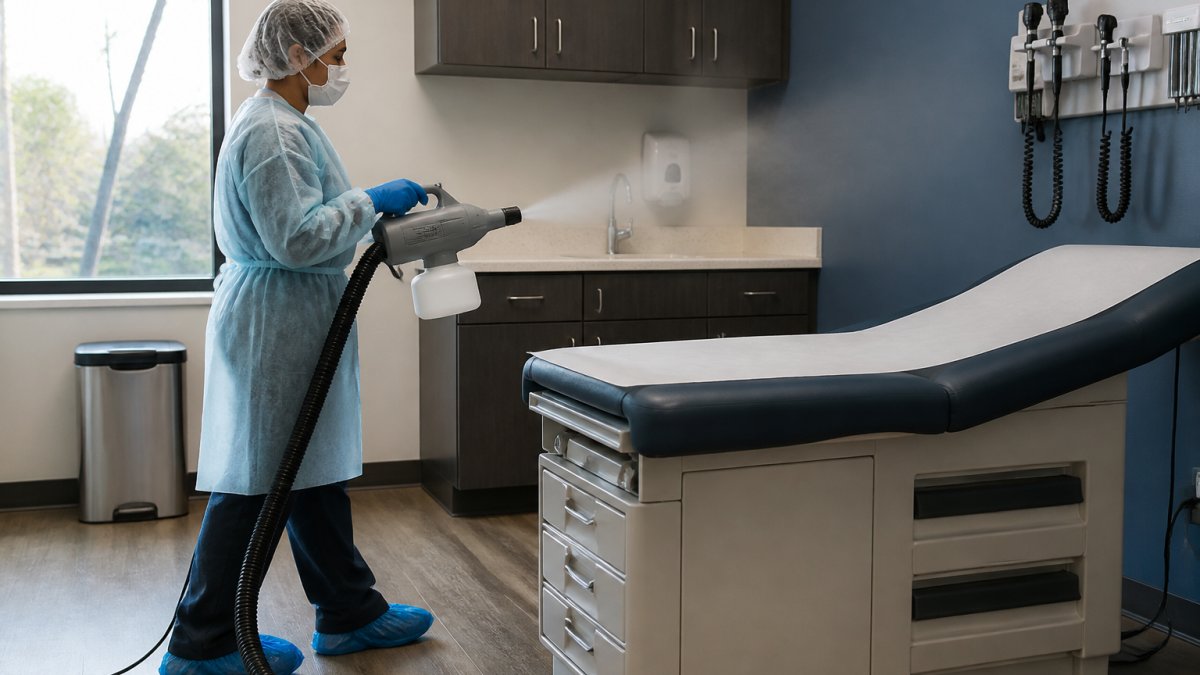
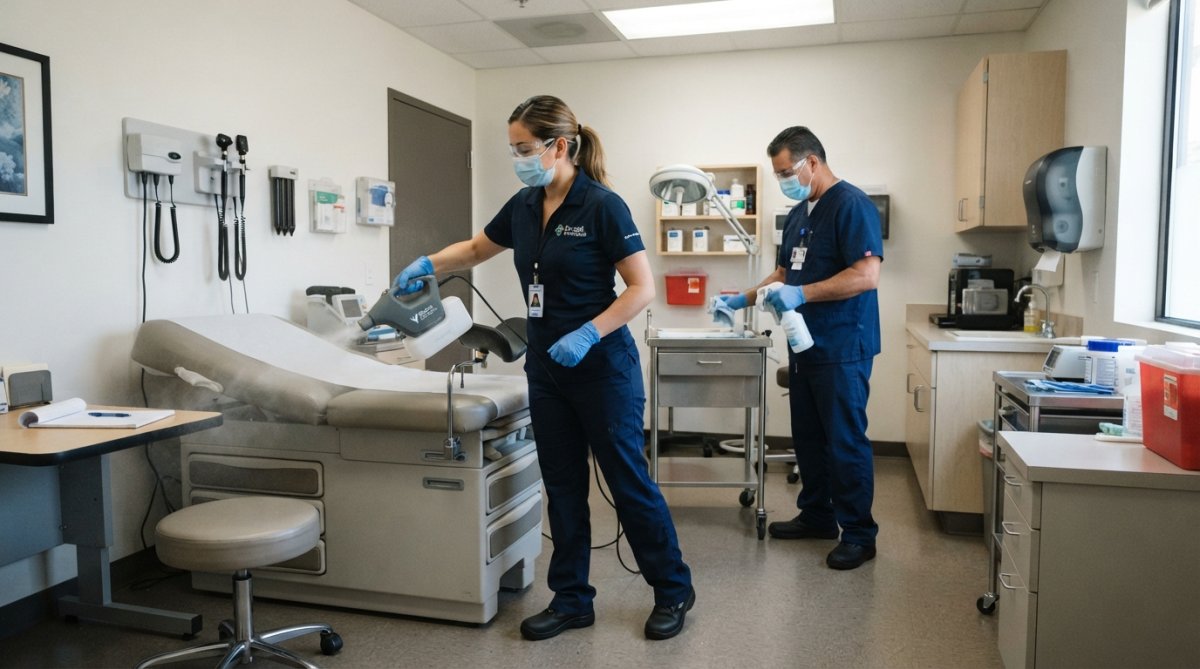
Electrostatic disinfection applies hospital-grade disinfectants with an electrical charge that ensures 360-degree coverage, unlike traditional spraying.
The disinfectant receives a positive charge as it exits the applicator; surfaces carry a negative charge, causing the mist to coat every surface including hard-to-reach areas, eliminating gaps that manual spraying leaves.
The Verification Advantage
The best commercial cleaning for medical offices includes measurable verification of disinfection effectiveness, not just the technology itself.
ATP testing is the industry standard for validating disinfection. After electrostatic disinfection, services should perform ATP swabs on high-risk surfaces (exam tables, door handles, light switches) and provide digital reports. Readings below 15 RLU indicate effective disinfection; readings above 30 RLU suggest contamination remains.
UV-C light validation is an emerging verification method using portable meters to confirm electrostatic mist reached all surfaces, particularly valuable in complex room layouts.
Digital reporting logs with timestamped documentation and verification test results provide objective proof of compliance and protect your practice in patient complaints or regulatory inquiries.
Electrostatic systems work well for exam rooms with multiple daily patients, waiting areas with high foot traffic, surgical suites, and multi-room practices where manual disinfection is time-prohibitive. Solo practices with low patient volume may need only daily manual disinfection; multi-provider clinics seeing 40+ patients daily benefit from electrostatic disinfection with ATP verification.
Ask prospective services: Do you perform ATP testing after application? Can you provide digital reports? How quickly do you respond if testing reveals incomplete coverage? These questions separate marketing from measurable infection control.
Top Commercial Cleaning Providers for Medical Offices
Rangel Janitorial: 30+ Years of Medical Facility Experience
Rangel Janitorial stands out with over 30 years of dedicated experience cleaning medical offices, dental practices, and healthcare facilities. The company's deep expertise in infection control, OSHA compliance, and specialized electrostatic disinfection makes it the strongest choice for practices demanding consistent, reliable service.
What sets Rangel Janitorial apart: fully bonded and insured professional crews trained specifically for medical environments. The company doesn't use a one-size-fits-all approach. Instead, it creates tailored cleaning plans that match your facility's unique layout, patient volume, and infection control requirements. Real-time facility upkeep means your office stays pristine throughout the day, not just after hours.
The electrostatic disinfection technology Rangel Janitorial uses delivers 360-degree coverage, reaching surfaces standard cleaning misses. This matters in exam rooms, waiting areas, and restrooms where cross-contamination risk is highest. The satisfaction guarantee reflects confidence in service quality, if something isn't right, the company makes it right.
Rangel Janitorial is trusted by over 500 California businesses, including medical practices that depend on consistent hygiene standards. The company's track record speaks to reliability and professionalism that facility managers can count on.
Jani-King: Infection Prevention Focus
Jani-King offers customized cleaning plans with emphasis on infection control and OSHA compliance. The franchise model provides consistency, though service quality varies by local franchise owner.
Coverall: Health-Based Cleaning System
Coverall's "Health-Based Cleaning System" incorporates hospital-grade disinfectants and HEPA-filter vacuums to address airborne pathogens. Pricing requires consultation and availability varies by region.
360clean (JaniMed): Specialized Medical Training
360clean's JaniMed program focuses on bloodborne pathogen safety with transparent pricing starting around $300/month for small practices. Availability is limited to franchise locations.
Stratus Building Solutions: Green Cleaning for Healthcare
Stratus Building Solutions combines healthcare cleaning with sustainable, eco-friendly practices using microfiber technology and HEPA-filtration. Availability depends on local franchise presence.
How to Choose the Right Cleaning Service for Your Medical Office
Selecting the best commercial cleaning for medical offices requires evaluating more than price and availability. A structured framework helps facility managers use measurable criteria.
Step 1: Define Your Baseline Cleaning Need
Calculate your facility's cleaning demand based on square footage, daily patient volume, and infection control risk level. This baseline determines service scope and cost.
Step 2: Evaluate Infection Control Credentials
Step 3: Request a Facility Walkthrough and Customized Proposal
During the walkthrough, ask the service representative:
- Which surfaces will they disinfect daily vs. weekly?
- How will they prevent cross-contamination between exam rooms?
- What disinfectants will they use, and are they hospital-grade (EPA-registered for healthcare use)?
- Will they offer electrostatic disinfection, and if so, how often and with what verification method (ATP testing)?
- How will they document completion of tasks (digital logs, photos, timestamps)?
- What is their response time for urgent cleaning requests (e.g., biohazard spill, patient illness)?
In-house cleaning costs:
Outsourced cleaning costs:
Step 5: Establish Performance Metrics and Accountability
Before signing a contract, agree on measurable performance standards:
- Response time to urgent requests: Service should respond to biohazard spills or urgent cleaning needs within 2 hours during business hours.
- Verification methods: If electrostatic disinfection is included, require ATP testing results and digital reports at least weekly.
- Quality inspections: Conduct unannounced spot checks monthly. Inspect high-touch surfaces with an ATP meter or visual inspection for dust/debris.
- Complaint resolution: Define how quickly the service will address complaints (24 hours is standard).
- Compliance documentation: Request quarterly proof that all staff have current OSHA training and background checks.
Red Flags to Avoid
- Service cannot provide OSHA training certificates for staff
- References from medical practices are unavailable or reluctant to recommend them
- Proposal is generic with no mention of your facility's specific layout or patient volume
- Service offers only price quotes with no walkthrough or customization
- No mention of verification methods (ATP testing, digital documentation)
- Response time to urgent requests is longer than 4 hours
- Service has no experience with medical offices (only general commercial cleaning)
Making the Final Decision
Frequently Asked Questions
What is the difference between standard office cleaning and medical office cleaning?
Medical office cleaning requires hospital-grade disinfectants, strict infection control protocols, and compliance with OSHA and HIPAA standards. Standard office cleaning focuses on general tidiness and basic sanitation. Medical facilities must address bloodborne pathogen safety, cross-contamination prevention, and high-touch surface disinfection. Professional medical office cleaning includes specialized training in pathogen reduction and biohazard disposal that standard cleaning does not cover.
What certifications should a commercial cleaning company have for medical offices?
Look for companies with OSHA bloodborne pathogen training, HIPAA compliance certification, and experience with infection control protocols. Staff should have background checks and training in handling hazardous materials. Verify the company is fully bonded and insured for medical facility work. Some providers offer specialized certifications that demonstrate commitment to medical-grade standards.
What is electrostatic disinfection for healthcare facilities?
Electrostatic disinfection uses positively charged disinfectant particles that are attracted to negatively charged surfaces, providing 360-degree coverage of hard-to-reach areas. This technology is especially effective in medical offices for eliminating pathogens on exam room surfaces, equipment, and high-touch areas. It reaches crevices and corners that traditional cleaning methods miss, reducing cross-contamination risk and improving overall infection control in healthcare environments.
How often should medical offices be professionally cleaned?
Most medical offices require daily professional cleaning, with high-touch surfaces cleaned multiple times per day. Exam rooms need thorough disinfection between patients. Waiting areas and restrooms require frequent attention due to high traffic and infection transmission risk. Some facilities benefit from after-hours deep cleaning combined with daytime touch-ups. The frequency depends on patient volume, facility size, and infection control protocols specific to your practice.