 Listicle
7 Benefits of Outsourcing Industrial Facility Cleaning
Table of Contents
- Why Facility Managers Are Outsourcing Industrial Cleaning in 2026
- Outsourcing vs In-House Janitorial Services: A Side-by-Side Comparison
- Cost Savings and Industrial Cleaning Service Cost Analysis
- OSHA Compliance and Facility Sanitation: Why Specialists Get It Right
- Access to Specialized Expertise and Industrial Cleaning Technology
- How to Manage the Transition to an Outsourced Cleaning Partner
- Conclusion: Is Outsourcing Industrial Facility Cleaning Right for You?
- Frequently Asked Questions
Last Updated: September 12, 2026
Why Facility Managers Are Outsourcing Industrial Cleaning in 2026
Outsourcing industrial facility cleaning means contracting a specialized commercial cleaning company to handle janitorial operations, sanitation, and building maintenance instead of managing those tasks in-house. The benefits of outsourcing industrial facility cleaning show up fastest in three places: lower operational overhead, fewer compliance headaches, and more consistent results across every shift.
That shift is accelerating because facility managers are being asked to do more with leaner teams. Industrial parks and warehouse-office hybrids often move to dedicated vendor partnerships, largely because in-house programs struggle to cover multiple shifts, specialized equipment, and documentation demands at once.
Below, we'll show how outsourcing compares to an in-house janitorial model, what a real cost analysis looks like, and how to manage the transition without disrupting production.
Outsourcing vs In-House Janitorial Services: A Side-by-Side Comparison
Outsourcing wins on cost predictability and compliance coverage; in-house wins on day-to-day control and cultural fit. The right answer depends on facility size, shift structure, and your team's administrative bandwidth.
Here's how the two models stack up across the factors that matter most:
| Factor | Outsourced Janitorial | In-House Janitorial |
|---|---|---|
| Cost structure | Fixed service agreement | Variable payroll and benefits |
| Management burden | Vendor-managed supervision | In-house hiring and scheduling |
| Specialized equipment | Provided by vendor | Capital purchase required |
| Coverage gaps | Backup crews available | Vulnerable to turnover |
| Compliance documentation | Vendor-maintained records | Built and tracked internally |
| Scalability | Adjust scope by site | Rehire and retrain each time |
Pros and Cons of Each Model
Outsourcing pros: predictable billing, trained crews, backup coverage, and specialized equipment included in the agreement. Outsourcing cons: less direct control over individual cleaners, and quality depends on the vendor you choose.
In-house pros: full control over scheduling, direct supervision, and staff who know your building. In-house cons: you absorb recruiting, benefits, training, turnover, and equipment costs, and one resignation can leave a shift uncovered.
Cost Savings and Industrial Cleaning Service Cost Analysis
Cost savings from outsourcing come from converting unpredictable labor expenses into a fixed service agreement, not from paying less per hour. An industrial cleaning service cost analysis should compare total cost of ownership, not just the invoice.
What to Include in Your Cost Comparison
- Fully loaded wages: base pay, payroll taxes, benefits, and overtime
- Recruiting, background checks, and onboarding for replacements
- Training programs and recurring refresher training
- Cleaning equipment, chemicals, and preventative maintenance
- Supervision and administrative time spent on scheduling
- Absence and turnover coverage costs
- Compliance documentation and recordkeeping labor
Add those line items up and the gap between an in-house hourly rate and a vendor's rate usually narrows considerably. The real savings often come from overhead you stop carrying: payroll administration, workers' compensation exposure, and management hours redirected to core business.
Rangel Janitorial builds each quote around your facility's specific cleaning protocols, so pricing reflects your actual scope rather than a generic rate. Request a free quote for numbers tied to your site.
OSHA Compliance and Facility Sanitation: Why Specialists Get It Right
OSHA compliance and facility sanitation require documented protocols, trained staff, and consistent execution, exactly where in-house programs tend to slip. Specialized vendors maintain the training records, SDS handling, and cleaning standards that inspections and audits demand.
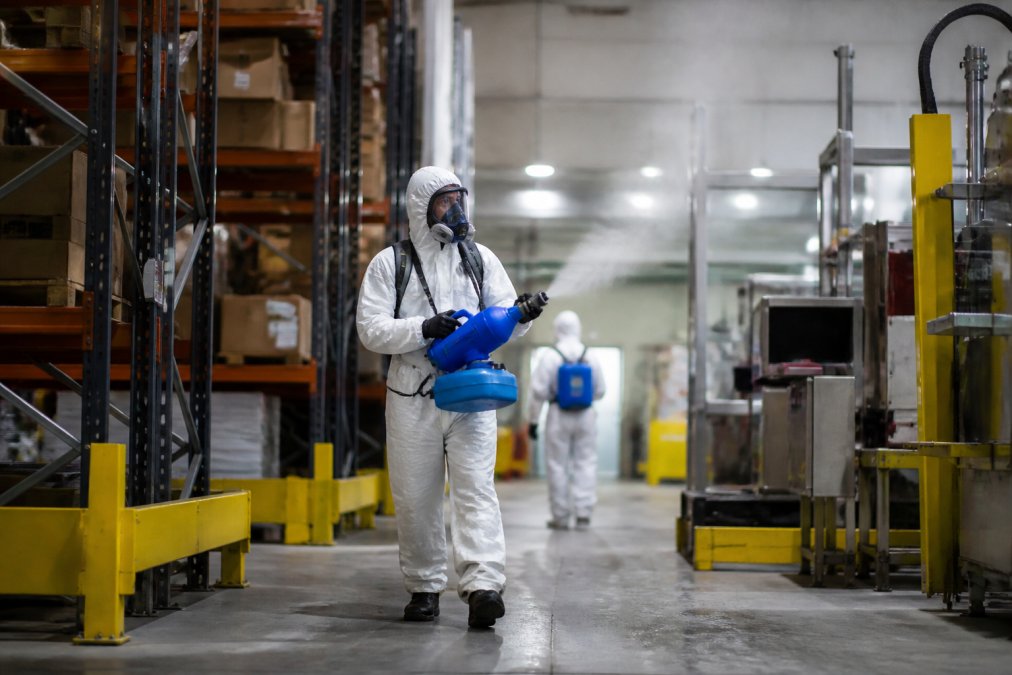
The OSHA standards for general industry cover everything from hazard communication to PPE requirements, and a cleaning vendor that works across industrial sites keeps those protocols current as a matter of routine. That matters for facility hygiene and for your risk management posture.
The Specific Standards That Apply to Industrial Cleaning Crews
Generic office-cleaning content stops at "we follow OSHA." Industrial facilities need the actual citations. The standards that come up most often include:
- 29 CFR 1910.1200 (Hazard Communication), the written HazCom program, container labeling, and Safety Data Sheet access for every chemical a crew brings on site. If your vendor cannot produce an SDS binder or digital equivalent on request, that is a finding waiting to happen.
- 29 CFR 1910.132-1910.138 (Personal Protective Equipment), hazard assessment, PPE selection, and training documentation for gloves, eye protection, and respiratory protection where dust or chemical exposure is present.
- 29 CFR 1910.147 (Control of Hazardous Energy / Lockout-Tagout), relevant when cleaning crews work near or around production equipment that must be de-energized before cleaning.
- 29 CFR 1910.1030 (Bloodborne Pathogens), required for any site with designated first-aid or medical-adjacent spaces, including locker rooms and on-site clinics.
- 29 CFR 1910.22 (Walking-Working Surfaces), floor care, spill response, and wet-floor signage protocols that reduce slip-and-fall exposure.
A vendor working across industrial sites already has these in their training matrix. An in-house program usually builds that matrix from scratch, then must keep it current as standards change.
What "Audit-Ready" Actually Looks Like
Compliance is not a binder on a shelf, it is a live record set. A genuinely audit-ready vendor can produce, on request:
- Training rosters with dates and topics for each crew member assigned to your site
- SDS access for every chemical used in your facility
- Inspection and quality-assurance logs tied to specific dates and areas
- Incident and near-miss reports with corrective actions
- A written scope of work that maps cleaning tasks to the areas and frequencies in your service agreement
That last item is the one most in-house programs miss. When a task is not written down, it is not auditable, or defensible in a workers' compensation or regulatory review.
Where Sanitation and Safety Overlap
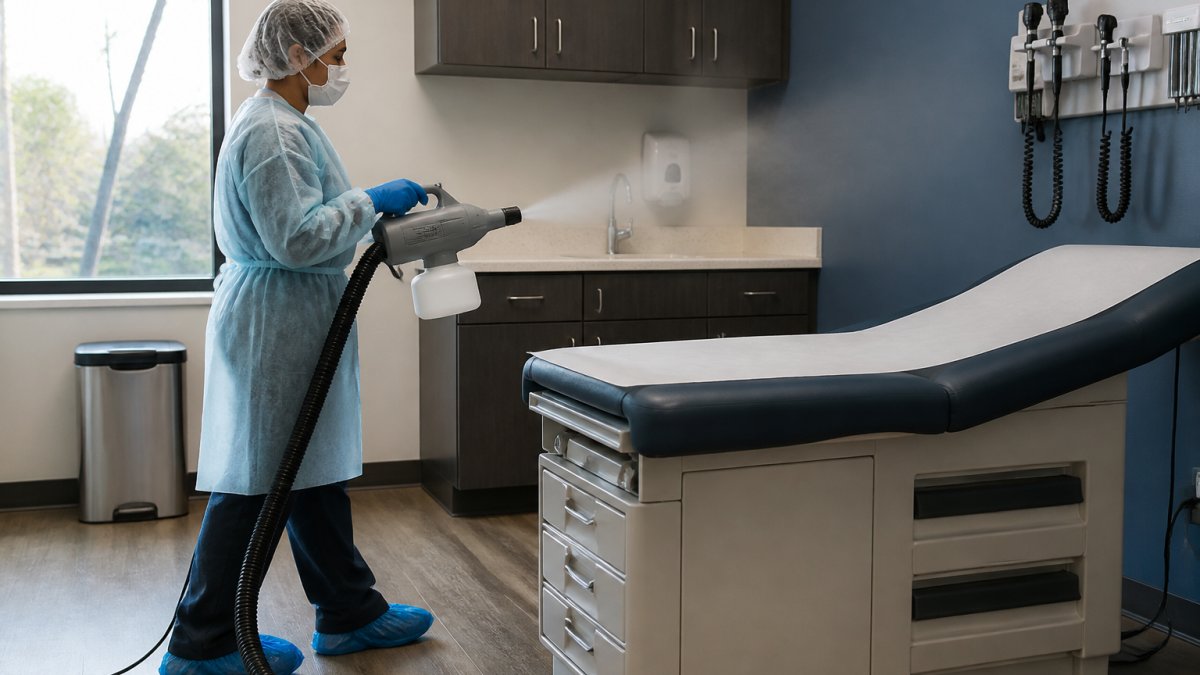
Industrial sanitation is not just appearance. Dust control around production equipment reduces combustible-dust and respiratory exposure (osha.gov). Slip-resistant floor treatment reduces the leading cause of industrial injury claims. Electrostatic disinfection reaches shelving undersides, control-panel backs, and other surfaces cloth-and-spray methods miss, critical in locker rooms, break areas, and medical-adjacent spaces.
The Risk-Mitigation Math
OSHA penalties are adjusted annually for inflation and published on osha.gov, so the exposure is public and rising (osha.gov). Beyond fines, the bigger cost is indirect: lost production during an inspection, corrective-action labor, and management hours responding to a citation. A vendor carrying the compliance documentation burden shifts that exposure to a partner whose business depends on getting it right.
Access to Specialized Expertise and Industrial Cleaning Technology
Specialized expertise is the benefit facility managers underestimate most. A vendor brings crews trained on industrial cleaning equipment, floor care systems, and sanitization chemistry that would be expensive to build in-house.
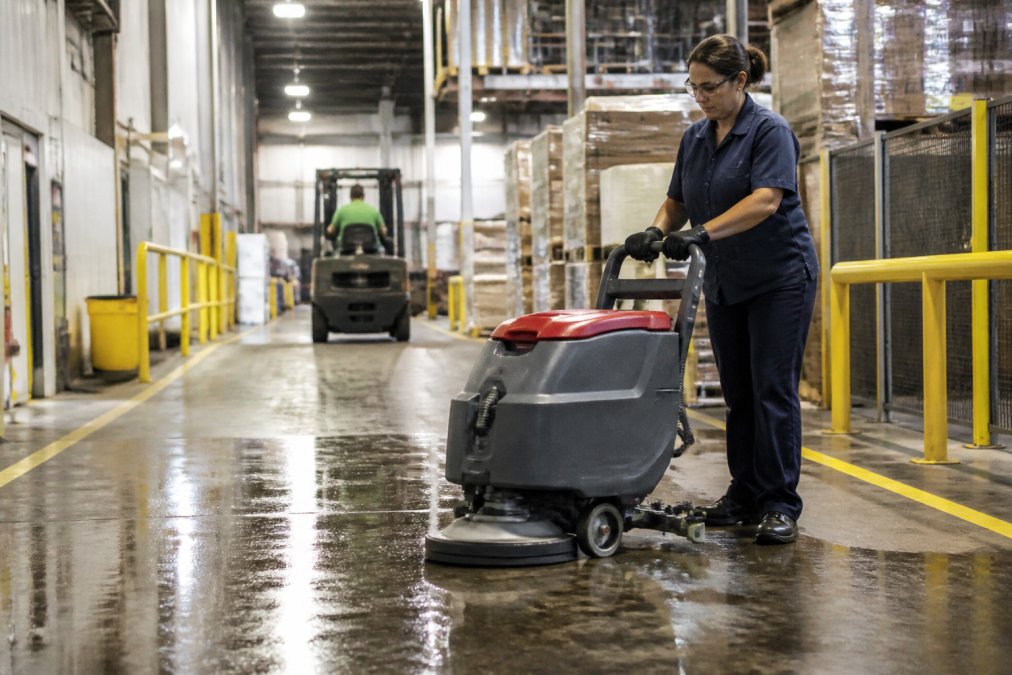
Vendors also absorb the cost of that technology. Floor scrubbers, burnishers, and electrostatic sprayers are real capital outlay, and a service agreement spreads that cost across their client base. Your facility gets the results without the purchase order.
Industrial cleaning differs from office cleaning in ways that matter: dust control around production equipment, slip-resistant floor treatment, and protocols that do not interfere with machinery. A vendor working across industrial sites has already solved those problems elsewhere.
The Technology Stack Behind Modern Industrial Cleaning
The equipment list is only half the story. The other half is the data layer deciding where equipment goes and when. The best results come from vendors who have moved to data-driven cleaning schedules.
- IoT sensors on dispensers and restroom fixtures, soap, towel, and tissue dispensers with connected sensors report usage and low-supply events, so restocking is triggered by actual consumption rather than a fixed route. The practical effect is fewer stockouts and less labor spent checking full dispensers.
- Connected floor-care equipment, scrubbers and burnishers with telematics report run time, area covered, and battery health. That data tells you whether a floor is actually being cleaned to the agreed frequency or just being walked over.
- Air-quality and particulate monitoring, sensors that track PM2.5 and PM10 near production areas help schedule dust-control passes around actual conditions instead of a static calendar.
- Computerized maintenance management system (CMMS) integration, cleaning tasks, inspection results, and work orders live in the same system your maintenance team already uses, so nothing falls between two vendors.
- Digital inspection apps, walkthrough findings are captured on a tablet with photos and timestamps, which produces an audit trail rather than a clipboard that gets lost.
None of this replaces trained crews. It tells you where to point them.
What to Ask a Vendor About Technology
A vendor that has genuinely integrated technology can answer these without preparation:
- Can you show me a sample of the reporting dashboard I would receive, and how often is it updated?
- Does your equipment report run time and area covered, and can I see that data for my site?
- How do inspection findings get logged, and can I export them?
- Does your system integrate with a CMMS, or does it live in a separate portal?
- Who owns the data your sensors and equipment generate about my facility?
That last question matters more than most facility managers expect. If the data lives only in the vendor's portal, you lose visibility the day the contract ends.
The Expertise That Does Not Show Up on an Equipment List
Technology is the visible layer. The invisible layer is judgment earned across many industrial sites:
- Knowing which disinfectant chemistry is compatible with which equipment surfaces and which will degrade them over time
- Knowing how to sequence cleaning around production schedules so a floor finish has time to cure before forklift traffic returns
- Knowing which floor-care products hold up under steel wheels versus rubber tires
- Knowing when a cleaning task should be escalated to your maintenance team rather than handled by the crew
That judgment is what you are really buying; the equipment is just delivery.
Rangel Janitorial's crews are trained professionals who handle electrostatic disinfection and standard janitorial work, which means fewer vendors to manage and one point of accountability.
How to Manage the Transition to an Outsourced Cleaning Partner
Transition management determines whether outsourcing succeeds. Facilities that struggle almost always handed over keys without a documented scope, walkthrough schedule, or agreed performance measures.
A transition that works usually follows this sequence:
- Document current scope. Walk every area and record what gets cleaned, how often, and to what standard.
- Define the service level agreement. Put frequency, response times, and escalation contacts in writing.
- Run a supervised first month. Do joint walkthroughs weekly until quality stabilizes.
- Set the reporting cadence. Monthly reviews with inspection data, not impressions.
- Assign an internal owner. One person on your team owns the vendor relationship.
KPIs and Performance Measurement for Your New Vendor
Track a few measurable KPIs rather than subjective impressions. Inspection scores, complaint response times, and scheduled-task completion rates give an objective picture of consistency. Review vendor QA reporting against your own walkthrough findings, any gap between the two is useful.
Conclusion: Is Outsourcing Industrial Facility Cleaning Right for You?
The benefits of outsourcing industrial facility cleaning are real, but they depend on a partner that can deliver consistency across your sites. If your team spends hours on scheduling, turnover, and equipment instead of core operations, outsourcing is worth a serious look.
Rangel Janitorial has supported facility and property managers for over 30 years with fully bonded and insured crews, tailored cleaning plans for each location, and electrostatic disinfection that reaches the surfaces standard cleaning misses. Every service is backed by a satisfaction guarantee.
Get started with Rangel Janitorial and get a free quote built around your facility's actual scope, schedule, and standards.
Frequently Asked Questions
What are the main benefits of outsourcing industrial facility cleaning?
Outsourcing industrial facility cleaning typically delivers cost savings, access to specialized expertise, and consistent quality. You shift staffing, training, and compliance responsibilities to a vendor. That reduces management burden and lets your team focus on core operations. Many facilities also see improved health and safety outcomes because professional crews follow documented protocols and bring industrial-grade equipment. For multi-site operations, outsourcing creates uniform cleaning standards across every location.
Does outsourcing industrial cleaning help with OSHA compliance?
Yes. Professional industrial cleaning partners stay current with OSHA requirements for hazard communication, PPE, and safe chemical handling. They train crews on OSHA compliance and facility sanitation protocols, maintain safety data sheets, and document procedures. That documentation protects your facility during inspections. In-house teams often lack the time or budget for ongoing compliance training, which increases risk. A qualified vendor absorbs that burden and provides audit-ready records.
What should an industrial cleaning service cost analysis include?
A complete industrial cleaning service cost analysis compares fully loaded in-house costs against vendor quotes. Include wages, benefits, payroll taxes, training, equipment, chemicals, supervision, turnover, and administrative overhead. Add indirect costs like downtime and compliance risk. Then compare those figures to the vendor's service agreement, which should cover labor, supplies, insurance, and quality assurance.
What are the risks of managing industrial cleaning in-house?
In-house cleaning exposes you to staffing volatility, training gaps, and compliance liability. When a janitor calls out, your facility stays dirty until someone covers the shift. Turnover rates in cleaning run high, so you constantly recruit and retrain. You also own the workers' compensation claims, chemical handling risks, and OSHA violations. Equipment breakdowns come out of your capital budget. Outsourcing transfers those operational and financial risks to a bonded, insured vendor.